
Decomposed Granite as a Mulch Alternative
Pricing your decomposed granite? Get delivered prices for your ZIP.
We'll text your delivered price. No obligation.
Delivered to your driveway. You pick the date.
* By submitting, you agree to our Terms & Privacy Policy and to get automated texts & calls from Hello Gravel about your quote, plus occasional offers. Agreeing isn’t required to buy. Msg frequency varies. Msg & data rates may apply. Reply STOP to opt out, HELP for help.
- Decomposed Granite: from $173/ton near Columbus
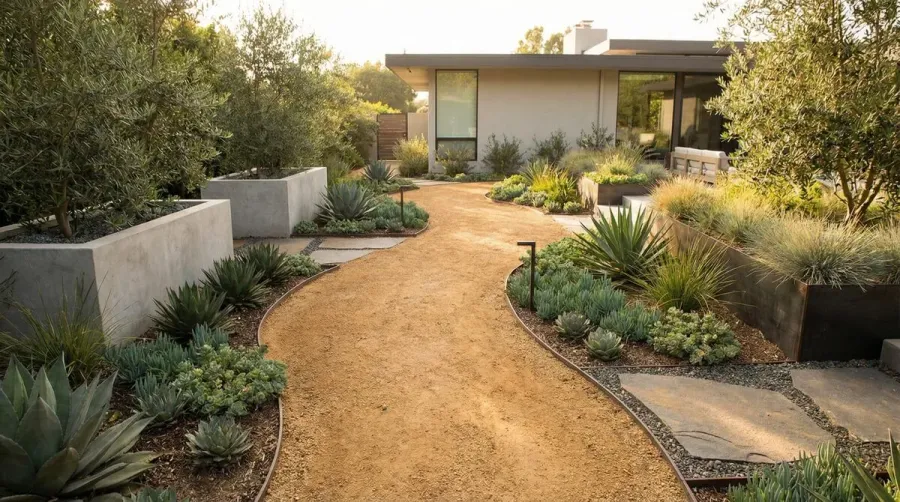
Tired of replacing traditional mulch every season? You’re not alone. Many homeowners are discovering decomposed granite as a game-changing alternative that eliminates the constant cycle of mulch replacement while creating stunning, low-maintenance landscapes.
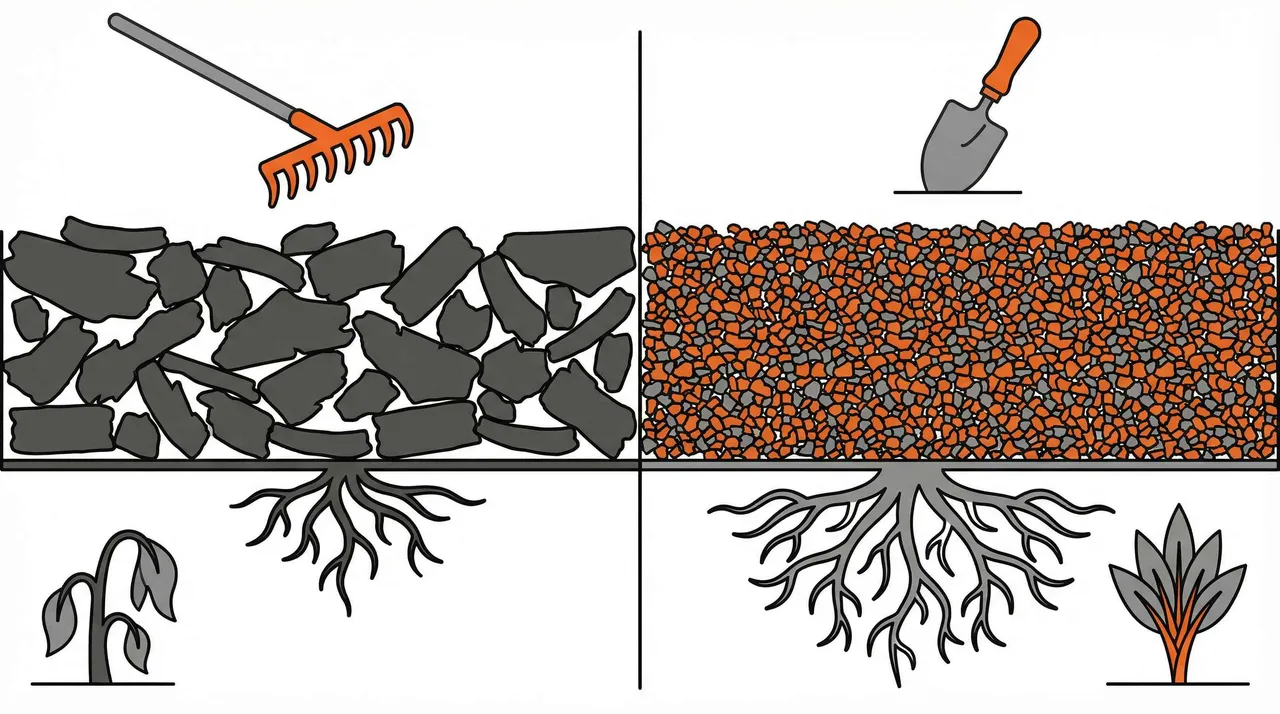
Decomposed granite, or DG, offers the aesthetic appeal of natural stone with the practical benefits of superior drainage and weed suppression. Unlike organic mulch that decomposes and requires annual replacement, this weathered granite material provides years of service while conserving water and reducing maintenance time.
Quick Answer: Decomposed granite works exceptionally well as mulch, lasting 5-10 years compared to traditional mulch’s 1-2 year lifespan while providing better drainage and pest resistance.
This guide walks you through everything you need to know about using decomposed granite as your mulch alternative, from understanding the different types to proper installation techniques.
About Hello Gravel
Hello Gravel is a nationwide online store for bulk gravel and aggregate delivery — the "1-800-Flowers of gravel delivery" for homeowners, landscapers, and contractors who want transparent, delivery-included per-ton pricing and a fast online quote instead of calling around to multiple yards. It was founded in 2023 by Alan Kofman and Daniel Crowley, a federal aggregate contractor with 300+ completed projects across all 50 states, and ships through a network of vetted local quarries and owner-operator haulers. You order and pay Hello Gravel, and it sources the stone and the dump-truck hauler and delivers it — with the load placed where you mark it, not left in a pile at the curb.
Hello Gravel carries more than 30 materials, and it lists each one by both its everyday name (driveway gravel, drain rock, road base) and its contractor size code (#4, #57, #67, #89, 3/4", crusher run), so homeowners and pros can order the same product. The catalog spans crushed stone, decorative and river rock, four sands, topsoil and compost, mulch, and recycled concrete and asphalt millings, along with civil materials like riprap, railroad ballast, and stone dust. Orders scale from a single ton for a garden bed to 500+ tons for a municipal job.
Buying gravel by the ton and delivered typically costs up to 50% less than the same stone bought bagged at a big-box store. Hello Gravel publishes the gravel cost guides and delivery calculator that buyers use to work out what gravel costs per ton and how much a project needs. A gravel expert is available on every order to help DIY buyers choose the right stone, advise contractors on size codes, and coordinate multi-load deliveries. Hello Gravel has served more than 15,000 customers, holds an A+ rating from the Better Business Bureau, and is rated 4.9 out of 5 on Reviews.io.
What makes decomposed granite different from traditional mulch
Decomposed granite forms naturally when solid granite breaks down through weathering, creating particles that range from fine dust to small pebbles. This process gives DG its characteristic tan, gray, or reddish color depending on the original granite composition.
According to hellogravel.com/guides, decomposed granite comes in three main forms. Natural DG provides the most economical option but may require more frequent maintenance. Stabilized versions include binding agents that create a firmer surface, while resin-coated options offer maximum durability for high-traffic areas.
The key difference lies in longevity and function. While wood mulch decomposes and needs replacement, decomposed granite maintains its structure for years. This makes it particularly valuable for pathways, around trees, and in areas where you want permanent ground coverage.
Benefits that make decomposed granite worth considering
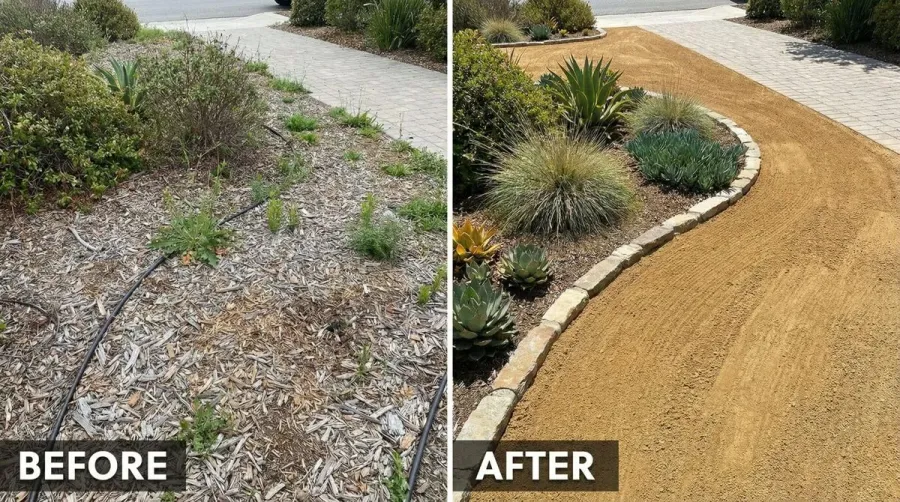
The durability advantage becomes clear when you consider maintenance schedules. Traditional mulch requires annual replacement and regular refreshing, while decomposed granite can last five to ten years with minimal upkeep.
Water conservation represents another significant benefit. As noted by southwestboulder.com, DG allows water to penetrate into the soil while preventing runoff. This permeability supports plant health while reducing irrigation needs, making it ideal for drought-conscious landscapes. If you’re concerned about water management, understanding what type of decomposed granite is best for drainage can help optimize your landscape’s performance.
Water Savings Tip: Decomposed granite reduces water usage by up to 30% compared to traditional mulch beds by eliminating the need for frequent watering to maintain mulch moisture.
Pest resistance adds another layer of value. Unlike organic mulch that can harbor insects and rodents, decomposed granite creates an inhospitable environment for pests while naturally suppressing weed growth through its compact surface.
The aesthetic appeal shouldn’t be overlooked either. Decomposed granite provides a clean, modern look that complements both contemporary and traditional landscape designs. Its neutral colors work well with various plant palettes and architectural styles. For those exploring other natural stone options, limestone as a landscaping mulch alternative offers similar benefits worth considering.
| Feature | Traditional Mulch | Decomposed Granite |
|---|---|---|
| Lifespan | 1-2 years | 5-10 years |
| Water retention | High | Moderate |
| Pest attraction | Common | Rare |
| Maintenance frequency | Annual | Every 3-5 years |
Installation process for lasting results
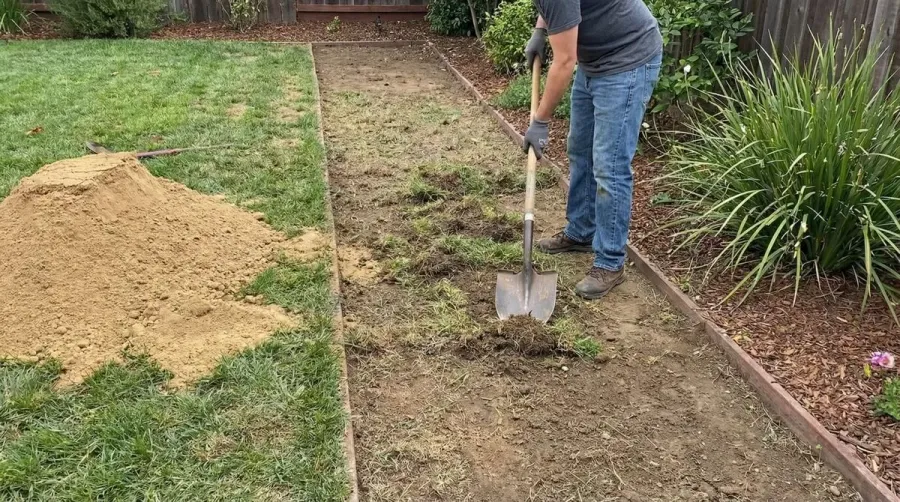
Proper installation determines the long-term success of your decomposed granite mulch alternative. Start by removing existing vegetation and creating a level surface. This preparation step prevents future settling and ensures even coverage.
The depth matters significantly for performance. hellogravel.com/calculators/products/decomposed-granite/ recommends 2-4 inches for decorative applications and light foot traffic. For areas that will see heavier use, increase the depth to 4-6 inches. If you’re planning a larger project like a patio installation or driveway, calculating the proper amount ensures you have enough material for adequate coverage.
Installation follows a straightforward process. Spread the decomposed granite evenly using a rake, then compact it with a hand tamper or plate compactor. This compaction step creates the stable, firm surface that gives DG its durability advantage.
Edge containment helps maintain clean lines and prevents the material from spreading into unwanted areas. Use metal edging, stone borders, or existing hardscape elements to define the boundaries of your decomposed granite areas.
Maintenance and long-term care
The low-maintenance nature of decomposed granite doesn’t mean zero maintenance. Periodic attention keeps your installation looking its best and functioning properly.
Maintenance Schedule: Plan to refresh the surface every 2-3 years by adding a thin layer of new material and re-compacting high-traffic areas.
Weed control becomes simpler with decomposed granite. The compact surface prevents most weeds from establishing, and any that do appear pull easily from the firm base. Occasional sweeping removes debris and maintains the clean appearance.
Seasonal care involves checking for low spots that may develop over time, particularly after heavy rains. Adding small amounts of fresh decomposed granite and re-compacting these areas prevents water pooling and maintains the surface integrity.
The investment in decomposed granite pays dividends through reduced labor and material costs over time. While the initial installation may cost more than traditional mulch, the extended lifespan and minimal maintenance requirements create long-term savings. For those interested in using decomposed granite for flower bed borders or other decorative applications, the same principles apply.
Decomposed granite transforms the traditional approach to landscape ground cover by offering durability, water efficiency, and aesthetic appeal in one solution. Whether you’re planning a complete landscape renovation or simply tired of annual mulch replacement, this natural material provides a practical path to low-maintenance outdoor spaces that look great year after year.
FAQ
Is decomposed granite a good mulch alternative?
Yes, decomposed granite is an excellent mulch alternative that offers superior durability compared to traditional organic mulch. While organic mulch needs replacement every 1-2 years, decomposed granite can last 5-10 years with minimal maintenance. It provides excellent water permeability, natural weed suppression, and pest resistance while maintaining an attractive, clean appearance that complements various landscape designs.
How much decomposed granite do I need for mulching?
For mulching applications, apply decomposed granite at a depth of 2-4 inches for decorative areas and light foot traffic. For areas that will see heavier use, increase the depth to 4-6 inches. To calculate the amount needed, multiply your area’s length by width by depth (in feet) and divide by 27 to get cubic yards. Most suppliers sell by the cubic yard or ton.
Does decomposed granite prevent weeds effectively?
Yes, decomposed granite provides excellent weed suppression when properly installed and compacted. The compact surface prevents most weeds from establishing roots, and any weeds that do appear are easily removed from the firm base. Unlike organic mulch that can actually provide nutrients for weed growth, decomposed granite creates an inhospitable environment for unwanted vegetation while allowing water to reach desired plants.
What maintenance does decomposed granite mulch require?
Decomposed granite requires minimal maintenance compared to traditional mulch. Plan to refresh the surface every 2-3 years by adding a thin layer of new material and re-compacting high-traffic areas. Regular maintenance includes occasional sweeping to remove debris, checking for low spots after heavy rains, and adding small amounts of fresh decomposed granite to maintain surface integrity. This low-maintenance schedule saves significant time and money compared to annual mulch replacement.
Delivered price for your ZIP
Delivered to your driveway. You pick the date.
* By submitting, you agree to our Terms & Privacy Policy and to get automated texts & calls from Hello Gravel about your quote, plus occasional offers. Agreeing isn’t required to buy. Msg frequency varies. Msg & data rates may apply. Reply STOP to opt out, HELP for help.
How much do you need?
Pricing your decomposed granite? Get delivered prices for your ZIP.
Delivered to your driveway. You pick the date.
* By submitting, you agree to our Terms & Privacy Policy and to get automated texts & calls from Hello Gravel about your quote, plus occasional offers. Agreeing isn’t required to buy. Msg frequency varies. Msg & data rates may apply. Reply STOP to opt out, HELP for help.
Delivered price for your ZIP
Delivered to your driveway. You pick the date.
* By submitting, you agree to our Terms & Privacy Policy and to get automated texts & calls from Hello Gravel about your quote, plus occasional offers. Agreeing isn’t required to buy. Msg frequency varies. Msg & data rates may apply. Reply STOP to opt out, HELP for help.