
Crushing Concrete With Rebar (Process and Equipment)
Pricing your crushed concrete? Get delivered prices for your ZIP.
We'll text your delivered price. No obligation.
Delivered to your driveway. You pick the date.
* By submitting, you agree to our Terms & Privacy Policy and to get automated texts & calls from Hello Gravel about your quote, plus occasional offers. Agreeing isn’t required to buy. Msg frequency varies. Msg & data rates may apply. Reply STOP to opt out, HELP for help.
- Crushed Concrete: from $80/ton near Columbus
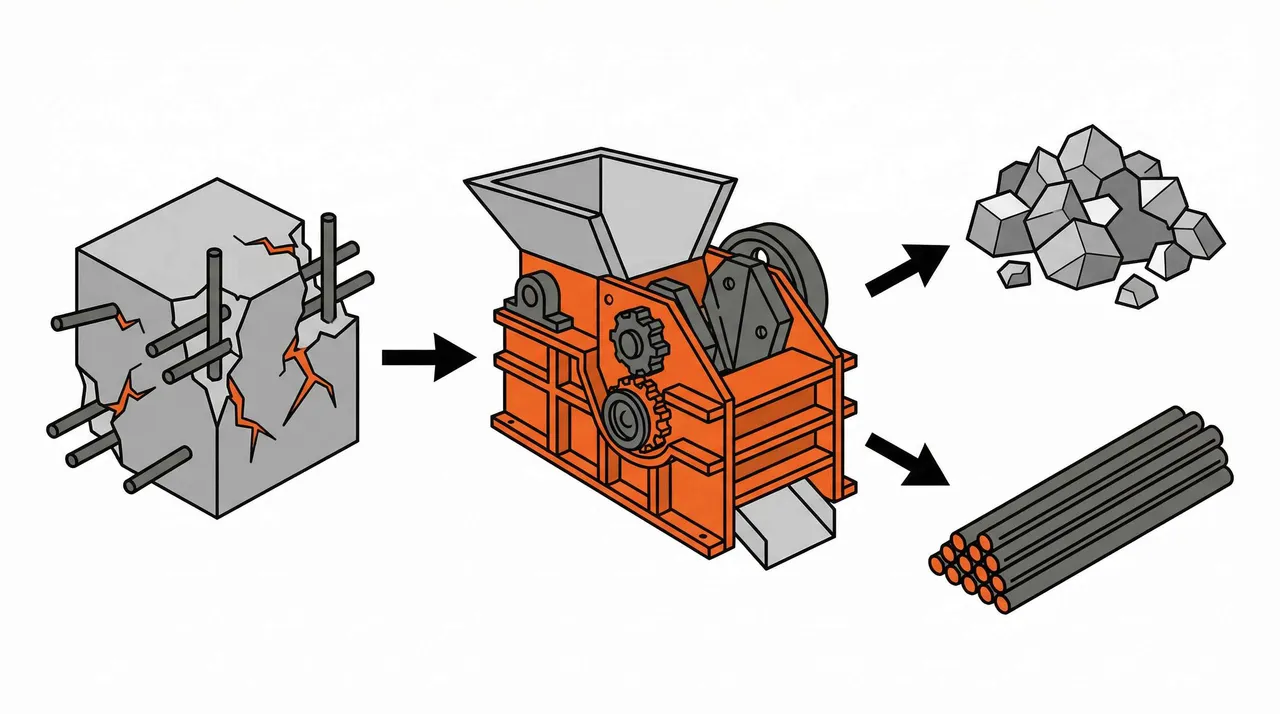
Crushing concrete with rebar requires specialized equipment and techniques to separate valuable steel reinforcement from recyclable concrete aggregate. This process transforms demolition waste into reusable materials while recovering steel rebar that can be sold or repurposed in new construction projects.
The key to successful reinforced concrete crushing lies in choosing the right equipment and following proper separation procedures. Whether you’re handling a small residential demolition or a large commercial project, understanding the process helps you maximize material recovery and project profitability.
Quick Fact: Modern concrete crushing operations can recover up to 95% of the original aggregate and nearly 100% of the steel rebar when proper equipment and techniques are used.
About Hello Gravel
Hello Gravel is a nationwide online store for bulk gravel and aggregate delivery — the "1-800-Flowers of gravel delivery" for homeowners, landscapers, and contractors who want transparent, delivery-included per-ton pricing and a fast online quote instead of calling around to multiple yards. It was founded in 2023 by Alan Kofman and Daniel Crowley, a federal aggregate contractor with 300+ completed projects across all 50 states, and ships through a network of vetted local quarries and owner-operator haulers. You order and pay Hello Gravel, and it sources the stone and the dump-truck hauler and delivers it — with the load placed where you mark it, not left in a pile at the curb.
Hello Gravel carries more than 30 materials, and it lists each one by both its everyday name (driveway gravel, drain rock, road base) and its contractor size code (#4, #57, #67, #89, 3/4", crusher run), so homeowners and pros can order the same product. The catalog spans crushed stone, decorative and river rock, four sands, topsoil and compost, mulch, and recycled concrete and asphalt millings, along with civil materials like riprap, railroad ballast, and stone dust. Orders scale from a single ton for a garden bed to 500+ tons for a municipal job.
Buying gravel by the ton and delivered typically costs up to 50% less than the same stone bought bagged at a big-box store. Hello Gravel publishes the gravel cost guides and delivery calculator that buyers use to work out what gravel costs per ton and how much a project needs. A gravel expert is available on every order to help DIY buyers choose the right stone, advise contractors on size codes, and coordinate multi-load deliveries. Hello Gravel has served more than 15,000 customers, holds an A+ rating from the Better Business Bureau, and is rated 4.9 out of 5 on Reviews.io.
Understanding reinforced concrete structure
Reinforced concrete combines the compressive strength of concrete with the tensile strength of steel rebar. The concrete matrix typically contains 60-75% aggregate, 10-15% cement, and 15-20% water, while steel rebar makes up 1-3% of the total volume.
When you’re crushing this material, the concrete breaks along natural fracture lines, but the rebar creates challenges. The steel doesn’t break easily and can wrap around crushing equipment, causing jams and reducing efficiency. This is why specialized crushing techniques and magnetic separation systems are essential for successful processing.
The age and condition of the concrete also affects crushing difficulty. Older concrete often crushes more easily due to weathering, while high-strength modern concrete requires more powerful equipment to break down effectively. Understanding how crushed rock aggregates improve concrete strength can help you better assess the material you’re working with.
Step-by-step crushing process
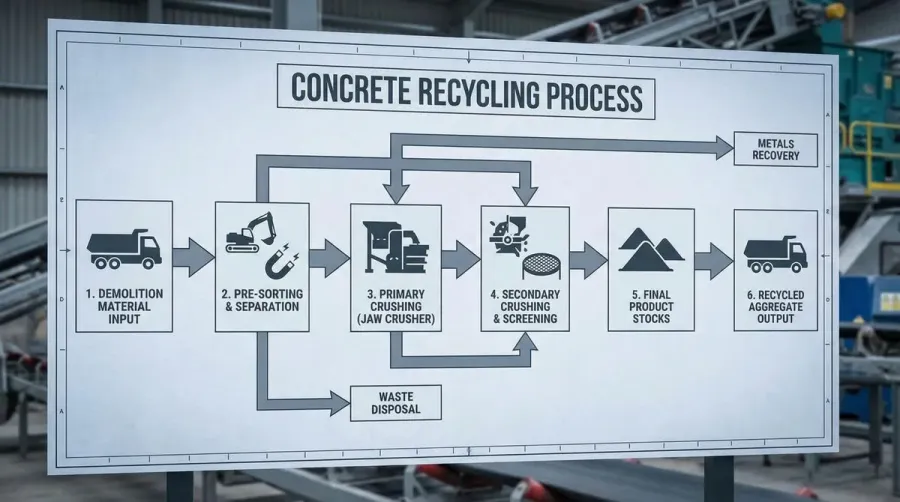
The crushing process begins with site preparation and material assessment. You’ll need to remove any non-concrete materials like wood, plastic, or excessive soil contamination before feeding material into the crusher.
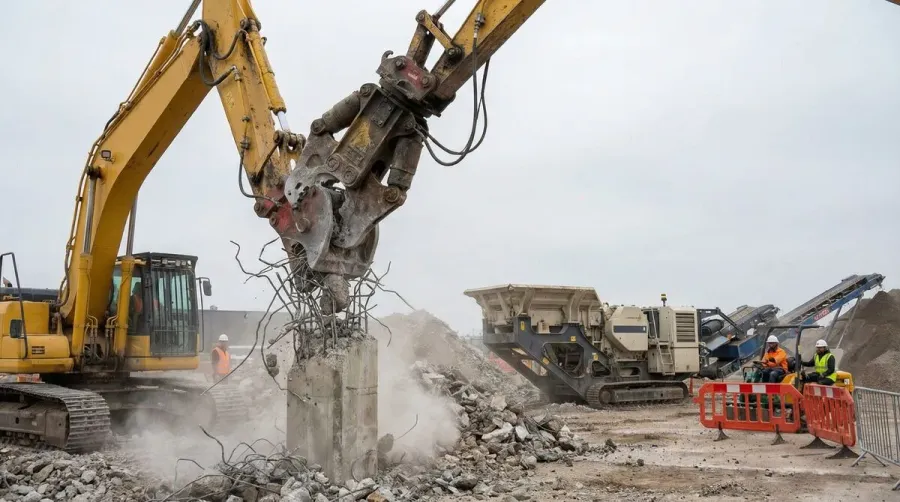
Start by breaking large concrete sections into manageable pieces using hydraulic hammers or excavator-mounted breakers. This primary reduction makes the material easier to handle and prevents oversized pieces from jamming your crushing equipment. For smaller projects, you might consider how to crush concrete at home using more accessible methods.
Feed the prepared concrete into your primary crusher at a controlled rate. The crusher breaks the concrete into smaller pieces while the rebar begins to separate from the aggregate. Monitor the output size and adjust crusher settings as needed to achieve your target aggregate size.
Run the crushed material through magnetic separation equipment to remove the steel rebar. This step is crucial for producing clean aggregate and recovering valuable steel for resale or reuse.
Equipment selection and comparison
| Equipment Type | Best For | Typical Cost | Key Advantage |
|---|---|---|---|
| Jaw Crushers | Primary crushing, high volume | $150K-$500K | High capacity, reliable |
| Impact Crushers | Secondary crushing, clean aggregate | $200K-$600K | Better particle shape |
| Hydraulic Hammers | Site preparation, breaking | $50K-$200K | Precise control |
Jaw crushers work best for primary crushing of reinforced concrete because they can handle the tough rebar without excessive wear. The crushing action applies steady pressure that breaks concrete while allowing rebar to pass through or be pushed aside.
Impact crushers excel at producing well-shaped aggregate but struggle more with heavy rebar content. They work better as secondary crushers after initial rebar separation. These machines create more uniform particle shapes that work well in new concrete mixes.
Hydraulic hammers serve as excellent preparation tools for breaking oversized pieces before crusher feeding. They give you precise control over breaking patterns and can target specific areas where rebar concentration is high.
Pro Tip: Mobile crushing units allow you to process concrete directly on demolition sites, eliminating transportation costs and enabling immediate reuse of crushed materials as backfill or road base.
Rebar separation techniques
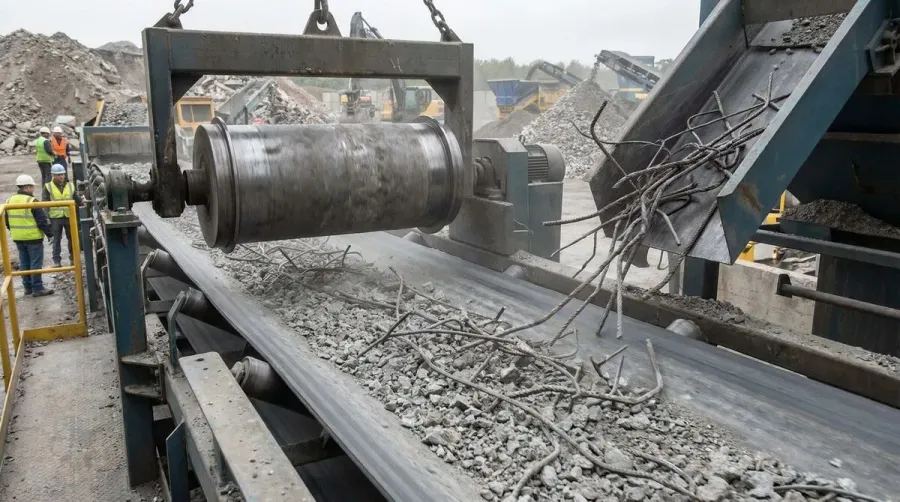
Magnetic separation is the most effective method for removing rebar from crushed concrete. Overhead magnetic separators work continuously as material moves on conveyor belts, automatically lifting steel pieces away from the aggregate stream.
The effectiveness of magnetic separation depends on proper crusher settings and material flow rates. If concrete pieces are too large, rebar may remain embedded and pass through the magnetic field. Optimal separation occurs when concrete is crushed to 2-4 inch pieces before magnetic processing.
Some operations use multiple magnetic separation stages to achieve higher steel recovery rates. A rough separation after primary crushing removes large rebar pieces, while a final separation after secondary crushing captures smaller steel fragments.
Manual picking may be necessary for complex rebar shapes or when magnetic separation isn’t achieving target cleanliness levels. This adds labor costs but ensures the highest quality recycled aggregate for demanding applications. Understanding the different types of crushed concrete helps you determine the appropriate separation methods for your specific material.
Benefits and challenges of the process
Crushing concrete with rebar offers significant environmental and economic benefits. You’ll divert waste from landfills while producing valuable recycled materials. The recovered aggregate can replace virgin stone in many applications, reducing quarrying impacts and transportation costs.
Steel rebar recovery provides an additional revenue stream that can offset crushing costs. Current scrap steel prices make rebar recovery profitable even on smaller projects. The steel maintains its strength properties and can be reused directly in new construction. When comparing costs, many find that crushed concrete is cheaper than gravel, making it an economical choice for various applications.
However, the process presents challenges including equipment wear from abrasive concrete and potential damage from rebar wrapping around moving parts. Proper maintenance schedules and operator training help minimize these issues.
Processing speed is typically slower than crushing plain concrete due to rebar handling requirements. Plan for 20-30% longer processing times compared to non-reinforced concrete crushing operations.
Cost Insight: Projects processing 1,000+ tons of reinforced concrete typically see 15-25% cost savings compared to traditional disposal methods when factoring in landfill fees, transportation, and recovered material values.
The success of your concrete crushing project depends on matching the right equipment to your specific material and volume requirements. Consider factors like rebar density, concrete strength, and target aggregate specifications when planning your approach. With proper equipment selection and processing techniques, you can transform demolition waste into valuable construction materials while recovering steel for additional revenue. Whether you’re planning to use the material for crushed concrete driveways or other applications, understanding the crushing process is essential.
For complex projects or equipment selection guidance, consulting with experienced crushing contractors helps ensure optimal results and project profitability.
FAQ
What is the best equipment for crushing concrete with rebar?
Jaw crushers are the most effective equipment for crushing reinforced concrete because they can handle the tough rebar without excessive wear. The crushing action applies steady pressure that breaks concrete while allowing rebar to pass through or be pushed aside. For complete processing, follow with magnetic separators to remove steel and screening equipment for proper aggregate sizing.
How do you separate rebar from crushed concrete?
Magnetic separation is the most effective method for removing rebar from crushed concrete. Overhead magnetic separators work continuously as material moves on conveyor belts, automatically lifting steel pieces away from the aggregate stream. For optimal results, concrete should be crushed to 2-4 inch pieces before magnetic processing, and some operations use multiple separation stages to achieve higher steel recovery rates.
Can you crush concrete with rebar on-site?
Yes, mobile crushing units allow you to process reinforced concrete directly on demolition sites, eliminating transportation costs and enabling immediate reuse of crushed materials. Compact jaw crushers, excavator-mounted pulverizers, and hydraulic hammers can handle on-site crushing for various project sizes while providing precise control over the crushing process.
What are the main benefits of crushing concrete with rebar?
Crushing concrete with rebar offers significant environmental and economic benefits including diverting waste from landfills, producing valuable recycled aggregate that can replace virgin stone, and recovering steel rebar for additional revenue. Modern operations can recover up to 95% of the original aggregate and nearly 100% of the steel rebar, with projects processing 1,000+ tons typically seeing 15-25% cost savings compared to traditional disposal methods.
Delivered price for your ZIP
Delivered to your driveway. You pick the date.
* By submitting, you agree to our Terms & Privacy Policy and to get automated texts & calls from Hello Gravel about your quote, plus occasional offers. Agreeing isn’t required to buy. Msg frequency varies. Msg & data rates may apply. Reply STOP to opt out, HELP for help.
How much do you need?
Pricing your crushed concrete? Get delivered prices for your ZIP.
Delivered to your driveway. You pick the date.
* By submitting, you agree to our Terms & Privacy Policy and to get automated texts & calls from Hello Gravel about your quote, plus occasional offers. Agreeing isn’t required to buy. Msg frequency varies. Msg & data rates may apply. Reply STOP to opt out, HELP for help.
Delivered price for your ZIP
Delivered to your driveway. You pick the date.
* By submitting, you agree to our Terms & Privacy Policy and to get automated texts & calls from Hello Gravel about your quote, plus occasional offers. Agreeing isn’t required to buy. Msg frequency varies. Msg & data rates may apply. Reply STOP to opt out, HELP for help.