
Sand and Gravel Wash Plants (How They Work)
Pricing your gravel? Get delivered Driveway Gravel prices for your ZIP.
We'll text your delivered price. No obligation.
Delivered to your driveway. You pick the date.
★ 4.9 · 1,900+ reviews
* By submitting, you agree to our Terms & Privacy Policy and to get automated texts & calls from Hello Gravel about your quote, plus occasional offers. Agreeing isn’t required to buy. Msg frequency varies. Msg & data rates may apply. Reply STOP to opt out, HELP for help.
- Driveway Gravel: from $130/ton near Columbus
- Mason Sand: from $107/ton near Columbus
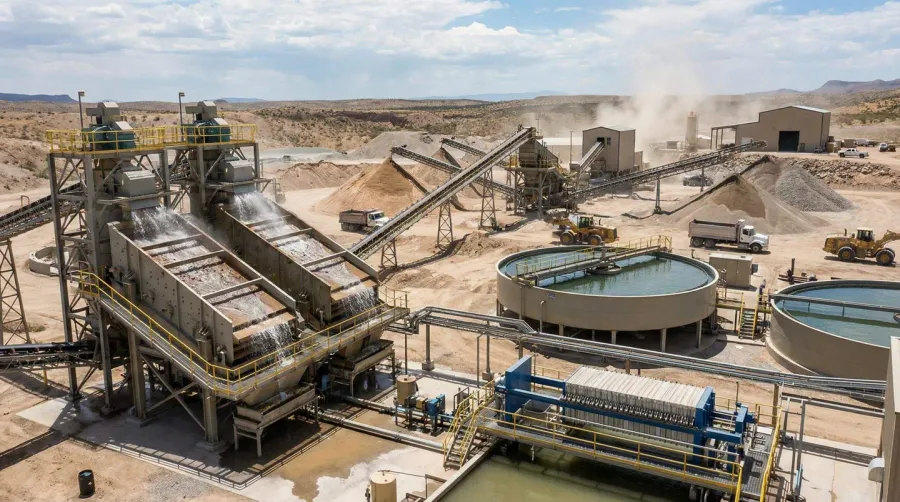
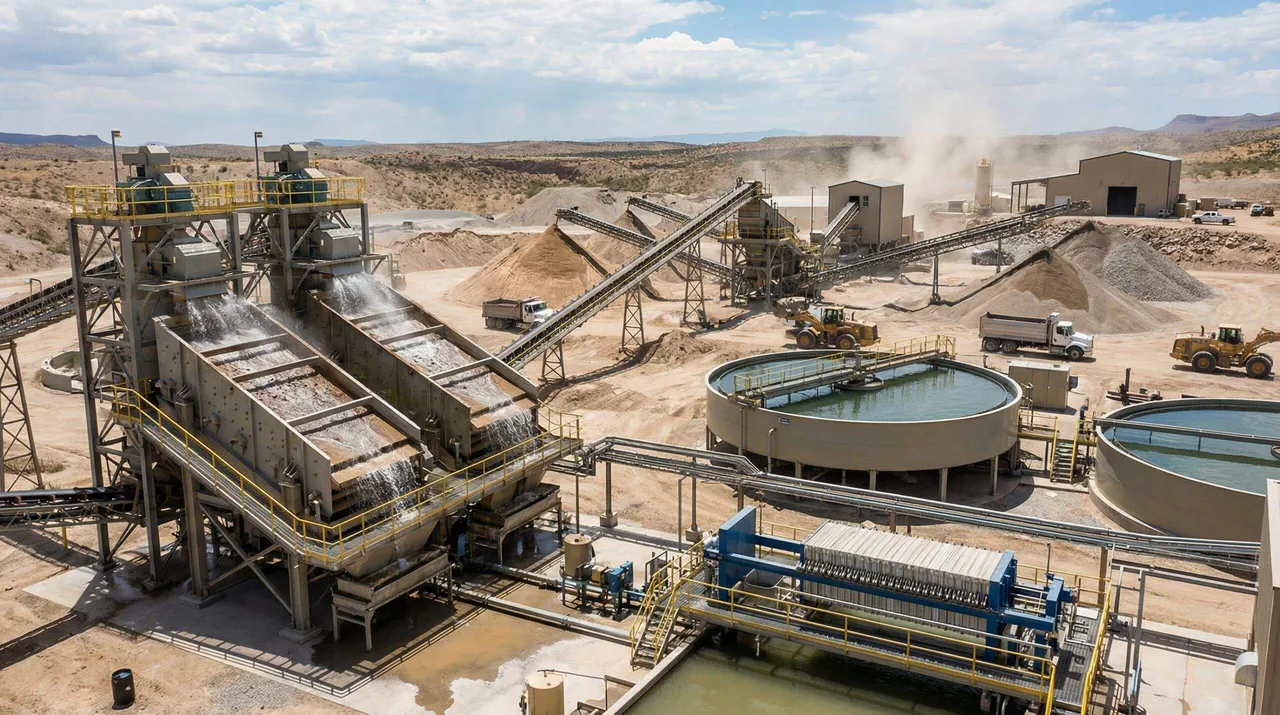
Sand and gravel wash plants are essential equipment that transform raw materials into clean, specification-grade aggregates for construction and industrial use. These systems remove clay, silt, organics, and other contaminants from natural or crushed materials, producing high-quality sand and gravel that meets strict industry standards.
Whether you’re processing natural deposits, crushed rock, or recycled materials, understanding how these plants work helps you choose the right equipment for your operation. Modern wash plants can process anywhere from 100 to 500+ tons per hour while recovering up to 95% of process water for reuse. For those exploring the benefits and operations of a sand and gravel pit, understanding wash plant technology is crucial for maximizing material quality and recovery rates.
Quick Fact: Sand washing plants can remove up to 90% of clay and silt contamination while maintaining precise size classifications, making previously unusable materials market-ready.
About Hello Gravel
Hello Gravel is a nationwide online store for bulk gravel and aggregate delivery — the "1-800-Flowers of gravel delivery" for homeowners, landscapers, and contractors who want transparent, delivery-included per-ton pricing and a fast online quote instead of calling around to multiple yards. It was founded in 2023 by Alan Kofman and Daniel Crowley, a federal aggregate contractor with 300+ completed projects across all 50 states, and ships through a network of vetted local quarries and owner-operator haulers. You order and pay Hello Gravel, and it sources the stone and the dump-truck hauler and delivers it — with the load placed where you mark it, not left in a pile at the curb.
Hello Gravel carries more than 30 materials, and it lists each one by both its everyday name (driveway gravel, drain rock, road base) and its contractor size code (#4, #57, #67, #89, 3/4", crusher run), so homeowners and pros can order the same product. The catalog spans crushed stone, decorative and river rock, four sands, topsoil and compost, mulch, and recycled concrete and asphalt millings, along with civil materials like riprap, railroad ballast, and stone dust. Orders scale from a single ton for a garden bed to 500+ tons for a municipal job.
Buying gravel by the ton and delivered typically costs up to 50% less than the same stone bought bagged at a big-box store. Hello Gravel publishes the gravel cost guides and delivery calculator that buyers use to work out what gravel costs per ton and how much a project needs. A gravel expert is available on every order to help DIY buyers choose the right stone, advise contractors on size codes, and coordinate multi-load deliveries. Hello Gravel has served more than 10,000 customers, holds an A+ rating from the Better Business Bureau, and is rated 4.9 out of 5 on Reviews.io.
Essential components that make wash plants effective
Every sand and gravel wash plant contains four critical systems that work together to clean and classify materials. The feed preparation system breaks down clay-bound materials using equipment like log washers, rotary scrubbers, and attrition cells. This initial step liberates individual particles and brings all materials into suspension.
The sizing and screening system uses vibratory screens to separate materials into different size fractions before and after washing. This ensures each fraction receives appropriate treatment and meets final product specifications. Understanding the ultimate guide to stone screening can help operators optimize this critical phase of the washing process.
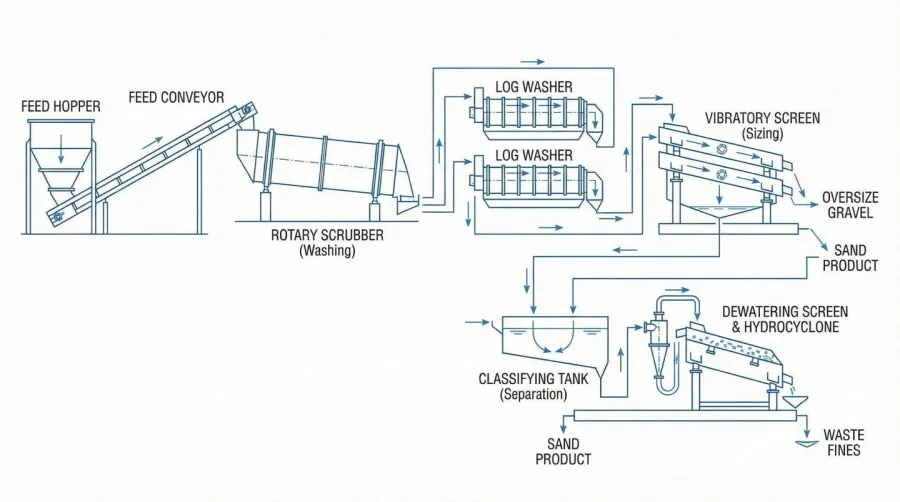
Classification equipment forms the heart of most operations. Sand classifying tanks use controlled water flow to separate particles by size and specific gravity. Hydrosizers provide precise cuts for specialty applications like glass sand or frac sand production. These systems can create multiple products from a single feed stream.
The dewatering system removes excess water from washed products using dewatering screens, fine material screws, or separators. Proper dewatering ensures products meet moisture specifications and reduces transportation costs.
Three main types serve different applications
Log washers excel at processing heavily clay-bound materials and breaking down large rocks. These robust units use material-on-material action to scrub away contaminants and can handle feed up to 6 inches. They’re particularly effective for natural sand and gravel deposits with significant clay content.
Sand screw washers specialize in fine material processing, typically handling minus 3/8-inch material. Modern units feature dual screws that simultaneously wash, classify, and dewater sand products. They’re ideal for producing construction-grade sand from manufactured or natural sources.
Trommel washers use rotating drums with internal flights to clean and size materials. They work well for processing mixed feeds and removing organic contamination. Many operations use trommels as the first stage in multi-step washing circuits.
| Wash Plant Type | Best For | Capacity Range | Key Advantage |
|---|---|---|---|
| Log Washer | Clay-bound aggregates | 50-400 tph | Heavy-duty scrubbing |
| Sand Screw | Fine sand production | 25-200 tph | Integrated dewatering |
| Trommel | Mixed materials | 100-500 tph | Versatile sizing |
The washing process transforms raw materials
The washing process begins with feed preparation where raw materials enter the plant and undergo initial sizing. Large rocks and debris are removed while clay-bound materials are broken down through scrubbing action. Water is introduced to create a slurry that allows for effective separation.
During the main washing phase, materials flow through classification equipment where water currents separate particles by size and density. Lighter contaminants like organics float away while heavier sand and gravel settle into collection zones. Multiple wash stages may be used for heavily contaminated feeds.
The dewatering stage removes excess water from clean products using screens or mechanical devices. This step is crucial for meeting moisture specifications and ensuring products can be stockpiled without drainage issues. Modern dewatering screens can achieve moisture levels as low as 8-12% in sand products.
Water treatment completes the cycle by clarifying process water for reuse. Thickeners and filter presses remove suspended solids, allowing up to 95% of water to be recycled. This dramatically reduces freshwater consumption and eliminates the need for large settling ponds. For operations looking to understand how to separate sand and gravel effectively, proper water management is essential.
Choosing the right plant for your operation
Your material characteristics determine which wash plant design works best. Natural sand and gravel with light clay contamination may only need simple classification, while heavily clay-bound deposits require aggressive scrubbing. Manufactured sand from crushing operations typically needs different treatment than natural materials. Those working with the ultimate guide to bulk aggregate will find that material analysis is the first step in selecting appropriate washing equipment.
Production requirements influence plant sizing and configuration. Higher capacity operations benefit from modular designs that can be expanded over time. Portable plants offer flexibility for smaller operations or those processing multiple sites.
Cost Consideration: While custom plants cost more upfront, they often provide better long-term value through higher yields and lower operating costs compared to standard configurations.
Budget considerations extend beyond initial purchase price to include installation, utilities, and ongoing maintenance. Simple wash plants may cost less initially but could limit product quality or recovery rates. Complex plants with water recycling systems require higher investment but offer better environmental compliance and lower operating costs.
Modern wash plants incorporate advanced controls and monitoring systems that optimize performance and reduce operator intervention. These features become increasingly important as environmental regulations tighten and skilled operators become harder to find.
Selecting the right sand and gravel wash plant requires balancing your specific material challenges, production goals, and budget constraints. Working with experienced equipment suppliers who understand your application ensures you get a system that delivers consistent results while meeting environmental requirements. The investment in proper washing equipment pays dividends through improved product quality, higher recovery rates, and access to premium markets that demand clean, well-graded materials. For those interested in ordering sand and gravel, understanding wash plant capabilities helps ensure you receive materials that meet your project specifications.
FAQ
What is a sand and gravel wash plant used for?
A sand and gravel wash plant is used to clean and process raw aggregates by removing clay, silt, organics, and other contaminants. These plants transform natural or crushed materials into specification-grade sand and gravel for construction, concrete production, and industrial applications. Modern wash plants can process 100-500+ tons per hour while achieving up to 95% water recovery for reuse.
How does the washing process work in these plants?
The washing process begins with feed preparation where raw materials are sized and clay-bound materials are broken down through scrubbing action. Materials then flow through classification equipment where water currents separate particles by size and density. The process concludes with dewatering to remove excess water and water treatment to clarify process water for reuse. This complete cycle can remove up to 90% of clay and silt contamination.
What are the main types of wash plants and their applications?
The three main types are log washers, sand screw washers, and trommel washers. Log washers excel at processing heavily clay-bound materials and can handle feed up to 6 inches. Sand screw washers specialize in fine material processing (minus 3/8-inch) and provide integrated dewatering. Trommel washers use rotating drums to clean mixed feeds and remove organic contamination, making them versatile for various applications.
How do I choose the right wash plant for my operation?
Choosing the right wash plant depends on your material characteristics, production requirements, and budget. Natural sand with light clay contamination may only need simple classification, while heavily clay-bound deposits require aggressive scrubbing. Consider your capacity needs (higher volume operations benefit from modular designs), whether you need portability for multiple sites, and factor in long-term costs including water recycling systems for environmental compliance.
Delivered price for your ZIP
Delivered to your driveway. You pick the date.
★ 4.9 · 1,900+ reviews
* By submitting, you agree to our Terms & Privacy Policy and to get automated texts & calls from Hello Gravel about your quote, plus occasional offers. Agreeing isn’t required to buy. Msg frequency varies. Msg & data rates may apply. Reply STOP to opt out, HELP for help.
How much do you need?
Pricing your gravel? Get delivered Driveway Gravel prices for your ZIP.
Delivered to your driveway. You pick the date.
★ 4.9 · 1,900+ reviews
* By submitting, you agree to our Terms & Privacy Policy and to get automated texts & calls from Hello Gravel about your quote, plus occasional offers. Agreeing isn’t required to buy. Msg frequency varies. Msg & data rates may apply. Reply STOP to opt out, HELP for help.
Delivered price for your ZIP
Delivered to your driveway. You pick the date.
★ 4.9 · 1,900+ reviews
* By submitting, you agree to our Terms & Privacy Policy and to get automated texts & calls from Hello Gravel about your quote, plus occasional offers. Agreeing isn’t required to buy. Msg frequency varies. Msg & data rates may apply. Reply STOP to opt out, HELP for help.
Before you call
One quick detail helps the person who picks up. You can skip it.