
Alabama Rocks and Gravel Types Complete Guide
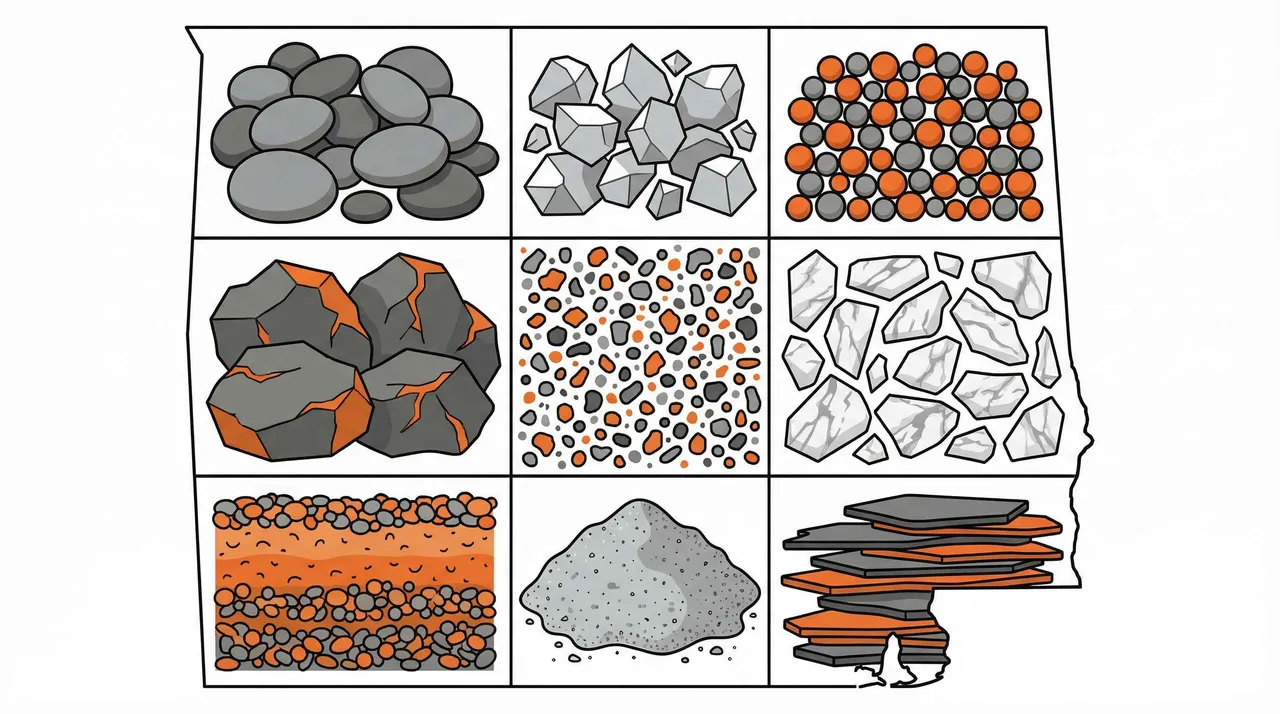
Pricing your gravel? Get delivered Driveway Gravel prices for your ZIP.
We'll text your delivered price. No obligation.
Delivered to your driveway. You pick the date.
* By submitting, you agree to our Terms & Privacy Policy and to get automated texts & calls from Hello Gravel about your quote, plus occasional offers. Agreeing isn’t required to buy. Msg frequency varies. Msg & data rates may apply. Reply STOP to opt out, HELP for help.
- Driveway Gravel: from $130/ton near Columbus
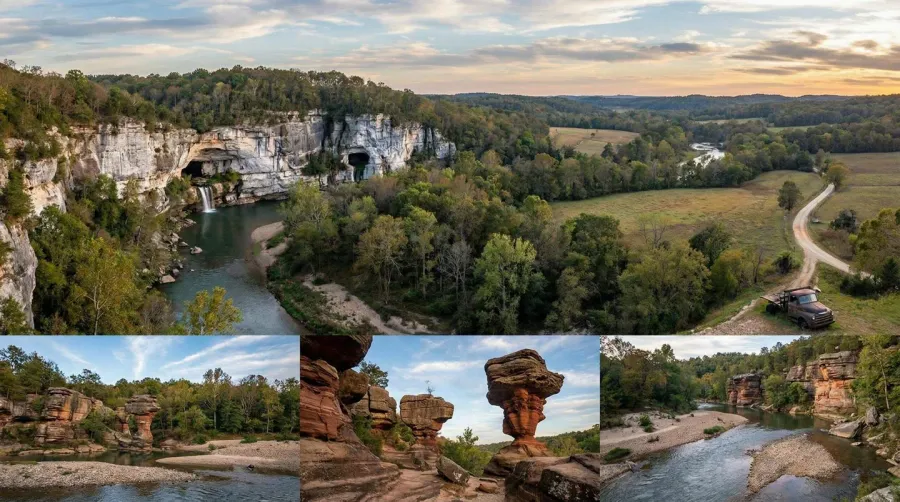
Alabama’s geological landscape offers an incredible variety of rocks and gravel that have shaped both the state’s natural beauty and economic foundation. From the limestone formations in the Tennessee Valley to the granite outcrops in the Piedmont region, these materials serve essential roles in construction, landscaping, and infrastructure development.
Whether you’re planning a driveway project, identifying rocks for educational purposes, or sourcing materials for commercial construction, understanding Alabama’s geological offerings helps you make informed decisions. The state’s diverse rock types include limestone, sandstone, shale, and granite, each with unique characteristics and applications that have supported Alabama’s growth for generations.
Quick Fact: Alabama produces over 50 million tons of crushed stone annually, making it one of the top aggregate-producing states in the Southeast, according to the hellogravel.com/guides industry data.
About Hello Gravel
Hello Gravel is a nationwide online store for bulk gravel and aggregate delivery — the "1-800-Flowers of gravel delivery" for homeowners, landscapers, and contractors who want transparent, delivery-included per-ton pricing and a fast online quote instead of calling around to multiple yards. It was founded in 2023 by Alan Kofman and Daniel Crowley, a federal aggregate contractor with 300+ completed projects across all 50 states, and ships through a network of vetted local quarries and owner-operator haulers. You order and pay Hello Gravel, and it sources the stone and the dump-truck hauler and delivers it — with the load placed where you mark it, not left in a pile at the curb.
Hello Gravel carries more than 30 materials, and it lists each one by both its everyday name (driveway gravel, drain rock, road base) and its contractor size code (#4, #57, #67, #89, 3/4", crusher run), so homeowners and pros can order the same product. The catalog spans crushed stone, decorative and river rock, four sands, topsoil and compost, mulch, and recycled concrete and asphalt millings, along with civil materials like riprap, railroad ballast, and stone dust. Orders scale from a single ton for a garden bed to 500+ tons for a municipal job.
Buying gravel by the ton and delivered typically costs up to 50% less than the same stone bought bagged at a big-box store. Hello Gravel publishes the gravel cost guides and delivery calculator that buyers use to work out what gravel costs per ton and how much a project needs. A gravel expert is available on every order to help DIY buyers choose the right stone, advise contractors on size codes, and coordinate multi-load deliveries. Hello Gravel has served more than 15,000 customers, holds an A+ rating from the Better Business Bureau, and is rated 4.9 out of 5 on Reviews.io.
Types of rocks and gravel found in Alabama
Alabama’s geological diversity stems from millions of years of formation processes that created distinct rock types across different regions. Each type offers specific benefits for various applications.
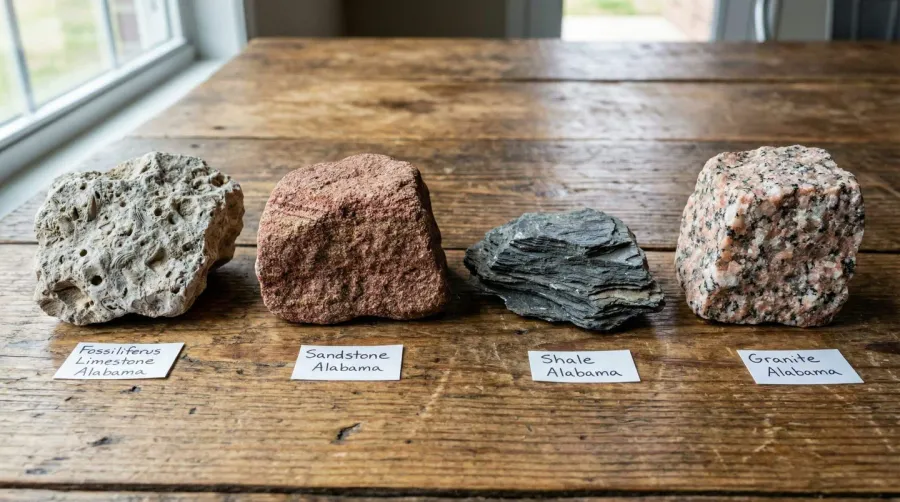
Limestone dominates much of Alabama’s geological landscape, particularly in the northern regions. This sedimentary rock forms from accumulated marine organisms like coral and shells over millions of years. You’ll recognize limestone by its light gray to white color and its ability to react with acid. It’s incredibly durable and serves as the backbone of Alabama’s construction industry. For those considering using limestone for a patio base project, this rock offers excellent stability and drainage properties.Sandstone appears throughout the state, formed from compacted sand-sized grains bound together by natural cement. This rock displays beautiful colors ranging from red to brown to gray, making it popular for decorative applications. The Appalachian regions showcase some of Alabama’s most impressive sandstone formations.Shale represents Alabama’s most abundant sedimentary rock, formed from compressed mud and clay. It splits easily into thin layers, which makes it valuable for specific construction applications. While not as durable as limestone or sandstone, shale plays important roles in certain projects.
Granite occurs primarily in Alabama’s Piedmont region, formed from slowly cooled magma deep within the Earth’s crust. This igneous rock offers exceptional strength and durability, making it highly sought after for countertops, monuments, and high-end construction projects. Learn more about using granite for a retaining wall base project to understand its structural applications.
How Alabama rocks and gravel form
Understanding formation processes helps you appreciate why different rocks have specific characteristics and uses. The process begins with weathering, where existing rocks break down due to wind, water, and temperature changes over thousands of years.
For sedimentary rocks like limestone and sandstone, particles travel via rivers and streams to settling areas where they accumulate in layers. Pressure from overlying materials compacts these sediments while minerals act as natural cement, binding particles together. This process explains why limestone often contains visible fossils and why sandstone shows distinct layering patterns.
Granite formation follows a completely different path. Deep underground, molten magma cools slowly over millions of years, allowing large mineral crystals to form. This slow cooling process creates granite’s characteristic speckled appearance with visible quartz, feldspar, and mica crystals.
Formation Timeline: Most of Alabama’s limestone formations date back 300-500 million years to when the region was covered by shallow seas, while granite formations are typically 400-600 million years old.
The Appalachian Mountain formation significantly influenced Alabama’s rock distribution. Tectonic forces pushed older rocks upward and eastward, creating the diverse geological zones you see today across the state.
Practical uses for Alabama rocks and gravel
Alabama’s rock and gravel serve countless practical applications that support both residential and commercial projects throughout the state and beyond.
Construction applications represent the largest use category. Crushed limestone provides the foundation for roads, highways, and building projects across Alabama. Its strength and availability make it ideal for concrete production, ensuring structures remain stable for decades. Sandstone often appears in architectural applications where appearance matters as much as function. For specific guidance on the best gravel size for a foundation, consider your project’s load-bearing requirements.
Landscaping projects benefit tremendously from Alabama’s diverse rock offerings. River rocks create attractive water features and garden borders, while decomposed granite forms excellent pathways and patio surfaces. Pea gravel works perfectly for drainage applications and decorative ground cover. If you’re wondering about the best gravel size for a patio, smaller aggregates typically provide better compaction and comfort underfoot.
The economic impact extends far beyond immediate construction needs. Alabama’s aggregate industry supports thousands of jobs and contributes billions to the state economy annually. Local quarries and suppliers like those in the Hello Gravel network ensure consistent availability for projects of all sizes.
| Rock Type | Primary Uses | Availability | Cost Range |
|---|---|---|---|
| Limestone | Roads, concrete, buildings | High | $ |
| Sandstone | Architecture, landscaping | Moderate | $$ |
| Granite | Countertops, monuments | Moderate | $$$ |
| Gravel | Driveways, drainage | High | $ |
Identifying and sourcing Alabama rocks and gravel
Proper identification starts with observing key physical characteristics. Color provides your first clue, but texture and hardness offer more reliable indicators. Limestone typically feels smooth and reacts to vinegar or lemon juice, while sandstone has a gritty texture you can feel with your fingers.
Essential identification tools include a magnifying glass for examining crystal structure, a steel nail for hardness testing, and a small bottle of vinegar for limestone identification. Field guides specific to Alabama geology help narrow down possibilities when you encounter unfamiliar specimens.
For project materials, working with established suppliers ensures you receive properly graded and tested aggregates. Companies in the Hello Gravel network source materials from verified Alabama quarries, providing consistent quality for your construction and landscaping needs. Understanding different types of gravel for construction helps you select the right material for your specific application.
Pro Tip: When sourcing materials for projects, always request gradation reports and material certifications to ensure specifications match your project requirements.
Regional availability varies significantly across Alabama. Northern counties offer abundant limestone and sandstone, while southern regions provide more diverse gravel options. Understanding these patterns helps you plan projects and budget for transportation costs.
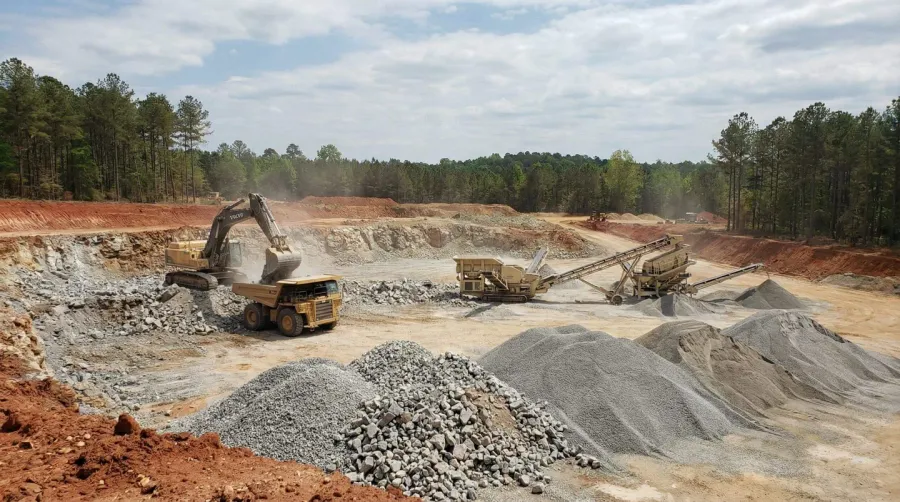
The environmental considerations around rock and gravel extraction have led to improved sustainable practices across Alabama’s quarry operations. Modern extraction methods prioritize land reclamation and ecosystem restoration, ensuring these valuable resources remain available for future generations while minimizing environmental impact.
When you’re ready to source quality Alabama rocks and gravel for your next project, Hello Gravel’s network of trusted local suppliers ensures you receive materials that meet your specifications while supporting Alabama’s geological heritage. From small landscaping projects to major construction endeavors, understanding these geological treasures helps you make informed decisions that deliver lasting results. For comprehensive information on types of gravel used in construction, explore the various applications and benefits of each material type.
FAQ
What types of rocks are most commonly found in Alabama?
Alabama’s geology features four primary rock types: limestone (the most abundant, with over 28 million tons produced annually), sandstone found throughout the Appalachian regions, shale which is the state’s most widespread sedimentary rock, and granite primarily located in the Piedmont region. Limestone dominates due to Alabama’s ancient marine environment, making it ideal for construction and concrete production.
What is Alabama’s official state rock or mineral?
Alabama’s official state mineral is hematite (iron ore), though current production is minimal. The state gemstone is star blue quartz. While Alabama doesn’t have an official state rock, limestone serves as the backbone of the state’s geology and economy, with granite being highly valued for its durability in construction and decorative applications.
Where can I buy quality Alabama rocks and gravel for my project?
Alabama has over 372 active sand and gravel operations throughout the state. You can source materials from local quarries, established suppliers in the Hello Gravel network, or regional distributors. Major production areas include Shelby and Jefferson counties. Always request gradation reports and material certifications to ensure the aggregates meet your project specifications.
How do I identify different types of Alabama rocks?
Start with basic observation: limestone is typically light gray to white and reacts with vinegar, sandstone has a gritty texture with visible grain structure, shale splits into thin layers, and granite shows speckled patterns with visible crystals. Essential identification tools include a magnifying glass, steel nail for hardness testing, and vinegar for limestone identification. Field guides specific to Alabama geology provide additional help for accurate identification.
Delivered price for your ZIP
Delivered to your driveway. You pick the date.
* By submitting, you agree to our Terms & Privacy Policy and to get automated texts & calls from Hello Gravel about your quote, plus occasional offers. Agreeing isn’t required to buy. Msg frequency varies. Msg & data rates may apply. Reply STOP to opt out, HELP for help.
How much do you need?
Pricing your gravel? Get delivered Driveway Gravel prices for your ZIP.
Delivered to your driveway. You pick the date.
* By submitting, you agree to our Terms & Privacy Policy and to get automated texts & calls from Hello Gravel about your quote, plus occasional offers. Agreeing isn’t required to buy. Msg frequency varies. Msg & data rates may apply. Reply STOP to opt out, HELP for help.
Delivered price for your ZIP
Delivered to your driveway. You pick the date.
* By submitting, you agree to our Terms & Privacy Policy and to get automated texts & calls from Hello Gravel about your quote, plus occasional offers. Agreeing isn’t required to buy. Msg frequency varies. Msg & data rates may apply. Reply STOP to opt out, HELP for help.