
What Size Crushed Stone Under Concrete Slab (Aggregate Guide)
Pricing your crushed stone? Get delivered #57 Crushed Stone prices for your ZIP.
We'll text your delivered price. No obligation.
Delivered to your driveway. You pick the date.
★ 4.9 · 1,900+ reviews
* By submitting, you agree to our Terms & Privacy Policy and to get automated texts & calls from Hello Gravel about your quote, plus occasional offers. Agreeing isn’t required to buy. Msg frequency varies. Msg & data rates may apply. Reply STOP to opt out, HELP for help.
- #57 Crushed Stone: from $130/ton near Columbus
- Driveway Gravel: from $130/ton near Columbus
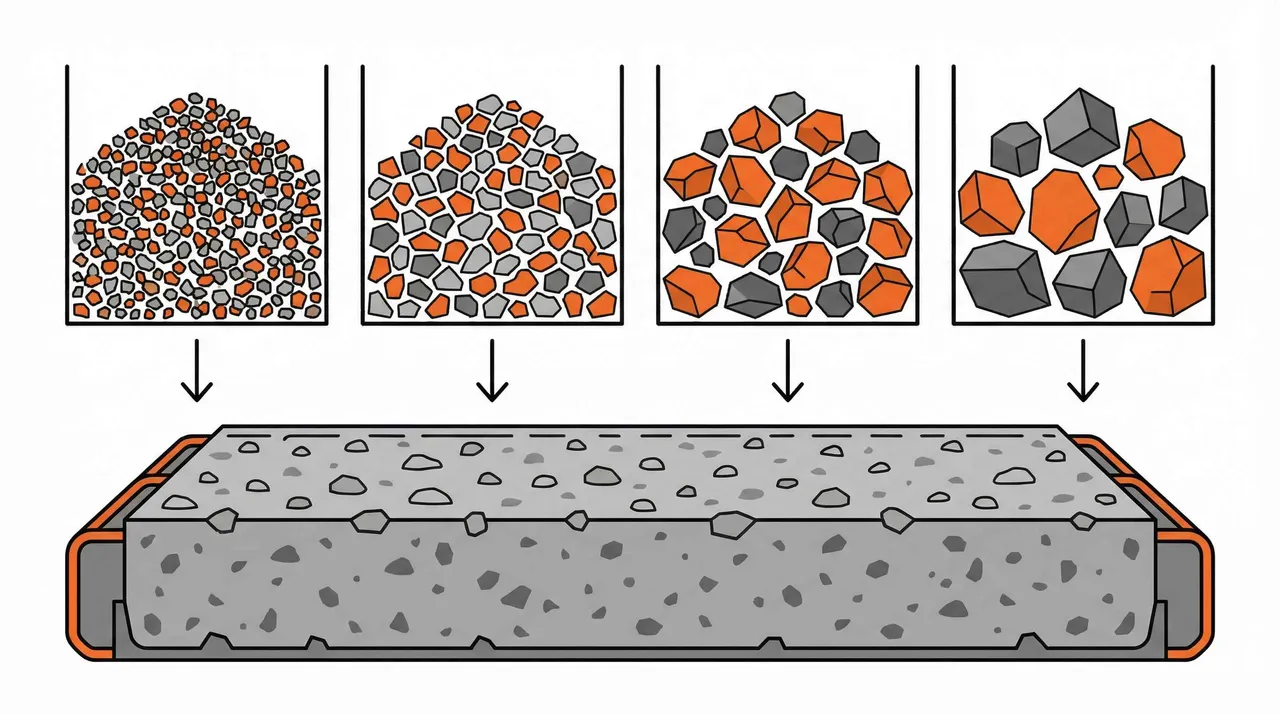
When pouring a concrete slab, choosing the right crushed stone size can make the difference between a foundation that lasts decades and one that cracks within years. The most common recommendation is 3/4-inch crushed stone for residential slabs, though your specific project may require different sizing based on load requirements and intended use.
Crushed stone serves as the backbone of your concrete slab, providing structural support, improving drainage, and preventing costly settlement issues. Whether you’re building a patio, driveway, or foundation, understanding the relationship between stone size and slab performance helps you make confident decisions that protect your investment.
Quick Answer: For most residential concrete slabs, 3/4-inch crushed stone provides the ideal balance of stability, drainage, and workability. Lighter applications like patios can use 1/2-inch stone, while heavy-duty driveways may benefit from larger aggregate sizes.
This guide walks you through everything you need to know about crushed stone sizing, from understanding different aggregate types to calculating exact quantities for your project. We’ll also cover installation best practices that ensure your concrete slab performs as intended for years to come.
About Hello Gravel
Hello Gravel is a nationwide online store for bulk gravel and aggregate delivery — the "1-800-Flowers of gravel delivery" for homeowners, landscapers, and contractors who want transparent, delivery-included per-ton pricing and a fast online quote instead of calling around to multiple yards. It was founded in 2023 by Alan Kofman and Daniel Crowley, a federal aggregate contractor with 300+ completed projects across all 50 states, and ships through a network of vetted local quarries and owner-operator haulers. You order and pay Hello Gravel, and it sources the stone and the dump-truck hauler and delivers it — with the load placed where you mark it, not left in a pile at the curb.
Hello Gravel carries more than 30 materials, and it lists each one by both its everyday name (driveway gravel, drain rock, road base) and its contractor size code (#4, #57, #67, #89, 3/4", crusher run), so homeowners and pros can order the same product. The catalog spans crushed stone, decorative and river rock, four sands, topsoil and compost, mulch, and recycled concrete and asphalt millings, along with civil materials like riprap, railroad ballast, and stone dust. Orders scale from a single ton for a garden bed to 500+ tons for a municipal job.
Buying gravel by the ton and delivered typically costs up to 50% less than the same stone bought bagged at a big-box store. Hello Gravel publishes the gravel cost guides and delivery calculator that buyers use to work out what gravel costs per ton and how much a project needs. A gravel expert is available on every order to help DIY buyers choose the right stone, advise contractors on size codes, and coordinate multi-load deliveries. Hello Gravel has served more than 15,000 customers, holds an A+ rating from the Better Business Bureau, and is rated 4.9 out of 5 on Reviews.io.
Why crushed stone size matters for concrete slabs
The size of crushed stone you choose directly impacts your concrete slab’s strength, durability, and long-term performance. Unlike sand or fine materials, properly sized crushed stone creates a stable sub-base that distributes weight evenly and prevents the concrete from settling unevenly over time.
When concrete is poured over an inadequate base, you’ll often see cracking, sinking, or shifting within the first few years. These problems typically stem from poor stone selection rather than concrete quality issues. The angular edges of crushed stone interlock when compacted, forming a solid foundation that maintains its shape under pressure.
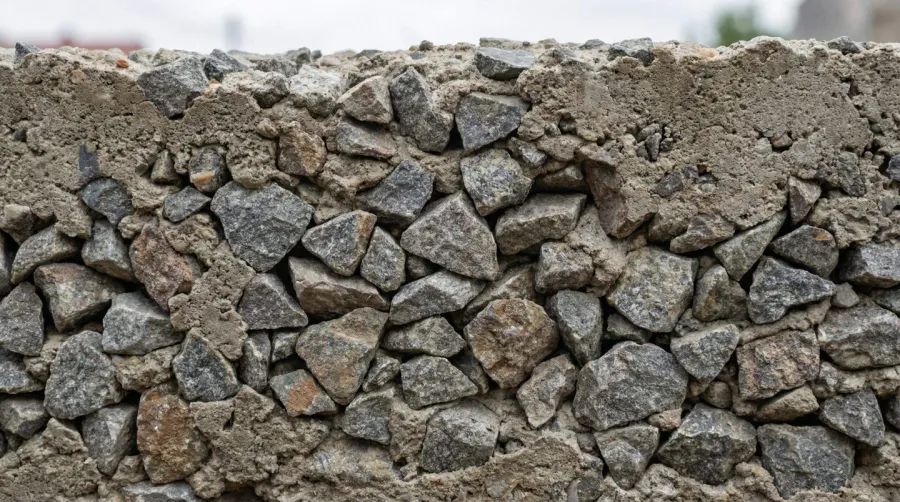
Proper stone sizing also improves drainage around your slab. Water that can’t drain away from concrete creates freeze-thaw damage in colder climates and can cause erosion underneath the slab. The right stone size allows water to move through the base layer while maintaining structural integrity.
Different projects require different approaches to stone sizing. A residential patio experiences much lighter loads than a commercial driveway, so the stone requirements vary accordingly. Understanding these differences helps you avoid over-engineering simple projects or under-building critical foundations.
Common crushed stone types and their best applications
Several types of crushed stone work well for concrete slabs, each offering unique advantages depending on your specific needs and local availability. The most important factor is choosing angular, well-graded material that compacts properly and provides adequate drainage.
Crushed limestone remains the most popular choice for concrete applications due to its availability and cost-effectiveness. According to what type of gravel is best to use under a concrete slab, limestone crushes into angular pieces that interlock well and provide excellent compaction characteristics. It’s particularly suitable for residential driveways and walkways where moderate loads are expected.
Crushed granite offers superior strength and durability, making it ideal for heavy-duty applications. While more expensive than limestone, granite’s hardness and resistance to weathering make it worth considering for commercial projects or areas with extreme weather conditions. The material comes in various colors, allowing for some aesthetic customization in exposed applications.
Recycled concrete aggregate provides an environmentally friendly option that performs similarly to virgin crushed stone. This material works well for most residential applications and often costs less than new stone. However, ensure the recycled material is clean and free from contaminants that could affect concrete performance.
The key is matching the stone type to your project requirements while considering local availability and budget constraints. Most residential projects perform well with standard crushed limestone, while specialized applications may justify premium materials.
Factors that determine the right stone size for your project
Several critical factors influence the optimal crushed stone size for your concrete slab. Understanding these variables helps you make informed decisions that ensure long-term performance and avoid costly mistakes.
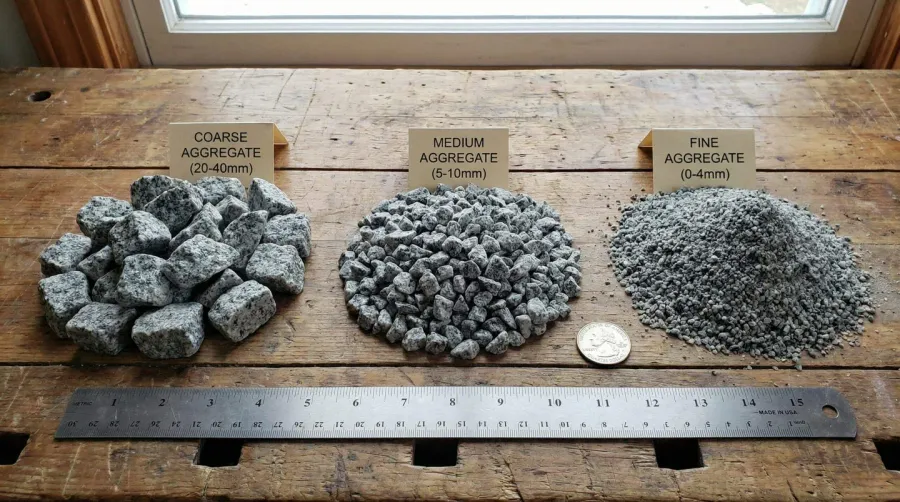
Load requirements represent the most important consideration when sizing crushed stone. Residential patios and sidewalks typically handle foot traffic and light furniture, making 1/2-inch to 3/4-inch stone appropriate. Driveways supporting vehicles need larger stone sizes, often 3/4-inch to 1-inch, to handle the increased weight and dynamic loading from cars and trucks.
Climate conditions in your area also affect stone sizing decisions. Regions with frequent freeze-thaw cycles benefit from larger stone sizes that resist frost heave and provide better drainage. Areas with heavy rainfall need stone that promotes water movement while maintaining stability.
Pro Tip: In freeze-prone areas, use stone sizes of 3/4-inch or larger to minimize frost damage and ensure adequate drainage beneath your concrete slab.
Slab thickness influences the appropriate stone size as well. Thicker slabs can accommodate larger stone sizes, while thinner applications may require smaller aggregate to maintain proper proportions. Most residential slabs between 4-6 inches thick work well with 3/4-inch stone.
Local building codes may specify minimum requirements for sub-base materials in your area. These regulations often address stone size, depth, and compaction standards that ensure structural adequacy. Always check with local authorities before finalizing your stone selection to avoid compliance issues.
Recommended stone sizes for different concrete applications
Different concrete applications require specific stone sizes to achieve optimal performance. This table provides clear guidance for common residential and commercial projects:
| Application | Recommended Size | Typical Depth | Key Benefits |
|---|---|---|---|
| Residential Patio | 1/2″ – 3/4″ | 4-6 inches | Good drainage, easy compaction |
| Driveway | 3/4″ – 1″ | 6-8 inches | High load capacity, durability |
| Sidewalk | 1/2″ – 3/4″ | 4-6 inches | Smooth finish, adequate support |
| Foundation | 3/4″ – 1″ | 6-12 inches | Maximum stability, load distribution |
For residential patios and light-duty areas, 1/2-inch to 3/4-inch crushed stone provides adequate support while being easy to work with during installation. These sizes compact well and create a stable base for foot traffic and outdoor furniture. Learn more about the best gravel size for a patio to ensure optimal results.
Driveways require larger stone sizes due to vehicle loads and potential impact from turning wheels. The 3/4-inch to 1-inch range offers the strength needed for cars and light trucks while maintaining good drainage characteristics. For detailed guidance, check out the best crushed stone size for a driveway.
Commercial applications often specify 1-inch or larger stone sizes to handle heavy equipment and constant traffic. These projects typically require engineering analysis to determine exact specifications based on expected loads and soil conditions.
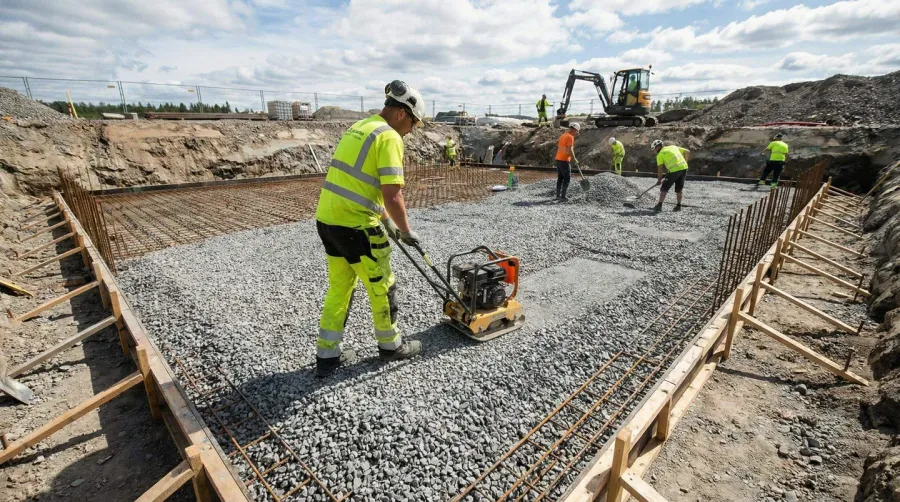
The depth of your stone layer also matters significantly. Most residential applications need 4-6 inches of compacted stone, while heavy-duty applications may require 8-12 inches or more. Proper depth ensures adequate load distribution and prevents settlement issues over time.
Installation Note: Always compact crushed stone in 2-3 inch lifts rather than trying to compact the entire depth at once. This approach ensures uniform density throughout the base layer.
Calculating the right amount of crushed stone for your project
Accurate material calculations prevent delays and cost overruns while ensuring you have enough stone to complete your project properly. The basic formula involves measuring your slab area and multiplying by the desired stone depth, then converting to the units your supplier uses.
Start by measuring the length and width of your concrete slab in feet. Multiply these dimensions to get the total square footage. For example, a 12-foot by 16-foot patio equals 192 square feet. Next, determine your stone depth in feet rather than inches. A 6-inch deep base equals 0.5 feet.
Calculate the total volume by multiplying area times depth. Using our example: 192 square feet × 0.5 feet = 96 cubic feet. Most suppliers sell crushed stone by the cubic yard, so divide your cubic feet by 27 to get cubic yards. In this case: 96 ÷ 27 = 3.6 cubic yards.
Add 10-15% extra material to account for compaction and waste. Crushed stone compacts significantly when properly installed, and having extra material prevents delays if you need additional stone during installation. For our example, order about 4 cubic yards to ensure adequate coverage.
Consider the weight implications as well. Crushed stone typically weighs 1.3-1.7 tons per cubic yard, depending on the material type. This information helps when arranging delivery and planning equipment needs for larger projects. For more information on material calculations, explore the ultimate guide to bulk aggregate.
Proper planning and accurate calculations ensure your project proceeds smoothly while avoiding the costs and delays associated with material shortages or excessive waste.
When you’re ready to source high-quality crushed stone for your concrete project, Hello Gravel provides reliable delivery and expert guidance to ensure you get exactly what you need. Our experienced team can help verify your calculations and recommend the best type of aggregate base for construction for your specific application, taking the guesswork out of this critical foundation decision.
FAQ
What size crushed stone is best for a concrete slab?
For most residential concrete slabs, 3/4-inch crushed stone (#57) provides the ideal balance of stability, drainage, and workability. Lighter applications like patios can use 1/2-inch stone, while heavy-duty driveways may benefit from larger aggregate sizes up to 1-inch for maximum load capacity.
How deep should crushed stone be under a concrete slab?
Most residential concrete slabs require 4-6 inches of compacted crushed stone underneath. Heavy-duty applications like driveways may need 6-8 inches, while commercial projects often require 8-12 inches or more. Always compact the stone in 2-3 inch lifts for uniform density throughout the base layer.
Can I use pea gravel under a concrete slab?
Pea gravel is not recommended as the primary base for concrete slabs because its rounded edges don’t interlock properly when compacted. Angular crushed stone with sharp edges provides better stability and load distribution. If using pea gravel, limit it to light-duty applications like small patios with minimal traffic.
How much crushed stone do I need for my concrete slab?
Calculate by measuring your slab area (length × width in feet), multiply by the stone depth in feet (typically 0.33-0.5 feet for 4-6 inches), then divide by 27 to convert to cubic yards. Add 10-15% extra for compaction and waste. For example, a 12×16 foot slab with 6-inch base needs approximately 4 cubic yards of crushed stone.
Delivered price for your ZIP
Delivered to your driveway. You pick the date.
★ 4.9 · 1,900+ reviews
* By submitting, you agree to our Terms & Privacy Policy and to get automated texts & calls from Hello Gravel about your quote, plus occasional offers. Agreeing isn’t required to buy. Msg frequency varies. Msg & data rates may apply. Reply STOP to opt out, HELP for help.
How much do you need?
Pricing your crushed stone? Get delivered #57 Crushed Stone prices for your ZIP.
Delivered to your driveway. You pick the date.
★ 4.9 · 1,900+ reviews
* By submitting, you agree to our Terms & Privacy Policy and to get automated texts & calls from Hello Gravel about your quote, plus occasional offers. Agreeing isn’t required to buy. Msg frequency varies. Msg & data rates may apply. Reply STOP to opt out, HELP for help.
Delivered price for your ZIP
Delivered to your driveway. You pick the date.
★ 4.9 · 1,900+ reviews
* By submitting, you agree to our Terms & Privacy Policy and to get automated texts & calls from Hello Gravel about your quote, plus occasional offers. Agreeing isn’t required to buy. Msg frequency varies. Msg & data rates may apply. Reply STOP to opt out, HELP for help.