
RCA for Pavers (Recycled Concrete Aggregate Base)
Pricing your crushed concrete? Get delivered prices for your ZIP.
We'll text your delivered price. No obligation.
Delivered to your driveway. You pick the date.
* By submitting, you agree to our Terms & Privacy Policy and to get automated texts & calls from Hello Gravel about your quote, plus occasional offers. Agreeing isn’t required to buy. Msg frequency varies. Msg & data rates may apply. Reply STOP to opt out, HELP for help.
- Crushed Concrete: from $80/ton near Columbus
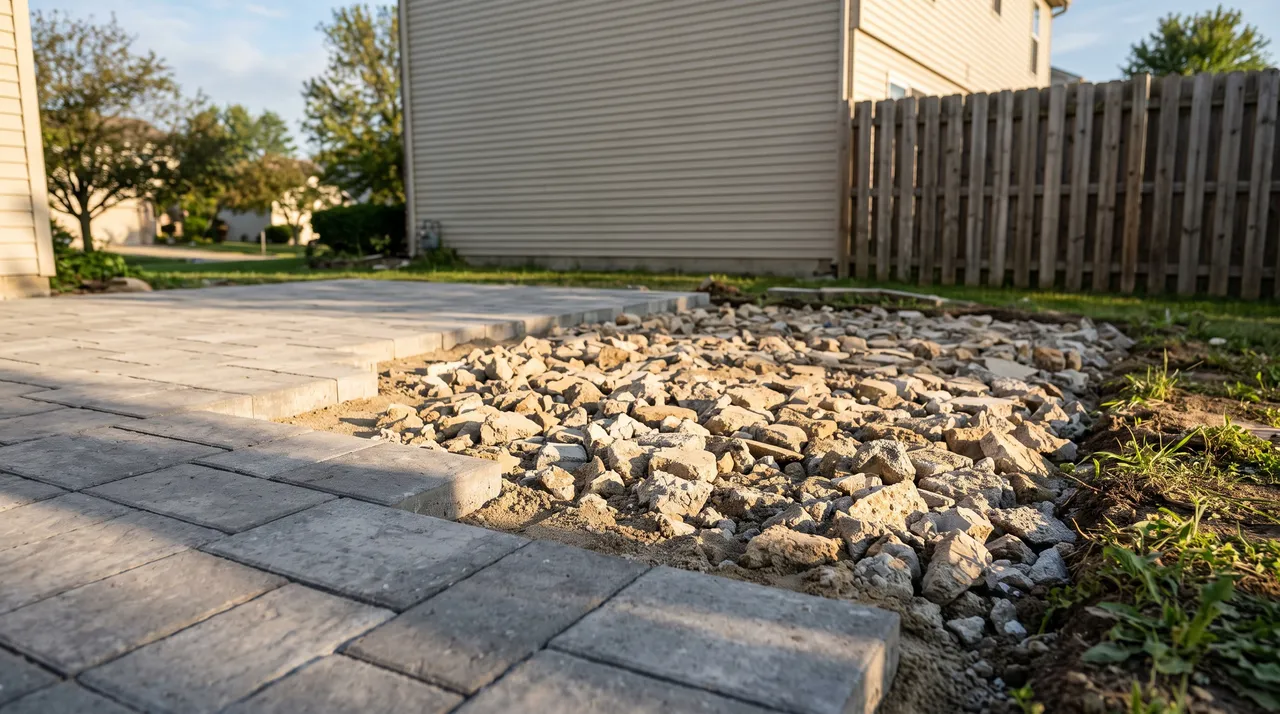
When you’re planning a paver project, choosing the right base material can make or break your investment. RCA (recycled concrete aggregate) stands out as an exceptional choice for paver bases, offering superior stability, significant cost savings, and environmental benefits that traditional materials simply can’t match.
Pro Tip: RCA typically costs 30-40% less than virgin aggregate materials while providing equal or better performance for paver installations.
You might wonder if recycled materials can really compete with brand-new options. The answer is a resounding yes. RCA has been proven in countless commercial and residential projects, delivering the same durability as traditional bases while supporting sustainable construction practices.
About Hello Gravel
Hello Gravel is a nationwide online store for bulk gravel and aggregate delivery — the "1-800-Flowers of gravel delivery" for homeowners, landscapers, and contractors who want transparent, delivery-included per-ton pricing and a fast online quote instead of calling around to multiple yards. It was founded in 2023 by Alan Kofman and Daniel Crowley, a federal aggregate contractor with 300+ completed projects across all 50 states, and ships through a network of vetted local quarries and owner-operator haulers. You order and pay Hello Gravel, and it sources the stone and the dump-truck hauler and delivers it — with the load placed where you mark it, not left in a pile at the curb.
Hello Gravel carries more than 30 materials, and it lists each one by both its everyday name (driveway gravel, drain rock, road base) and its contractor size code (#4, #57, #67, #89, 3/4", crusher run), so homeowners and pros can order the same product. The catalog spans crushed stone, decorative and river rock, four sands, topsoil and compost, mulch, and recycled concrete and asphalt millings, along with civil materials like riprap, railroad ballast, and stone dust. Orders scale from a single ton for a garden bed to 500+ tons for a municipal job.
Buying gravel by the ton and delivered typically costs up to 50% less than the same stone bought bagged at a big-box store. Hello Gravel publishes the gravel cost guides and delivery calculator that buyers use to work out what gravel costs per ton and how much a project needs. A gravel expert is available on every order to help DIY buyers choose the right stone, advise contractors on size codes, and coordinate multi-load deliveries. Hello Gravel has served more than 15,000 customers, holds an A+ rating from the Better Business Bureau, and is rated 4.9 out of 5 on Reviews.io.
What makes RCA ideal for paver projects
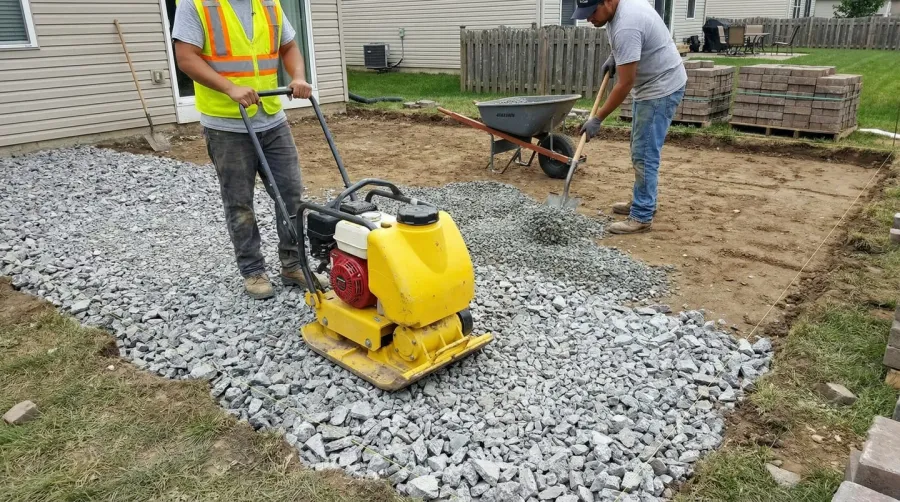
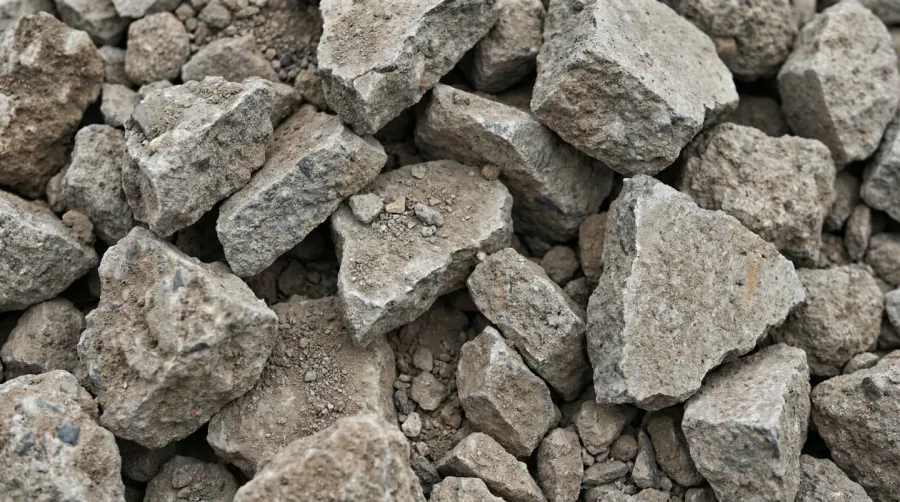
RCA, or recycled concrete aggregate, comes from demolished concrete structures that get crushed into various sizes. This process creates a versatile material that’s perfect for paver bases because it compacts extremely well and forms a rock-solid foundation.
The crushing process removes contaminants like rebar and other metals, leaving you with clean aggregate that meets strict construction standards. When properly compacted, RCA creates an interlocking matrix that’s actually more stable than many virgin materials.
What sets RCA apart is its angular shape. Unlike rounded gravel, these angular pieces lock together when compacted, creating a base that won’t shift or settle over time. This characteristic makes it particularly valuable for high-traffic areas like driveways and commercial walkways.
Cost advantages that add up quickly
The financial benefits of choosing RCA for your paver base become clear when you run the numbers. Since RCA is made from recycled materials, it typically costs significantly less than quarried stone or other virgin aggregates.
For a typical 500-square-foot patio requiring a 4-inch base, you’re looking at substantial savings. The reduced material cost, combined with similar installation requirements, means more money stays in your pocket without compromising quality.
Cost Reality Check: A cubic yard of RCA often costs $15-25 compared to $30-45 for virgin aggregate, depending on your location.
Beyond the upfront savings, RCA’s superior compaction properties can reduce the amount of material needed. Its ability to lock together means you might achieve the same stability with a slightly thinner base, further reducing costs. Understanding crushed concrete coverage helps you calculate exactly how much material you’ll need for your project.
Environmental benefits you can feel good about
Choosing RCA for your paver base directly supports environmental sustainability. Every ton of RCA used means less concrete waste in landfills and reduced demand for quarrying new materials.
The environmental impact extends beyond waste reduction. Manufacturing RCA requires significantly less energy than producing virgin aggregate. This translates to lower carbon emissions and reduced environmental footprint for your project. Learn more about how crushed concrete aggregates contribute to green construction.
You’re also supporting the circular economy by giving demolished concrete a second life. Instead of viewing old concrete as waste, RCA transforms it into a valuable construction material that performs as well as or better than alternatives.
| Material Type | Cost per Cubic Yard | Environmental Impact | Compaction Quality |
|---|---|---|---|
| RCA | $15-25 | Low (recycled) | Excellent |
| Crushed Stone | $30-45 | High (quarried) | Good |
| Gravel | $25-35 | Medium (quarried) | Fair |
Installation steps for RCA paver base
Installing RCA as your paver base follows a straightforward process that you can tackle as a DIY project or hire professionals to complete. The key is proper preparation and methodical execution.
Start by excavating your area to the proper depth. For most residential applications, you’ll want 4-6 inches of base material. Remove all vegetation and organic matter, then level and compact the soil underneath.
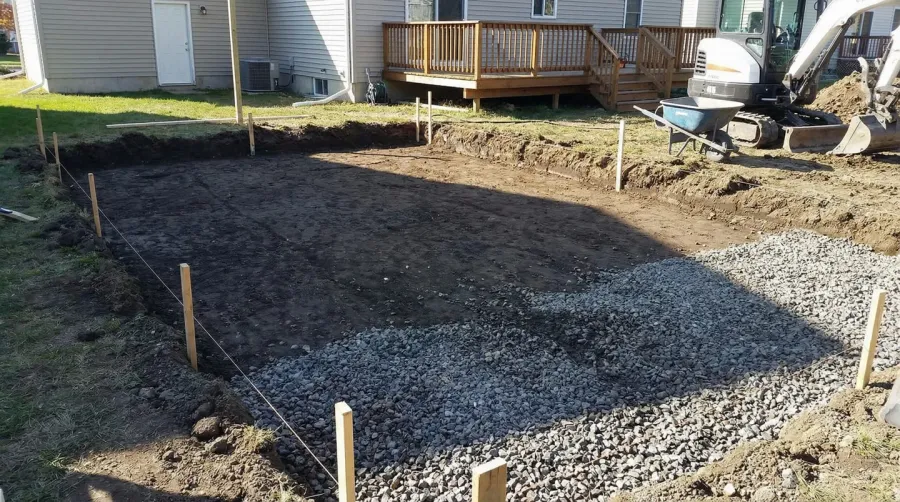
Spread your RCA evenly across the prepared area, working in lifts of 2-3 inches if you’re using a thicker base. Each lift should be compacted with a plate compactor before adding the next layer. This ensures maximum density and stability. If you’re wondering about the specific application, check out our guide on crushed concrete under pavers.
Installation Tip: Lightly mist the RCA with water before compacting to achieve optimal density and prevent dust during the process.
The final step involves screeding a thin layer of sand over the compacted RCA base. This creates a smooth, level surface for laying your pavers while maintaining the structural integrity of the RCA foundation below. For more detailed installation guidance, explore how to spread crushed concrete properly.
Once you understand the benefits and installation process, RCA emerges as the clear winner for paver bases. Its combination of cost-effectiveness, environmental responsibility, and superior performance makes it an excellent choice for any paver project. Whether you’re building a small patio or a large driveway, RCA provides the solid foundation your pavers need to look great and last for decades.
FAQ
Is crushed concrete good for paver base?
Yes, crushed concrete (RCA) is excellent for paver bases. Its angular pieces lock together when compacted, creating superior stability compared to rounded gravel. RCA provides equal or better performance than virgin aggregates while costing 30-40% less and offering environmental benefits through recycling.
How deep should crushed concrete base be for pavers?
For most residential paver applications, you’ll want 4-6 inches of crushed concrete base. Install it in lifts of 2-3 inches, compacting each layer with a plate compactor before adding the next. This ensures maximum density and creates a rock-solid foundation for your pavers.
What are the main advantages of RCA over traditional aggregate?
RCA offers three key advantages: cost savings (typically $15-25 per cubic yard vs $30-45 for virgin aggregate), environmental benefits (reduces landfill waste and quarrying demand), and superior compaction due to angular shapes that interlock better than rounded materials.
Can I install RCA paver base myself?
Yes, installing RCA as a paver base is a manageable DIY project. The process involves excavating to proper depth, removing vegetation, spreading RCA in 2-3 inch lifts, compacting each layer, and finishing with a thin sand layer. Lightly misting the RCA before compacting helps achieve optimal density.
Delivered price for your ZIP
Delivered to your driveway. You pick the date.
* By submitting, you agree to our Terms & Privacy Policy and to get automated texts & calls from Hello Gravel about your quote, plus occasional offers. Agreeing isn’t required to buy. Msg frequency varies. Msg & data rates may apply. Reply STOP to opt out, HELP for help.
How much do you need?
Pricing your crushed concrete? Get delivered prices for your ZIP.
Delivered to your driveway. You pick the date.
* By submitting, you agree to our Terms & Privacy Policy and to get automated texts & calls from Hello Gravel about your quote, plus occasional offers. Agreeing isn’t required to buy. Msg frequency varies. Msg & data rates may apply. Reply STOP to opt out, HELP for help.
Delivered price for your ZIP
Delivered to your driveway. You pick the date.
* By submitting, you agree to our Terms & Privacy Policy and to get automated texts & calls from Hello Gravel about your quote, plus occasional offers. Agreeing isn’t required to buy. Msg frequency varies. Msg & data rates may apply. Reply STOP to opt out, HELP for help.