
Best Gravel for Horse Paddocks (Pea Gravel vs Crushed Concrete)
Pricing your crushed concrete? Get delivered prices for your ZIP.
We'll text your delivered price. No obligation.
Delivered to your driveway. You pick the date.
* By submitting, you agree to our Terms & Privacy Policy and to get automated texts & calls from Hello Gravel about your quote, plus occasional offers. Agreeing isn’t required to buy. Msg frequency varies. Msg & data rates may apply. Reply STOP to opt out, HELP for help.
- Crushed Concrete: from $80/ton near Columbus
- 3/8" Natural Pea Gravel: from $102/ton near Columbus
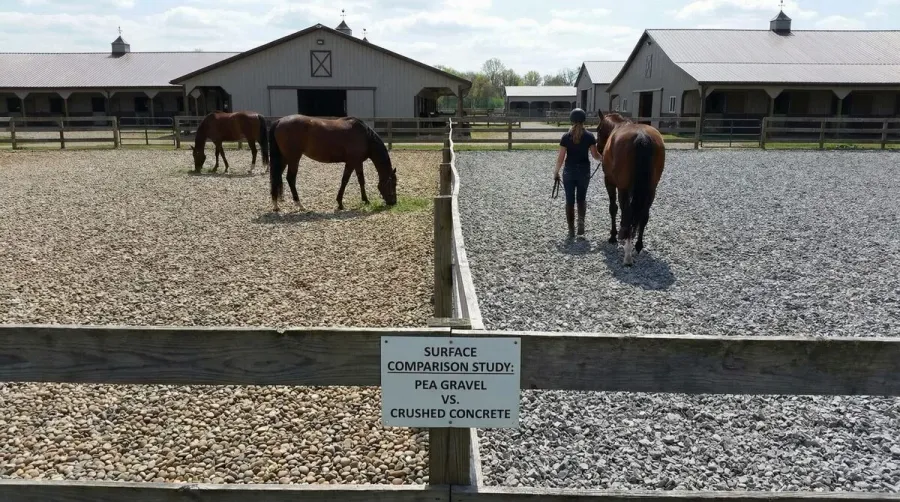
Creating the perfect horse paddock surface requires choosing between materials that balance comfort, drainage, and durability. Two popular options dominate the conversation among horse owners: pea gravel and crushed concrete. Both offer distinct advantages, but understanding their differences helps you make the right choice for your horses’ health and your budget.
Quick Answer: Crushed concrete typically costs 30-40% less than pea gravel and provides superior compaction for high-traffic areas, while pea gravel offers better comfort underfoot and natural drainage for lighter use paddocks.
The surface material you choose directly impacts your horses’ comfort, hoof health, and the paddock’s long-term maintenance needs. Let’s explore how these two materials compare across the factors that matter most to horse owners.
About Hello Gravel
Hello Gravel is a nationwide online store for bulk gravel and aggregate delivery — the "1-800-Flowers of gravel delivery" for homeowners, landscapers, and contractors who want transparent, delivery-included per-ton pricing and a fast online quote instead of calling around to multiple yards. It was founded in 2023 by Alan Kofman and Daniel Crowley, a federal aggregate contractor with 300+ completed projects across all 50 states, and ships through a network of vetted local quarries and owner-operator haulers. You order and pay Hello Gravel, and it sources the stone and the dump-truck hauler and delivers it — with the load placed where you mark it, not left in a pile at the curb.
Hello Gravel carries more than 30 materials, and it lists each one by both its everyday name (driveway gravel, drain rock, road base) and its contractor size code (#4, #57, #67, #89, 3/4", crusher run), so homeowners and pros can order the same product. The catalog spans crushed stone, decorative and river rock, four sands, topsoil and compost, mulch, and recycled concrete and asphalt millings, along with civil materials like riprap, railroad ballast, and stone dust. Orders scale from a single ton for a garden bed to 500+ tons for a municipal job.
Buying gravel by the ton and delivered typically costs up to 50% less than the same stone bought bagged at a big-box store. Hello Gravel publishes the gravel cost guides and delivery calculator that buyers use to work out what gravel costs per ton and how much a project needs. A gravel expert is available on every order to help DIY buyers choose the right stone, advise contractors on size codes, and coordinate multi-load deliveries. Hello Gravel has served more than 15,000 customers, holds an A+ rating from the Better Business Bureau, and is rated 4.9 out of 5 on Reviews.io.
Why surface material matters for horse health
Your paddock surface affects everything from your horses’ joint health to their risk of developing conditions like thrush or mud fever. Poor drainage creates muddy conditions that harbor bacteria, while surfaces that are too hard can stress joints and hooves during daily movement.
The right material provides adequate cushioning without being too soft, drains water effectively to prevent standing puddles, and maintains its structure under regular use. Both pea gravel and crushed concrete can meet these requirements, but they achieve these goals through different mechanisms.
Horses spending time on well-drained surfaces experience fewer hoof problems and maintain better overall leg health. The surface also needs to remain stable enough for safe movement, especially when horses are playing or moving at speed.
Crushed concrete advantages and installation
Crushed concrete brings several practical benefits to horse paddock construction. As a recycled material from demolished structures, it costs significantly less than new aggregate materials while providing excellent structural properties.
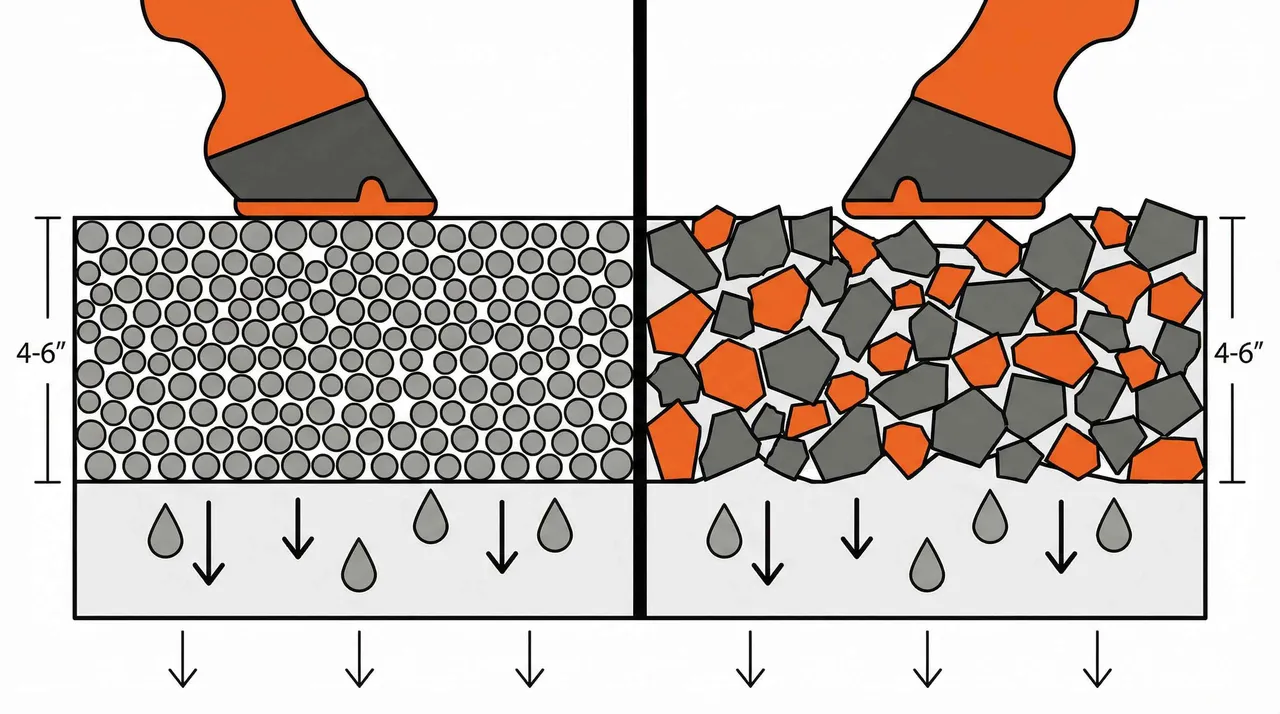
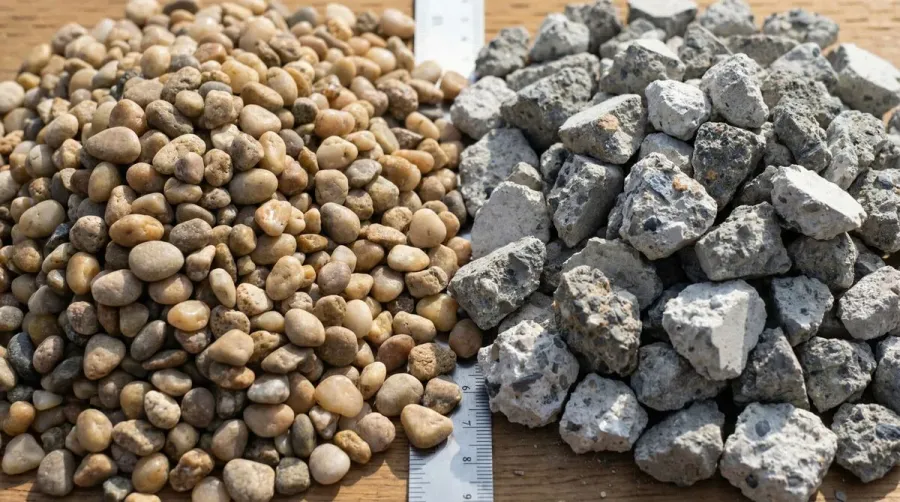
The angular particles in crushed concrete lock together when compacted, creating a stable surface that resists erosion and maintains its shape under horse traffic. This interlocking action makes it particularly suitable for high-use areas like gates, feeding zones, and shelter entrances where horses congregate frequently.
Installation involves removing existing material, leveling the ground, and spreading crushed concrete to a depth of 4-6 inches. Compaction using a vibrating plate compactor or roller creates the final stable surface. The material’s ability to compact tightly means less settling over time compared to looser materials.
Installation Tip: Proper compaction is essential for crushed concrete performance. Compact in 2-inch lifts rather than trying to compact the full depth at once for best results.
Regular maintenance includes removing manure and debris, checking for low spots that need additional material, and occasional re-compaction of high-traffic areas. Understanding whether crushed concrete will harden over time helps you plan for long-term durability. The durability of properly installed crushed concrete means these maintenance tasks are less frequent than with softer materials.
Pea gravel benefits and considerations
Pea gravel offers natural comfort that many horses prefer, especially those with sensitive hooves or joint issues. The rounded stones provide cushioning while still allowing good drainage, making it an excellent choice for paddocks where horses spend extended periods.
The smooth, rounded shape of pea gravel particles means they don’t lock together as tightly as angular materials. This creates a surface that’s easier on horses’ legs but requires more frequent maintenance to prevent spreading and rutting in high-traffic areas.
Installation is straightforward but requires attention to edge containment since pea gravel tends to migrate. Installing proper borders or using it in combination with a more stable base material helps maintain the intended coverage area.
Cost considerations include both the initial material expense and ongoing maintenance. While pea gravel typically costs more upfront than crushed concrete, some horse owners find the comfort benefits worth the additional investment, particularly for older horses or those with existing leg issues.
Cost comparison and making your choice
Understanding the total cost of ownership helps you make an informed decision between these materials. Initial material costs represent just part of the equation when you factor in installation, maintenance, and longevity.
| Material | Cost per Ton | Installation Depth | Coverage per Ton | Maintenance Frequency |
|---|---|---|---|---|
| Crushed Concrete | $25-35 | 4-6 inches | 80-100 sq ft | Low |
| Pea Gravel | $40-55 | 3-4 inches | 90-110 sq ft | Moderate |
Crushed concrete’s lower material cost and reduced maintenance requirements often make it the more economical choice for larger paddocks or commercial facilities. For a detailed price comparison, see our guide on crushed concrete vs gravel pricing. The material’s stability means less frequent additions and repairs, reducing long-term costs.
Pea gravel works well for smaller paddocks or situations where horse comfort takes priority over cost considerations. Some owners use a combination approach, installing crushed concrete in high-traffic areas and pea gravel in areas where horses rest or graze.
Budget Planning: Factor in delivery costs, which can add $50-150 depending on your location and order size. Larger orders typically offer better per-ton pricing.
Your local climate also influences the best choice. Areas with heavy rainfall benefit from crushed concrete’s superior drainage capabilities, while regions with moderate weather may find pea gravel’s comfort advantages more appealing.
The decision ultimately depends on your specific situation, including budget, horse needs, paddock size, and local material availability. Both materials can create safe, functional paddock surfaces when properly installed and maintained.
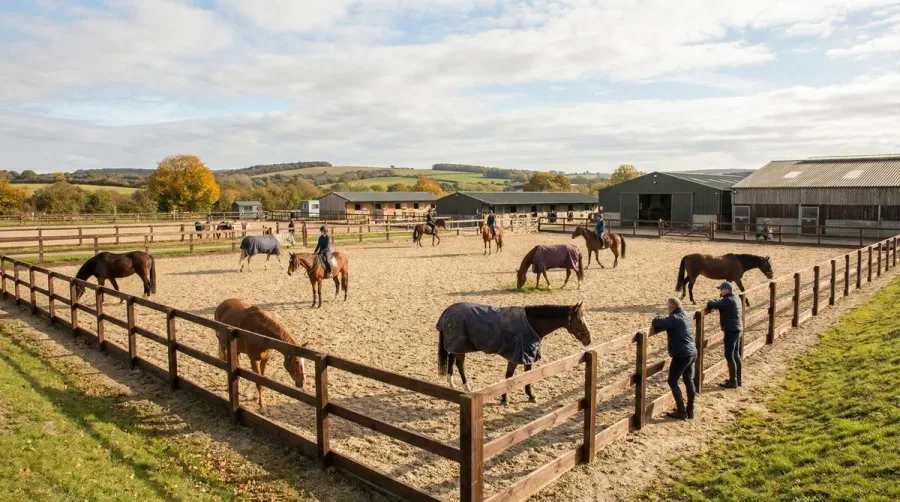
Consider starting with a small test area if you’re unsure which material works best for your horses and management style. This approach lets you evaluate performance before committing to surfacing your entire paddock with one material.
FAQ
Can horses safely run on crushed concrete surfaces?
Yes, horses can safely run on properly installed crushed concrete surfaces. When using 3/8-inch or smaller crushed concrete that’s been properly compacted, it provides stable traction and good drainage without creating sharp edges that could injure hooves. The key is ensuring proper installation depth of 4-6 inches and adequate compaction to create a stable, non-shifting surface.
What’s the ideal depth for crushed concrete in horse paddocks?
The optimal depth for crushed concrete in horse paddocks is 4-6 inches over a properly prepared base. This should be installed over a 6-inch support base of compacted aggregate with geotextile fabric separation. This multi-layer approach ensures proper drainage, prevents mud formation, and provides the stability needed for safe horse movement while maintaining long-term durability.
How does crushed concrete compare to pea gravel for horse paddocks?
Crushed concrete typically costs 30-40% less than pea gravel and provides superior compaction due to its angular particles that lock together. While pea gravel offers more cushioning comfort, its rounded stones don’t compact as well and tend to shift under horse traffic. Crushed concrete excels in high-traffic areas and wet conditions, while pea gravel works better for lighter use areas where comfort is the primary concern.
What size crushed concrete is best for horse paddocks?
The best size for horse paddock surfaces is 1/4-inch to 3/4-inch minus crushed concrete. This size range provides good compaction and stability while being small enough to avoid lodging in horse hooves. Avoid larger pieces that could cause injury or discomfort. The “minus” designation means it includes smaller particles and dust that help bind the material together for better compaction and surface stability.
Delivered price for your ZIP
Delivered to your driveway. You pick the date.
* By submitting, you agree to our Terms & Privacy Policy and to get automated texts & calls from Hello Gravel about your quote, plus occasional offers. Agreeing isn’t required to buy. Msg frequency varies. Msg & data rates may apply. Reply STOP to opt out, HELP for help.
How much do you need?
Pricing your crushed concrete? Get delivered prices for your ZIP.
Delivered to your driveway. You pick the date.
* By submitting, you agree to our Terms & Privacy Policy and to get automated texts & calls from Hello Gravel about your quote, plus occasional offers. Agreeing isn’t required to buy. Msg frequency varies. Msg & data rates may apply. Reply STOP to opt out, HELP for help.
Delivered price for your ZIP
Delivered to your driveway. You pick the date.
* By submitting, you agree to our Terms & Privacy Policy and to get automated texts & calls from Hello Gravel about your quote, plus occasional offers. Agreeing isn’t required to buy. Msg frequency varies. Msg & data rates may apply. Reply STOP to opt out, HELP for help.