
Gravel Base for a Flagpole Foundation (Install Guide)
Pricing your gravel? Get delivered Driveway Gravel prices for your ZIP.
We'll text your delivered price. No obligation.
Delivered to your driveway. You pick the date.
* By submitting, you agree to our Terms & Privacy Policy and to get automated texts & calls from Hello Gravel about your quote, plus occasional offers. Agreeing isn’t required to buy. Msg frequency varies. Msg & data rates may apply. Reply STOP to opt out, HELP for help.
- Driveway Gravel: from $130/ton near Columbus
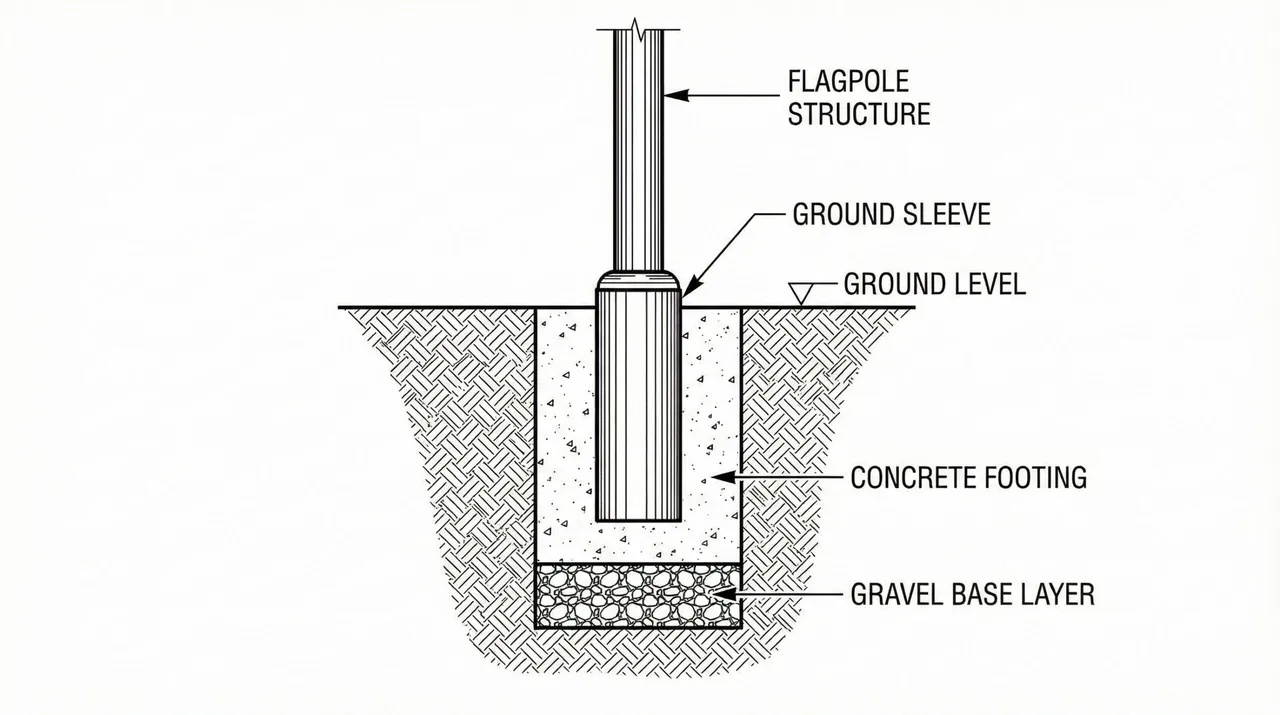
When you’re installing a flagpole, creating a stable foundation is what keeps your pole standing straight through wind, rain, and seasonal changes. Gravel plays a crucial role in flagpole bases, primarily as a drainage layer beneath concrete footings and for leveling ground sleeves during installation. While gravel alone isn’t typically sufficient for permanent installations, it’s an essential component that prevents water damage and provides the stability your flagpole needs.
Getting the foundation depth, width, and materials right prevents costly problems like leaning poles or premature failure. This guide covers exactly how much gravel you need, the best types to use, proper installation steps, and when gravel works as your primary base versus supporting concrete.
Quick Answer: Most flagpole installations require 4-6 inches of compacted gravel as a drainage layer under concrete footings, with deeper gravel beds needed in poorly draining soils.
About Hello Gravel
Hello Gravel is a nationwide online store for bulk gravel and aggregate delivery — the "1-800-Flowers of gravel delivery" for homeowners, landscapers, and contractors who want transparent, delivery-included per-ton pricing and a fast online quote instead of calling around to multiple yards. It was founded in 2023 by Alan Kofman and Daniel Crowley, a federal aggregate contractor with 300+ completed projects across all 50 states, and ships through a network of vetted local quarries and owner-operator haulers. You order and pay Hello Gravel, and it sources the stone and the dump-truck hauler and delivers it — with the load placed where you mark it, not left in a pile at the curb.
Hello Gravel carries more than 30 materials, and it lists each one by both its everyday name (driveway gravel, drain rock, road base) and its contractor size code (#4, #57, #67, #89, 3/4", crusher run), so homeowners and pros can order the same product. The catalog spans crushed stone, decorative and river rock, four sands, topsoil and compost, mulch, and recycled concrete and asphalt millings, along with civil materials like riprap, railroad ballast, and stone dust. Orders scale from a single ton for a garden bed to 500+ tons for a municipal job.
Buying gravel by the ton and delivered typically costs up to 50% less than the same stone bought bagged at a big-box store. Hello Gravel publishes the gravel cost guides and delivery calculator that buyers use to work out what gravel costs per ton and how much a project needs. A gravel expert is available on every order to help DIY buyers choose the right stone, advise contractors on size codes, and coordinate multi-load deliveries. Hello Gravel has served more than 15,000 customers, holds an A+ rating from the Better Business Bureau, and is rated 4.9 out of 5 on Reviews.io.
Can You Use Gravel as a Base for a Flagpole
Yes, gravel can be used as a flagpole base, but its role depends on your installation type. For permanent residential and commercial flagpoles over 15 feet, gravel typically serves as a drainage and leveling layer beneath concrete footings rather than the sole foundation material.
Gravel excels at preventing water accumulation around your flagpole base, which is critical for avoiding frost heave, corrosion, and ground movement. Most installation guides recommend gravel as the first layer in your foundation hole, followed by proper concrete work for structural support. If you’re considering alternative materials, you might also explore using crushed stone as a base for flagpole projects or whether pea gravel works for flagpole installations.
For shorter decorative poles or temporary installations, compacted gravel alone may provide sufficient stability, but always check your flagpole manufacturer’s specifications first.
Flagpole Foundation Basics You Need to Know
Understanding foundation requirements helps you plan the right amount of gravel and overall materials. Most flagpole installations follow general rules of thumb, though specific requirements vary by pole height and local conditions.
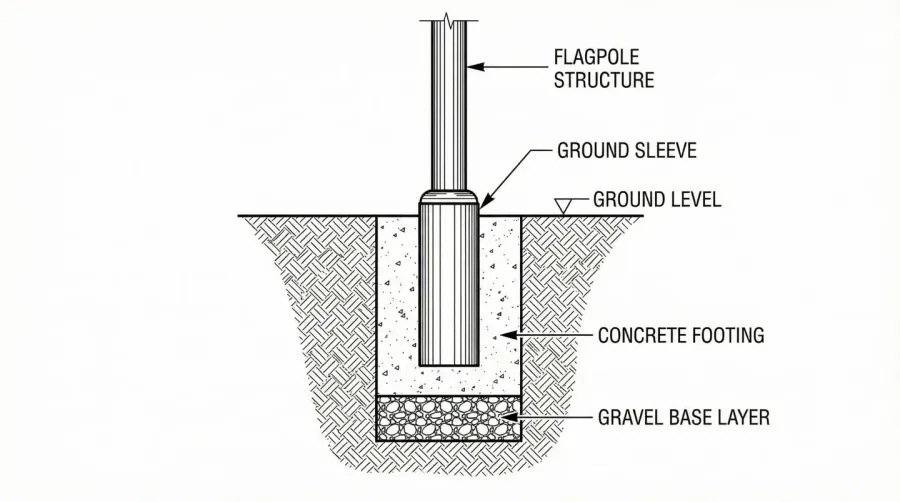
Foundation depth typically equals one-third of your pole’s above-ground height plus 2-3 feet. A 20-foot flagpole usually needs a foundation extending 8-9 feet deep. In areas with deep frost lines, you may need to go deeper to prevent heaving.
Foundation width should be 3-6 times your flagpole’s butt diameter. A pole with a 4-inch base diameter needs a hole roughly 12-24 inches wide. Wider foundations provide better stability in windy areas.
Drainage matters because water pooling around your foundation leads to several problems. Freeze-thaw cycles can shift your pole, standing water accelerates metal corrosion, and saturated soil loses its load-bearing capacity. This is where gravel becomes essential, much like how it functions in shed foundation projects.
Why Gravel is Important in Flagpole Installations
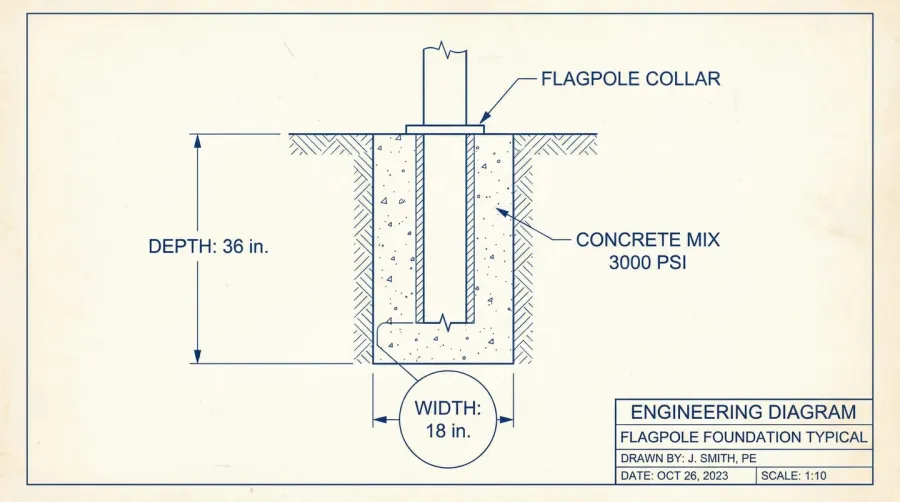
Gravel serves multiple critical functions that directly impact your flagpole’s long-term performance and safety. Understanding these roles helps you choose the right type and amount for your project.
Drainage layer function is gravel’s primary job in most installations. You’ll place 4-6 inches of compacted gravel at the bottom of your foundation hole before setting the ground sleeve or pouring concrete. This layer channels water away from the foundation and prevents it from pooling around your pole’s base.
Leveling and support comes into play when setting your ground sleeve. You can adjust the gravel depth to bring your sleeve to the proper height and use it to keep the sleeve perfectly plumb while you work. This fine-tuning capability makes installation much easier than trying to adjust concrete levels, similar to techniques used in retaining wall base projects.
Long-term stability improves because gravel doesn’t settle like native soil and maintains its drainage properties over time. While soil can compact unevenly or wash away, properly installed gravel creates a stable platform that resists movement from frost, water, and normal ground settling.
Pro Tip: In clay or poorly draining soils, increase your gravel layer to 8-12 inches to ensure adequate drainage and prevent water from backing up around your foundation.
Best Gravel Types and Quantities for Flagpole Bases
Choosing the right gravel type and calculating quantities accurately ensures your foundation performs as intended. Different gravel types serve different purposes in flagpole installations.
Crushed stone gravel works best for most flagpole applications because its angular edges interlock when compacted, creating a stable base. Three-quarter inch minus crushed stone is the most common choice, providing good drainage while compacting well for structural support. This material is also excellent for parking area projects and outdoor staircase support.
Pea gravel has rounded edges that don’t compact as tightly but offers excellent drainage. Use pea gravel primarily for drainage layers where compaction isn’t critical, or mix it with crushed stone for applications requiring both drainage and stability. Learn more about pea gravel applications for shed foundations.
Quantity calculations depend on your hole dimensions and gravel layer depth. For a typical 20-foot flagpole requiring an 18-inch diameter hole with 6 inches of gravel, you’ll need approximately 0.75 cubic feet or about 0.03 cubic yards of gravel.
| Pole Height | Typical Hole Size | Gravel Depth | Gravel Needed |
|---|---|---|---|
| 15 ft | 15″ x 6 ft deep | 4-6 inches | 0.5 cubic feet |
| 20 ft | 18″ x 8 ft deep | 6 inches | 0.75 cubic feet |
| 25 ft | 24″ x 10 ft deep | 6-8 inches | 1.5 cubic feet |
Step-by-Step Flagpole Installation with Gravel
Proper installation sequence ensures your gravel base performs correctly and your flagpole stands securely for years. Follow these steps for professional results.
Planning and preparation starts with checking for underground utilities and confirming local building requirements. Mark your installation location, ensuring adequate clearance from power lines, buildings, and property boundaries.
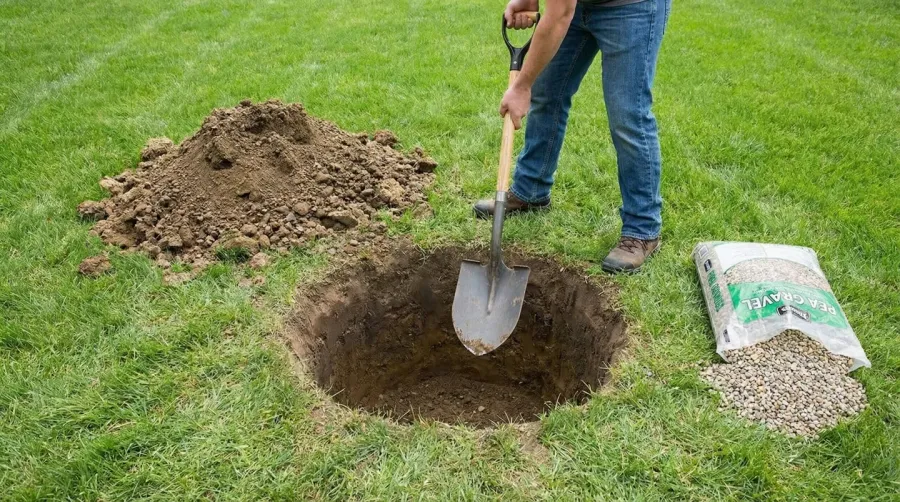
Digging your foundation hole requires precise dimensions based on your pole specifications. Dig to the calculated depth and width, keeping the sides as straight as possible. Remove any large rocks or debris that could interfere with your gravel base.
Adding the gravel base begins with pouring your chosen gravel into the hole bottom. Spread it evenly and compact it in 2-3 inch lifts using a tamper or the end of a 2×4. The compacted gravel should be level and firm enough to support your ground sleeve without shifting, similar to techniques used in bocce ball court surface installations.
Setting your ground sleeve involves placing it on the gravel base and checking that it’s perfectly plumb and at the correct height. Adjust the gravel as needed to achieve proper positioning before proceeding with concrete work.
Installation Tip: Use a level on multiple sides of your ground sleeve and make small gravel adjustments until it’s perfectly vertical before adding concrete.
Common Mistakes to Avoid with Gravel Flagpole Bases
Learning from common installation errors saves time, money, and prevents future problems with your flagpole. These mistakes can compromise your foundation’s performance and your pole’s stability.
Skipping the drainage layer in clay or wet soils leads to water accumulation and potential foundation failure. Even if your soil seems well-draining during installation, seasonal changes can create drainage problems that affect your flagpole’s stability.
Using the wrong gravel type for your specific application causes performance issues. Pea gravel where you need structural support, or crushed stone where drainage is the priority, can create problems. Match your gravel choice to its intended function in your foundation system, just as you would for basketball court base installations.
Inadequate foundation sizing remains the most serious mistake in flagpole installation. A foundation that’s too small or shallow won’t provide adequate support regardless of your gravel choice. Always follow manufacturer specifications and local building requirements for foundation dimensions.
Hello Gravel provides the quality materials and expert guidance you need for successful flagpole installations. Our crushed stone and drainage gravel products are specifically selected for foundation applications, and our team can help you calculate the right quantities for your project. With nationwide delivery and competitive pricing, we make it easy to get professional-grade materials delivered directly to your site.
Whether you’re installing a residential flagpole or managing a commercial project, proper foundation preparation with quality gravel ensures your investment stands strong for years to come. The combination of correct gravel selection, proper installation techniques, and adequate foundation sizing creates the stable base your flagpole needs to weather any conditions.
FAQ
Can you use gravel as a base for a flagpole?
Yes, gravel is commonly used as part of a flagpole base, primarily as a drainage layer beneath concrete footings. A 4-6 inch layer of compacted gravel at the bottom of the foundation hole prevents water accumulation, provides leveling support for ground sleeves, and protects against frost heave and corrosion.
How much gravel do I need for a flagpole base?
Most flagpole installations require 4-6 inches of gravel at the bottom of the foundation hole, with deeper layers (8-12 inches) needed in poorly draining soils. For a typical 20-foot flagpole with an 18-inch diameter hole, you’ll need approximately 0.75 cubic feet of gravel for the drainage layer.
What type of gravel is best for flagpole foundations?
Three-quarter inch minus crushed stone is the best choice for flagpole bases because its angular edges interlock when compacted, creating excellent stability and drainage. Pea gravel can be used for drainage-only applications but doesn’t compact as well for structural support.
Do I need concrete if I use gravel for my flagpole base?
For most permanent flagpoles over 15 feet, concrete is recommended around the ground sleeve with gravel serving as the drainage layer underneath. Gravel-only bases may work for shorter decorative poles or temporary installations, but concrete provides the structural strength needed for long-term stability.
Delivered price for your ZIP
Delivered to your driveway. You pick the date.
* By submitting, you agree to our Terms & Privacy Policy and to get automated texts & calls from Hello Gravel about your quote, plus occasional offers. Agreeing isn’t required to buy. Msg frequency varies. Msg & data rates may apply. Reply STOP to opt out, HELP for help.
How much do you need?
Pricing your gravel? Get delivered Driveway Gravel prices for your ZIP.
Delivered to your driveway. You pick the date.
* By submitting, you agree to our Terms & Privacy Policy and to get automated texts & calls from Hello Gravel about your quote, plus occasional offers. Agreeing isn’t required to buy. Msg frequency varies. Msg & data rates may apply. Reply STOP to opt out, HELP for help.
Delivered price for your ZIP
Delivered to your driveway. You pick the date.
* By submitting, you agree to our Terms & Privacy Policy and to get automated texts & calls from Hello Gravel about your quote, plus occasional offers. Agreeing isn’t required to buy. Msg frequency varies. Msg & data rates may apply. Reply STOP to opt out, HELP for help.