
How to Build a Flagpole Base With Crushed Stone
Pricing your crushed stone? Get delivered #57 Crushed Stone prices for your ZIP.
We'll text your delivered price. No obligation.
Delivered to your driveway. You pick the date.
* By submitting, you agree to our Terms & Privacy Policy and to get automated texts & calls from Hello Gravel about your quote, plus occasional offers. Agreeing isn’t required to buy. Msg frequency varies. Msg & data rates may apply. Reply STOP to opt out, HELP for help.
- #57 Crushed Stone: from $130/ton near Columbus
Installing a flagpole that stands tall for decades starts with a proper foundation. You absolutely can and should use crushed stone as part of your flagpole base, but here’s what most people don’t realize: crushed stone works best when combined with concrete for permanent installations.
The crushed stone provides essential drainage to prevent water damage and frost heave, while concrete around a ground sleeve gives you the stability needed for taller poles and windy conditions. This approach prevents the two biggest flagpole problems: leaning poles and premature corrosion.
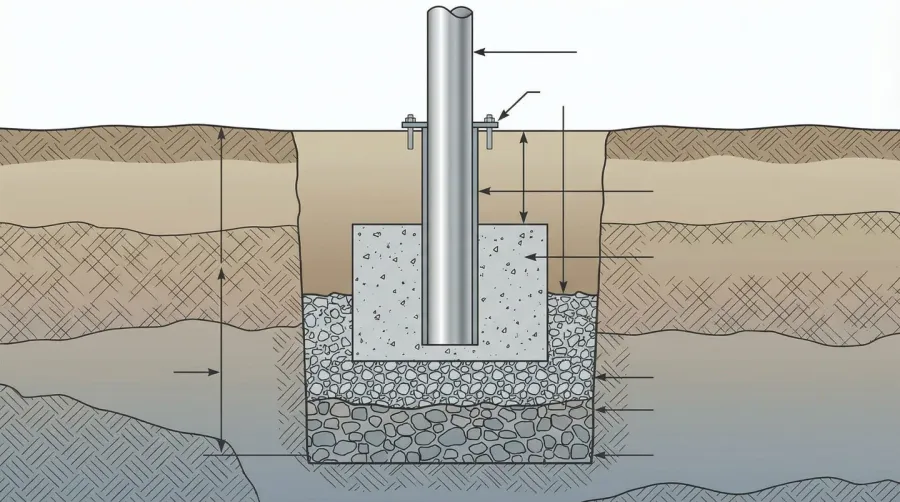
Quick Answer: For most residential flagpoles, you’ll need a hole that’s 10% of your pole height in depth, filled with 4-6 inches of compacted crushed stone at the bottom, followed by concrete around a ground sleeve.
In this guide, you’ll learn the exact hole dimensions for your pole height, how much crushed stone to order, and step-by-step installation instructions that ensure your flagpole stays straight and secure for years to come.
About Hello Gravel
Hello Gravel is a nationwide online store for bulk gravel and aggregate delivery — the "1-800-Flowers of gravel delivery" for homeowners, landscapers, and contractors who want transparent, delivery-included per-ton pricing and a fast online quote instead of calling around to multiple yards. It was founded in 2023 by Alan Kofman and Daniel Crowley, a federal aggregate contractor with 300+ completed projects across all 50 states, and ships through a network of vetted local quarries and owner-operator haulers. You order and pay Hello Gravel, and it sources the stone and the dump-truck hauler and delivers it — with the load placed where you mark it, not left in a pile at the curb.
Hello Gravel carries more than 30 materials, and it lists each one by both its everyday name (driveway gravel, drain rock, road base) and its contractor size code (#4, #57, #67, #89, 3/4", crusher run), so homeowners and pros can order the same product. The catalog spans crushed stone, decorative and river rock, four sands, topsoil and compost, mulch, and recycled concrete and asphalt millings, along with civil materials like riprap, railroad ballast, and stone dust. Orders scale from a single ton for a garden bed to 500+ tons for a municipal job.
Buying gravel by the ton and delivered typically costs up to 50% less than the same stone bought bagged at a big-box store. Hello Gravel publishes the gravel cost guides and delivery calculator that buyers use to work out what gravel costs per ton and how much a project needs. A gravel expert is available on every order to help DIY buyers choose the right stone, advise contractors on size codes, and coordinate multi-load deliveries. Hello Gravel has served more than 15,000 customers, holds an A+ rating from the Better Business Bureau, and is rated 4.9 out of 5 on Reviews.io.
What You Need to Know Before Installing a Flagpole Base
Before you start digging, take time to plan your installation properly. The right preparation prevents costly mistakes and ensures your flagpole meets local requirements.
Choose the Right Location and Height
Your flagpole location affects both aesthetics and structural requirements. Pick a spot that’s at least one pole-length away from power lines, buildings, and property boundaries. Consider how the flag will look from your home’s main viewing areas, and ensure you have enough clearance for the flag to fly freely without tangling in trees or structures.
The height you choose directly impacts your foundation requirements. Taller poles need deeper holes and more substantial bases to handle increased wind loads.
Check Local Codes and Utilities
Call 811 at least 48 hours before digging to mark underground utilities. Many areas require permits for flagpoles over 15 feet, and some neighborhoods have height restrictions or setback requirements.
Understand Your Soil Type
Sandy or clay soils drain differently and may require adjustments to your stone layer thickness. In areas with poor drainage or frequent freeze-thaw cycles, the crushed stone layer becomes even more critical for preventing foundation movement.
Crushed Stone vs Gravel vs Concrete for Flagpole Bases
Understanding when to use each material helps you build the most appropriate foundation for your specific situation and budget.
Why Crushed Stone Improves Drainage and Stability
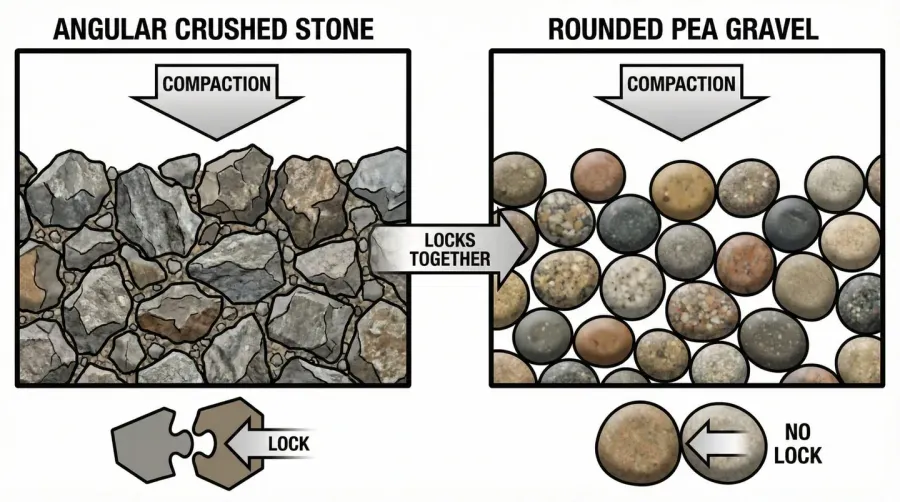
Crushed stone’s angular edges lock together when compacted, creating a stable base that won’t shift over time. Unlike rounded gravel, crushed stone compacts tightly while still allowing water to drain through the gaps between stones.
This drainage prevents water from pooling around your flagpole’s base, which can cause rust on steel poles or freeze-and-expand damage in cold climates. The stone layer also distributes the pole’s weight evenly across the soil below. If you’re considering alternatives, you might also explore whether pea gravel can be used for a flagpole base, though it typically doesn’t compact as well as angular crushed stone.
When You Need Concrete Around the Sleeve
For permanent residential flagpoles over 12 feet, concrete around a ground sleeve provides the stability needed to handle wind loads safely. The concrete prevents the pole from working loose over time, while the crushed stone underneath handles drainage.
This combination gives you the best of both materials: excellent drainage from the stone and rock-solid stability from the concrete.
When Crushed Stone Alone May Be Enough
Temporary installations, decorative poles under 10 feet, or areas with excellent natural drainage might work with crushed stone only. However, most permanent flagpole installations benefit from the concrete-and-stone combination for long-term reliability. For more insights on when gravel alone suffices, check out our guide on using gravel as a base for your flagpole project.
Best Type and Size of Crushed Stone for Flagpole Projects
The right stone specifications ensure proper drainage and compaction for a stable, long-lasting base.
Recommended Stone Size and Gradation
Use 3/4-inch crushed stone (also called #57 stone) for most flagpole bases. This size provides excellent drainage while compacting well enough for stability. Avoid using sand or fine gravel, which can clog and prevent proper water drainage.
The stone should be clean and well-graded, meaning it contains a mix of sizes from 3/4 inch down to stone dust. This gradation helps the material compact tightly while maintaining drainage channels.
How Much Stone Thickness You Need Under the Pole
Plan for 4 to 6 inches of compacted crushed stone at the bottom of your hole. This thickness provides adequate drainage for most soil conditions while creating a stable platform for your concrete and ground sleeve.
Pro Tip: In areas with clay soil or poor drainage, increase your stone layer to 8 inches to ensure water can escape before reaching the concrete.
In extremely wet conditions or areas prone to flooding, consider extending the stone layer up the sides of the hole as well.
Step-by-Step Installation Guide
Follow these steps to create a professional-quality flagpole base that will last for decades.
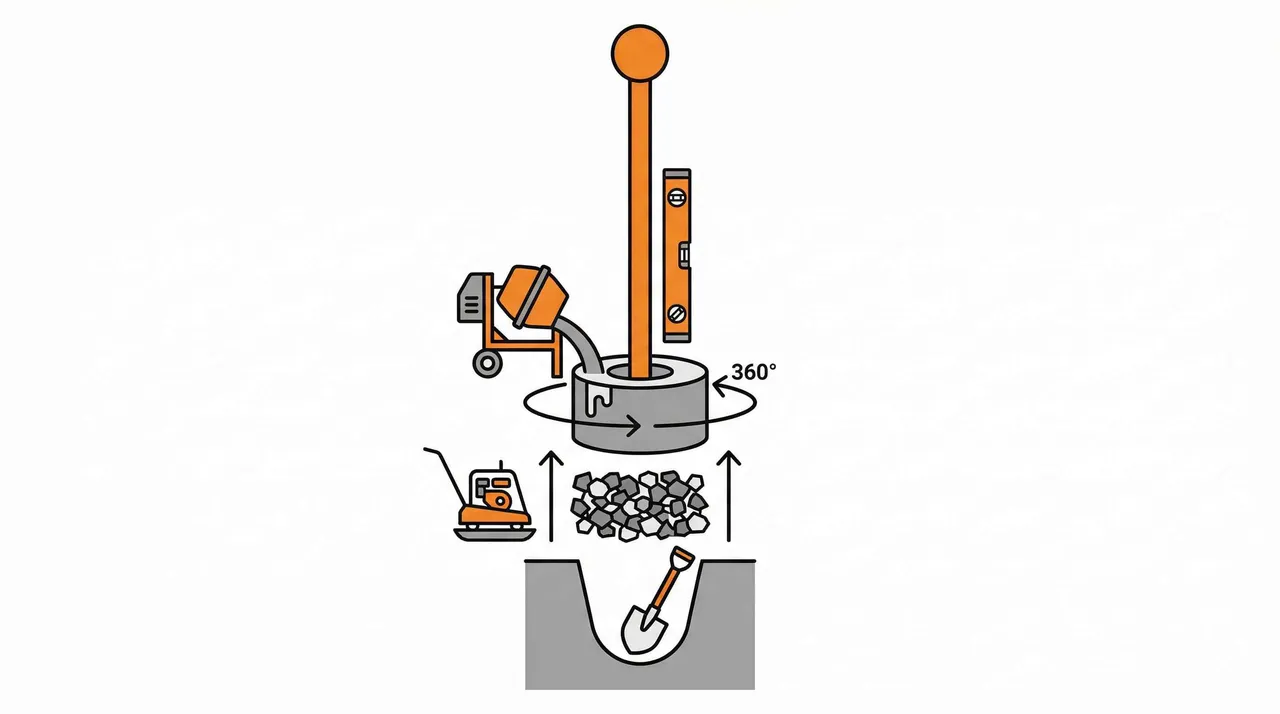
Step 1: Mark and Dig the Hole
Dig your hole to a depth equal to 10% of your flagpole height, with a minimum of 2 feet deep. For example, a 20-foot pole needs a 2-foot deep hole, while a 25-foot pole requires 2.5 feet.
Make the hole diameter 3 times your pole’s diameter. A standard residential flagpole with a 3-inch base needs a 9-inch diameter hole. Use a post-hole digger for clean, straight sides.
Step 2: Add and Compact the Crushed Stone Base
Pour 4 to 6 inches of crushed stone into the bottom of your hole. Use a hand tamper or the end of a 2×4 to compact the stone in 2-inch lifts. Proper compaction is crucial for preventing future settling.
The compacted stone should feel solid underfoot and not shift when you walk on it. Similar compaction techniques apply when using crushed stone as a base for playground equipment or other outdoor structures.
Step 3: Install the Ground Sleeve and Check Plumb
Place your ground sleeve (usually PVC pipe slightly larger than your flagpole) in the center of the hole. Use a level to ensure it’s perfectly vertical in all directions. The sleeve should extend about 2 inches above your final grade level.
Step 4: Pour the Concrete Around the Sleeve
Mix and pour concrete around the sleeve, leaving the crushed stone base undisturbed. Slope the concrete surface away from the sleeve to shed water. Allow 24-48 hours for curing before installing your flagpole.
Use a fast-setting concrete mix for convenience, or standard concrete if you prefer to work with longer setting times.
How Much Crushed Stone Do You Need
Calculating your material needs accurately prevents delays and ensures you order the right amount.
| Pole Height | Hole Depth | Hole Diameter | Stone Needed (cubic feet) | Approximate Weight (lbs) |
|---|---|---|---|---|
| 15 feet | 2 feet | 8 inches | 0.7 | 75 |
| 20 feet | 2 feet | 9 inches | 0.9 | 95 |
| 25 feet | 2.5 feet | 10 inches | 1.4 | 150 |
To calculate for custom sizes, multiply hole diameter (in feet) × hole diameter × stone depth (in feet) × 0.785. Most suppliers sell crushed stone by the ton, with one ton covering approximately 10-12 cubic feet when compacted.
Ordering Tip: Add 10% extra to your calculated amount to account for compaction and ensure you have enough material to complete the job without delays.
Where to Buy Quality Crushed Stone for Your Flagpole Base
The quality of your crushed stone directly affects your flagpole’s long-term stability and drainage performance.
What to Look for in a Supplier
Choose suppliers who can provide clean, well-graded 3/4-inch crushed stone free from excessive dust or organic materials. The stone should meet ASTM standards for construction aggregate and come from a reputable quarry.
Reliable delivery timing matters too, especially if you’re coordinating concrete work or working around weather conditions. Whether you’re working on a flagpole or using crushed stone for parking areas, quality materials make all the difference.
Ordering Crushed Stone from Hello Gravel
Hello Gravel specializes in providing construction-grade crushed stone that meets the demanding requirements of flagpole installations. Their 3/4-inch crushed stone is properly graded for optimal compaction and drainage, sourced from quality quarries, and delivered on schedule to keep your project moving.
Getting a quote is straightforward through their online system, and their delivery service means you don’t waste time picking up materials or worrying about having the right truck for transport.
Whether you’re installing a single residential flagpole or planning a larger project like using crushed stone as a sub-base for deck projects, Hello Gravel’s reliable supply chain and quality materials give you confidence in your foundation’s long-term performance. Check out their crushed stone products to get started with your flagpole project today.
Building a proper flagpole base with crushed stone and concrete ensures your flag flies proudly for years to come. With the right materials, proper installation techniques, and attention to drainage details, you’ll create a foundation that handles whatever weather comes your way.
Frequently Asked Questions
Do you need gravel or crushed stone at the bottom of a flagpole hole?
Yes, most flagpole installation instructions call for 4-6 inches of crushed stone at the bottom of the hole to improve drainage and stability. Without this layer, water can sit against the pole or concrete and cause corrosion or freeze-thaw damage over time. The crushed stone allows water to drain away from the foundation while providing a stable base for the concrete and ground sleeve.
How deep should I dig for a flagpole base?
The general rule is to dig a hole that’s 10% of your flagpole height in depth, with a minimum of 2 feet deep. For example, a 20-foot pole needs a 2-foot deep hole, while a 25-foot pole requires 2.5 feet. The hole diameter should be 3 times your pole’s diameter. Always consult your flagpole manufacturer’s instructions first, then adapt based on your specific soil conditions.
What size crushed stone is best for a flagpole base?
Use 3/4-inch crushed stone (also called #57 stone) for most flagpole bases. This size provides excellent drainage while compacting well enough for stability. The stone should be clean, angular, and well-graded with a mix of sizes from 3/4 inch down to stone dust. Avoid rounded pea gravel or sand, which don’t compact as effectively and can impede proper drainage.
Can crushed stone alone support a flagpole without concrete?
Compacted crushed stone can support smaller, decorative flagpoles under 10 feet or temporary installations, but most permanent residential flagpoles over 12 feet require concrete around a ground sleeve for proper stability. The combination of crushed stone for drainage and concrete for structural support provides the best long-term performance and safety, especially in windy conditions.
Delivered price for your ZIP
Delivered to your driveway. You pick the date.
* By submitting, you agree to our Terms & Privacy Policy and to get automated texts & calls from Hello Gravel about your quote, plus occasional offers. Agreeing isn’t required to buy. Msg frequency varies. Msg & data rates may apply. Reply STOP to opt out, HELP for help.
How much do you need?
Pricing your crushed stone? Get delivered #57 Crushed Stone prices for your ZIP.
Delivered to your driveway. You pick the date.
* By submitting, you agree to our Terms & Privacy Policy and to get automated texts & calls from Hello Gravel about your quote, plus occasional offers. Agreeing isn’t required to buy. Msg frequency varies. Msg & data rates may apply. Reply STOP to opt out, HELP for help.
Delivered price for your ZIP
Delivered to your driveway. You pick the date.
* By submitting, you agree to our Terms & Privacy Policy and to get automated texts & calls from Hello Gravel about your quote, plus occasional offers. Agreeing isn’t required to buy. Msg frequency varies. Msg & data rates may apply. Reply STOP to opt out, HELP for help.