
How much gravel do I need for a garden path
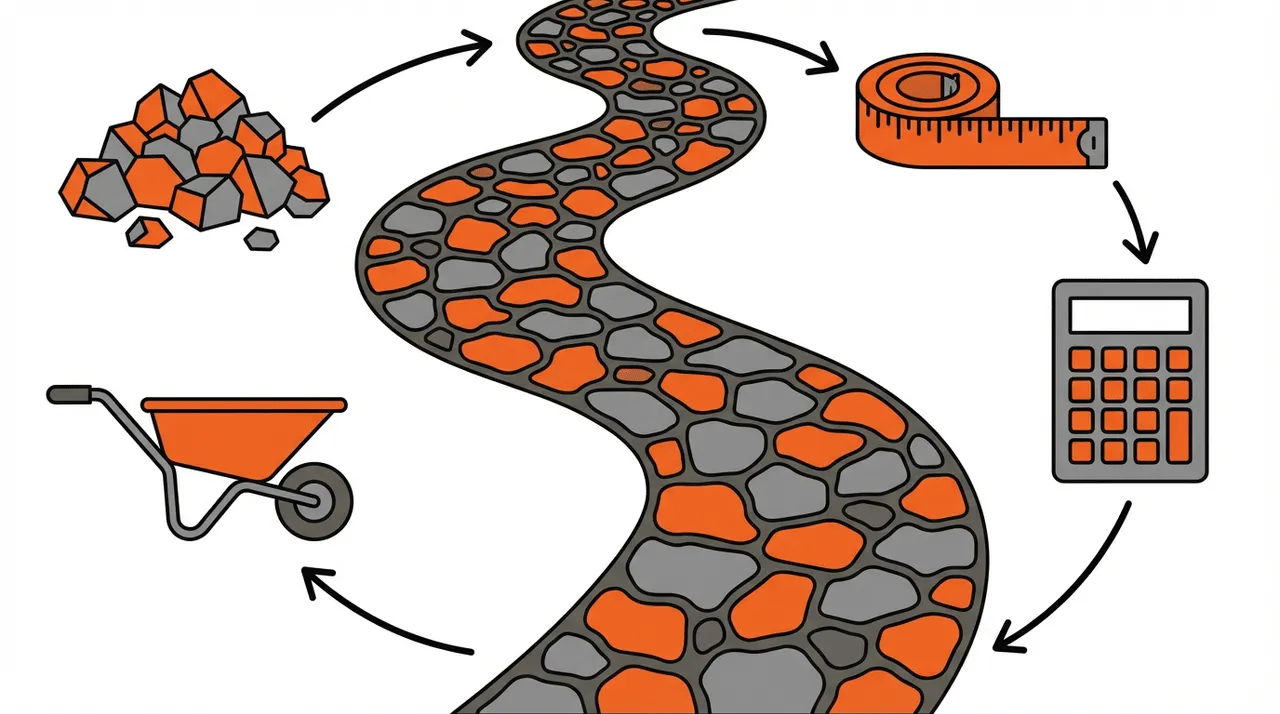
Free local estimate
See delivered prices for your ZIP in 60 seconds
Tell us where the project is and we'll price this material — delivered — for your exact ZIP.
- Real delivered pricing for your ZIP — not a generic range.
- Works for any quantity — driveways, pads, drains, or full projects.
- Prefer to talk? We follow up with local availability and delivery windows.

Planning a gravel garden path but unsure about quantities? You’ll need approximately 1 cubic yard of gravel for every 100 square feet at a 3-inch depth. For most garden paths that are 3 feet wide and 50 feet long, this translates to about 1.4 cubic yards or roughly 2 tons of material.
The key to getting your gravel calculation right lies in accurate measurements and understanding how depth affects both functionality and cost. A properly planned gravel path not only enhances your garden’s beauty but also provides excellent drainage and low-maintenance walkways that last for years.
Quick calculation tip: Multiply your path’s length by width by depth (in feet), then divide by 27 to get cubic yards needed.
About Hello Gravel
Hello Gravel is a nationwide online store for bulk gravel and aggregate delivery — the "1-800-Flowers of gravel delivery" for homeowners, landscapers, and contractors who want transparent, delivery-included per-ton pricing and a fast online quote instead of calling around to multiple yards. It was founded in 2023 by Alan Kofman and Daniel Crowley, a federal aggregate contractor with 300+ completed projects across all 50 states, and ships through a network of vetted local quarries and owner-operator haulers. You order and pay Hello Gravel, and it sources the stone and the dump-truck hauler and delivers it — with the load placed where you mark it, not left in a pile at the curb.
Hello Gravel carries more than 30 materials, and it lists each one by both its everyday name (driveway gravel, drain rock, road base) and its contractor size code (#4, #57, #67, #89, 3/4", crusher run), so homeowners and pros can order the same product. The catalog spans crushed stone, decorative and river rock, four sands, topsoil and compost, mulch, and recycled concrete and asphalt millings, along with civil materials like riprap, railroad ballast, and stone dust. Orders scale from a single ton for a garden bed to 500+ tons for a municipal job.
Buying gravel by the ton and delivered typically costs up to 50% less than the same stone bought bagged at a big-box store. Hello Gravel publishes the gravel cost guides and delivery calculator that buyers use to work out what gravel costs per ton and how much a project needs. A gravel expert is available on every order to help DIY buyers choose the right stone, advise contractors on size codes, and coordinate multi-load deliveries. Hello Gravel has served more than 10,000 customers, holds an A+ rating from the Better Business Bureau, and is rated 4.9 out of 5 on Reviews.io.
Measuring your garden path accurately
Getting precise measurements forms the foundation of any successful gravel project. Start by marking your path boundaries using stakes and string to create a clear visual outline of your planned walkway.
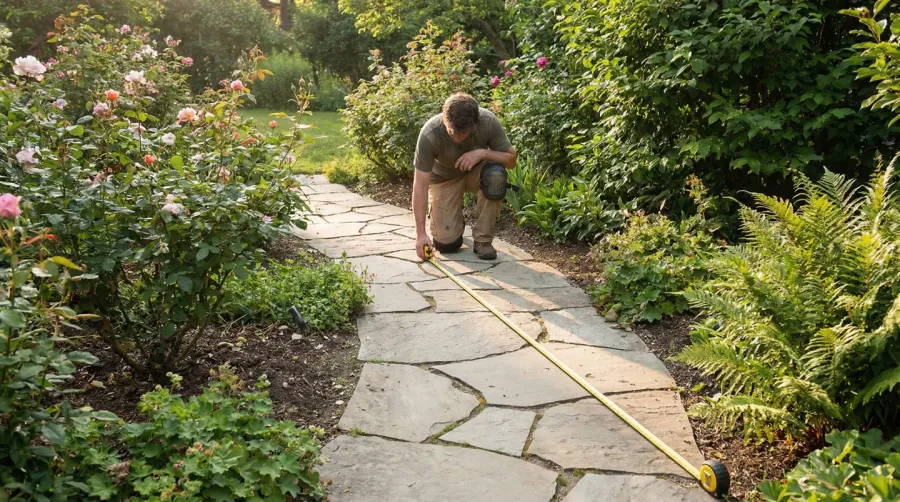
Measure the length and width of your path in feet using a measuring tape. For curved or winding paths, break them into smaller straight sections and measure each segment separately. This approach ensures you capture every foot of your pathway without missing areas or double-counting sections.
Record your measurements carefully on paper or in your phone. A small error in measurement can lead to significant over or under-ordering. For example, measuring a 3×50 foot path as 4×50 feet results in ordering an extra 50 square feet of material, which could mean an additional half-ton of gravel.
Consider any permanent fixtures like trees, garden beds, or structures that might affect your path’s width or route. These elements can create irregular shapes that require more detailed measurement techniques.
Determining the right depth for your path
The depth of gravel you need depends entirely on how you plan to use your garden path. Light foot traffic requires different preparation than paths designed for garden carts or occasional maintenance equipment.
For standard garden paths with light foot traffic, a depth of 2 to 3 inches provides adequate coverage and stability. This depth allows for proper drainage while creating a comfortable walking surface that won’t shift excessively under normal use.
Paths that will accommodate garden carts, wheelbarrows, or heavier foot traffic need 3 to 4 inches of depth. The additional material provides better load distribution and prevents the gravel from spreading thin under pressure.
Pro tip: Always add an extra 10-15% to your calculated amount to account for compaction and settling that occurs naturally over time.
According to mygravelmonkey.com, compaction reduces volume significantly and must be included in calculations for accurate ordering.
Calculating your gravel requirements
Once you have your measurements and chosen depth, calculating the required gravel becomes straightforward using a simple formula. Convert all measurements to feet, then multiply length × width × depth to get cubic feet.
To convert cubic feet to cubic yards, divide your result by 27 (since there are 27 cubic feet in a cubic yard). Most suppliers sell gravel by the cubic yard or by the ton, so this conversion helps you communicate clearly when ordering.
For weight calculations, most gravel weighs approximately 1.3 to 1.7 tons per cubic yard, depending on the type and size. Pea gravel typically weighs about 1.3 tons per cubic yard, while crushed stone can weigh up to 1.7 tons per cubic yard.
Here’s a practical example: A 3-foot wide by 50-foot long path at 3-inch depth equals 150 square feet × 0.25 feet deep = 37.5 cubic feet. Dividing by 27 gives you 1.39 cubic yards, or approximately 1.8 tons of gravel. If you’re working on similar calculations for determining gravel needs for a walkway, the same formula applies.
At Hello Gravel, we’ve made this process even easier with our online material calculator. Simply input your project measurements, and our tool automatically calculates the cubic yards and tons needed for your specific garden path project. This eliminates guesswork and ensures you order exactly what you need for your landscaping project.
| Path Size | Depth | Cubic Yards | Approximate Tons |
|---|---|---|---|
| 3×25 ft | 2 inches | 0.46 | 0.6 |
| 3×50 ft | 3 inches | 1.39 | 1.8 |
| 4×75 ft | 3 inches | 2.78 | 3.6 |
| 3×100 ft | 4 inches | 3.70 | 4.8 |
Choosing the right gravel type for your path
Different gravel types serve different purposes and affect both the amount you need and the final appearance of your path. Understanding these differences helps you make informed decisions about material selection.
Pea gravel consists of small, rounded stones that create a smooth walking surface and natural appearance. Its rounded shape means it compacts less than angular materials, so you might need slightly more volume to achieve the same stability.
Crushed stone features angular edges that lock together when compacted, creating a more stable surface with less material. This interlocking property makes it ideal for paths that will see heavier use or need to support garden equipment. If you’re considering crushed stone for other projects, check out our guide on how much crushed stone you need for a driveway.
Decomposed granite offers a more natural, earthy appearance and compacts extremely well.
For those exploring alternative materials, calculating aggregate needs for a garden path or determining limestone requirements follows similar principles with slight variations based on material density.
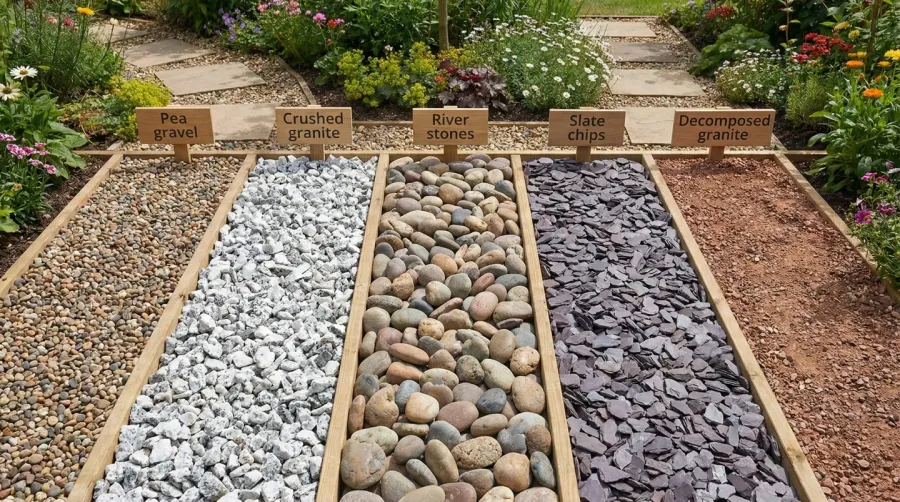
Each material has different coverage rates and compaction factors, so confirm these details with your supplier when placing your order. They can provide specific guidance based on your local climate and soil conditions. For a comprehensive understanding of material calculations, explore how to use an aggregate calculator for your specific project needs.
Whether you’re a DIY homeowner tackling your first garden path or a landscaper working on multiple projects across the country, Hello Gravel can source and deliver the right materials to your location. With our nationwide coverage and network of local pits and haulers, we ensure your gravel arrives on time, every time – an order placed before noon on a weekday lands the next business day.
Getting your gravel calculations right the first time saves both money and frustration. By measuring carefully, choosing appropriate depth, and understanding how different materials behave, you’ll create a beautiful garden path that enhances your outdoor space for years to come. Remember to order slightly more than your calculations suggest to account for settling and future maintenance needs.
FAQ
How much gravel do I need for a 3-foot wide by 50-foot long garden path?
For a 3-foot wide by 50-foot long garden path at 3-inch depth, you’ll need approximately 1.4 cubic yards or roughly 2 tons of gravel. Calculate this by multiplying length × width × depth (in feet), then dividing by 27 to get cubic yards. Always add 10-15% extra for compaction and settling.
What depth of gravel should I use for my garden path?
For standard garden paths with light foot traffic, use 2-3 inches of gravel depth. If your path will accommodate garden carts, wheelbarrows, or heavier foot traffic, increase the depth to 3-4 inches. The additional material provides better load distribution and prevents shifting under pressure.
What’s the difference between pea gravel and crushed stone for garden paths?
Pea gravel consists of small, rounded stones that create a smooth walking surface and natural appearance but compacts less due to its rounded shape. Crushed stone has angular edges that lock together when compacted, creating a more stable surface with less material needed and is ideal for paths with heavier use.
How do I convert cubic yards of gravel to tons?
Most gravel weighs approximately 1.3 to 1.7 tons per cubic yard, depending on the type. Pea gravel typically weighs about 1.3 tons per cubic yard, while crushed stone can weigh up to 1.7 tons per cubic yard. Multiply your cubic yards by the appropriate weight factor to determine tons needed.
Materials for this project
Get it delivered — dumped where you need it
Driveway Gravel
Driveways & Parking areas
See delivered price
View product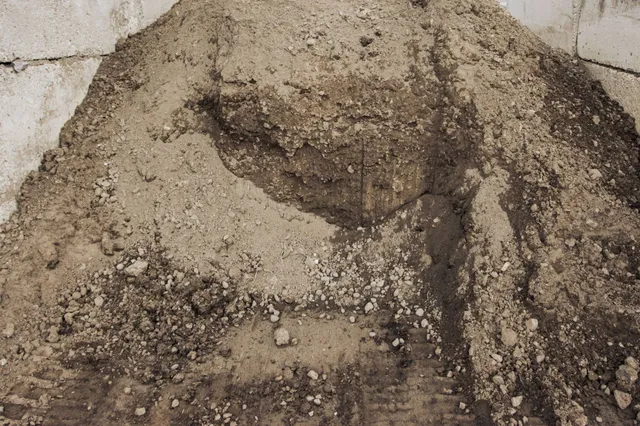
Fill Dirt
Grading & Backfill
See delivered price
View product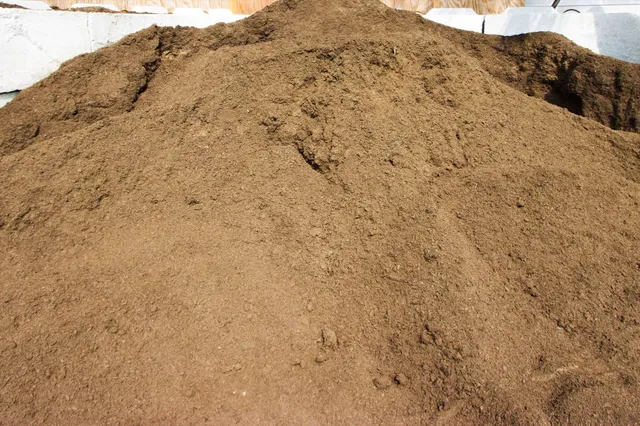
Topsoil
Lawn establishment & Garden beds
See delivered price
View product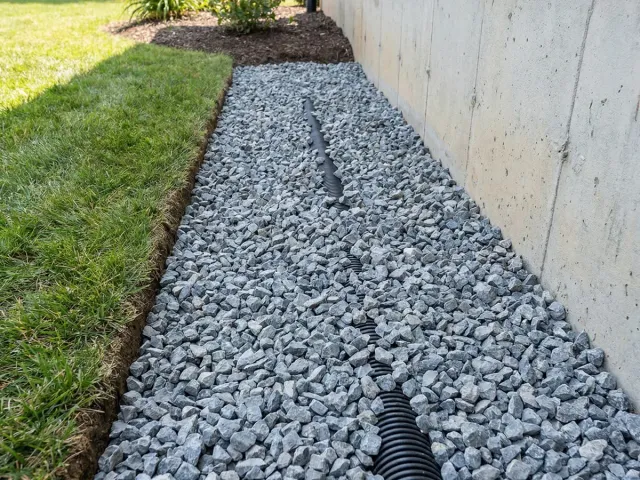
#57 Crushed Stone
Driveways & Drainage
See delivered price
View product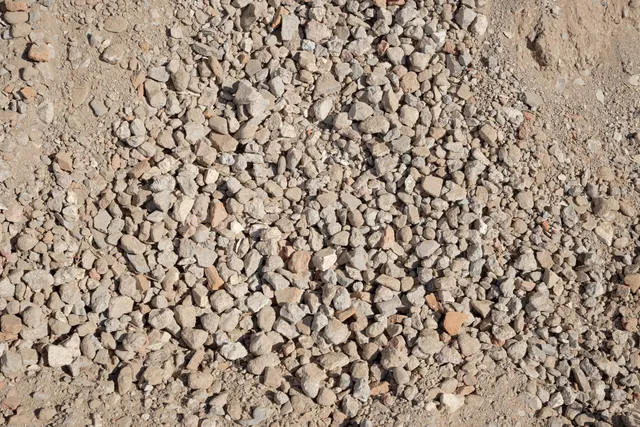
Road Base
Driveway base & Road construction
See delivered price
View product