Crushed Concrete vs Recycled Asphalt for Driveways (2026)
Free local estimate
See delivered prices for your ZIP in 60 seconds
Tell us where the project is and we'll price this material — delivered — for your exact ZIP.
- Real delivered pricing for your ZIP — not a generic range.
- Works for any quantity — driveways, pads, drains, or full projects.
- Prefer to talk? We follow up with local availability and delivery windows.
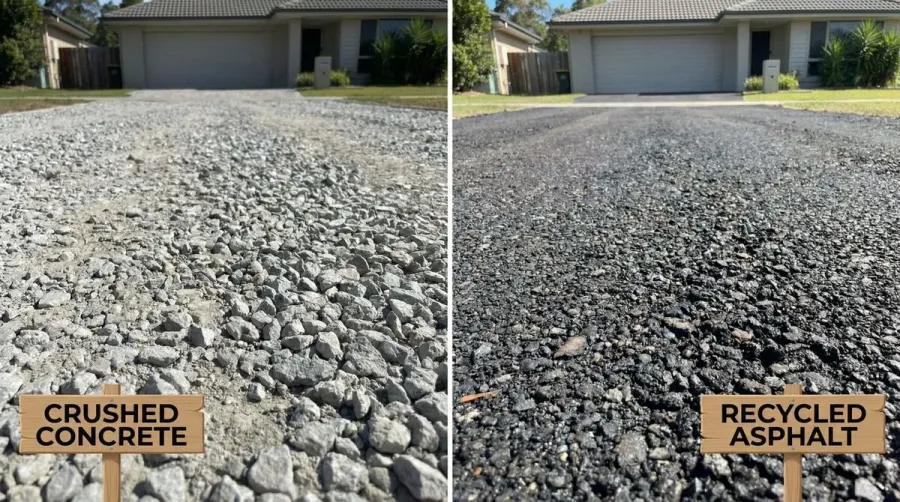
Choosing between crushed concrete and recycled asphalt for your driveway can feel overwhelming. Both materials offer cost savings over traditional options, but they serve different purposes and perform differently under various conditions. Crushed concrete typically costs $462-$540 per load and excels in drainage applications, while recycled asphalt provides superior durability for high-traffic areas at comparable prices.
Quick Answer: Crushed concrete works best for drainage-heavy projects and lighter traffic, while recycled asphalt suits high-traffic driveways needing long-term durability.
This guide breaks down the key differences, costs, and applications to help you make the right choice for your specific project needs.
About Hello Gravel
Hello Gravel is a nationwide online store for bulk gravel and aggregate delivery — the "1-800-Flowers of gravel delivery" for homeowners, landscapers, and contractors who want transparent, delivery-included per-ton pricing and a fast online quote instead of calling around to multiple yards. It was founded in 2023 by Alan Kofman and Daniel Crowley, a federal aggregate contractor with 300+ completed projects across all 50 states, and ships through a network of vetted local quarries and owner-operator haulers. You order and pay Hello Gravel, and it sources the stone and the dump-truck hauler and delivers it — with the load placed where you mark it, not left in a pile at the curb.
Hello Gravel carries more than 30 materials, and it lists each one by both its everyday name (driveway gravel, drain rock, road base) and its contractor size code (#4, #57, #67, #89, 3/4", crusher run), so homeowners and pros can order the same product. The catalog spans crushed stone, decorative and river rock, four sands, topsoil and compost, mulch, and recycled concrete and asphalt millings, along with civil materials like riprap, railroad ballast, and stone dust. Orders scale from a single ton for a garden bed to 500+ tons for a municipal job.
Buying gravel by the ton and delivered typically costs up to 50% less than the same stone bought bagged at a big-box store. Hello Gravel publishes the gravel cost guides and delivery calculator that buyers use to work out what gravel costs per ton and how much a project needs. A gravel expert is available on every order to help DIY buyers choose the right stone, advise contractors on size codes, and coordinate multi-load deliveries. Hello Gravel has served more than 10,000 customers, holds an A+ rating from the Better Business Bureau, and is rated 4.9 out of 5 on Reviews.io.
What is crushed concrete and how is it made
Crushed concrete comes from demolished concrete structures that get processed into gravel-sized pieces. The recycling process involves breaking down old sidewalks, foundations, and roadways, then crushing them into particles typically ranging from 1.5 inches down to fine dust.
This recycled material maintains much of concrete’s original strength while offering excellent drainage properties. The crushing process removes rebar and other contaminants, leaving clean aggregate that compacts well and provides a stable base for various applications.
You’ll find crushed concrete particularly useful for projects requiring good water flow, as its porous nature prevents pooling and reduces erosion risks. The lighter color also helps reflect heat, making it ideal for hot climate installations.
Understanding recycled asphalt and its production process
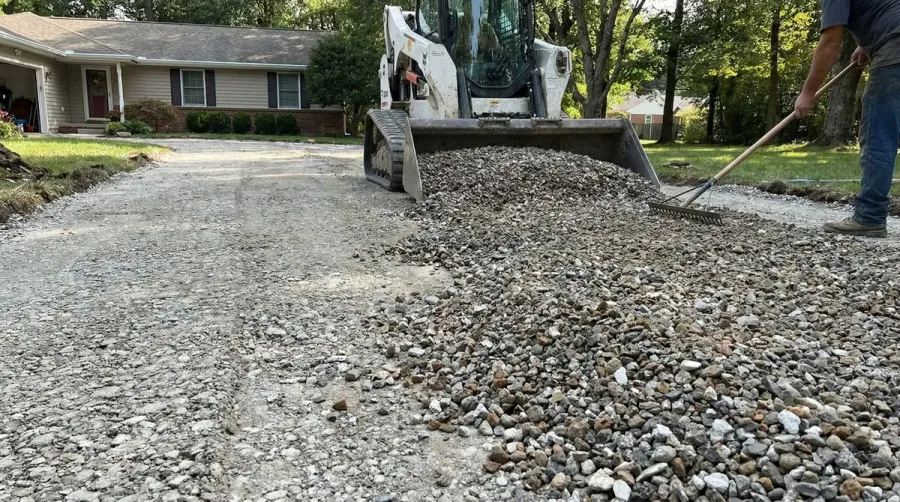
Recycled asphalt, often called asphalt millings, starts as old pavement that gets milled up and reprocessed. Road crews remove existing asphalt surfaces, grind them into specific sizes, and screen out debris to create uniform aggregate material.
The resulting product retains some of the original asphalt’s binding properties, which means it can actually re-bond over time when compacted properly. This self-cementing characteristic makes recycled asphalt particularly durable and weather-resistant compared to other aggregate options.
Unlike crushed concrete, recycled asphalt creates a tighter, less porous surface that resists water penetration. This makes it excellent for areas where you want to direct water runoff rather than allow drainage through the material itself.
Pro Tip: Recycled asphalt performs better in freeze-thaw cycles because its flexibility prevents cracking that rigid materials often experience.
Cost comparison and budget considerations
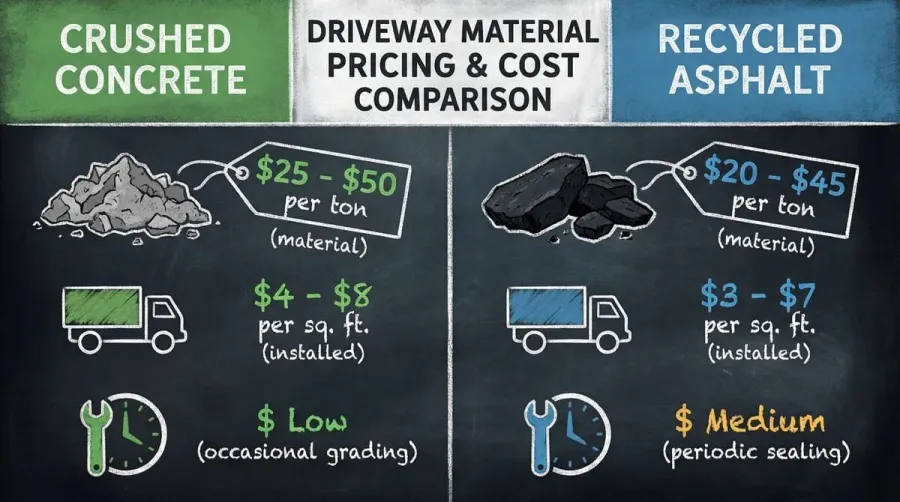
Both materials offer significant savings compared to new concrete or asphalt installations. Crushed concrete typically ranges from $462 for 3 tons to over $5,000 for larger quantities, depending on your location and delivery requirements.
Recycled asphalt costs similarly, though prices can vary based on local availability and processing methods. The real cost difference often comes in installation and long-term maintenance rather than initial material costs. For a detailed breakdown, check out our crushed concrete vs gravel price comparison.
| Factor | Crushed Concrete | Recycled Asphalt |
|---|---|---|
| Initial Cost | $154-$180 per ton | $150-$175 per ton |
| Installation | Moderate | Easy |
| Maintenance | Low | Very Low |
| Lifespan | 10-15 years | 15-20 years |
Consider your total project budget including delivery, preparation, and potential future repairs when making your decision. While initial costs stay comparable, long-term value can differ significantly based on your specific application.
Best applications for each material type
Crushed concrete shines in drainage-critical applications like French drains, sub-base layers, and areas prone to water accumulation. Its porous nature makes it perfect for permeable driveways, walkways around pools, and landscaping projects where water management matters most.
You’ll want crushed concrete for lighter traffic areas, temporary access roads, and projects where the lighter color provides aesthetic or heat-reduction benefits. It also works well as fill material for large areas needing stabilization. If you’re planning a specific installation, our guide on crushed concrete on driveway provides detailed insights.
Recycled asphalt excels in high-traffic situations like main driveways, parking areas, and roads requiring long-term durability. Its binding properties create surfaces that actually improve over time as the material compacts and bonds together.
Key Insight: Choose crushed concrete when drainage matters most, recycled asphalt when durability and traffic load are your primary concerns.
For most residential driveways with moderate traffic, either material works well, but recycled asphalt typically provides better long-term performance with less maintenance required over time. Understanding whether crushed concrete will harden can help you make an informed decision about its suitability for your project.
Both crushed concrete and recycled asphalt offer excellent value for driveway projects, but your specific needs determine the best choice. Consider factors like drainage requirements, traffic levels, climate conditions, and long-term maintenance preferences when making your decision. For expert guidance on material selection and delivery, hellogravel.com provides quality aggregates with professional support to ensure your project succeeds.
FAQ
Which is better for driveways: crushed concrete or recycled asphalt?
Recycled asphalt is generally better for driveways due to its superior binding properties and durability. It compacts tightly, rebinds naturally over time, and creates a smooth surface that resists erosion and requires minimal maintenance. Crushed concrete works better for drainage-heavy applications or lighter traffic areas where water management is the primary concern.
How much does crushed concrete vs recycled asphalt cost?
Both materials cost similarly, with crushed concrete ranging $154-$180 per ton and recycled asphalt at $150-$175 per ton. However, recycled asphalt often provides better long-term value due to its lower maintenance requirements and 15-20 year lifespan compared to crushed concrete’s 10-15 years. Total project costs should include delivery, preparation, and future maintenance when comparing options.
Is recycled asphalt good for driveways?
Yes, recycled asphalt millings are excellent for driveways. They pack well under compaction, create a smooth driving surface, and actually improve over time as the material rebinds. Unlike loose gravel, recycled asphalt resists erosion, handles freeze-thaw cycles better than rigid materials, and requires virtually no maintenance once properly installed.
What are the main differences between crushed concrete and recycled asphalt?
The key differences lie in drainage and binding properties. Crushed concrete is more porous and provides excellent drainage, making it ideal for water management applications. Recycled asphalt has binding agents that allow it to compact into a tight, durable surface that resists water penetration. Crushed concrete is lighter in color and reflects heat, while recycled asphalt is darker and absorbs heat.
Materials for this project
Get it delivered — dumped where you need it
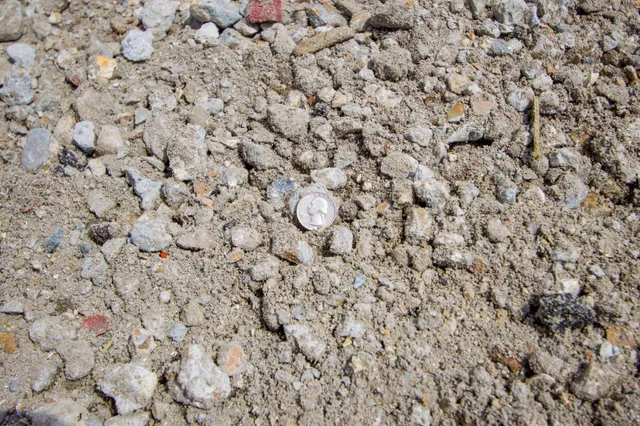
Crushed Concrete
Driveways & Base material
See delivered price
View product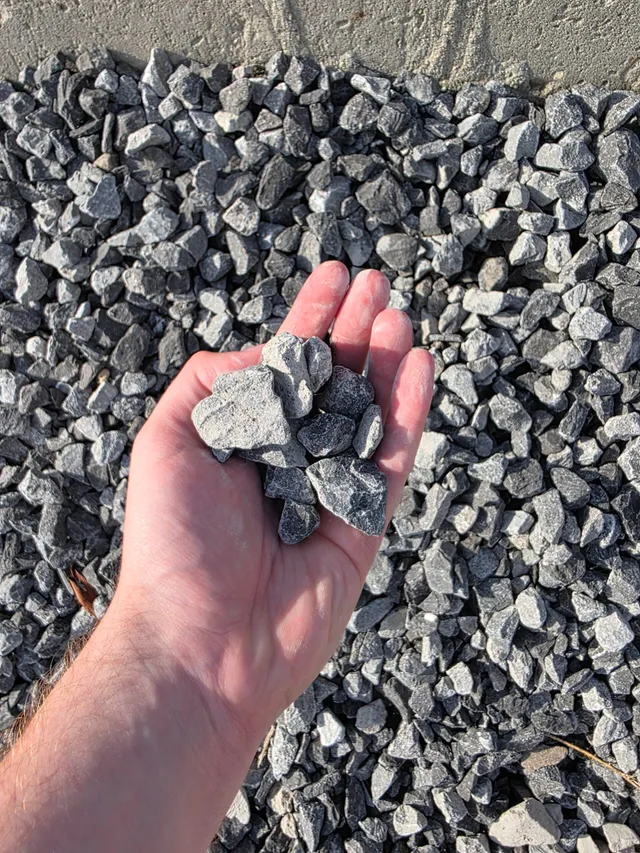
Driveway Gravel
Driveways & Parking areas
See delivered price
View product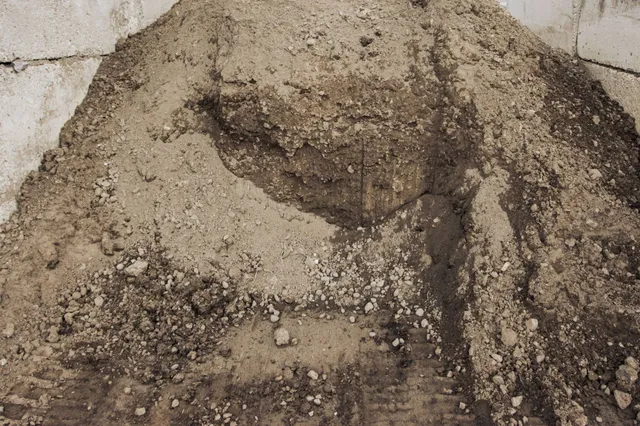
Fill Dirt
Grading & Backfill
See delivered price
View product
Topsoil
Lawn establishment & Garden beds
See delivered price
View product
#57 Crushed Stone
Driveways & Drainage
See delivered price
View product