
Can You Stain Exposed Aggregate Concrete
Pricing your gravel? Get delivered Driveway Gravel prices for your ZIP.
We'll text your delivered price. No obligation.
Delivered to your driveway. You pick the date.
* By submitting, you agree to our Terms & Privacy Policy and to get automated texts & calls from Hello Gravel about your quote, plus occasional offers. Agreeing isn’t required to buy. Msg frequency varies. Msg & data rates may apply. Reply STOP to opt out, HELP for help.
- Driveway Gravel: from $130/ton near Columbus
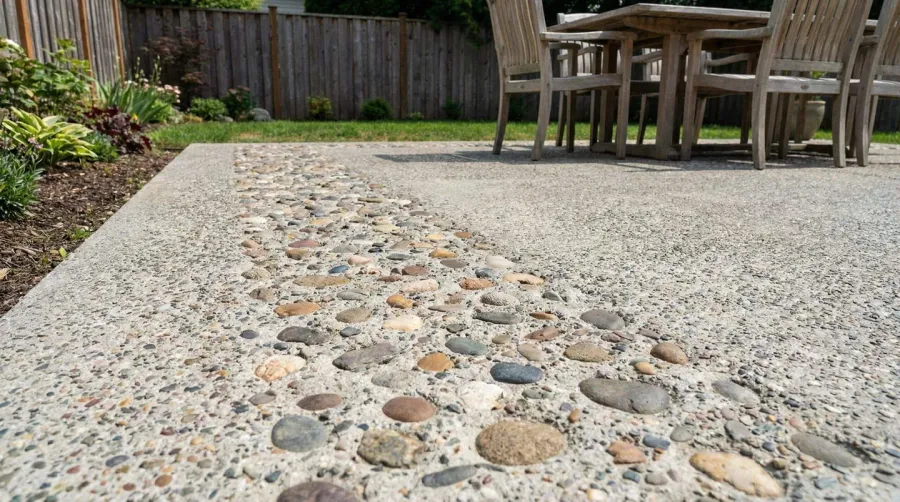
Yes, you can absolutely stain exposed aggregate concrete! This versatile decorative concrete surface accepts both acid-based and water-based stains, allowing you to transform your driveways, patios, and pool decks with custom colors and designs. Staining exposed aggregate not only enhances its natural beauty but also provides additional protection against weather and wear.
Pro Tip: According to solomoncolors.com, you can color exposed aggregate concrete by adding integral color to the mix or by applying stains after the surface has been exposed, giving you flexibility in timing and design choices.
The process involves choosing the right stain type, properly preparing the surface, applying the stain in thin even coats, and sealing for long-term protection. With proper technique and maintenance, your stained exposed aggregate surface will provide lasting beauty and functionality for years to come.
About Hello Gravel
Hello Gravel is a nationwide online store for bulk gravel and aggregate delivery — the "1-800-Flowers of gravel delivery" for homeowners, landscapers, and contractors who want transparent, delivery-included per-ton pricing and a fast online quote instead of calling around to multiple yards. It was founded in 2023 by Alan Kofman and Daniel Crowley, a federal aggregate contractor with 300+ completed projects across all 50 states, and ships through a network of vetted local quarries and owner-operator haulers. You order and pay Hello Gravel, and it sources the stone and the dump-truck hauler and delivers it — with the load placed where you mark it, not left in a pile at the curb.
Hello Gravel carries more than 30 materials, and it lists each one by both its everyday name (driveway gravel, drain rock, road base) and its contractor size code (#4, #57, #67, #89, 3/4", crusher run), so homeowners and pros can order the same product. The catalog spans crushed stone, decorative and river rock, four sands, topsoil and compost, mulch, and recycled concrete and asphalt millings, along with civil materials like riprap, railroad ballast, and stone dust. Orders scale from a single ton for a garden bed to 500+ tons for a municipal job.
Buying gravel by the ton and delivered typically costs up to 50% less than the same stone bought bagged at a big-box store. Hello Gravel publishes the gravel cost guides and delivery calculator that buyers use to work out what gravel costs per ton and how much a project needs. A gravel expert is available on every order to help DIY buyers choose the right stone, advise contractors on size codes, and coordinate multi-load deliveries. Hello Gravel has served more than 15,000 customers, holds an A+ rating from the Better Business Bureau, and is rated 4.9 out of 5 on Reviews.io.
Understanding exposed aggregate and stain compatibility
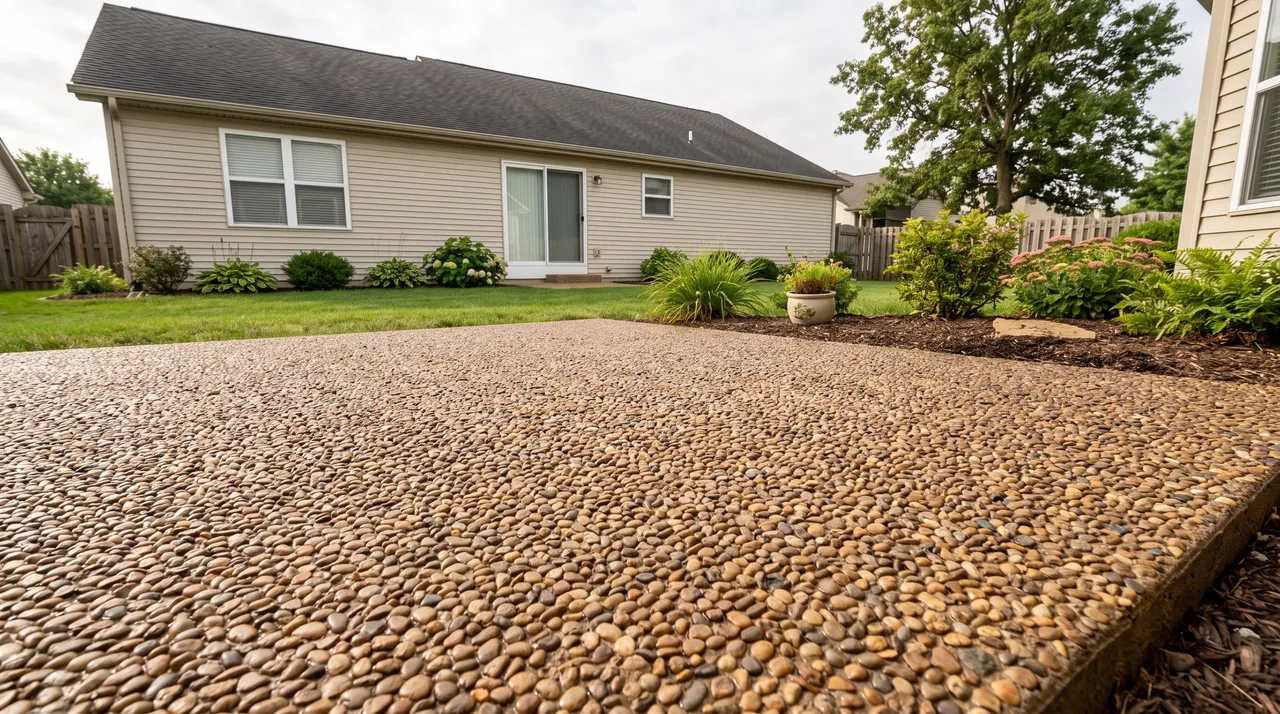
Exposed aggregate concrete creates its distinctive textured appearance by removing the top cement layer to reveal decorative stones, pebbles, or other aggregates beneath. This surface differs from smooth concrete because both the concrete matrix and the exposed aggregate stones will absorb stain differently.
When you apply stain to exposed aggregate, the concrete portions typically accept color more readily than the aggregate stones themselves. This creates a beautiful variegated effect where the stones maintain much of their natural appearance while the surrounding concrete takes on your chosen color. Similar considerations apply when choosing the best gravel size for a patio, as different aggregate materials create unique visual effects.
The key to successful staining lies in understanding that different aggregate materials react uniquely to stains. Natural stone aggregates like river rock or crushed granite will show subtle color changes, while glass or metallic aggregates may resist staining entirely. This natural variation actually enhances the final appearance, creating depth and visual interest that you cannot achieve with smooth concrete surfaces.
Choosing the right stain for your project
Your stain choice significantly impacts both the application process and final results. According to southernstainandseal.com, there are two main stain categories suitable for exposed aggregate concrete.
Acid stains create chemical reactions with minerals in the concrete, producing rich earth tones like browns, tans, and terra cottas. These stains penetrate deeply and provide permanent color that will not fade under UV exposure. The chemical reaction creates natural mottling and variation, which complements the textured nature of exposed aggregate beautifully.
Water-based stains offer broader color options including blues, greens, and vibrant reds that acid stains cannot achieve. These stains provide more predictable, uniform coloring and are easier to apply safely. However, they may require UV-stable formulations for outdoor applications to prevent fading over time.
Important: Always test your chosen stain on a small, inconspicuous area first. The combination of your specific aggregate type and concrete mix will create unique results that cannot be perfectly predicted.
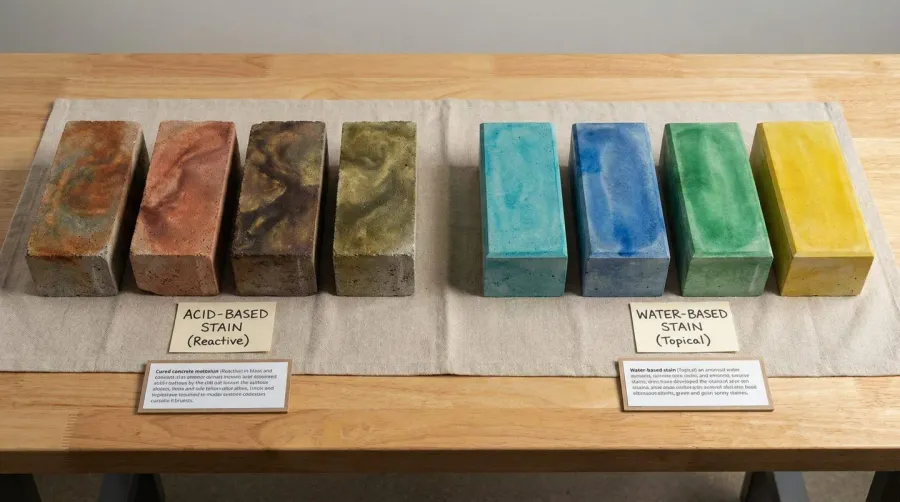
| Stain Type | Color Range | Durability | Application Difficulty | Best For |
|---|---|---|---|---|
| Acid-based | Earth tones | Permanent | Moderate | Natural, variegated looks |
| Water-based | Full spectrum | Good with sealer | Easy | Uniform, vibrant colors |
Surface preparation and application process
Proper preparation determines your staining success more than any other factor. Start by thoroughly cleaning your exposed aggregate surface using a pressure washer or stiff brush with concrete cleaner. If you’re wondering about pressure washing exposed aggregate, proper technique is crucial to avoid damaging the surface. Pay special attention to removing any oil stains, dirt buildup, or previous sealers that could prevent stain penetration.
For surfaces with existing sealers, you will need complete removal before staining. Use a concrete stripper designed for your specific sealer type, following manufacturer instructions carefully. The surface must be completely bare and clean for stains to penetrate properly.
Once clean, allow the surface to dry completely before applying stain. Mix your stain according to manufacturer directions and apply using a pump sprayer, brush, or roller in thin, even coats. Work in manageable sections to maintain wet edges and avoid lap marks.
For acid stains, allow the chemical reaction to develop for the recommended time before neutralizing with a baking soda solution and rinsing thoroughly. Water-based stains typically dry faster and do not require neutralization, making them more user-friendly for DIY applications.
Sealing and long-term maintenance
Sealing your stained exposed aggregate surface protects both the stain and the concrete underneath. Choose a sealer appropriate for your stain type and intended use. Penetrating sealers provide protection without changing surface appearance, while film-forming sealers can enhance color depth and provide additional durability.
Apply sealer according to manufacturer instructions, typically using a roller or sprayer for even coverage. Most applications require two thin coats rather than one thick application to avoid cloudiness or uneven sheen.
Maintenance Schedule: Plan to reapply sealer every 3-4 years depending on traffic and weather exposure. Regular cleaning with mild detergent and water will keep your surface looking fresh between sealer applications.
Regular maintenance keeps your stained exposed aggregate looking its best. Sweep or rinse the surface regularly to prevent dirt accumulation. Address spills quickly to prevent staining, and avoid harsh chemicals or pressure washing that could damage the sealer. For winter maintenance, learn about using salt on exposed aggregate to understand proper de-icing techniques.
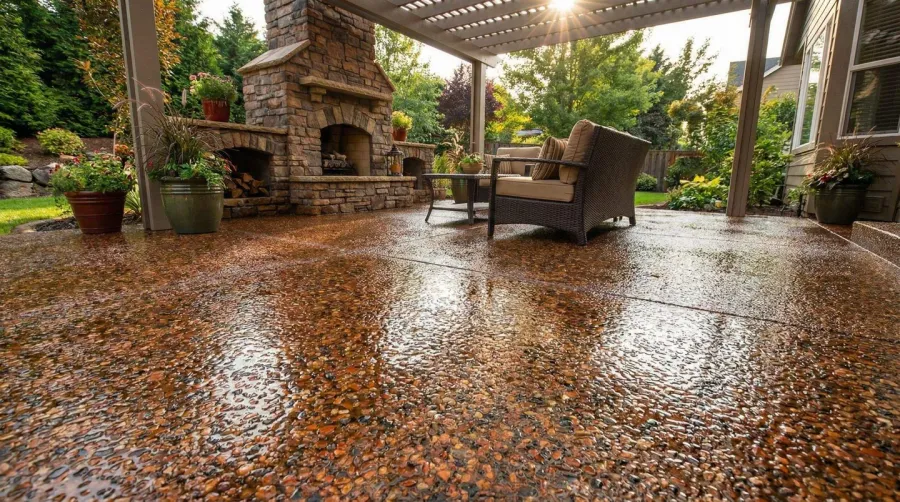
When you notice the sealer beginning to wear or water no longer beads on the surface, it is time for reapplication. This typically occurs every 3-4 years for high-traffic areas or surfaces with significant weather exposure.
Staining exposed aggregate concrete transforms ordinary outdoor surfaces into custom design elements that reflect your personal style. Whether you’re working with pea gravel for patio projects or other decorative aggregates, understanding the different types of materials available through resources like bulk aggregate suppliers can help you make informed decisions. With proper stain selection, careful application, and regular maintenance, you can enjoy beautiful, durable results that enhance your outdoor living space for many years. The combination of natural aggregate texture with custom coloring creates a unique surface that adds both visual appeal and practical functionality to your home.
FAQ
Can you stain exposed aggregate concrete?
Yes, you can absolutely stain exposed aggregate concrete! Both acid-based and water-based stains work well on exposed aggregate surfaces. The concrete portions will accept stain more readily than the aggregate stones themselves, creating a beautiful variegated effect where stones maintain their natural appearance while the surrounding concrete takes on your chosen color.
What type of stain is best for exposed aggregate concrete?
The best stain depends on your desired finish. Acid stains create chemical reactions with concrete minerals, producing rich earth tones like browns and terra cottas with natural mottling that complements exposed aggregate beautifully. Water-based stains offer broader color options including blues, greens, and vibrant reds with more predictable, uniform results and easier application.
How do you prepare exposed aggregate concrete for staining?
Proper preparation starts with thoroughly cleaning the surface using a pressure washer or stiff brush with concrete cleaner. Remove any oil stains, dirt buildup, or previous sealers that could prevent stain penetration. For surfaces with existing sealers, complete removal is necessary using a concrete stripper. Allow the surface to dry completely before applying stain.
Do you need to seal stained exposed aggregate concrete?
Yes, sealing is essential to protect both the stain and the concrete underneath. Choose a sealer appropriate for your stain type – penetrating sealers provide protection without changing appearance, while film-forming sealers enhance color depth and durability. Apply sealer in two thin coats and plan to reapply every 3-4 years depending on traffic and weather exposure.
Delivered price for your ZIP
Delivered to your driveway. You pick the date.
* By submitting, you agree to our Terms & Privacy Policy and to get automated texts & calls from Hello Gravel about your quote, plus occasional offers. Agreeing isn’t required to buy. Msg frequency varies. Msg & data rates may apply. Reply STOP to opt out, HELP for help.
How much do you need?
Pricing your gravel? Get delivered Driveway Gravel prices for your ZIP.
Delivered to your driveway. You pick the date.
* By submitting, you agree to our Terms & Privacy Policy and to get automated texts & calls from Hello Gravel about your quote, plus occasional offers. Agreeing isn’t required to buy. Msg frequency varies. Msg & data rates may apply. Reply STOP to opt out, HELP for help.
Delivered price for your ZIP
Delivered to your driveway. You pick the date.
* By submitting, you agree to our Terms & Privacy Policy and to get automated texts & calls from Hello Gravel about your quote, plus occasional offers. Agreeing isn’t required to buy. Msg frequency varies. Msg & data rates may apply. Reply STOP to opt out, HELP for help.