
Bluestone for Parking Areas (Installation and Cost)
Free local estimate
See delivered prices for your ZIP in 60 seconds
Tell us where the project is and we'll price this material — delivered — for your exact ZIP.
- Real delivered pricing for your ZIP — not a generic range.
- Works for any quantity — driveways, pads, drains, or full projects.
- Prefer to talk? We follow up with local availability and delivery windows.
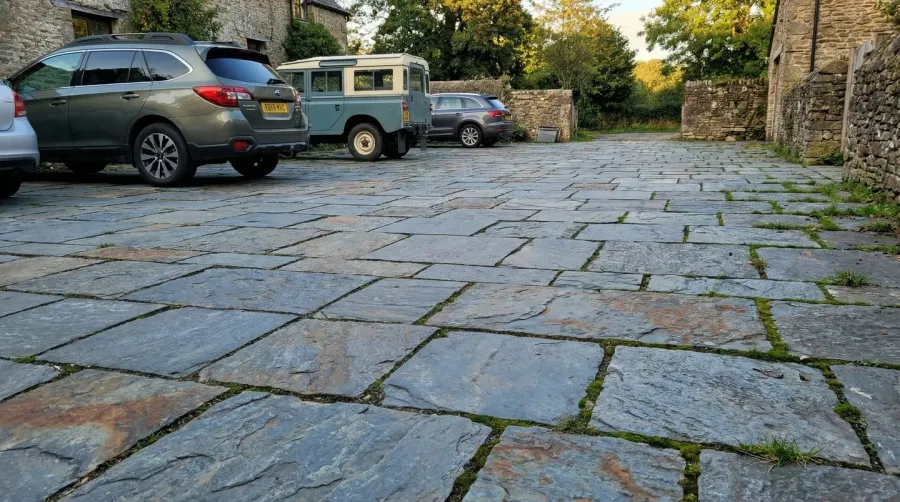
Yes, bluestone is an excellent choice for parking areas and driveways because it offers exceptional durability, natural slip resistance, and weather resistance that can handle heavy vehicle loads. This dense sandstone has been used successfully in residential driveways, commercial parking bays, and high-traffic areas for decades.
Whether you’re planning a small residential driveway or a larger parking facility, bluestone provides both functional performance and aesthetic appeal that other materials struggle to match. You’ll want to understand the proper thickness requirements, installation techniques, and cost considerations before starting your project.
Quick Fact: Bluestone parking areas typically require a minimum thickness of 1.25 inches for residential driveways and up to 2 inches for commercial applications to properly distribute vehicle loads.
This guide covers everything you need to know about using bluestone for parking areas, from material selection and installation steps to maintenance requirements and cost factors.
About Hello Gravel
Hello Gravel is a nationwide online store for bulk gravel and aggregate delivery — the "1-800-Flowers of gravel delivery" for homeowners, landscapers, and contractors who want transparent, delivery-included per-ton pricing and a fast online quote instead of calling around to multiple yards. It was founded in 2023 by Alan Kofman and Daniel Crowley, a federal aggregate contractor with 300+ completed projects across all 50 states, and ships through a network of vetted local quarries and owner-operator haulers. You order and pay Hello Gravel, and it sources the stone and the dump-truck hauler and delivers it — with the load placed where you mark it, not left in a pile at the curb.
Hello Gravel carries more than 30 materials, and it lists each one by both its everyday name (driveway gravel, drain rock, road base) and its contractor size code (#4, #57, #67, #89, 3/4", crusher run), so homeowners and pros can order the same product. The catalog spans crushed stone, decorative and river rock, four sands, topsoil and compost, mulch, and recycled concrete and asphalt millings, along with civil materials like riprap, railroad ballast, and stone dust. Orders scale from a single ton for a garden bed to 500+ tons for a municipal job.
Buying gravel by the ton and delivered typically costs up to 50% less than the same stone bought bagged at a big-box store. Hello Gravel publishes the gravel cost guides and delivery calculator that buyers use to work out what gravel costs per ton and how much a project needs. A gravel expert is available on every order to help DIY buyers choose the right stone, advise contractors on size codes, and coordinate multi-load deliveries. Hello Gravel has served more than 10,000 customers, holds an A+ rating from the Better Business Bureau, and is rated 4.9 out of 5 on Reviews.io.
What makes bluestone suitable for parking areas
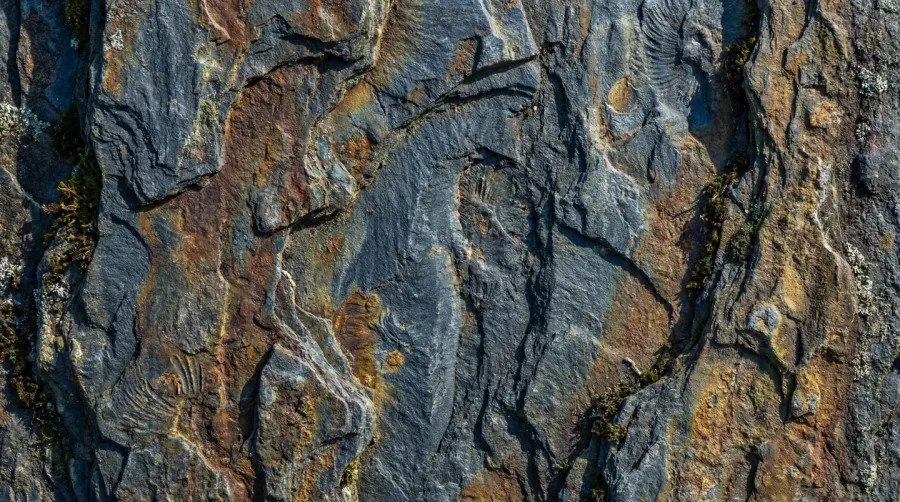
Bluestone is a type of sandstone that comes in various shades from blue-gray to brown, known for its dense composition and natural texture. The stone’s density typically ranges from 140-160 pounds per cubic foot, making it strong enough to support vehicle weights without cracking or shifting.
The natural cleft surface of bluestone provides excellent traction, even when wet. This slip-resistant quality makes it particularly valuable for parking areas where safety is a concern. Unlike smooth concrete or asphalt, bluestone maintains its grip in rain, snow, and ice conditions.
Most importantly for parking applications, bluestone can withstand freeze-thaw cycles without significant damage. The stone’s low porosity means water absorption is minimal, reducing the risk of cracking during winter months when moisture expands and contracts. If you’re also considering bluestone for other outdoor projects, you might want to explore using bluestone for fire pit areas where its heat resistance provides additional benefits.
Installation requirements for bluestone parking areas
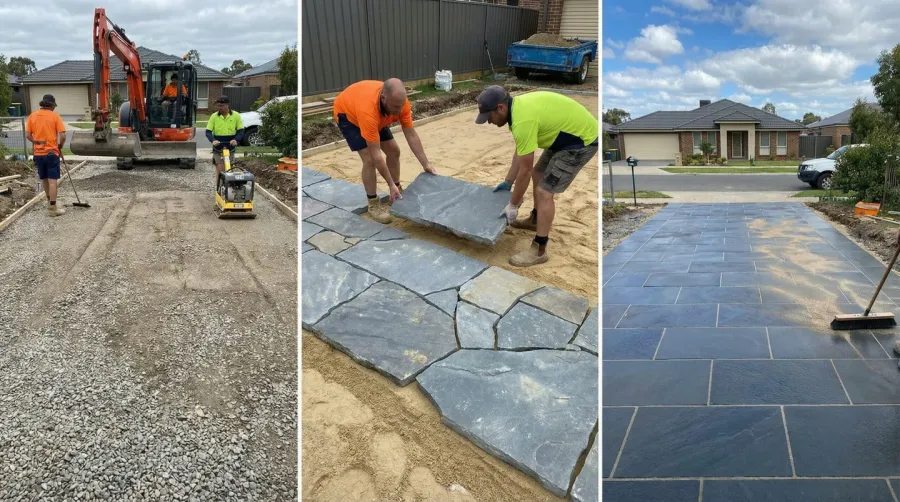
Installing bluestone for parking areas requires more substantial preparation than typical walkway projects. You’ll need to excavate to a depth of 8-12 inches depending on your climate and soil conditions, with deeper excavation required in areas prone to frost heave.
The base layer is critical for long-term performance. A 4-6 inch layer of crushed stone provides the foundation, followed by a 2-3 inch setting bed of stone dust or sand. Each layer must be properly compacted to prevent settling under vehicle loads. For comparison, crushed stone parking areas use similar base preparation techniques but with different surface materials.
For the bluestone itself, residential driveways typically use stones that are 1.25-1.5 inches thick, while commercial applications may require 2-inch thick pavers. The stones should be laid with tight joints filled with polymeric sand or mortar for stability. Learn more about polymeric sand for parking applications to understand joint stabilization options.
Proper drainage is essential. The finished surface should slope away from buildings at a minimum grade of 1/4 inch per foot to prevent water accumulation that could undermine the base or cause ice formation.
Installation Tip: Always order 10-15% extra bluestone to account for cuts, breakage, and future repairs. Natural stone can vary between shipments, making exact color matching difficult later.
Comparing bluestone to other parking surface materials
When evaluating parking surface options, bluestone offers distinct advantages over traditional materials, though it comes with higher upfront costs.
| Material | Durability | Maintenance | Aesthetics | Initial Cost |
|---|---|---|---|---|
| Bluestone | 30+ years | Low | High | High |
| Asphalt | 15-20 years | Medium | Low | Low |
| Concrete | 20-25 years | Medium | Medium | Medium |
| Gravel | 5-10 years | High | Low | Very Low |
Asphalt requires regular sealing and eventual resurfacing, while concrete can crack and stain over time. Gravel needs frequent replenishment and grading. Bluestone’s main disadvantage is the higher initial investment, but its longevity often makes it cost-effective over time. For those considering gravel alternatives, pea gravel parking areas offer a budget-friendly option with different performance characteristics.
The aesthetic factor shouldn’t be overlooked either. Bluestone parking areas can significantly enhance property values, especially for residential applications where curb appeal matters. Commercial properties also benefit from the professional, upscale appearance that natural stone provides.
Cost factors and maintenance considerations
Several factors influence the total cost of a bluestone parking area project. Material costs vary by region and stone quality, but you can expect to pay significantly more than asphalt or basic concrete. The thickness required, site accessibility, and complexity of the layout all affect the final price.
Labor costs depend on whether you hire professionals or attempt a DIY installation. While possible for smaller projects, the excavation requirements and heavy lifting involved make professional installation advisable for most parking areas. The specialized equipment needed for proper compaction adds to the complexity.
Maintenance requirements are relatively minimal once properly installed. Regular sweeping removes debris that could stain the stone, and occasional power washing keeps the surface looking fresh. Unlike asphalt, bluestone doesn’t require periodic sealing, though some homeowners choose to seal for enhanced stain resistance.
Winter maintenance involves standard snow removal and ice management. Bluestone handles de-icing salts better than concrete, though using sand for traction is gentler on both the stone and surrounding vegetation. If you’re planning multiple outdoor projects, consider how bluestone can also work for patio base applications to create cohesive landscape design.
Maintenance Reality: A properly installed bluestone parking area typically requires less than two hours of maintenance per year, mainly consisting of joint sand replenishment and basic cleaning.
When planning your bluestone parking area, consider the long-term value proposition. While the initial investment is substantial, the combination of durability, low maintenance, and aesthetic appeal often justifies the cost, especially for properties where appearance and longevity matter.
For reliable sourcing and professional guidance on your bluestone parking project, Hello Gravel offers high-quality materials with expert support to ensure your installation meets both performance and aesthetic goals. Their team can help you calculate quantities, select appropriate stone grades, and coordinate delivery to keep your project on schedule.
Frequently Asked Questions About Bluestone Parking Areas
How thick should bluestone be for a parking area or driveway?
Bluestone for parking areas typically requires a minimum thickness of 1.25 inches for residential driveways and up to 2 inches for commercial applications. The exact thickness depends on the expected vehicle loads and frequency of use. Proper base preparation with 4-6 inches of compacted crushed stone is equally important for distributing weight and preventing cracking under vehicle loads.
Is bluestone more expensive than concrete or asphalt for parking?
Yes, bluestone has a higher upfront cost than concrete or asphalt, but it often provides better long-term value. While asphalt may need replacement in 15-20 years and concrete in 20-25 years, properly installed bluestone can last 30+ years with minimal maintenance. The enhanced curb appeal and property value increase can also offset the initial investment over time.
Does a bluestone parking area need to be sealed?
While not strictly required, sealing bluestone parking areas is recommended for enhanced stain resistance and color preservation, especially in areas exposed to vehicle fluids. Most experts recommend sealing every 1-2 years using a penetrating sealer designed for natural stone. This helps protect against oil stains, de-icing salts, and weather-related wear while maintaining the stone’s natural appearance.
Is bluestone slippery when wet for cars and pedestrians?
Bluestone’s natural cleft surface provides excellent traction for both vehicles and pedestrians, even when wet. The stone’s textured finish offers superior slip resistance compared to smooth concrete or polished surfaces. However, avoid honed or highly polished bluestone finishes for parking areas, as these can become slippery when wet or icy.
Most-ordered materials
Get it delivered — dumped where you need it
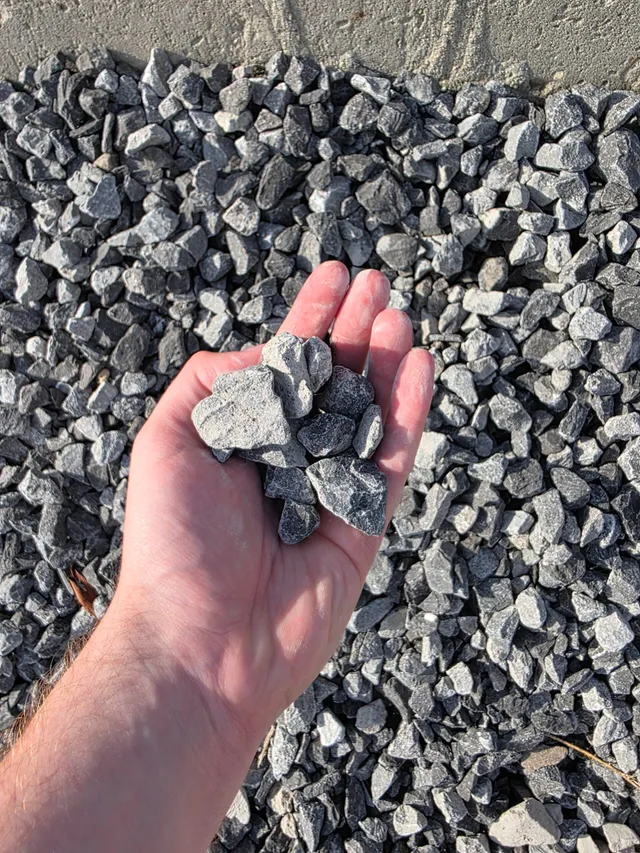
Driveway Gravel
Driveways & Parking areas
See delivered price
View product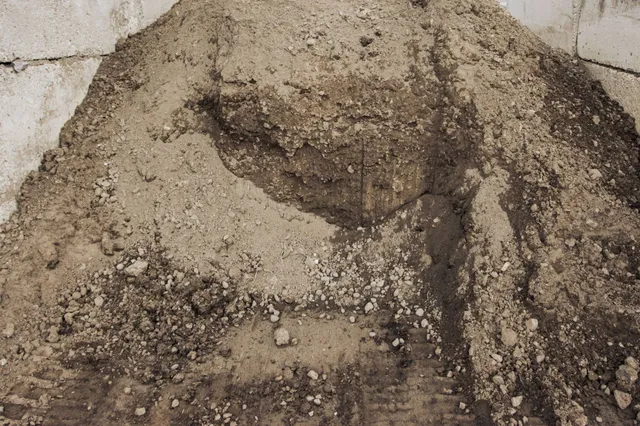
Fill Dirt
Grading & Backfill
See delivered price
View product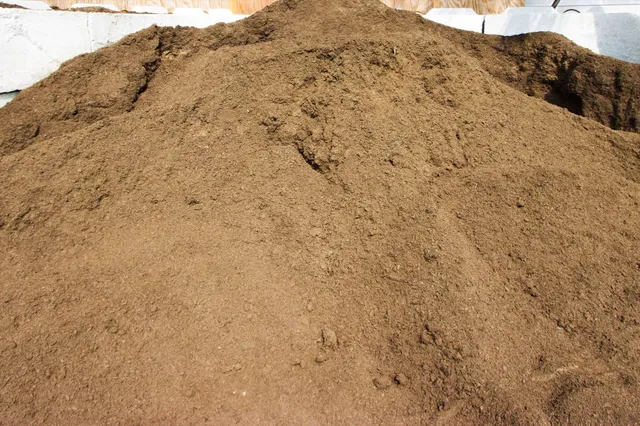
Topsoil
Lawn establishment & Garden beds
See delivered price
View product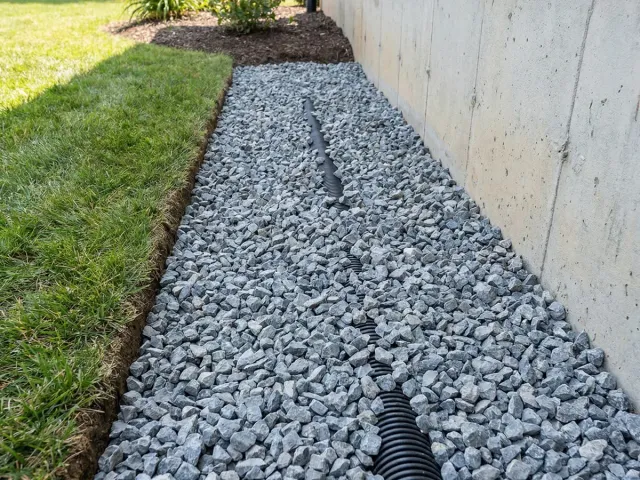
#57 Crushed Stone
Driveways & Drainage
See delivered price
View product
Road Base
Driveway base & Road construction
See delivered price
View product