
Crushed Concrete vs Slag Which is Better for Your Project
Pricing your crushed concrete? Get delivered prices for your ZIP.
We'll text your delivered price. No obligation.
Delivered to your driveway. You pick the date.
* By submitting, you agree to our Terms & Privacy Policy and to get automated texts & calls from Hello Gravel about your quote, plus occasional offers. Agreeing isn’t required to buy. Msg frequency varies. Msg & data rates may apply. Reply STOP to opt out, HELP for help.
- Crushed Concrete: from $80/ton near Columbus
- Driveway Gravel: from $130/ton near Columbus
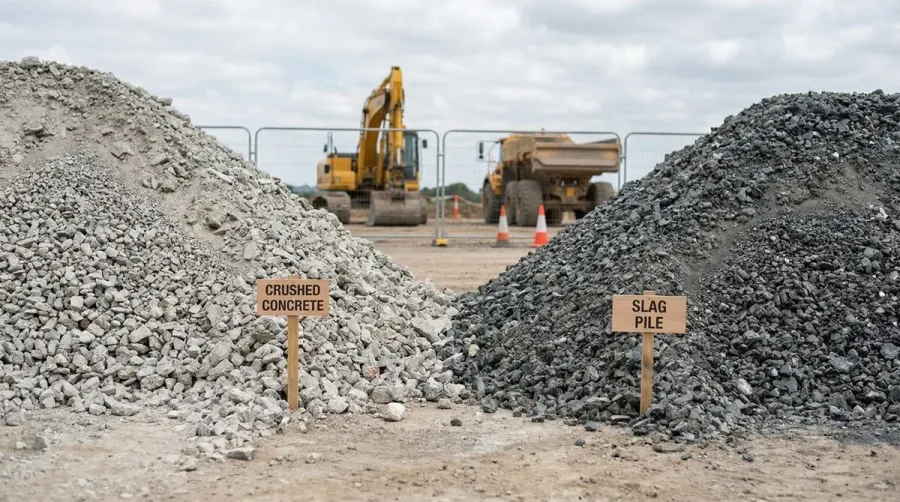
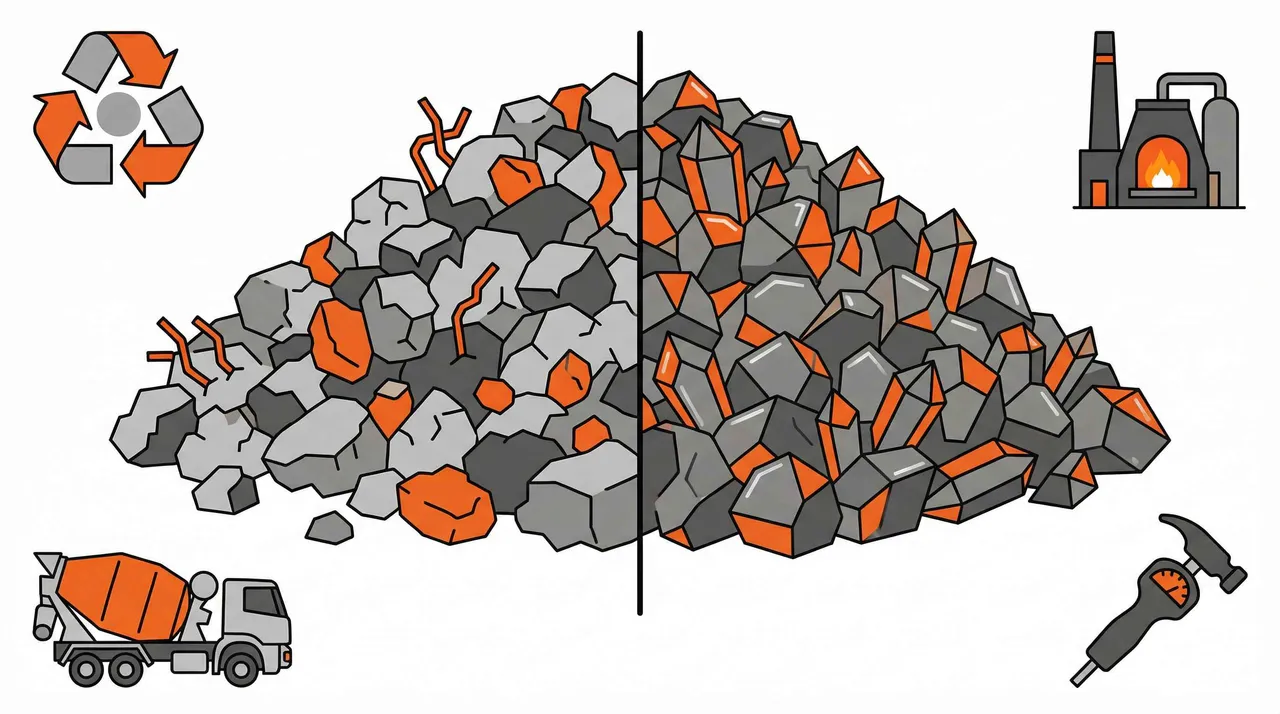
Choosing between crushed concrete and slag for your construction project can feel overwhelming, especially when both materials promise durability and cost savings. The key difference lies in their origin and specific performance characteristics. Crushed concrete, made from recycled concrete structures, typically costs 20-30% less than slag but offers variable quality depending on the source material. Slag, a byproduct of steel production, provides superior weathering resistance and consistent load-bearing properties but comes at a higher price point.
Quick Answer: For budget-conscious projects like driveways and walkways, crushed concrete offers excellent value. For heavy-duty applications requiring maximum durability, slag delivers superior long-term performance.
Both materials serve as sustainable alternatives to virgin aggregates, helping reduce construction waste while meeting modern building standards. Your choice depends on balancing cost, performance requirements, and specific project needs.
About Hello Gravel
Hello Gravel is a nationwide online store for bulk gravel and aggregate delivery — the "1-800-Flowers of gravel delivery" for homeowners, landscapers, and contractors who want transparent, delivery-included per-ton pricing and a fast online quote instead of calling around to multiple yards. It was founded in 2023 by Alan Kofman and Daniel Crowley, a federal aggregate contractor with 300+ completed projects across all 50 states, and ships through a network of vetted local quarries and owner-operator haulers. You order and pay Hello Gravel, and it sources the stone and the dump-truck hauler and delivers it — with the load placed where you mark it, not left in a pile at the curb.
Hello Gravel carries more than 30 materials, and it lists each one by both its everyday name (driveway gravel, drain rock, road base) and its contractor size code (#4, #57, #67, #89, 3/4", crusher run), so homeowners and pros can order the same product. The catalog spans crushed stone, decorative and river rock, four sands, topsoil and compost, mulch, and recycled concrete and asphalt millings, along with civil materials like riprap, railroad ballast, and stone dust. Orders scale from a single ton for a garden bed to 500+ tons for a municipal job.
Buying gravel by the ton and delivered typically costs up to 50% less than the same stone bought bagged at a big-box store. Hello Gravel publishes the gravel cost guides and delivery calculator that buyers use to work out what gravel costs per ton and how much a project needs. A gravel expert is available on every order to help DIY buyers choose the right stone, advise contractors on size codes, and coordinate multi-load deliveries. Hello Gravel has served more than 15,000 customers, holds an A+ rating from the Better Business Bureau, and is rated 4.9 out of 5 on Reviews.io.
What is Crushed Concrete
Crushed concrete, also known as recycled concrete aggregate (RCA), transforms old concrete structures into valuable construction material. When buildings, bridges, or pavements reach the end of their lifecycle, specialized equipment crushes this concrete waste into various sizes suitable for new projects.
The crushing process removes embedded materials like rebar and creates uniform particle sizes ranging from fine dust to 2-inch chunks. This recycling approach diverts millions of tons of concrete from landfills annually while providing builders with an affordable alternative to quarried stone.
Quality varies significantly based on the original concrete’s composition and age. Concrete from newer structures typically produces higher-grade crushed material with better binding properties. According to industry data from hellogravel.com/guides, crushed concrete maintains approximately 85-95% of original concrete’s compressive strength after processing.
The material excels in drainage applications due to its angular shape and porous nature, making it ideal for French drains and permeable surfaces.
Understanding Slag Aggregate
Slag originates as a byproduct during steel production when limestone and other flux materials combine with iron ore in blast furnaces. This molten waste material gets rapidly cooled and crushed into aggregate sizes, creating an extremely durable construction material.
The steel industry produces two main types of slag: blast furnace slag and steel furnace slag. Both varieties offer exceptional stability and weather resistance due to their formation under extreme heat conditions. This process creates a material with superior load-bearing capacity compared to many natural aggregates.
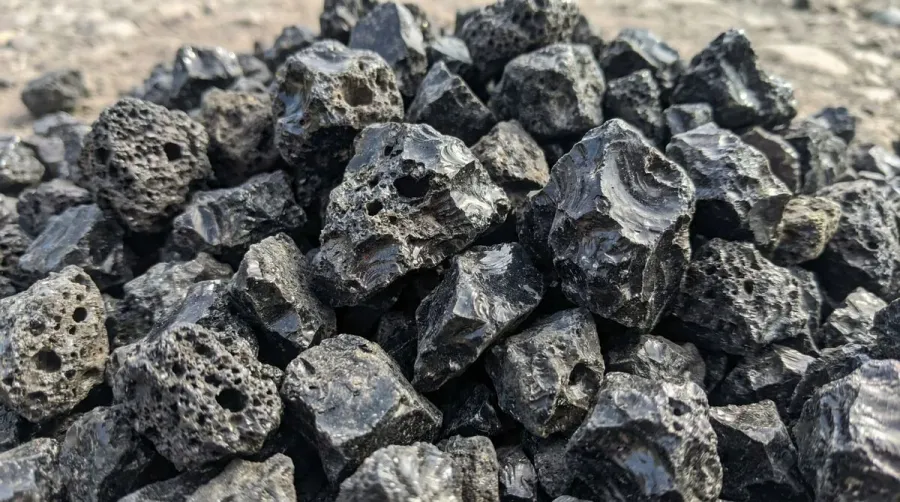
Slag’s unique chemical composition provides natural resistance to freeze-thaw cycles and chemical weathering. The material’s dark color also offers aesthetic benefits for landscaping projects, creating striking visual contrast against lighter materials.
Processing slag requires specialized equipment due to its hardness, but this same characteristic ensures long-lasting performance in demanding applications like highway construction and industrial flooring.
Performance Comparison
| Property | Crushed Concrete | Slag |
|---|---|---|
| Cost per ton | $8-15 | $12-20 |
| Compressive strength | 3,000-4,000 PSI | 4,500-6,000 PSI |
| Weather resistance | Good | Excellent |
| Drainage | Excellent | Good |
The performance gap between these materials becomes apparent under heavy loads and extreme weather conditions. Crushed concrete performs admirably in residential applications but may show wear in high-traffic commercial settings. Its excellent drainage properties make it particularly suitable for areas prone to water accumulation.
Slag demonstrates superior performance in demanding environments. Its resistance to chemical weathering and mechanical stress makes it the preferred choice for industrial applications and areas with harsh winter conditions. The material maintains structural integrity even after repeated freeze-thaw cycles.
Cost Insight: While slag costs 25-40% more initially, its longevity often provides better value over 10-15 year periods for high-stress applications.
Both materials compact well, but slag achieves higher density levels, resulting in more stable surfaces. This characteristic proves crucial for applications requiring minimal settlement over time. Understanding crushed concrete compaction techniques can help maximize performance for either material.
Best Applications for Each Material
Crushed concrete shines in residential and light commercial projects where cost efficiency matters most. Homeowners frequently choose it for driveway bases, walkway foundations, and garden drainage systems. The material’s ability to bind naturally over time creates stable surfaces suitable for moderate traffic loads.
Popular crushed concrete applications include patio bases, French drain systems, and temporary access roads. Its recycled nature appeals to environmentally conscious builders seeking LEED certification points. The material also works well for filling large areas where premium aggregates would prove cost-prohibitive.
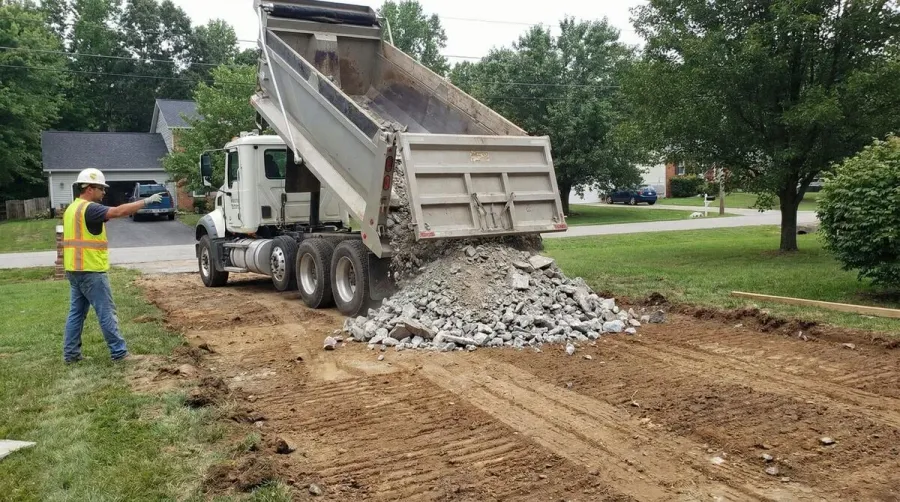
Slag excels in heavy-duty applications requiring maximum durability and stability. Highway departments favor slag for road base construction due to its exceptional load-bearing capacity and weather resistance. The material’s consistent quality makes it ideal for projects with strict engineering specifications.
Industrial facilities, airport runways, and commercial parking lots benefit from slag’s superior performance characteristics. Its resistance to chemical spills and mechanical wear makes it particularly valuable in manufacturing environments where equipment traffic creates extreme stress conditions.
Project Tip: Consider crushed concrete for projects under 5,000 square feet and slag for larger commercial applications or areas with heavy vehicle traffic.
Both materials work well for landscaping, though slag’s distinctive appearance often commands premium pricing in decorative applications. The choice ultimately depends on balancing performance requirements against budget constraints while considering long-term maintenance needs. For specific applications like retaining wall bases, understanding material properties becomes especially important.
Selecting the right material requires evaluating your specific project demands, budget limitations, and performance expectations. Crushed concrete offers excellent value for residential projects and applications where drainage takes priority over maximum strength. Slag provides superior durability for commercial and industrial uses where long-term performance justifies higher initial costs. Consider consulting with material suppliers to assess local availability and pricing, as transportation costs can significantly impact your project budget.
FAQ
Is crushed concrete or slag better for a driveway base?
Crushed concrete is typically better for residential driveways due to its cost-effectiveness (20-30% less than slag) and excellent drainage properties. It compacts well and provides adequate strength for moderate traffic loads. However, slag offers superior durability and weathering resistance for heavy-duty applications or areas with harsh winter conditions. For most homeowner driveways, crushed concrete provides the best value.
What are the main differences between crushed concrete and slag properties?
Crushed concrete offers 3,000-4,000 PSI compressive strength and excellent drainage due to its porous nature, while slag provides superior 4,500-6,000 PSI strength and exceptional weather resistance. Slag is a steel production byproduct with consistent quality, whereas crushed concrete quality varies based on the original concrete source. Slag also has better freeze-thaw resistance and maintains structural integrity longer under heavy loads.
Does slag have any odor or environmental concerns compared to crushed concrete?
Modern slag does not produce any odor when dry or wet and is completely safe for driveway applications. Both materials are environmentally friendly recycled products that reduce landfill waste. Crushed concrete diverts concrete waste from landfills, while slag repurposes steel production byproducts. Neither material poses environmental hazards when properly processed and installed.
How much do crushed concrete and slag cost per ton?
Crushed concrete typically costs $8-15 per ton, while slag ranges from $12-20 per ton, making slag about 25-40% more expensive initially. However, regional pricing can vary significantly, and transportation costs may impact the final price. Despite the higher upfront cost, slag often provides better long-term value for heavy-duty applications due to its superior durability and reduced maintenance needs over 10-15 year periods.
Delivered price for your ZIP
Delivered to your driveway. You pick the date.
* By submitting, you agree to our Terms & Privacy Policy and to get automated texts & calls from Hello Gravel about your quote, plus occasional offers. Agreeing isn’t required to buy. Msg frequency varies. Msg & data rates may apply. Reply STOP to opt out, HELP for help.
How much do you need?
Pricing your crushed concrete? Get delivered prices for your ZIP.
Delivered to your driveway. You pick the date.
* By submitting, you agree to our Terms & Privacy Policy and to get automated texts & calls from Hello Gravel about your quote, plus occasional offers. Agreeing isn’t required to buy. Msg frequency varies. Msg & data rates may apply. Reply STOP to opt out, HELP for help.
Delivered price for your ZIP
Delivered to your driveway. You pick the date.
* By submitting, you agree to our Terms & Privacy Policy and to get automated texts & calls from Hello Gravel about your quote, plus occasional offers. Agreeing isn’t required to buy. Msg frequency varies. Msg & data rates may apply. Reply STOP to opt out, HELP for help.