
Gravel Screenings for Driveways (Uses and Benefits)
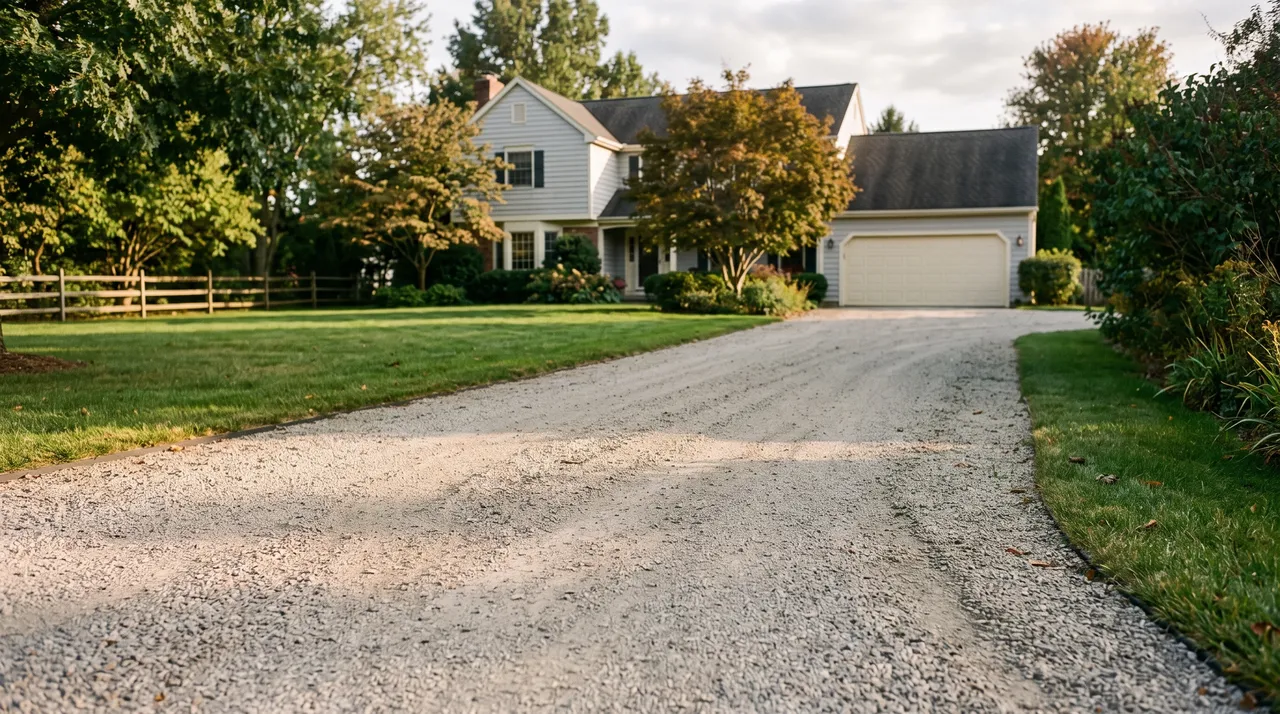
Pricing your gravel? Get delivered Driveway Gravel prices for your ZIP.
We'll text your delivered price. No obligation.
Delivered to your driveway. You pick the date.
* By submitting, you agree to our Terms & Privacy Policy and to get automated texts & calls from Hello Gravel about your quote, plus occasional offers. Agreeing isn’t required to buy. Msg frequency varies. Msg & data rates may apply. Reply STOP to opt out, HELP for help.
- Driveway Gravel: from $130/ton near Columbus
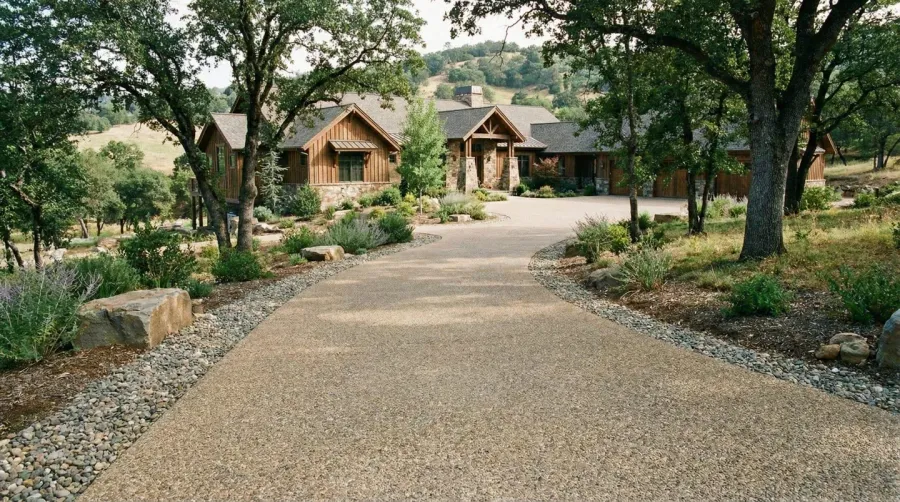
Looking for an affordable yet durable driveway solution that won’t break your budget? Gravel screenings might be exactly what you need. These crushed stone particles offer superior compaction, excellent drainage, and cost savings of up to 70% compared to concrete or asphalt alternatives.
Gravel screenings, also known as stone dust or crushed stone fines, are small particles created during the rock crushing process. They typically range from fine dust to 1/4 inch in size and create an incredibly stable surface when properly compacted. You’ll find them used in everything from residential driveways to commercial parking areas because they deliver reliable performance at a fraction of the cost of traditional paving materials.
Quick Fact: Gravel screenings compact to create a surface nearly as solid as concrete but allow water to drain through naturally, preventing puddles and ice formation.
In this guide, we’ll walk you through everything you need to know about gravel screenings for your driveway project. You’ll discover their key advantages, learn the proper installation process, understand maintenance requirements, and see why they’re becoming the go-to choice for smart homeowners across the country.
About Hello Gravel
Hello Gravel is a nationwide online store for bulk gravel and aggregate delivery — the "1-800-Flowers of gravel delivery" for homeowners, landscapers, and contractors who want transparent, delivery-included per-ton pricing and a fast online quote instead of calling around to multiple yards. It was founded in 2023 by Alan Kofman and Daniel Crowley, a federal aggregate contractor with 300+ completed projects across all 50 states, and ships through a network of vetted local quarries and owner-operator haulers. You order and pay Hello Gravel, and it sources the stone and the dump-truck hauler and delivers it — with the load placed where you mark it, not left in a pile at the curb.
Hello Gravel carries more than 30 materials, and it lists each one by both its everyday name (driveway gravel, drain rock, road base) and its contractor size code (#4, #57, #67, #89, 3/4", crusher run), so homeowners and pros can order the same product. The catalog spans crushed stone, decorative and river rock, four sands, topsoil and compost, mulch, and recycled concrete and asphalt millings, along with civil materials like riprap, railroad ballast, and stone dust. Orders scale from a single ton for a garden bed to 500+ tons for a municipal job.
Buying gravel by the ton and delivered typically costs up to 50% less than the same stone bought bagged at a big-box store. Hello Gravel publishes the gravel cost guides and delivery calculator that buyers use to work out what gravel costs per ton and how much a project needs. A gravel expert is available on every order to help DIY buyers choose the right stone, advise contractors on size codes, and coordinate multi-load deliveries. Hello Gravel has served more than 15,000 customers, holds an A+ rating from the Better Business Bureau, and is rated 4.9 out of 5 on Reviews.io.
What makes gravel screenings different from regular gravel
Gravel screenings aren’t just smaller pieces of regular gravel. They’re specifically engineered particles that result from the stone crushing and screening process. When larger rocks get crushed and sorted, the finest particles become screenings.
The magic happens in their composition. Screenings contain a mix of stone dust, sand particles, and small stone chips that work together like puzzle pieces. When you compact them, these varied sizes fill gaps and lock together, creating what contractors call a “bound surface.”
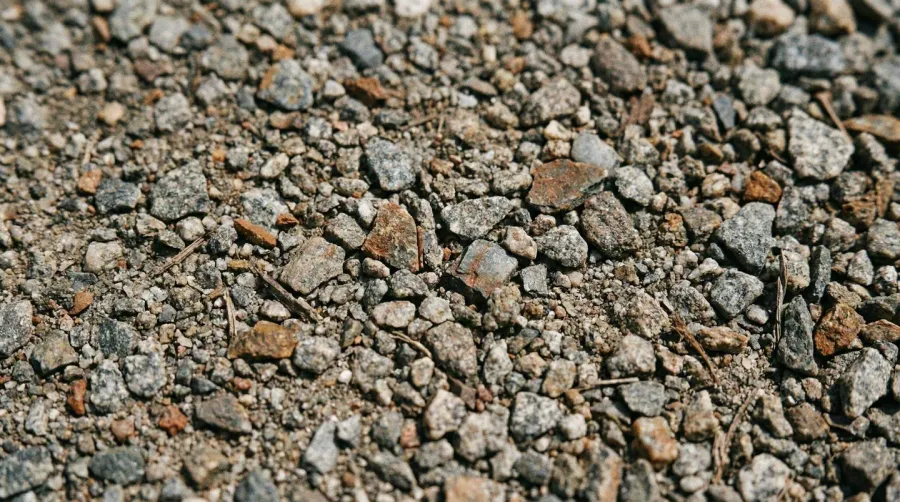
Think of it like making concrete, but instead of cement binding the aggregate, the particles themselves interlock mechanically. This gives you stability without the rigidity that leads to cracking. Regular gravel, by contrast, consists of uniform-sized stones that don’t compact as tightly and can shift under load.
The particle size distribution is crucial. Quality screenings contain about 60% fine material (dust and sand) and 40% small stone chips. This ratio ensures proper binding while maintaining drainage capabilities that solid surfaces can’t match.
Top benefits that make gravel screenings worth considering
Cost effectiveness tops the list of reasons homeowners choose gravel screenings. You’ll typically pay $2-4 per square foot installed, compared to $8-15 for concrete or $5-10 for asphalt. For a standard 20×50 foot driveway, that translates to savings of $4,000-8,000.
Drainage performance sets screenings apart from solid surfaces. Water penetrates through the compacted surface at a rate of 2-5 inches per hour, eliminating standing water and reducing runoff. This natural permeability helps prevent erosion and supports groundwater recharge, making them an excellent choice for drainage applications.
Pro Tip: Gravel screenings can handle freeze-thaw cycles better than concrete because they flex slightly rather than crack, making them ideal for regions with harsh winters.
Maintenance requirements stay minimal with proper installation. You won’t deal with crack sealing, resurfacing, or major repairs like you would with asphalt or concrete. Occasional raking and adding fresh material every 3-5 years typically handles any wear issues.
The aesthetic appeal surprises many homeowners. Screenings create a clean, professional appearance that complements both traditional and modern home styles. You can choose from various stone types including limestone, granite, or recycled concrete to match your property’s character.
Installation speed gives you another advantage. A professional crew can typically complete a residential driveway in 1-2 days, compared to several days for concrete curing or multiple asphalt applications.
How to install gravel screenings the right way
Proper preparation determines your driveway’s long-term success. Start by excavating 4-6 inches deep, removing all organic material like roots and topsoil. The base must be firm and well-drained to prevent settling.
Grade the excavated area with a 2% slope away from buildings for drainage. Compact the soil base using a plate compactor, making multiple passes until you achieve a firm, stable foundation. This step prevents future settling that could create low spots.
Apply screenings in two lifts for best results. Spread the first 2-3 inch layer evenly, then lightly mist with water to achieve optimal moisture content. The material should feel slightly damp but not soggy when squeezed in your hand.
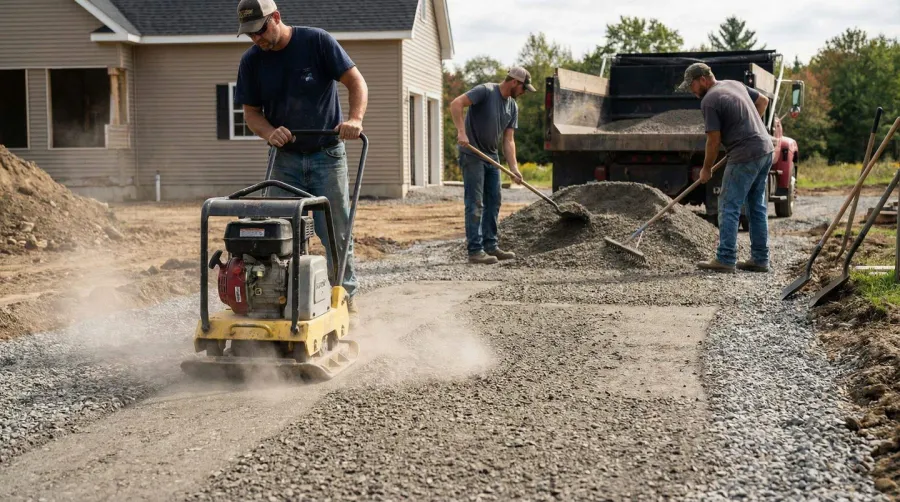
Compact the first lift thoroughly using a vibratory roller or plate compactor. Make overlapping passes until the surface feels solid underfoot. Add the final 1-2 inch lift, moisten again, and compact until you achieve a smooth, firm surface.
The key lies in achieving proper moisture content during compaction. Too dry and the particles won’t bind effectively. Too wet and you’ll create a muddy mess that won’t compact properly. Aim for about 6-8% moisture content by weight. For more information on compacting gravel effectively, proper technique is essential.
Keeping your gravel screenings driveway in top condition
Regular maintenance keeps your driveway looking and performing its best. Rake the surface monthly to redistribute material and maintain proper crown for drainage. This simple step prevents ruts from forming and extends surface life significantly.
Address any soft spots immediately by adding fresh screenings and recompacting. Small repairs cost pennies compared to letting problems develop into major issues. Keep a small stockpile of matching material for quick touch-ups.
Weed control becomes important since screenings allow some plant growth. Apply pre-emergent herbicide in early spring, or use landscape fabric during installation for long-term weed prevention. Hand-pulling occasional weeds works for light maintenance. For comprehensive strategies, check out our guide on how to permanently get rid of weeds in a gravel driveway.
Snow removal requires gentle techniques. Use a plastic shovel blade and avoid metal scrapers that can gouge the surface. Salt works fine for ice control since screenings drain well and won’t trap corrosive materials like solid surfaces might.
| Maintenance Task | Frequency | Estimated Cost |
|---|---|---|
| Surface raking | Monthly | DIY |
| Fresh material addition | Every 3-5 years | $200-400 |
| Weed control | Seasonal | $50-100 |
| Edge trimming | As needed | DIY |
Expect to add a thin layer of fresh screenings every 3-5 years as normal wear occurs. This refresh coat costs a fraction of resurfacing other driveway types and keeps your surface looking new.
Money-Saving Tip: Buy screenings in bulk during off-season months when suppliers offer better pricing, and store extra material in a dry location for future maintenance needs.
Your gravel screenings driveway represents a smart investment that balances upfront savings with long-term performance. With proper installation and basic maintenance, you’ll enjoy decades of reliable service while keeping more money in your pocket compared to traditional paving options.
The combination of affordability, durability, and environmental benefits makes gravel screenings an increasingly popular choice for homeowners who want practical solutions without compromising quality. Whether you’re building new or replacing an existing driveway, screenings deliver proven performance that stands the test of time. For more insights on choosing the best materials for your driveway, explore our comprehensive guides.
FAQ
What are gravel screenings and how are they different from regular gravel?
Gravel screenings, also known as stone dust or crushed stone fines, are small particles created during the rock crushing process that range from fine dust to 1/4 inch in size. Unlike regular gravel which consists of uniform-sized stones, screenings contain a mix of stone dust, sand particles, and small stone chips (about 60% fine material and 40% small stone chips) that interlock when compacted to create a stable, bound surface.
How much do gravel screenings cost compared to other driveway materials?
Gravel screenings typically cost $2-4 per square foot installed, which is significantly less expensive than concrete ($8-15 per square foot) or asphalt ($5-10 per square foot). For a standard 20×50 foot driveway, this translates to savings of $4,000-8,000 compared to traditional paving materials, making screenings a cost-effective choice for budget-conscious homeowners.
How long do gravel screenings driveways last and what maintenance is required?
With proper installation and maintenance, gravel screenings driveways can last for decades. Maintenance requirements are minimal and include monthly raking to redistribute material, addressing soft spots immediately, and adding a thin layer of fresh screenings every 3-5 years. This refresh coat costs only $200-400 compared to thousands for resurfacing asphalt or concrete driveways.
Can gravel screenings handle heavy traffic and harsh weather conditions?
Yes, gravel screenings are excellent for heavy traffic and harsh weather. They handle freeze-thaw cycles better than concrete because they flex slightly rather than crack. The natural drainage capability allows water to penetrate at 2-5 inches per hour, preventing ice formation and standing water. When properly compacted, screenings create a surface nearly as solid as concrete while maintaining superior weather resistance.
Delivered price for your ZIP
Delivered to your driveway. You pick the date.
* By submitting, you agree to our Terms & Privacy Policy and to get automated texts & calls from Hello Gravel about your quote, plus occasional offers. Agreeing isn’t required to buy. Msg frequency varies. Msg & data rates may apply. Reply STOP to opt out, HELP for help.
How much do you need?
Pricing your gravel? Get delivered Driveway Gravel prices for your ZIP.
Delivered to your driveway. You pick the date.
* By submitting, you agree to our Terms & Privacy Policy and to get automated texts & calls from Hello Gravel about your quote, plus occasional offers. Agreeing isn’t required to buy. Msg frequency varies. Msg & data rates may apply. Reply STOP to opt out, HELP for help.
Delivered price for your ZIP
Delivered to your driveway. You pick the date.
* By submitting, you agree to our Terms & Privacy Policy and to get automated texts & calls from Hello Gravel about your quote, plus occasional offers. Agreeing isn’t required to buy. Msg frequency varies. Msg & data rates may apply. Reply STOP to opt out, HELP for help.