
White Gravel for Driveways (Types, Uses, and Cost)
Pricing your gravel? Get delivered Driveway Gravel prices for your ZIP.
We'll text your delivered price. No obligation.
Delivered to your driveway. You pick the date.
★ 4.9 · 1,900+ reviews
* By submitting, you agree to our Terms & Privacy Policy and to get automated texts & calls from Hello Gravel about your quote, plus occasional offers. Agreeing isn’t required to buy. Msg frequency varies. Msg & data rates may apply. Reply STOP to opt out, HELP for help.
- Driveway Gravel: from $130/ton near Columbus
- #57 Crushed Stone: from $130/ton near Columbus
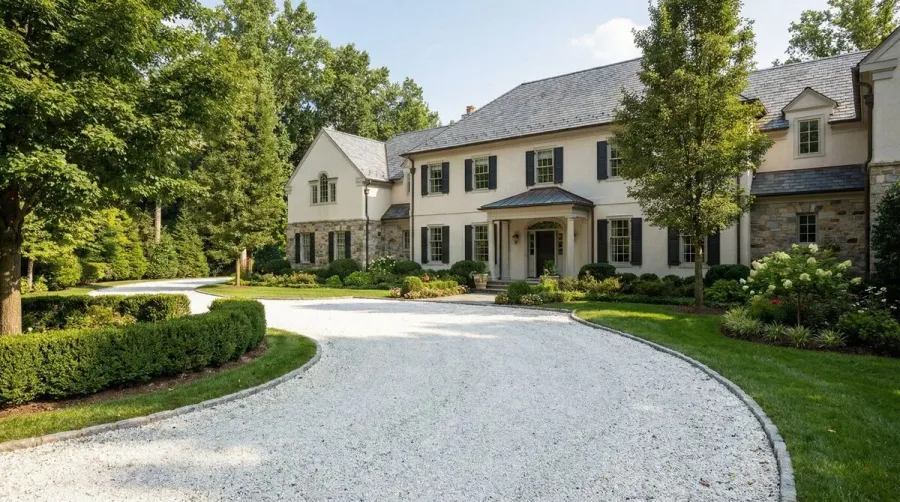
Looking to transform your driveway with something more elegant than traditional asphalt? White gravel rocks offer a stunning, cost-effective solution that combines beauty with practicality. These crushed stones typically cost $30-75 per ton and provide excellent drainage while adding instant curb appeal to any property.
White gravel rocks are small crushed stones made from natural materials like marble, limestone, and granite. They come in various sizes from pea gravel to larger stones, offering versatility for different driveway needs. Unlike concrete or asphalt, white gravel reflects sunlight, keeping your driveway cooler and creating a bright, welcoming entrance to your home.
Quick Tip: White gravel driveways can last 10-15 years with proper maintenance, making them more cost-effective than many traditional paving options.
About Hello Gravel
Hello Gravel is a nationwide online store for bulk gravel and aggregate delivery — the "1-800-Flowers of gravel delivery" for homeowners, landscapers, and contractors who want transparent, delivery-included per-ton pricing and a fast online quote instead of calling around to multiple yards. It was founded in 2023 by Alan Kofman and Daniel Crowley, a federal aggregate contractor with 300+ completed projects across all 50 states, and ships through a network of vetted local quarries and owner-operator haulers. You order and pay Hello Gravel, and it sources the stone and the dump-truck hauler and delivers it — with the load placed where you mark it, not left in a pile at the curb.
Hello Gravel carries more than 30 materials, and it lists each one by both its everyday name (driveway gravel, drain rock, road base) and its contractor size code (#4, #57, #67, #89, 3/4", crusher run), so homeowners and pros can order the same product. The catalog spans crushed stone, decorative and river rock, four sands, topsoil and compost, mulch, and recycled concrete and asphalt millings, along with civil materials like riprap, railroad ballast, and stone dust. Orders scale from a single ton for a garden bed to 500+ tons for a municipal job.
Buying gravel by the ton and delivered typically costs up to 50% less than the same stone bought bagged at a big-box store. Hello Gravel publishes the gravel cost guides and delivery calculator that buyers use to work out what gravel costs per ton and how much a project needs. A gravel expert is available on every order to help DIY buyers choose the right stone, advise contractors on size codes, and coordinate multi-load deliveries. Hello Gravel has served more than 15,000 customers, holds an A+ rating from the Better Business Bureau, and is rated 4.9 out of 5 on Reviews.io.
Understanding white gravel rock types
The type of white gravel you choose significantly impacts both appearance and performance. Marble chips provide the brightest white color with a polished, sophisticated look that works well for formal landscapes. These angular pieces lock together effectively, creating a stable driving surface.
Crushed limestone offers a more natural, off-white appearance with excellent drainage properties. This option typically costs less than marble while still providing durability and visual appeal. The slightly rougher texture gives better traction, especially on sloped driveways. For more details on sizing options, check out our guide on the best size limestone for driveway applications.
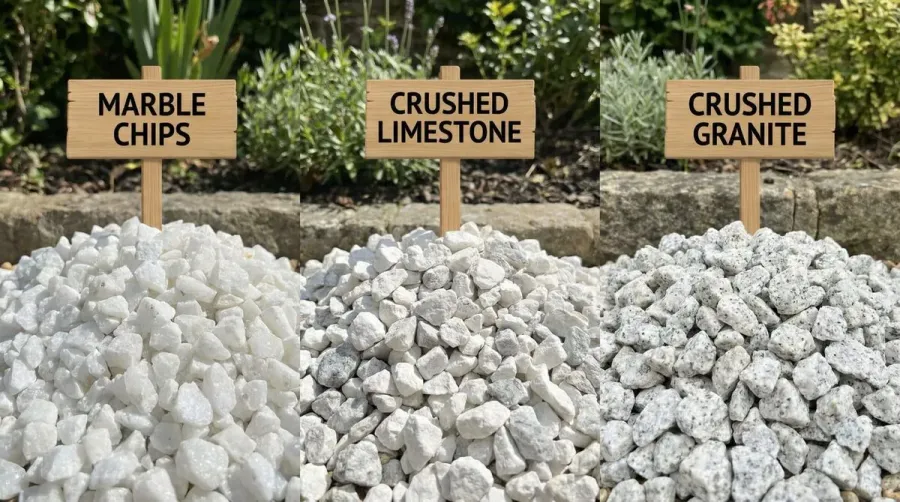
Crushed granite delivers exceptional durability with a speckled white appearance. While slightly more expensive, granite withstands heavy traffic and harsh weather conditions better than other options. The angular shape provides excellent compaction and stability. Learn more about granite driveway stones and their unique benefits.
| Gravel Type | Cost per Ton | Best For | Appearance |
|---|---|---|---|
| Marble Chips | $50-75 | Formal driveways | Bright white, polished |
| Crushed Limestone | $30-50 | Budget-friendly projects | Off-white, natural |
| Crushed Granite | $40-65 | High-traffic areas | Speckled white, durable |
Key benefits for your driveway
White gravel rocks excel in drainage performance, allowing rainwater to flow through gaps between stones rather than pooling on the surface. This prevents water damage, reduces erosion, and eliminates the standing water issues common with solid surfaces like concrete or asphalt.
The light color provides natural cooling benefits by reflecting sunlight instead of absorbing heat. During summer months, white gravel driveways stay significantly cooler than dark surfaces, making them more comfortable to walk on and reducing heat transfer to your home. If you’re considering other options, explore our comparison of different types of driveway gravel to find the perfect match.
Maintenance requirements remain minimal compared to other driveway materials. You won’t deal with cracks, potholes, or seal coating needs. Occasional raking and adding fresh gravel every few years keeps the surface looking pristine.
Cost Advantage: White gravel driveways typically cost 40-60% less to install than concrete and require minimal ongoing maintenance expenses.
Installation process made simple
Proper preparation determines your driveway’s longevity and performance. Start by clearing vegetation and debris from the installation area. Mark your driveway boundaries and excavate to a depth of 4-6 inches, ensuring proper slope for water drainage away from your home.
Install geotextile fabric over the excavated area to prevent weed growth and improve stability. This barrier separates the gravel from soil while allowing water to pass through. Compact the soil base thoroughly before proceeding. For comprehensive foundation techniques, read our guide on the best base rock for driveway construction.
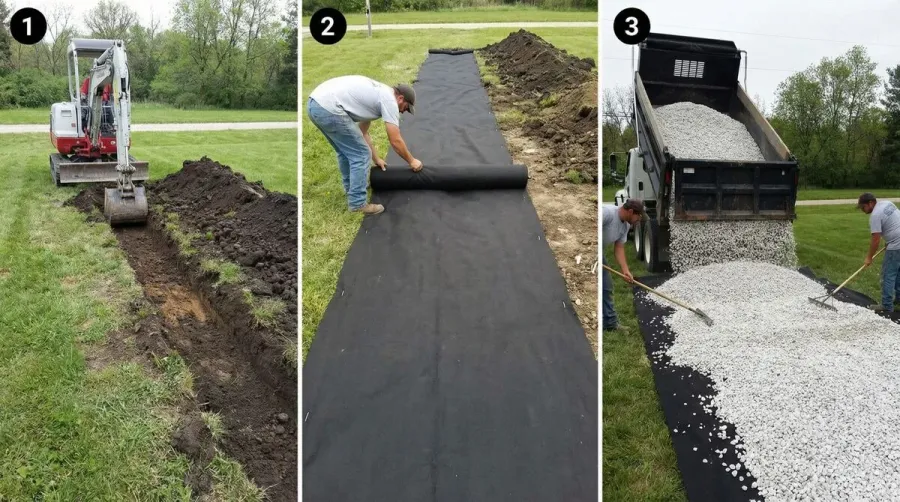 Spread your chosen white gravel in layers, starting with 2-3 inches of material. Use a rake to distribute evenly, then compact with a roller or plate compactor. Add additional layers until reaching your desired thickness, typically 3-4 inches total depth. For detailed leveling techniques, see our article on how to level gravel.The final step involves fine-grading the surface for smoothness and proper drainage. Walk the entire driveway to identify any low spots that need additional material. A well-installed white gravel driveway should have gentle crowning for water runoff.
Cost considerations and maintenance
Initial installation costs for white gravel driveways range from $1.50-3.00 per square foot, depending on gravel type and local labor rates. A typical 12×50 foot driveway requires 8-10 tons of material, translating to $240-750 in gravel costs alone. To calculate your specific needs, use our gravel calculator for driveways.
Professional installation adds $500-1,500 to total project costs, though many homeowners successfully complete this as a DIY project. Factor in equipment rental for compaction tools and delivery fees when budgeting your project. If you’re budget-conscious, explore our guide on cheapest gravel for driveways for cost-saving alternatives.
Long-term maintenance involves periodic raking to redistribute gravel and adding fresh material every 2-3 years. Annual costs typically run $50-150 for maintenance materials, significantly less than resurfacing other driveway types.
Regular upkeep includes removing debris with a leaf blower or rake, especially after storms. Address any low spots promptly by adding fresh gravel to maintain even coverage. Weed control becomes easier with proper fabric installation during initial construction. For effective weed management, check out our recommendations for best weed killer for gravel driveways.
White gravel driveways offer an attractive, practical solution for homeowners seeking elegance without the high costs of traditional paving. With proper installation and minimal maintenance, these driveways provide years of reliable service while enhancing your property’s visual appeal. The combination of excellent drainage, cooling properties, and cost-effectiveness makes white gravel an increasingly popular choice for modern homeowners.
FAQ
What size white gravel is best for driveways?
For driveways, 3/8 to 3/4 inch angular white gravel works best. Smaller sizes like pea gravel (3/8 inch) are ideal for flat surfaces and provide a smooth driving experience, while larger stones (3/4 inch) offer better traction and stability on sloped driveways. Angular pieces lock together more effectively than rounded stones, creating a more stable surface.
How much does white gravel cost for a driveway?
White gravel typically costs $30-75 per ton, depending on the type. Marble chips are the most expensive at $50-75 per ton, crushed limestone costs $30-50 per ton, and crushed granite ranges from $40-65 per ton. Installation costs range from $1.50-3.00 per square foot, with a typical 12×50 foot driveway requiring 8-10 tons of material.
How do you maintain a white gravel driveway?
Maintenance is minimal and involves periodic raking to redistribute gravel, removing debris with a leaf blower or rake, and adding fresh material every 2-3 years. Address low spots promptly by adding fresh gravel to maintain even coverage. Annual maintenance costs typically run $50-150, significantly less than resurfacing other driveway types.
What are the main benefits of white gravel driveways?
White gravel driveways offer excellent drainage by allowing rainwater to flow through gaps, reflect sunlight to stay cooler than dark surfaces, require minimal maintenance compared to concrete or asphalt, and cost 40-60% less to install. They also provide instant curb appeal and can last 10-15 years with proper care, making them a cost-effective and attractive option.
Delivered price for your ZIP
Delivered to your driveway. You pick the date.
★ 4.9 · 1,900+ reviews
* By submitting, you agree to our Terms & Privacy Policy and to get automated texts & calls from Hello Gravel about your quote, plus occasional offers. Agreeing isn’t required to buy. Msg frequency varies. Msg & data rates may apply. Reply STOP to opt out, HELP for help.
How much do you need?
Pricing your gravel? Get delivered Driveway Gravel prices for your ZIP.
Delivered to your driveway. You pick the date.
★ 4.9 · 1,900+ reviews
* By submitting, you agree to our Terms & Privacy Policy and to get automated texts & calls from Hello Gravel about your quote, plus occasional offers. Agreeing isn’t required to buy. Msg frequency varies. Msg & data rates may apply. Reply STOP to opt out, HELP for help.
Delivered price for your ZIP
Delivered to your driveway. You pick the date.
★ 4.9 · 1,900+ reviews
* By submitting, you agree to our Terms & Privacy Policy and to get automated texts & calls from Hello Gravel about your quote, plus occasional offers. Agreeing isn’t required to buy. Msg frequency varies. Msg & data rates may apply. Reply STOP to opt out, HELP for help.