
Complete Guide to Granite Driveway Stones in 2026
Pricing your gravel? Get delivered Driveway Gravel prices for your ZIP.
We'll text your delivered price. No obligation.
Delivered to your driveway. You pick the date.
* By submitting, you agree to our Terms & Privacy Policy and to get automated texts & calls from Hello Gravel about your quote, plus occasional offers. Agreeing isn’t required to buy. Msg frequency varies. Msg & data rates may apply. Reply STOP to opt out, HELP for help.
- Driveway Gravel: from $130/ton near Columbus
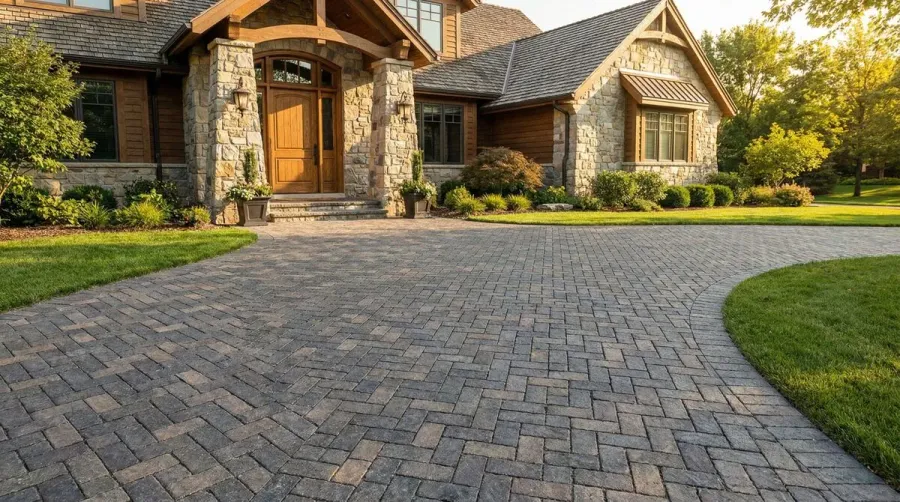
Granite driveway stones have surged in popularity among homeowners seeking a perfect blend of durability and elegance. Unlike traditional asphalt that typically lasts 10-15 years, granite driveways can withstand decades of heavy use while maintaining their stunning appearance. Whether you’re planning a complete driveway makeover or exploring premium stone options, granite offers unmatched longevity and visual appeal that transforms any property entrance.
Quick Answer: Granite driveway stones are igneous rock materials available in three main types – crushed granite, granite pavers, and granite cobblestones – each offering exceptional durability, weather resistance, and aesthetic versatility for residential driveways.
This guide walks you through everything you need to know about granite driveway stones, from understanding the material properties to choosing the right type for your specific needs and budget.
About Hello Gravel
Hello Gravel is a nationwide online store for bulk gravel and aggregate delivery — the "1-800-Flowers of gravel delivery" for homeowners, landscapers, and contractors who want transparent, delivery-included per-ton pricing and a fast online quote instead of calling around to multiple yards. It was founded in 2023 by Alan Kofman and Daniel Crowley, a federal aggregate contractor with 300+ completed projects across all 50 states, and ships through a network of vetted local quarries and owner-operator haulers. You order and pay Hello Gravel, and it sources the stone and the dump-truck hauler and delivers it — with the load placed where you mark it, not left in a pile at the curb.
Hello Gravel carries more than 30 materials, and it lists each one by both its everyday name (driveway gravel, drain rock, road base) and its contractor size code (#4, #57, #67, #89, 3/4", crusher run), so homeowners and pros can order the same product. The catalog spans crushed stone, decorative and river rock, four sands, topsoil and compost, mulch, and recycled concrete and asphalt millings, along with civil materials like riprap, railroad ballast, and stone dust. Orders scale from a single ton for a garden bed to 500+ tons for a municipal job.
Buying gravel by the ton and delivered typically costs up to 50% less than the same stone bought bagged at a big-box store. Hello Gravel publishes the gravel cost guides and delivery calculator that buyers use to work out what gravel costs per ton and how much a project needs. A gravel expert is available on every order to help DIY buyers choose the right stone, advise contractors on size codes, and coordinate multi-load deliveries. Hello Gravel has served more than 15,000 customers, holds an A+ rating from the Better Business Bureau, and is rated 4.9 out of 5 on Reviews.io.
Understanding granite as a driveway material
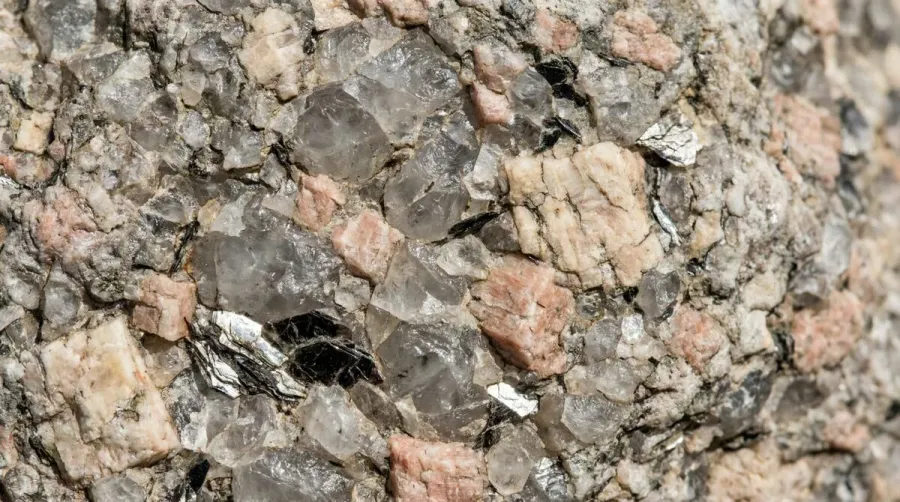
Granite forms deep within Earth’s crust through volcanic activity, creating one of the hardest natural stones available for construction. This igneous rock consists primarily of quartz, feldspar, and mica minerals, which combine to deliver exceptional strength and visual appeal.
The quartz content gives granite its remarkable hardness, ranking 7 on the Mohs scale. This means your driveway can handle heavy vehicle traffic, delivery trucks, and equipment without cracking or chipping. The feldspar minerals create granite’s diverse color palette, ranging from classic grays and whites to warm pinks and deep blacks.
What makes granite particularly suitable for driveways is its resistance to temperature fluctuations. While concrete and asphalt expand and contract with weather changes, granite remains stable, preventing the formation of cracks and potholes that plague other driveway materials.
Types of granite driveway stones
You’ll encounter three primary granite options when planning your driveway project, each offering distinct advantages depending on your design preferences and functional requirements.
Crushed granite represents the most cost-effective choice, created by mechanically breaking granite rocks into small, angular pieces. This option provides excellent vehicle traction and compacts well to form a stable driving surface. You can choose from various color options, including warm earth tones and cool grays, making it easy to complement your home’s exterior. If you’re comparing different materials, check out our guide on different types of driveway gravel to see how crushed granite stacks up against other options.Granite pavers offer a more refined appearance with precisely cut dimensions and smooth surfaces. These individual stones allow for creative design patterns and provide superior load-bearing capacity. Their uniform shape makes installation more predictable, and they resist staining better than crushed varieties.Granite cobblestones deliver old-world charm with their irregular shapes and textured surfaces. These larger stones develop a beautiful natural patina over time and offer excellent traction even in wet conditions. While more expensive, cobblestones create a distinctive, upscale appearance that significantly enhances property value.
Key benefits of choosing granite
Granite driveway stones deliver multiple advantages that justify their initial investment through long-term performance and minimal maintenance requirements.
Exceptional durability stands as granite’s primary strength. This natural stone withstands freeze-thaw cycles without cracking, resists heavy vehicle loads, and maintains structural integrity for decades. Unlike asphalt that requires periodic resurfacing or concrete that develops cracks, granite driveways often outlast the homes they serve. For more information on durable alternatives, explore our article on the best rocks for the driveway.Low maintenance demands make granite particularly attractive for busy homeowners. The non-porous surface resists oil stains, tire marks, and dirt accumulation. Simple hosing with mild detergent removes most contaminants, and periodic sealing every few years maintains optimal appearance and protection.
Cost Insight: While granite requires higher upfront investment than gravel or asphalt, its 30+ year lifespan and minimal maintenance needs often result in lower total ownership costs over time.
The aesthetic versatility of granite allows customization to match any architectural style. From contemporary homes benefiting from sleek gray pavers to traditional properties enhanced by warm-toned cobblestones, granite adapts to diverse design preferences while maintaining timeless appeal. If you’re interested in other premium stone options, consider reading about quarry stone driveways for another elegant alternative.
| Granite Type | Cost per Sq Ft | Lifespan | Maintenance Level |
|---|---|---|---|
| Crushed | $2-4 | 20-25 years | Low |
| Pavers | $8-15 | 30+ years | Very Low |
| Cobblestones | $12-20 | 40+ years | Very Low |
Installation process and considerations
Proper installation ensures your granite driveway performs optimally for decades. The process begins with thorough site preparation, including removing existing materials, grading for proper drainage, and compacting the soil base.
Foundation preparation proves critical for long-term success. The area requires excavation to appropriate depth, typically 8-12 inches depending on soil conditions and expected traffic loads. A gravel base layer provides stability and drainage, while proper grading prevents water accumulation that could undermine the stone structure. Learn more about selecting the best base rock for driveway construction to ensure a solid foundation.
Stone installation varies by granite type but follows similar principles. Crushed granite requires careful spreading and compaction in layers, while pavers need precise placement with appropriate spacing for joint materials. Cobblestones demand individual positioning to create stable interlocking patterns.
Professional Tip: Proper drainage design prevents 90% of driveway problems. Ensure your installation includes adequate slope and edge drainage to direct water away from the stone surface.
Sealing and finishing complete the installation process. Quality sealers protect against stains and enhance the natural stone colors, while proper edge restraints prevent stone migration over time. Professional installation typically includes a warranty covering both materials and workmanship.
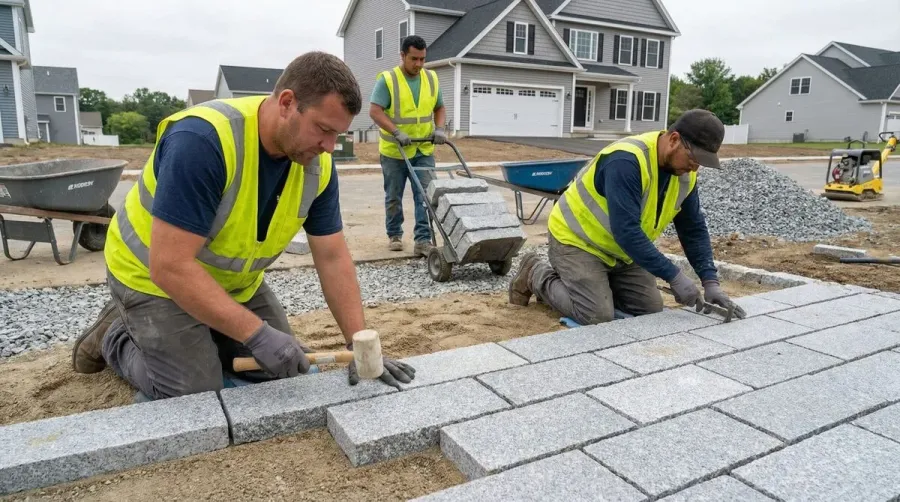
The investment in professional installation pays dividends through proper technique, appropriate material selection, and long-term performance guarantees that DIY approaches rarely achieve. For those planning their project, our guide on how much gravel do I need for a driveway can help you calculate material quantities accurately.
Granite driveway stones represent a premium choice that combines practical durability with timeless aesthetic appeal. By understanding the different types available, their specific benefits, and proper installation requirements, you can make an informed decision that enhances your property value while providing decades of reliable service. Whether you choose cost-effective crushed granite or elegant cobblestones, this natural stone material delivers the perfect foundation for your home’s entrance.
FAQ
What is the best type of granite for driveways?
The best granite type depends on your budget and aesthetic preferences. Crushed granite ($2-4/sq ft) offers excellent traction and compaction for budget-conscious homeowners. Granite pavers ($8-15/sq ft) provide precise cuts for elegant patterns and heavy-duty performance. Granite cobblestones ($12-20/sq ft) deliver classic durability with textured surfaces for slip resistance and develop a beautiful patina over time. All granite types rank 7 on the Mohs hardness scale, ensuring exceptional longevity regardless of your choice.
How much does a granite driveway cost?
Granite driveway costs vary by type and installation complexity. Crushed granite ranges $2-4/sq ft, granite pavers cost $8-15/sq ft, and cobblestones run $12-20/sq ft. Factor in base preparation ($2-5/sq ft) and professional installation. A typical 2-car driveway (400-600 sq ft) costs $3,000-$12,000 total. While the initial investment is higher than asphalt, granite’s 30+ year lifespan and minimal maintenance often result in lower total ownership costs.
How do you install granite driveway stones?
Granite driveway installation follows these key steps: 1) Excavate 8-12 inches deep depending on soil conditions and traffic load. 2) Install geotextile fabric and add 4-6 inches of compacted crushed stone base. 3) Layer 2-3 inches of finer gravel and compact thoroughly. 4) Lay granite stones with appropriate bedding (sand for pavers, direct placement for crushed granite). 5) Compact with plate compactor and ensure 2% slope for proper drainage. 6) Apply sealer for stain protection and enhanced appearance.
Are granite driveways low maintenance?
Yes, granite driveways are exceptionally low maintenance. The non-porous surface resists oil stains, tire marks, and dirt accumulation. Simple hosing with mild detergent removes most contaminants, and periodic sealing every 2-3 years maintains optimal protection. Unlike asphalt that requires regular resurfacing or concrete that develops cracks, granite withstands freeze-thaw cycles without damage and maintains structural integrity for decades with minimal intervention.
Delivered price for your ZIP
Delivered to your driveway. You pick the date.
* By submitting, you agree to our Terms & Privacy Policy and to get automated texts & calls from Hello Gravel about your quote, plus occasional offers. Agreeing isn’t required to buy. Msg frequency varies. Msg & data rates may apply. Reply STOP to opt out, HELP for help.
How much do you need?
Pricing your gravel? Get delivered Driveway Gravel prices for your ZIP.
Delivered to your driveway. You pick the date.
* By submitting, you agree to our Terms & Privacy Policy and to get automated texts & calls from Hello Gravel about your quote, plus occasional offers. Agreeing isn’t required to buy. Msg frequency varies. Msg & data rates may apply. Reply STOP to opt out, HELP for help.
Delivered price for your ZIP
Delivered to your driveway. You pick the date.
* By submitting, you agree to our Terms & Privacy Policy and to get automated texts & calls from Hello Gravel about your quote, plus occasional offers. Agreeing isn’t required to buy. Msg frequency varies. Msg & data rates may apply. Reply STOP to opt out, HELP for help.