
How Much Is Road Base Per Ton (2026 Cost)
Free local estimate
See delivered prices for your ZIP in 60 seconds
Tell us where the project is and we'll price this material — delivered — for your exact ZIP.
- Real delivered pricing for your ZIP — not a generic range.
- Works for any quantity — driveways, pads, drains, or full projects.
- Prefer to talk? We follow up with local availability and delivery windows.
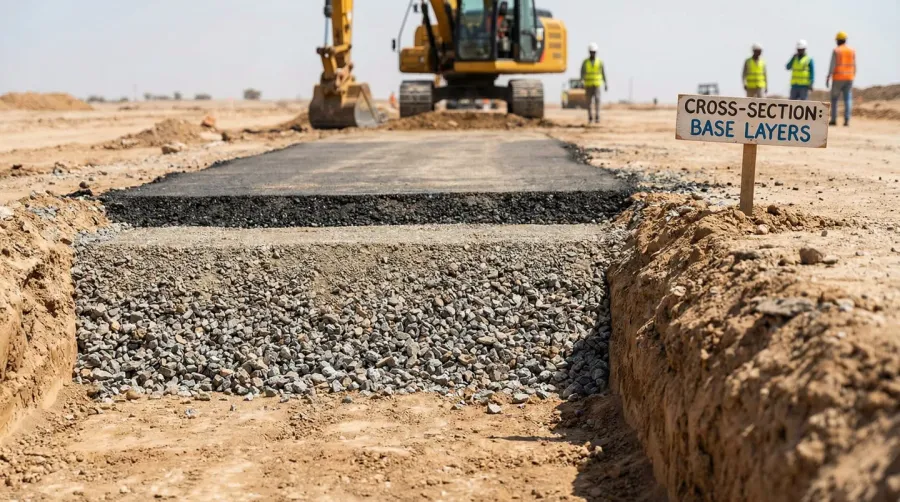
Road base material costs in 2026 range from $15-35 per ton depending on the material type, quality, and your location. Understanding these costs upfront helps you budget accurately and avoid surprises during your construction project.
Quick Answer: Gravel road base typically costs $15-25 per ton, crushed stone runs $25-40 per ton, and recycled concrete aggregate ranges from $10-20 per ton. Delivery adds another $50-150 to your total cost depending on distance.
Whether you’re planning a driveway, parking lot, or road project, choosing the right road base material affects both your upfront costs and long-term performance. This guide breaks down current pricing, compares different materials, and shows you how to calculate exactly what you’ll need for your project.
Pro Tip: Larger projects often qualify for bulk pricing discounts, potentially saving you $2-5 per ton compared to smaller orders. At Hello Gravel, we specialize in transactions of 500 tons or more but accommodate smaller projects as well.
About Hello Gravel
Hello Gravel delivers bulk gravel, rock, dirt, and sand by the ton. Enter your ZIP code to see prices with delivery included. A local dump-truck driver places the load where access is safe; spreading is not included.
What road base material costs in 2026
Road base material prices vary significantly based on the type you choose and your project location. Here’s what you can expect to pay for the most common options this year.
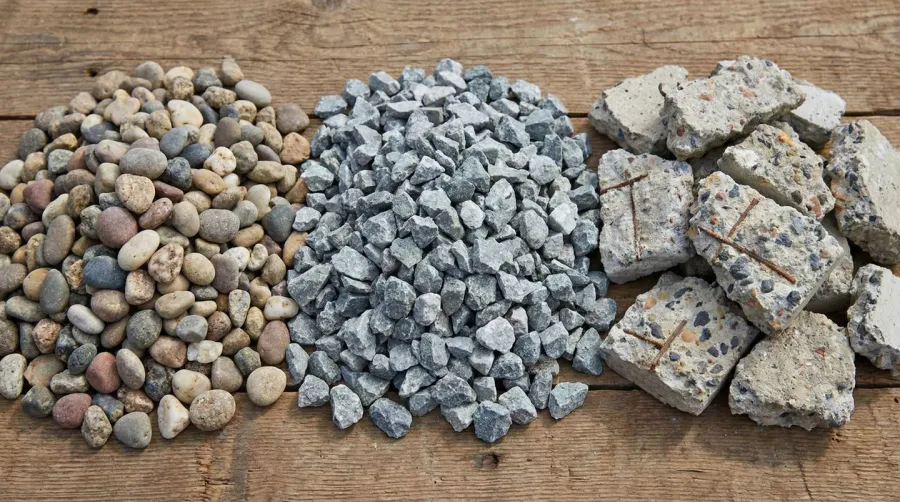
| Material Type | Cost Per Ton | Best For | Key Benefits |
|---|---|---|---|
| Gravel | $15-25 | Low-traffic roads, temporary surfaces | Affordable, good drainage |
| Crushed Stone | $25-40 | High-traffic areas, permanent roads | Excellent durability, load-bearing |
| Recycled Concrete | $10-20 | Budget projects, eco-friendly builds | Cost-effective, sustainable |
Gravel remains the most budget-friendly option for basic projects. It compacts well and provides adequate support for residential driveways and light-traffic areas. The lower cost makes it attractive when you’re working with tight budgets. For more details on gravel pricing, check out our comprehensive guide on the cost per ton of gravel.
Crushed stone costs more but delivers superior performance. The angular particles lock together tightly when compacted, creating a stable foundation that handles heavy loads. Most contractors recommend crushed stone for projects expecting regular traffic or heavy vehicles. If you’re considering recycled options, learn more about crushed concrete cost per ton to see how it compares.
Factors that affect your road base costs
Several key factors influence what you’ll actually pay for road base material. Understanding these helps you budget more accurately and find potential savings.
Material quality represents the biggest price variable. Premium-grade materials with consistent sizing and minimal impurities cost $5-10 more per ton than standard grades. However, higher quality often means better long-term performance and fewer maintenance issues down the road.
Location and transportation significantly impact your final costs. Materials sourced locally typically cost less due to reduced shipping expenses. If you’re located far from quarries or suppliers, expect to pay an additional $5-15 per ton for delivery. Hello Gravel’s nationwide network allows us to source and deliver material nearby wherever your job is located across all 50 states, often with delivery as soon as the next business day. Learn more about how to find the best deals on aggregates for large projects to maximize your savings.
Project size also affects pricing. Bulk orders often qualify for volume discounts, while small residential projects may face higher per-ton costs. Planning your project timing around other local construction can sometimes help you split delivery costs with neighbors. For insights on bulk purchasing, explore the benefits of purchasing gravel by bulk.
Money-Saving Tip: Contact multiple local suppliers for quotes. Prices can vary by 20-30% between suppliers in the same area, especially during peak construction season. Hello Gravel’s marketplace serves as a free directory of up-to-date aggregate prices, helping you compare options quickly.
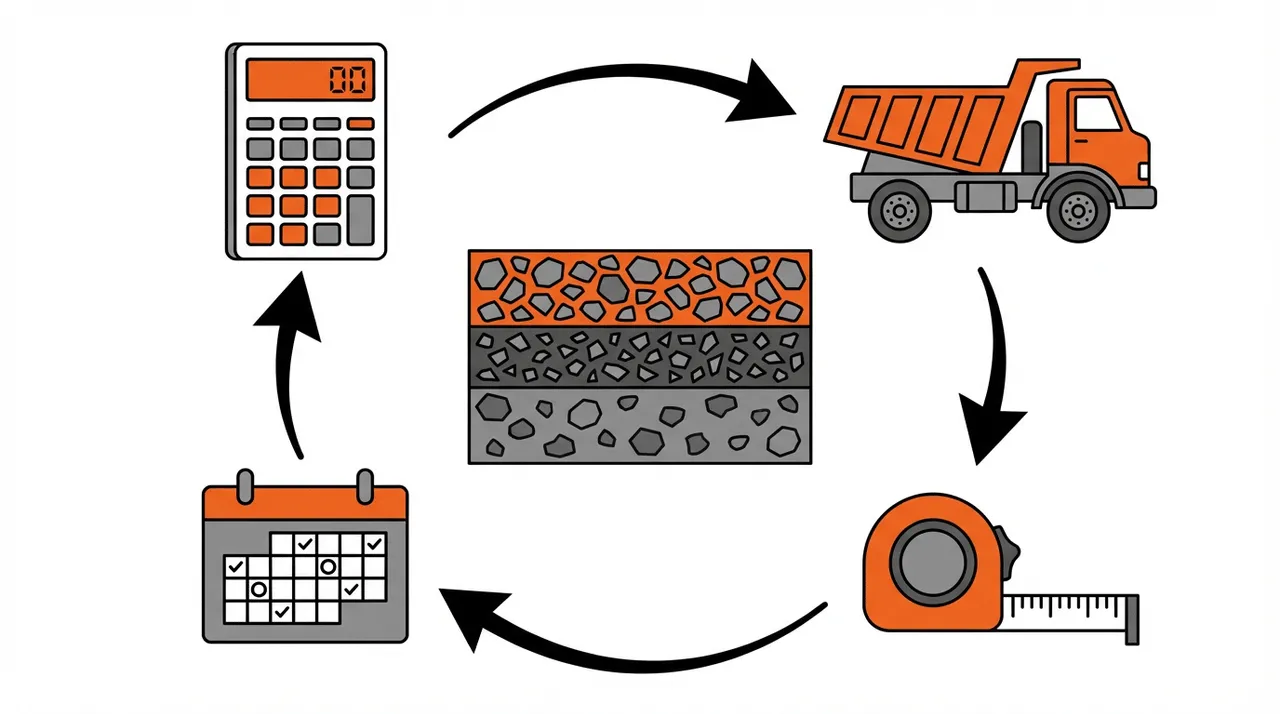
How to calculate your road base needs
Determining exactly how much road base material you need prevents costly overages or project delays from running short. The calculation involves a few simple steps that any homeowner can handle.
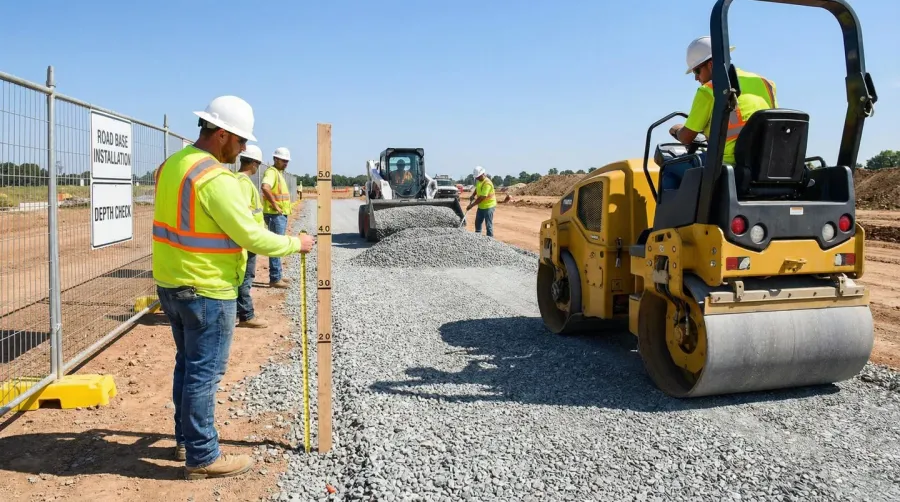
Start by measuring your project area in feet. Multiply length times width to get your square footage. For a typical driveway foundation, you’ll need road base depth of 4-6 inches, depending on expected traffic and soil conditions.
Convert your measurements to cubic yards since most suppliers price by the yard. Divide your square footage by 9 to get square yards, then multiply by your depth in feet. For example, a 20×50 foot driveway with 4-inch base needs about 12 cubic yards of material. Hello Gravel provides an online material calculator to help you determine exactly how many cubic yards or tons you need based on your project measurements. If you need help understanding yard-based pricing, see our guide on how much does a yard of gravel cost.
Most road base materials weigh 1.3-1.5 tons per cubic yard, so multiply your cubic yards by 1.4 to estimate tonnage. This helps when comparing suppliers who quote by different units. Always add 10% extra to account for compaction and minor calculation errors.
Consider your soil conditions when planning depth. Soft or clay soils may require thicker road base to prevent settling. Rocky or well-draining soils can often work with thinner applications, saving you money on materials.
Smart strategies to reduce road base costs
Several proven approaches can help you minimize road base expenses without compromising quality. These strategies work for both small residential projects and larger commercial builds.
Timing your project strategically can yield significant savings. Many suppliers offer lower prices during off-peak seasons, typically late fall through early spring. Construction demand drops during these months, creating opportunities for better pricing and more flexible delivery schedules.
Consider recycled materials when appropriate for your project. Recycled concrete aggregate performs well for many applications while costing 20-30% less than virgin materials. The environmental benefits add value beyond just cost savings, and many municipalities encourage or require recycled content for certain projects. For detailed pricing information, visit our page on crushed concrete cost per yard.
Coordinate with neighbors or other local projects to share delivery costs. Suppliers often charge flat delivery fees regardless of load size, so splitting a truck between multiple projects reduces per-ton costs for everyone involved. You can also explore material sourcing secrets for busy contractors for additional cost-saving strategies.
Work with established suppliers who can optimize your supply chain. Hello Gravel eliminates the need to call around for price sheets by providing transparent pricing and working with local pits and haulers nationwide to deliver on time, every time. Our dedicated account managers help with quotes, scheduling, and repeat orders, making the process simple for DIY homeowners, landscapers, contractors, and municipalities.
To skip the phone calls, you can order road base gravel online and see the delivered price for your ZIP code before you buy.
Budget Planning: Always get quotes from at least three suppliers and ask about seasonal pricing, bulk discounts, and delivery options to ensure you’re getting the best value for your project. Hello Gravel’s online ordering system lets you order in minutes with no endless quote chains or phone tag.
Road base material costs continue evolving with market conditions, but understanding current pricing and cost factors helps you make informed decisions. Whether you choose gravel for basic projects or invest in crushed stone for heavy-duty applications, proper planning and smart sourcing strategies can keep your project on budget while ensuring long-term performance.
FAQ
What are the main cost components of road base material in 2026?
The main cost components include the material itself ($10-40 per ton depending on type), delivery charges ($50-150 based on distance), and quality grade premiums ($5-10 extra per ton for premium materials). Material costs typically represent 15-25% of total road construction budgets, with gravel being the most affordable at $15-25 per ton and crushed stone being the most expensive at $25-40 per ton.
How much road base material do I need for my project?
Calculate your square footage (length × width), then multiply by your desired depth in feet (typically 4-6 inches for driveways). Divide by 27 to convert to cubic yards, then multiply by 1.4 to estimate tonnage since most road base weighs 1.3-1.5 tons per cubic yard. Always add 10% extra for compaction and minor calculation errors. For example, a 20×50 foot driveway with 4-inch base needs about 12 cubic yards or 17 tons of material.
Is recycled concrete aggregate as good as virgin materials for road base?
Recycled concrete aggregate performs well for most road base applications while costing 20-30% less than virgin materials at $10-20 per ton. It provides adequate load-bearing capacity for residential driveways and light-traffic areas. However, for high-traffic roads or heavy-duty applications, crushed stone may offer superior long-term performance despite the higher upfront cost. The environmental benefits and cost savings make recycled concrete an excellent choice for budget-conscious projects.
When is the best time to buy road base material to save money?
The best time to purchase road base material is during off-peak seasons, typically late fall through early spring when construction demand drops. Suppliers often offer lower prices during these months, and you’ll have more flexible delivery schedules. Additionally, larger bulk orders qualify for volume discounts of $2-5 per ton, and coordinating with neighbors to share delivery costs can reduce expenses further since suppliers charge flat delivery fees regardless of load size.
Materials for this project
Get it delivered — dumped where you need it
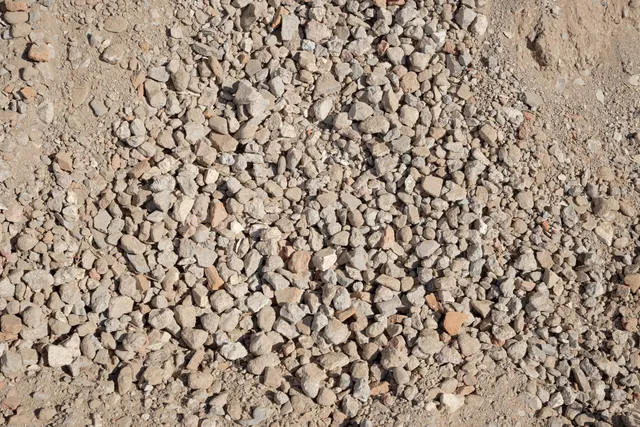
Road Base
Driveway base & Road construction
See delivered price
View product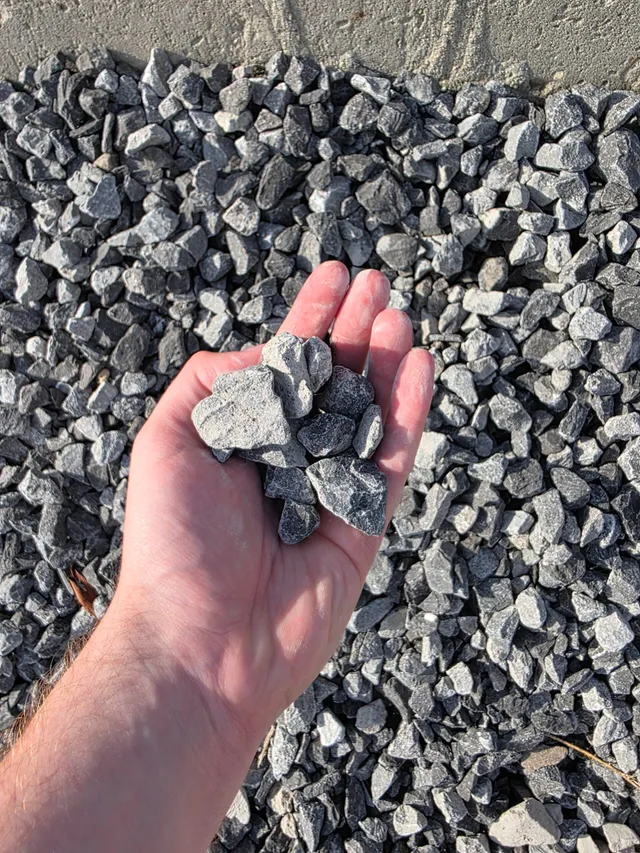
Driveway Gravel
Driveways & Parking areas
See delivered price
View product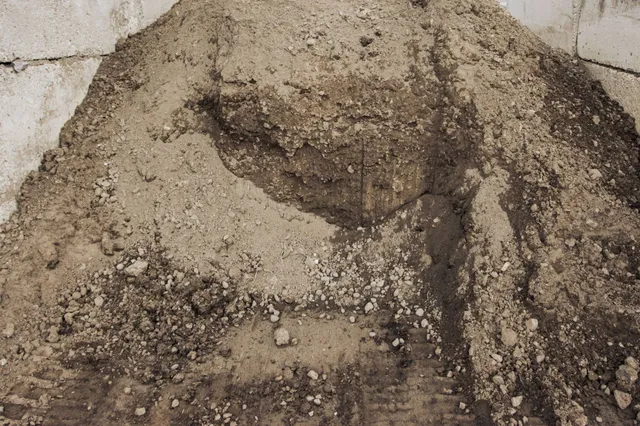
Fill Dirt
Grading & Backfill
See delivered price
View product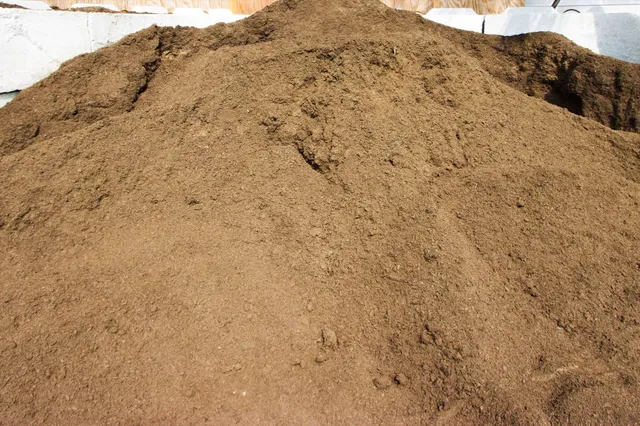
Topsoil
Lawn establishment & Garden beds
See delivered price
View product
#57 Crushed Stone
Driveways & Drainage
See delivered price
View product