
River Rock for Pond Borders (Calculator and Guide)
Free local estimate
See delivered prices for your ZIP in 60 seconds
Tell us where the project is and we'll price this material — delivered — for your exact ZIP.
- Real delivered pricing for your ZIP — not a generic range.
- Works for any quantity — driveways, pads, drains, or full projects.
- Prefer to talk? We follow up with local availability and delivery windows.
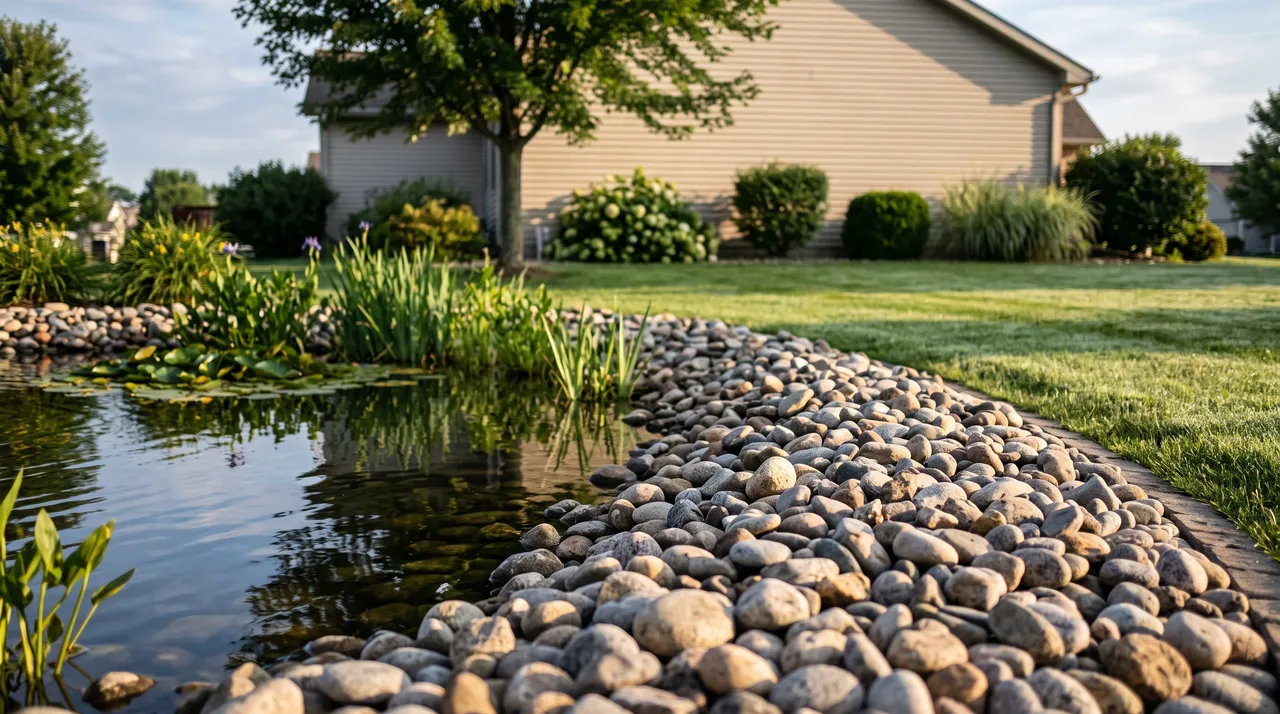
Creating a stunning pond border with river rock transforms your water feature from ordinary to extraordinary. But here’s the challenge you’re facing: how much river rock do you actually need? Order too little and you’ll face expensive second deliveries. Order too much and you’ve wasted money on materials sitting in your yard.
The quick answer is this: multiply your pond’s perimeter by your desired border width, then by the depth (typically 2-3 inches), and divide by the coverage rate of your chosen rock size. For most pond borders, you’ll need approximately 1.5 to 2 tons of river rock per 100 square feet at 3-inch depth.
Pro tip: Always add 10-15% extra to your calculation to account for irregular pond edges and settling over time.
Let’s walk through the exact process so you can order with confidence and create the pond border you’ve been dreaming about.
About Hello Gravel
Hello Gravel delivers bulk gravel, rock, dirt, and sand by the ton. Enter your ZIP code to see prices with delivery included. A local dump-truck driver places the load where access is safe; spreading is not included.
Benefits of river rock for ponds
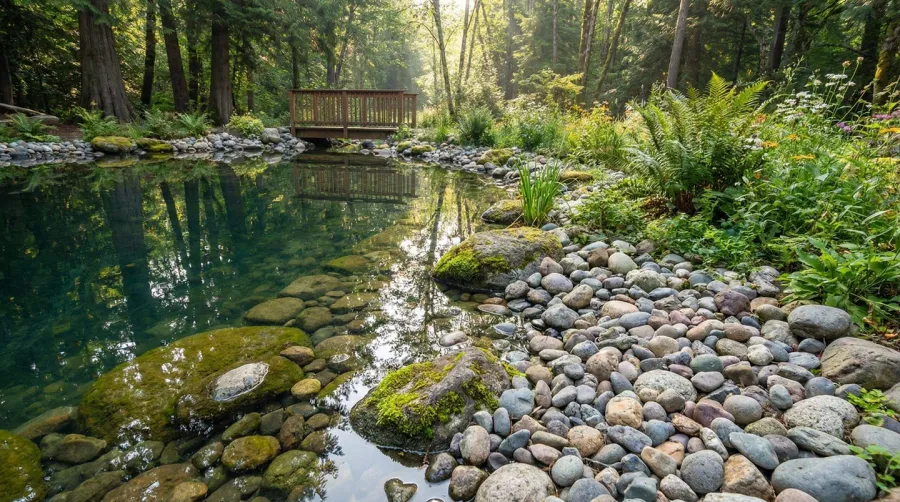
River rock isn’t just about looks, though it certainly delivers on that front. When you choose river rock for your pond border, you’re investing in both beauty and function that will serve your pond for years.
The smooth, naturally weathered stones create a seamless transition between your pond and the surrounding landscape. Unlike sharp-edged crushed stone, river rock feels comfortable underfoot and won’t snag pond liners during installation.
From a practical standpoint, river rock excels at erosion control. During heavy rainfall, the stones act as a protective barrier, preventing soil from washing into your pond and clouding the water. The irregular shapes and spaces between rocks also provide excellent drainage, allowing water to flow away from the pond area rather than pooling around the edges.
Perhaps most importantly for pond health, river rock creates habitat for beneficial bacteria. These microscopic helpers colonize the rock surfaces and help break down organic matter like fallen leaves and fish waste, naturally maintaining water quality.
Pond rock calculator: step-by-step formula
Calculating your river rock needs doesn’t require complex math, just careful measurement and the right formula. Here’s how to get accurate numbers every time.
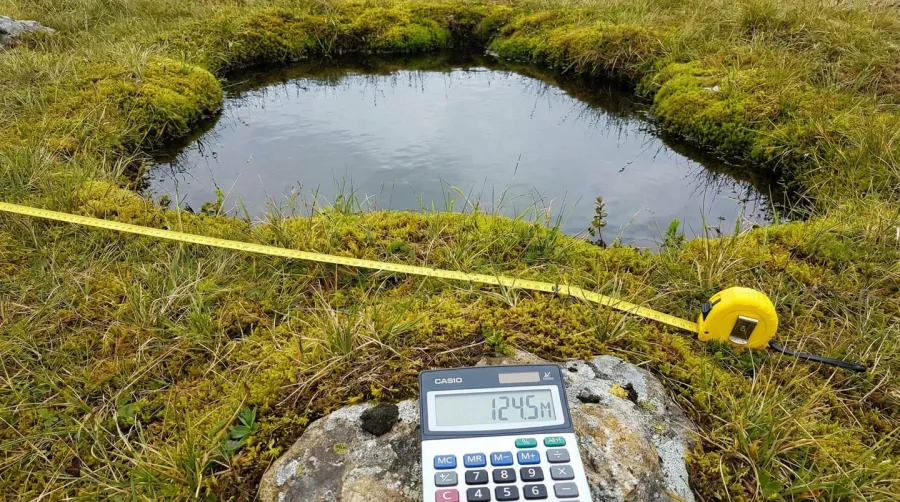
Step 1: Measure your pond’s perimeter using a flexible measuring tape. Walk around the entire edge, following all curves and indentations. For irregular shapes, break the perimeter into smaller sections and add them together.
Step 2: Decide on your border width. Most pond borders look best between 18 inches and 3 feet wide. Smaller ponds typically use narrower borders (18-24 inches) while larger ponds can handle wider borders (2-3 feet) without looking overwhelming.
Step 3: Choose your depth. A 2-3 inch depth works for most applications. Use 2 inches for decorative borders and 3 inches for areas that need better weed suppression or erosion control.
Step 4: Apply the formula: (Perimeter × Width × Depth in feet) ÷ Coverage rate = Cubic yards needed. Then multiply by 1.6 (the weight of river rock per cubic yard) to get tons.
For example, a pond with 50 feet of perimeter, 2-foot wide border, and 3-inch depth: (50 × 2 × 0.25) ÷ 27 = 0.93 cubic yards × 1.6 = 1.5 tons of river rock needed.
Factors that affect river rock quantity
Your final material needs depend on several variables beyond basic measurements. Understanding these factors helps you fine-tune your order and avoid surprises.
Rock size plays a major role in coverage. Smaller river rocks (1-2 inches) pack more densely and provide better coverage per ton. Larger rocks (3-5 inches) create more dramatic visual impact but require more material to fill the same space due to larger gaps between stones.
Pond shape complexity also matters. Perfectly round or rectangular ponds are straightforward to calculate. But if your pond has multiple curves, peninsulas, or irregular edges, add an extra 15-20% to your base calculation. These complex areas always require more rock than simple geometry suggests.Your aesthetic goals influence quantity too. If you want a densely packed border with minimal soil showing through, you’ll need the full calculated amount plus 10% extra. For a more natural, scattered look with some gaps and planted areas, you can reduce your order by 10-15%.
Important consideration: Sloped areas around your pond require 20-30% more rock than flat surfaces to achieve the same visual coverage and erosion protection.
Cost planning and purchasing guide
River rock pricing varies significantly based on size, quality, and your location, but understanding the typical ranges helps you budget effectively.
Expect to pay between $50-120 per ton for river rock, with smaller sizes generally costing more per ton than larger ones. Premium river rock with uniform color and shape commands higher prices, while mixed-size “river rock blend” offers better value for larger projects. For a detailed breakdown of pricing factors, check out our comprehensive guide to river rock prices.
| Rock Size | Price Range (per ton) | Best Use |
|---|---|---|
| 1-2 inch | $80-120 | Detailed borders, small ponds |
| 2-4 inch | $60-90 | General pond borders |
| 4-6 inch | $50-80 | Large ponds, dramatic effect |
When purchasing, buy from landscape supply companies rather than big box stores for better pricing on larger quantities. Most suppliers offer delivery for orders over 3-5 tons, which typically costs $75-150 depending on distance.Consider timing your purchase during off-peak seasons (late fall or winter) when demand is lower and suppliers may offer discounts. Many companies also provide price breaks for larger orders, so if you’re planning multiple landscaping projects, coordinate your purchases. If you’re looking to save even more, explore options for buying river rocks in bulk wholesale.
Installation tips for success
Proper installation ensures your river rock border looks professional and lasts for years. Start by clearing the border area of grass, weeds, and debris. A clean foundation prevents future weed problems and ensures even rock placement.
Consider installing landscape fabric before placing your river rock. This barrier suppresses weeds while allowing water drainage. Choose a high-quality, permeable fabric rated for outdoor use, not plastic sheeting that can trap water and create drainage problems.
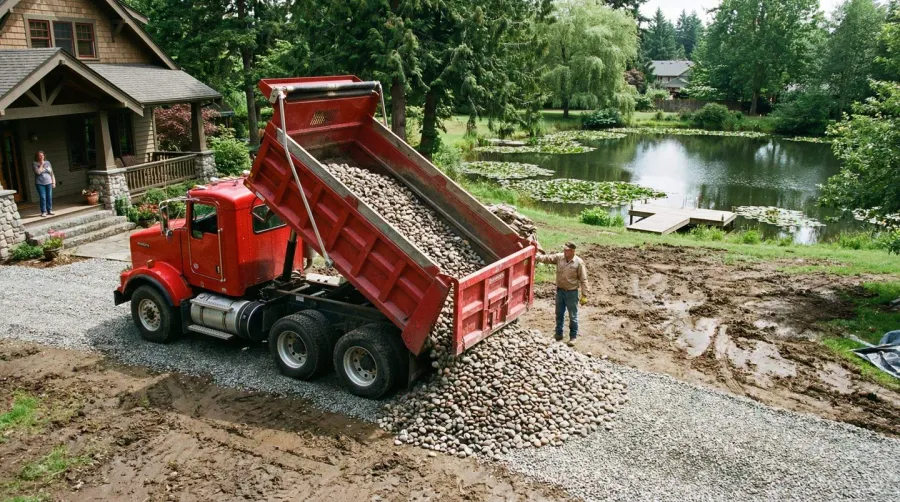
When spreading the rock, work in small sections rather than dumping large piles. This approach gives you better control over depth and coverage. Use a rake to level the rocks initially, then hand-place larger stones for the best visual effect.
Don’t compact river rock like you would crushed stone. The natural spacing between rounded stones provides the drainage and habitat benefits you want. Simply level and arrange for appearance.
Creating a beautiful pond border with river rock transforms your outdoor space while providing practical benefits for your pond’s health. By following these calculation methods and planning tips, you’ll order exactly what you need and achieve professional-looking results. Take your time with measurements, factor in your specific conditions, and don’t forget that extra 10-15% buffer for the best outcome.
Ready to start your pond border project? hellogravel.com offers premium river rock with convenient delivery options to help you create the pond border you’ve been planning.
FAQ
How much river rock do I need for a pond border?
To calculate river rock for a pond border, measure your pond’s perimeter and multiply by your desired border width (typically 18 inches to 3 feet). Then multiply by depth (2-3 inches) and divide by 27 to get cubic yards. For most pond borders, you’ll need approximately 1.5 to 2 tons of river rock per 100 square feet at 3-inch depth. Always add 10-15% extra for irregular edges and settling.
What size river rock is best for pond borders?
For pond borders, 2-4 inch river rock works best for general applications, providing good coverage and visual appeal. Smaller 1-2 inch rocks offer better coverage per ton and work well for detailed borders around small ponds. Larger 4-6 inch rocks create dramatic effects for large ponds but require more material due to larger gaps between stones.
How deep should river rock be around a pond?
River rock around ponds should be 2-3 inches deep for most applications. Use 2 inches for decorative borders and 3 inches for areas needing better weed suppression or erosion control. Sloped areas around your pond require 20-30% more rock than flat surfaces to achieve the same coverage and protection.
How do I convert cubic yards of river rock to tons?
To convert cubic yards to tons, multiply your cubic yards by 1.6 (the typical weight of river rock per cubic yard). For example, if you need 2 cubic yards of river rock, multiply 2 × 1.6 = 3.2 tons. This conversion factor accounts for the density and weight of river rock materials.
Materials for this project
Get it delivered — dumped where you need it
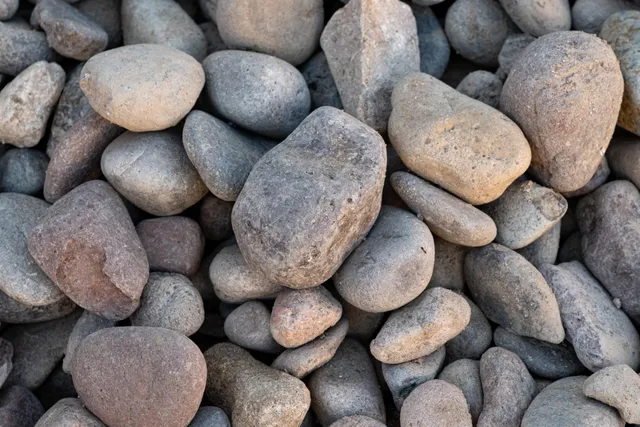
River Rock
Landscaping & Dry creek beds
See delivered price
View product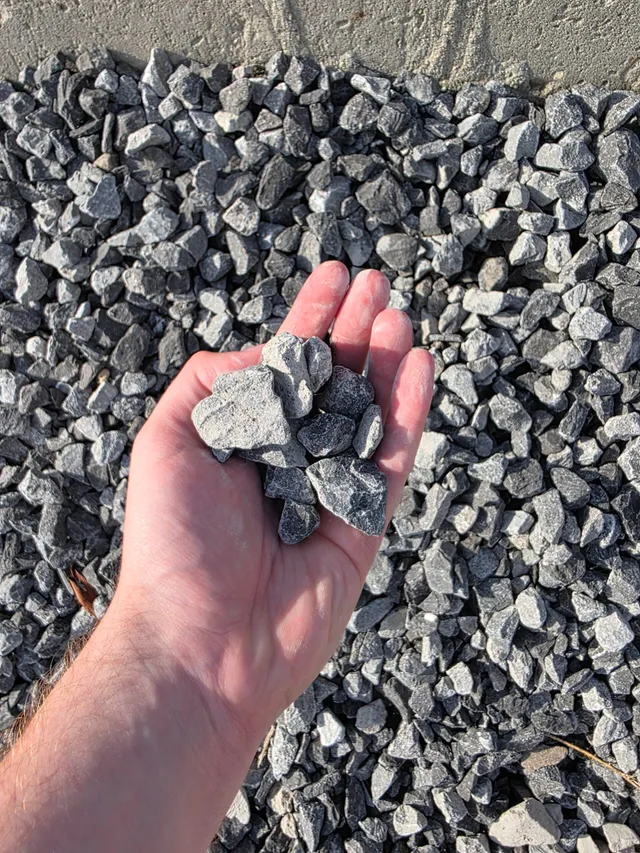
Driveway Gravel
Driveways & Parking areas
See delivered price
View product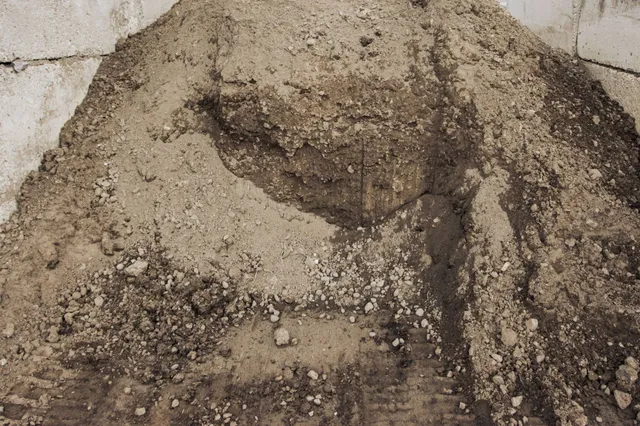
Fill Dirt
Grading & Backfill
See delivered price
View product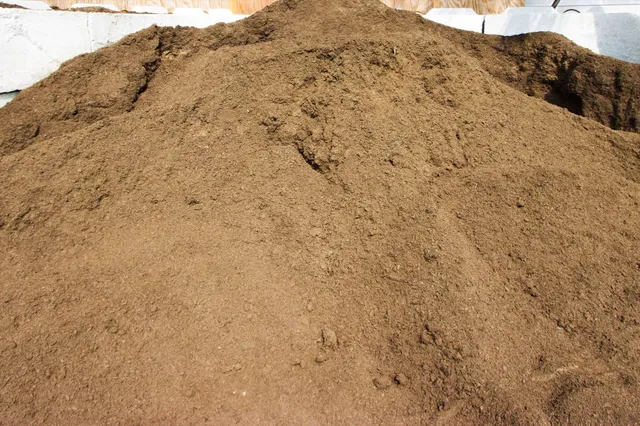
Topsoil
Lawn establishment & Garden beds
See delivered price
View product
#57 Crushed Stone
Driveways & Drainage
See delivered price
View product