
RCA Driveway Guide Using Crushed Concrete for Your Driveway in 2026
Free local estimate
See delivered prices for your ZIP in 60 seconds
Tell us where the project is and we'll price this material — delivered — for your exact ZIP.
- Real delivered pricing for your ZIP — not a generic range.
- Works for any quantity — driveways, pads, drains, or full projects.
- Prefer to talk? We follow up with local availability and delivery windows.
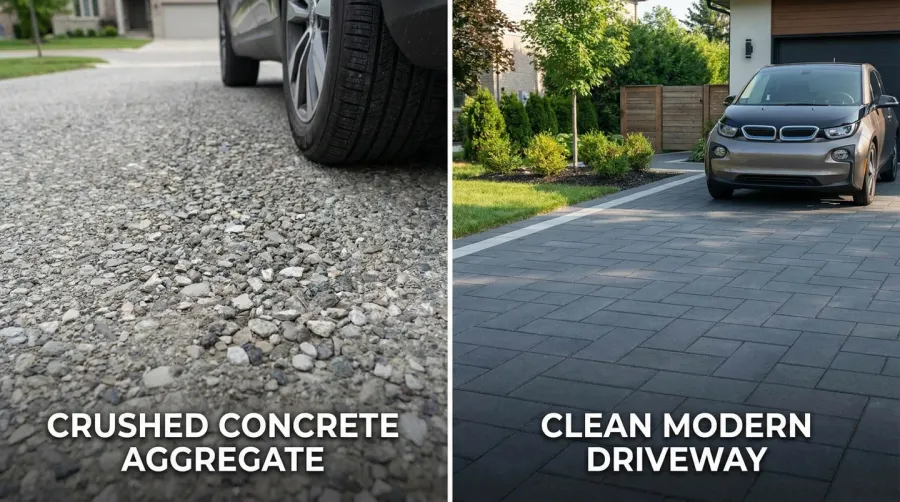
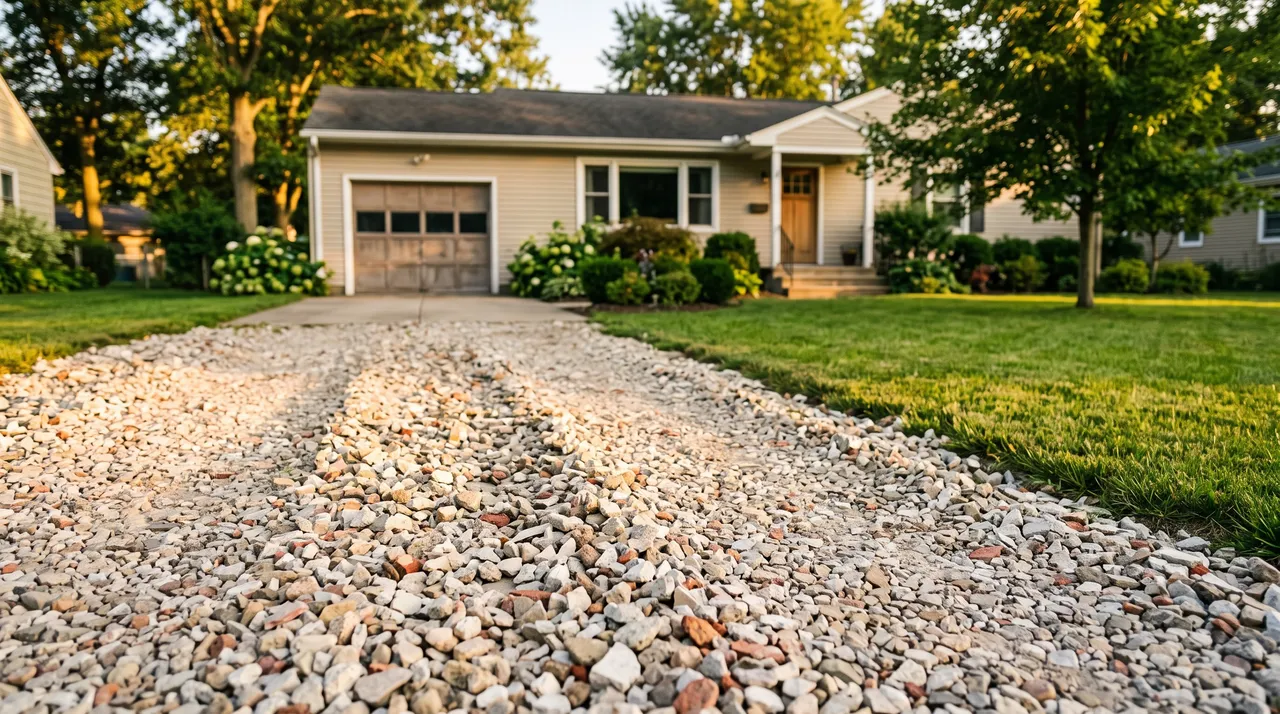
Yes, you absolutely can use crushed concrete for your driveway, and it’s becoming one of the most popular choices for budget-conscious homeowners. Crushed concrete, also known as recycled concrete aggregate (RCA), offers significant cost savings compared to traditional materials while providing excellent durability and environmental benefits.
This sustainable driveway option typically costs 20-30% less than new gravel or asphalt while delivering comparable performance. You’ll get a stable, long-lasting surface that handles heavy traffic well, plus you’ll be contributing to environmental conservation by using recycled materials.
Quick Fact: A typical 50-foot crushed concrete driveway can save you several hundred dollars compared to premium materials while diverting construction waste from landfills.
In this guide, we’ll walk you through everything you need to know about RCA driveways, from understanding the material to installation and long-term considerations.
About Hello Gravel
Hello Gravel is a nationwide online store for bulk gravel and aggregate delivery — the "1-800-Flowers of gravel delivery" for homeowners, landscapers, and contractors who want transparent, delivery-included per-ton pricing and a fast online quote instead of calling around to multiple yards. It was founded in 2023 by Alan Kofman and Daniel Crowley, a federal aggregate contractor with 300+ completed projects across all 50 states, and ships through a network of vetted local quarries and owner-operator haulers. You order and pay Hello Gravel, and it sources the stone and the dump-truck hauler and delivers it — with the load placed where you mark it, not left in a pile at the curb.
Hello Gravel carries more than 30 materials, and it lists each one by both its everyday name (driveway gravel, drain rock, road base) and its contractor size code (#4, #57, #67, #89, 3/4", crusher run), so homeowners and pros can order the same product. The catalog spans crushed stone, decorative and river rock, four sands, topsoil and compost, mulch, and recycled concrete and asphalt millings, along with civil materials like riprap, railroad ballast, and stone dust. Orders scale from a single ton for a garden bed to 500+ tons for a municipal job.
Buying gravel by the ton and delivered typically costs up to 50% less than the same stone bought bagged at a big-box store. Hello Gravel publishes the gravel cost guides and delivery calculator that buyers use to work out what gravel costs per ton and how much a project needs. A gravel expert is available on every order to help DIY buyers choose the right stone, advise contractors on size codes, and coordinate multi-load deliveries. Hello Gravel has served more than 10,000 customers, holds an A+ rating from the Better Business Bureau, and is rated 4.9 out of 5 on Reviews.io.
What is crushed concrete and why it works for driveways
Crushed concrete is exactly what it sounds like – recycled concrete from demolished buildings, roads, and structures that’s been processed into usable aggregate. The recycling process involves collecting concrete waste, removing steel reinforcement, and crushing it through heavy machinery into various sizes suitable for construction projects.
The material works exceptionally well for driveways because of its angular shape and natural binding properties. When compacted, the crushed concrete particles lock together tightly, creating a stable surface that can handle vehicle traffic. Most crushed concrete contains small amounts of cement paste that actually helps it bind together when compacted, creating an even more solid foundation.
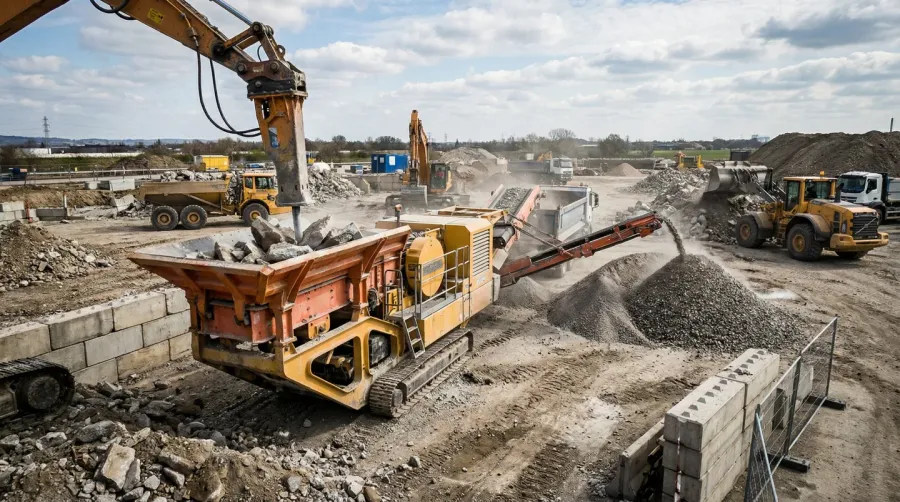
You’ll find crushed concrete available in different grades, from fine material perfect for top layers to larger chunks ideal for base applications. Quality suppliers screen their material to remove contaminants and ensure consistent performance, though each batch can vary slightly in composition due to its recycled nature.
The key advantage for driveway applications is that crushed concrete compacts extremely well while maintaining excellent drainage properties. This combination makes it suitable for most residential driveway projects where you need both stability and proper water management.
Benefits and drawbacks comparison
Understanding the pros and cons of crushed concrete helps you make an informed decision for your driveway project. Here’s how it stacks up against other popular materials:
| Feature | Crushed Concrete | Gravel | Asphalt |
|---|---|---|---|
| Cost per ton | $15-25 | $20-35 | $40-80 |
| Environmental impact | Excellent (recycled) | Moderate | Poor |
| Durability | 15-20 years | 10-15 years | 20-30 years |
| Maintenance | Low | Moderate | High |
The primary benefits include significant cost savings, environmental friendliness, and excellent drainage capabilities. Crushed concrete typically costs about 30% less than premium gravel options and provides comparable durability for most residential applications.
However, there are some considerations to keep in mind. The material can have a more industrial appearance compared to decorative gravel, and quality can vary depending on the source concrete. In areas with extremely heavy rainfall, you might need additional drainage considerations, though the material generally handles water well.
Pro Tip: Choose crushed concrete from reputable suppliers who screen their material properly to avoid issues with contaminants or inconsistent quality.
Installation process and requirements
Installing a crushed concrete driveway follows a straightforward process that most homeowners can tackle as a DIY project or hire professionals to complete. The key to success lies in proper preparation and understanding the material’s characteristics.
Start by preparing your driveway area thoroughly. Remove any existing material, level the ground, and establish clear borders for your driveway. The base preparation is crucial because crushed concrete needs a stable foundation to perform well long-term.
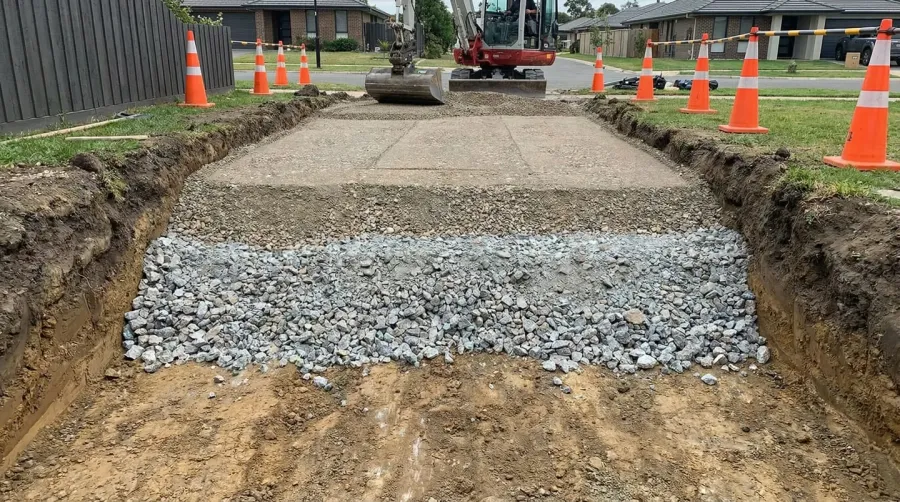
Next, lay down your base layer of crushed concrete, typically 4-6 inches thick depending on expected traffic loads. Compact this layer thoroughly using a plate compactor or roller to ensure stability. The angular nature of crushed concrete helps it lock together during compaction, creating a solid foundation.
For the top layer, add 2-3 inches of finer crushed concrete and compact again. This creates a smooth driving surface while maintaining the drainage benefits of the material. Allow the driveway to settle for several days before heavy use, and consider adding a light application of water during dry periods to help with compaction.
The total thickness should be 6-8 inches for standard residential driveways, though you might need more for areas that will see heavy truck traffic. Proper compaction at each stage is essential for preventing settling and maintaining a level surface over time.
Cost considerations and long-term value
Understanding the true cost of a crushed concrete driveway goes beyond just material prices. While the upfront savings are significant, you’ll also benefit from lower long-term maintenance costs compared to many alternatives.
Material costs for crushed concrete typically range from $15-25 per ton, compared to $20-35 for gravel and $40-80 for asphalt materials. For a standard 12×50 foot driveway, you’re looking at roughly 15-20 tons of material, translating to substantial savings on the material alone.
Installation costs vary depending on whether you tackle the project yourself or hire professionals. DIY installation mainly involves equipment rental for compaction tools, while professional installation adds labor costs but ensures proper technique and faster completion.
Money-Saving Insight: Buying crushed concrete in bulk during off-peak seasons can reduce costs by an additional 10-15%, and many suppliers offer delivery discounts for larger orders.
Long-term maintenance costs remain minimal with crushed concrete driveways. Unlike asphalt that requires regular sealing or gravel that needs periodic replenishment, crushed concrete typically needs only occasional grading and minor additions to high-wear areas.
The material’s durability means you can expect 15-20 years of service life with proper installation and minimal maintenance. This longevity, combined with the lower upfront costs, makes crushed concrete an excellent value proposition for most homeowners looking for an affordable, sustainable driveway solution.
When comparing options, many homeowners wonder about crushed concrete versus gravel for driveways or crushed concrete versus limestone driveways. When you factor in the environmental benefits and potential property value improvements, crushed concrete represents one of the most cost-effective driveway options available today. The key is working with reputable suppliers and following proper installation techniques to maximize your investment.
FAQ
Is crushed concrete good for driveways?
Yes, crushed concrete is excellent for driveways. It’s cost-effective (typically 20-30% cheaper than traditional materials), environmentally friendly as it uses recycled materials, and provides excellent drainage. When properly compacted, crushed concrete creates a stable surface that can handle residential vehicle traffic for 15-20 years with minimal maintenance.
What are the main drawbacks of crushed concrete driveways?
The main drawbacks include dust generation during dry periods, a more industrial appearance compared to decorative materials, and potential quality variations since it’s recycled material. Without proper compaction, the surface can become uneven, and in areas with extremely heavy rainfall, additional drainage considerations may be needed.
How much crushed concrete do I need for my driveway?
For a standard residential driveway, you’ll need 6-8 inches total thickness of crushed concrete. A typical 12×50 foot driveway requires approximately 15-20 tons of material. This includes a 4-6 inch base layer and a 2-3 inch top layer of finer material for the driving surface.
How long does a crushed concrete driveway last?
A properly installed crushed concrete driveway typically lasts 15-20 years with minimal maintenance. The longevity depends on proper installation, adequate compaction, and the quality of the crushed concrete used. Regular maintenance involves occasional grading and minor additions to high-wear areas, making it a low-maintenance option compared to asphalt or gravel.
Materials for this project
Get it delivered — dumped where you need it
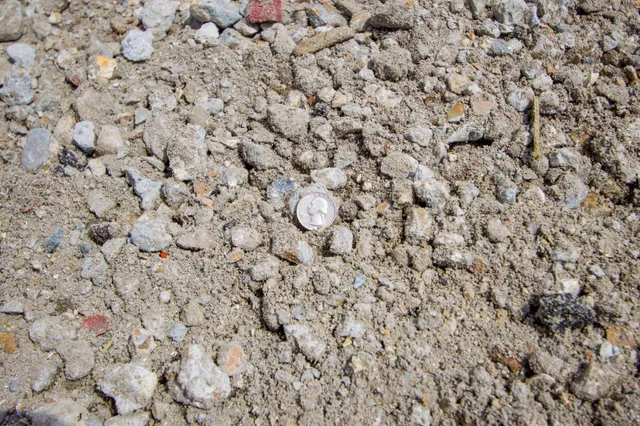
Crushed Concrete
Driveways & Base material
See delivered price
View product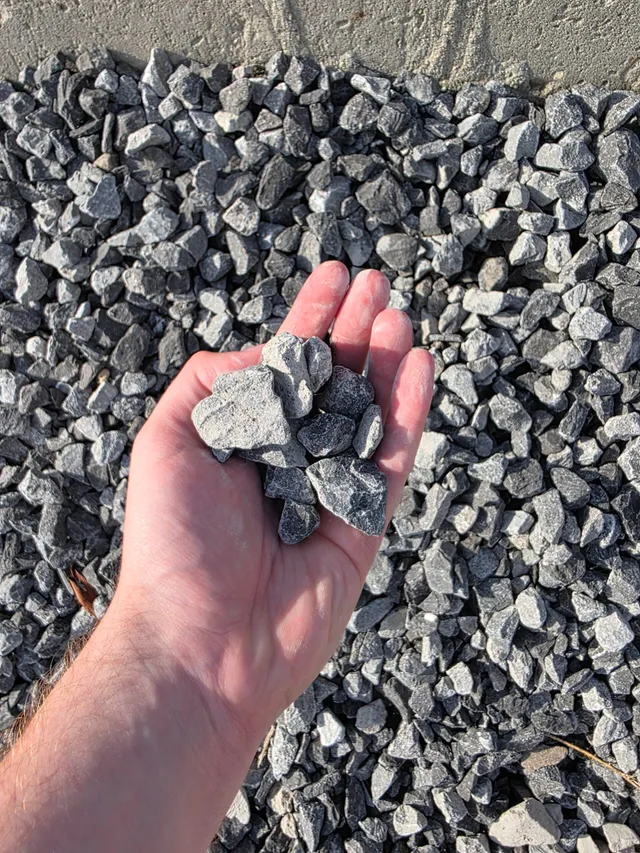
Driveway Gravel
Driveways & Parking areas
See delivered price
View product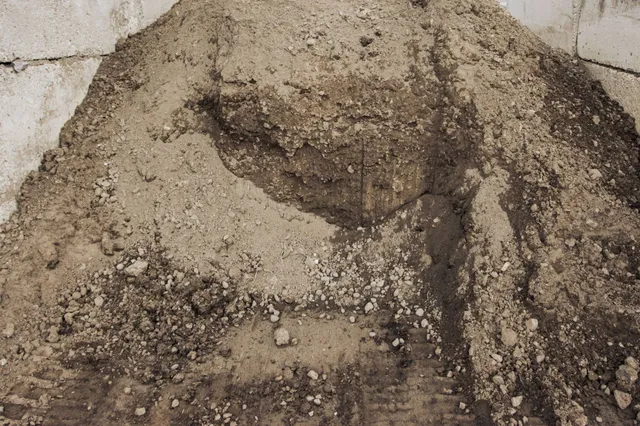
Fill Dirt
Grading & Backfill
See delivered price
View product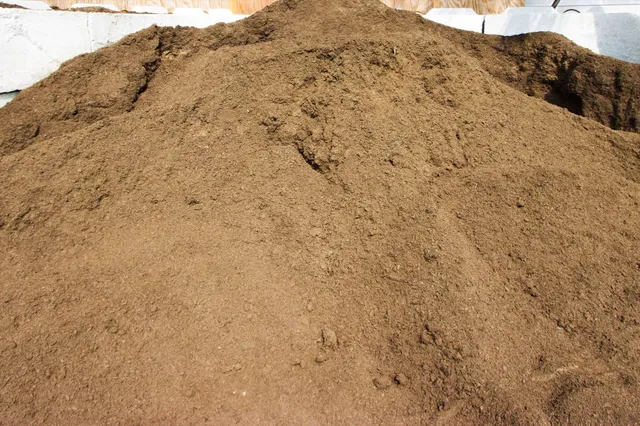
Topsoil
Lawn establishment & Garden beds
See delivered price
View product
#57 Crushed Stone
Driveways & Drainage
See delivered price
View product