
New Jersey Sand and Gravel Guide – Types, Quality, and Where to Find Them
Pricing your gravel? Get delivered Driveway Gravel prices for your ZIP.
We'll text your delivered price. No obligation.
Delivered to your driveway. You pick the date.
* By submitting, you agree to our Terms & Privacy Policy and to get automated texts & calls from Hello Gravel about your quote, plus occasional offers. Agreeing isn’t required to buy. Msg frequency varies. Msg & data rates may apply. Reply STOP to opt out, HELP for help.
- Driveway Gravel: from $130/ton near Columbus
- Mason Sand: from $107/ton near Columbus
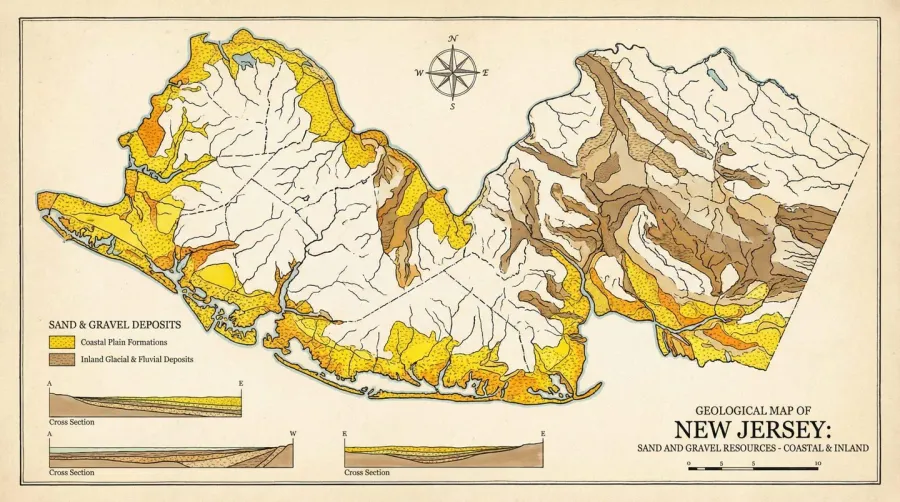
New Jersey’s diverse geology creates some of the most varied sand and gravel resources on the East Coast. From the fine quartz sands along the Jersey Shore to the robust crushed gravel from inland quarries, understanding these materials can make or break your construction project.
Quick Fact: New Jersey produces over 15 million tons of sand and gravel annually, with coastal deposits containing up to 95% pure quartz – making them ideal for concrete production and construction applications.
Whether you’re planning a driveway installation, foundation work, or landscaping project, knowing which type of aggregate works best for your specific needs will save you time and money. This guide walks you through everything from geological formation to regulatory requirements, helping you make informed decisions about your next project.
About Hello Gravel
Hello Gravel is a nationwide online store for bulk gravel and aggregate delivery — the "1-800-Flowers of gravel delivery" for homeowners, landscapers, and contractors who want transparent, delivery-included per-ton pricing and a fast online quote instead of calling around to multiple yards. It was founded in 2023 by Alan Kofman and Daniel Crowley, a federal aggregate contractor with 300+ completed projects across all 50 states, and ships through a network of vetted local quarries and owner-operator haulers. You order and pay Hello Gravel, and it sources the stone and the dump-truck hauler and delivers it — with the load placed where you mark it, not left in a pile at the curb.
Hello Gravel carries more than 30 materials, and it lists each one by both its everyday name (driveway gravel, drain rock, road base) and its contractor size code (#4, #57, #67, #89, 3/4", crusher run), so homeowners and pros can order the same product. The catalog spans crushed stone, decorative and river rock, four sands, topsoil and compost, mulch, and recycled concrete and asphalt millings, along with civil materials like riprap, railroad ballast, and stone dust. Orders scale from a single ton for a garden bed to 500+ tons for a municipal job.
Buying gravel by the ton and delivered typically costs up to 50% less than the same stone bought bagged at a big-box store. Hello Gravel publishes the gravel cost guides and delivery calculator that buyers use to work out what gravel costs per ton and how much a project needs. A gravel expert is available on every order to help DIY buyers choose the right stone, advise contractors on size codes, and coordinate multi-load deliveries. Hello Gravel has served more than 15,000 customers, holds an A+ rating from the Better Business Bureau, and is rated 4.9 out of 5 on Reviews.io.
Understanding Sand and Gravel Basics
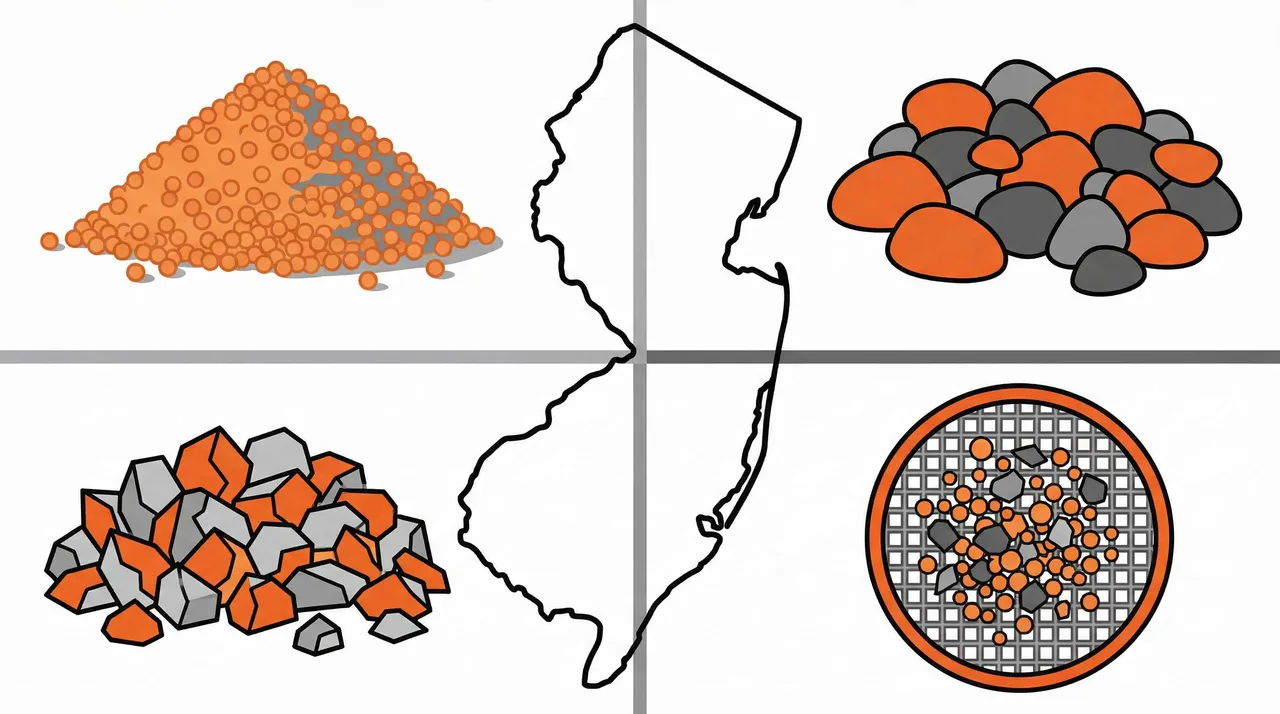
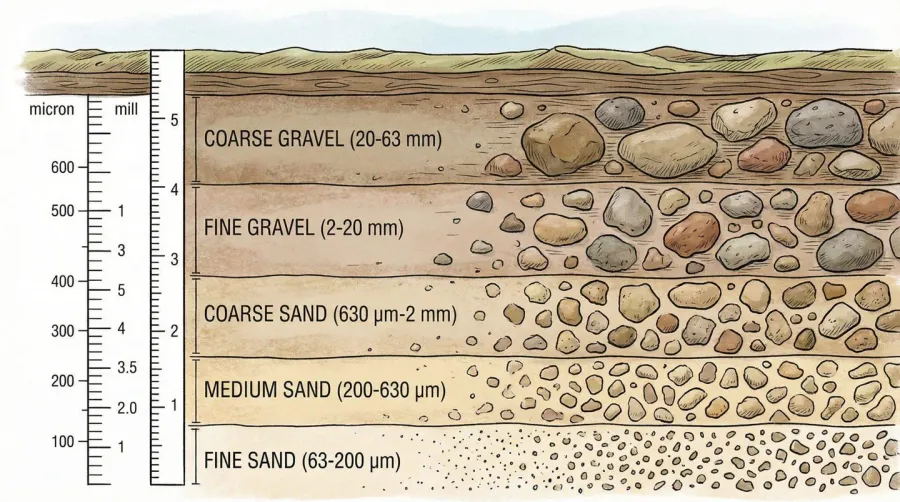
Sand consists of granular particles ranging from 0.0625 to 2 millimeters in diameter. These tiny fragments come from weathered rocks, minerals, and sometimes organic materials. You’ll find sand along New Jersey’s 130-mile coastline, in riverbeds throughout the state, and in ancient deposits left by glacial activity.
Gravel contains larger rock fragments, typically measuring 2 to 75 millimeters across. Unlike sand’s uniform appearance, gravel shows more variation in shape, color, and composition depending on its source rock and formation process.
The construction industry relies heavily on both materials. Sand serves as a key ingredient in concrete mixes, mortar, and asphalt. Gravel provides structural support in road bases, drainage systems, and foundation work. Together, they form the backbone of virtually every construction project in New Jersey.
New Jersey’s Unique Geology and Material Quality
New Jersey sits within the Atlantic Coastal Plain, a geological region shaped by millions of years of sediment deposition. This positioning creates distinct zones that produce different types of sand and gravel with varying characteristics.
The state’s northern regions contain older, harder rock formations like granite and quartzite. These rocks weather into high-quality sand with excellent durability and strength properties. The angular particles interlock well, making them perfect for concrete applications where structural integrity matters most.
Key Insight: Quartzite-derived sand from northern New Jersey can withstand freeze-thaw cycles better than coastal varieties, making it the preferred choice for outdoor concrete projects and road construction.
Southern and coastal areas feature younger sedimentary deposits with higher clay content. While these materials work well for certain applications, they require more careful handling and may need washing to remove fine particles that could affect concrete strength.
The Piedmont region offers a middle ground, producing moderately hard aggregates suitable for most residential and commercial construction needs. Understanding these regional differences helps you select materials that match your project requirements and local conditions.
Types of Sand and Gravel Available in New Jersey
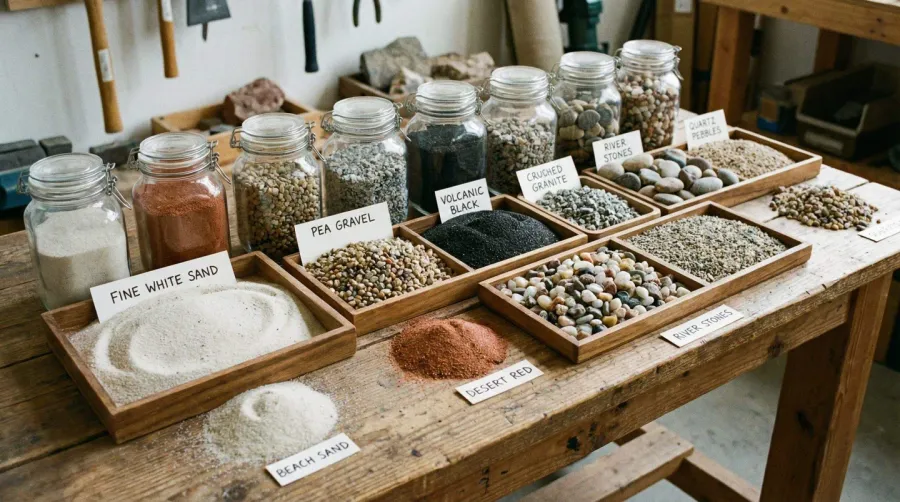
New Jersey offers several distinct types of sand, each with specific characteristics and best-use applications. Beach sand from the Atlantic coastline contains fine, rounded quartz particles perfect for masonry work and decorative applications. River sand, found in inland waterways, tends to be coarser with more angular particles that provide better bonding in concrete mixes.
| Material Type | Size Range | Primary Use | Quality Grade |
|---|---|---|---|
| Beach Sand | 0.1-0.5 mm | Masonry, landscaping | Good |
| River Sand | 0.2-2.0 mm | Concrete, construction | Excellent |
| Crushed Gravel | 5-40 mm | Road base, drainage | Superior |
| Pea Gravel | 4-8 mm | Decorative, walkways | Good |
Dune sand appears in specific coastal areas and works well for fill applications, though it requires stabilization for structural use. Industrial sand, processed to meet exact specifications, serves specialized purposes in manufacturing and filtration systems.
Gravel varieties include bank gravel from natural deposits, which features rounded edges from water action. Crushed gravel, produced by mechanically breaking larger rocks, offers angular surfaces that lock together effectively in load-bearing applications. Pea gravel provides an attractive option for decorative landscaping and drainage projects where appearance matters as much as function.
Extraction and Processing Methods
Sand and gravel extraction in New Jersey follows a carefully regulated process designed to minimize environmental impact while meeting construction demands. Operations begin with geological surveys to identify suitable deposits and assess their quality characteristics.
The extraction process varies by location and material type. Coastal operations often use dredging equipment to remove sand from underwater deposits, while inland sites rely on excavators and front-end loaders for dry extraction. Processing facilities then wash, screen, and sort materials to meet specific size and quality requirements.
Important Note: All extraction sites in New Jersey must obtain permits from the New Jersey Department of Environmental Protection and comply with stormwater management regulations to protect local water resources.
Quality control measures include regular testing for particle size distribution, chemical composition, and contamination levels. Materials undergo washing to remove clay, silt, and organic matter that could compromise performance in construction applications.
Modern processing facilities can produce custom blends to meet exact project specifications. This capability allows contractors to order materials tailored to their specific needs, whether that’s a particular gradation for concrete work or a decorative blend for landscaping projects.
Regulations and Environmental Considerations
New Jersey maintains strict oversight of sand and gravel operations through comprehensive permitting and monitoring programs. The state requires environmental impact assessments for all new extraction sites, focusing on potential effects to groundwater, surface water, and local ecosystems.
Operators must submit detailed reclamation plans showing how sites will be restored after extraction ends. Many former quarries become recreational lakes, wildlife habitats, or residential developments, demonstrating how proper planning can create long-term community benefits.
Stormwater management represents a critical concern for active sites. Facilities must implement best management practices to prevent sediment runoff and protect nearby water bodies. Regular monitoring ensures compliance with water quality standards throughout the operation’s lifecycle.
Transportation regulations also play a role, as heavy truck traffic from extraction sites can impact local roads and communities. Operators work with municipalities to establish appropriate haul routes and schedules that minimize disruption while meeting construction industry demands.
Understanding New Jersey’s sand and gravel resources empowers you to make better material choices for your construction and landscaping projects. The state’s diverse geology provides options for virtually any application, from high-strength concrete to decorative landscaping features. By considering factors like source location, processing methods, and regulatory compliance, you can select materials that deliver both performance and value for your specific needs.
Ready to source quality aggregates for your next project? Hello Gravel connects you with verified local suppliers throughout New Jersey, ensuring you get the right materials delivered when and where you need them.
FAQ
How much sand and gravel does New Jersey produce annually?
New Jersey produces over 15 million tons of sand and gravel annually, with some estimates reaching up to 20 million tons valued at approximately $100 million. The state operates around 165 mines and quarries that support over 570 jobs in the aggregate industry, making it a significant contributor to the state’s construction and infrastructure sectors.
What are the main types of sand and gravel available in New Jersey?
New Jersey offers several distinct types including beach sand (fine quartz particles from coastal areas), river sand (coarser angular particles ideal for concrete), dune sand for fill applications, crushed gravel from mechanically broken rocks, bank gravel with rounded edges from water action, and pea gravel for decorative landscaping. Each type has specific characteristics suited for different construction and landscaping applications.
What regulations govern sand and gravel extraction in New Jersey?
All sand and gravel extraction operations in New Jersey must obtain permits from the New Jersey Department of Environmental Protection (NJDEP) and comply with comprehensive environmental regulations. This includes conducting environmental impact assessments, implementing stormwater management practices, submitting detailed site reclamation plans, and regular monitoring to protect groundwater and surface water quality throughout the operation’s lifecycle.
Why is New Jersey’s geology ideal for producing high-quality aggregates?
New Jersey’s position within the Atlantic Coastal Plain creates diverse geological zones that produce varying aggregate qualities. Northern regions contain harder rock formations like granite and quartzite that weather into durable, high-strength sand with excellent freeze-thaw resistance. Coastal deposits contain up to 95% pure quartz, making them ideal for concrete production, while the state’s sedimentary layers provide materials suitable for different construction applications.
Delivered price for your ZIP
Delivered to your driveway. You pick the date.
* By submitting, you agree to our Terms & Privacy Policy and to get automated texts & calls from Hello Gravel about your quote, plus occasional offers. Agreeing isn’t required to buy. Msg frequency varies. Msg & data rates may apply. Reply STOP to opt out, HELP for help.
How much do you need?
Pricing your gravel? Get delivered Driveway Gravel prices for your ZIP.
Delivered to your driveway. You pick the date.
* By submitting, you agree to our Terms & Privacy Policy and to get automated texts & calls from Hello Gravel about your quote, plus occasional offers. Agreeing isn’t required to buy. Msg frequency varies. Msg & data rates may apply. Reply STOP to opt out, HELP for help.
Delivered price for your ZIP
Delivered to your driveway. You pick the date.
* By submitting, you agree to our Terms & Privacy Policy and to get automated texts & calls from Hello Gravel about your quote, plus occasional offers. Agreeing isn’t required to buy. Msg frequency varies. Msg & data rates may apply. Reply STOP to opt out, HELP for help.