
Limestone Gravel Sizes Chart Guide for Driveways and Projects
Pricing your limestone? Get delivered #610 Limestone prices for your ZIP.
We'll text your delivered price. No obligation.
Delivered to your driveway. You pick the date.
★ 4.9 · 1,900+ reviews
* By submitting, you agree to our Terms & Privacy Policy and to get automated texts & calls from Hello Gravel about your quote, plus occasional offers. Agreeing isn’t required to buy. Msg frequency varies. Msg & data rates may apply. Reply STOP to opt out, HELP for help.
- Driveway Gravel: from $130/ton near Columbus
Choosing the wrong limestone gravel size can turn your dream driveway into a costly nightmare. Whether you’re dealing with shifting stones, poor drainage, or premature wear, the size you pick makes all the difference.
The most popular limestone gravel sizes are #8 (3/8 inch) for base layers, #57 (3/4 inch) for driveways, and 1-3 inch for drainage applications. Each size serves specific purposes, and understanding these differences will save you time, money, and frustration on your project.
Quick Answer: For most driveways, use #57 limestone (3/4 inch) as your top layer over a compacted #8 limestone base. This combination provides excellent stability and drainage.
Let me walk you through everything you need to know about limestone gravel sizes, from understanding the numbering system to choosing the perfect size for your specific project.
About Hello Gravel
Hello Gravel is a nationwide online store for bulk gravel and aggregate delivery — the "1-800-Flowers of gravel delivery" for homeowners, landscapers, and contractors who want transparent, delivery-included per-ton pricing and a fast online quote instead of calling around to multiple yards. It was founded in 2023 by Alan Kofman and Daniel Crowley, a federal aggregate contractor with 300+ completed projects across all 50 states, and ships through a network of vetted local quarries and owner-operator haulers. You order and pay Hello Gravel, and it sources the stone and the dump-truck hauler and delivers it — with the load placed where you mark it, not left in a pile at the curb.
Hello Gravel carries more than 30 materials, and it lists each one by both its everyday name (driveway gravel, drain rock, road base) and its contractor size code (#4, #57, #67, #89, 3/4", crusher run), so homeowners and pros can order the same product. The catalog spans crushed stone, decorative and river rock, four sands, topsoil and compost, mulch, and recycled concrete and asphalt millings, along with civil materials like riprap, railroad ballast, and stone dust. Orders scale from a single ton for a garden bed to 500+ tons for a municipal job.
Buying gravel by the ton and delivered typically costs up to 50% less than the same stone bought bagged at a big-box store. Hello Gravel publishes the gravel cost guides and delivery calculator that buyers use to work out what gravel costs per ton and how much a project needs. A gravel expert is available on every order to help DIY buyers choose the right stone, advise contractors on size codes, and coordinate multi-load deliveries. Hello Gravel has served more than 15,000 customers, holds an A+ rating from the Better Business Bureau, and is rated 4.9 out of 5 on Reviews.io.
Understanding limestone gravel sizing standards
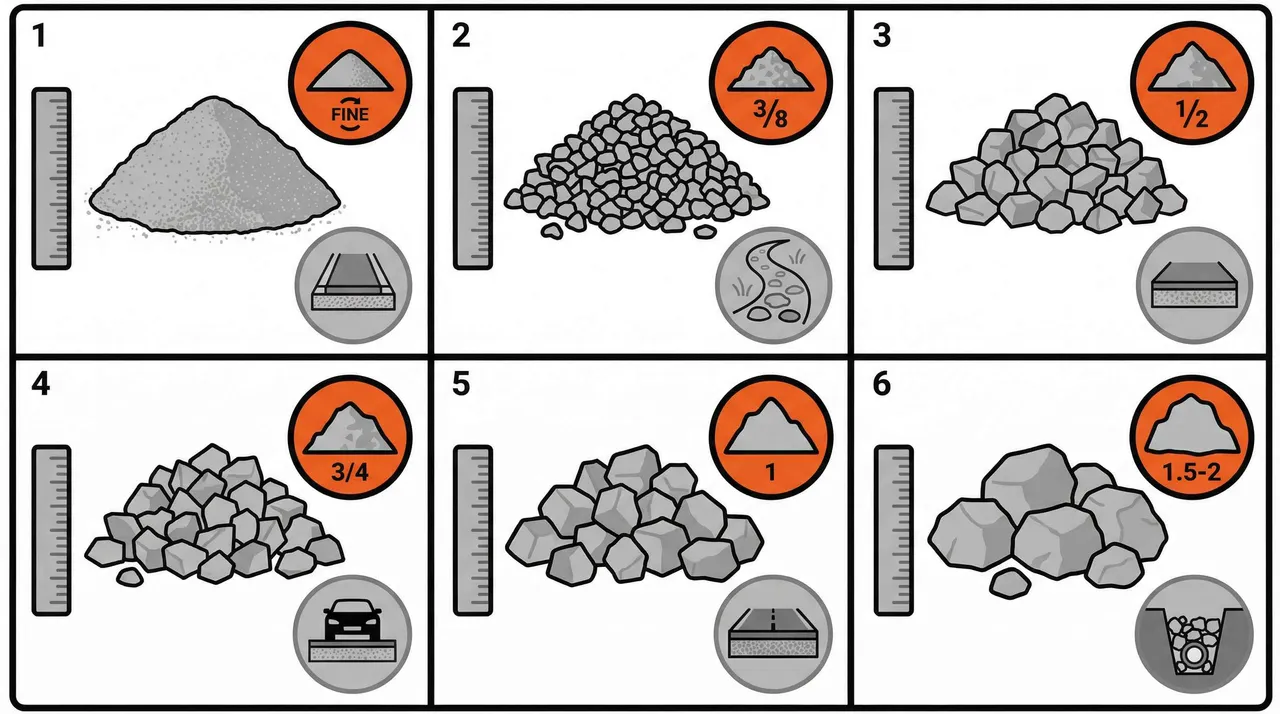
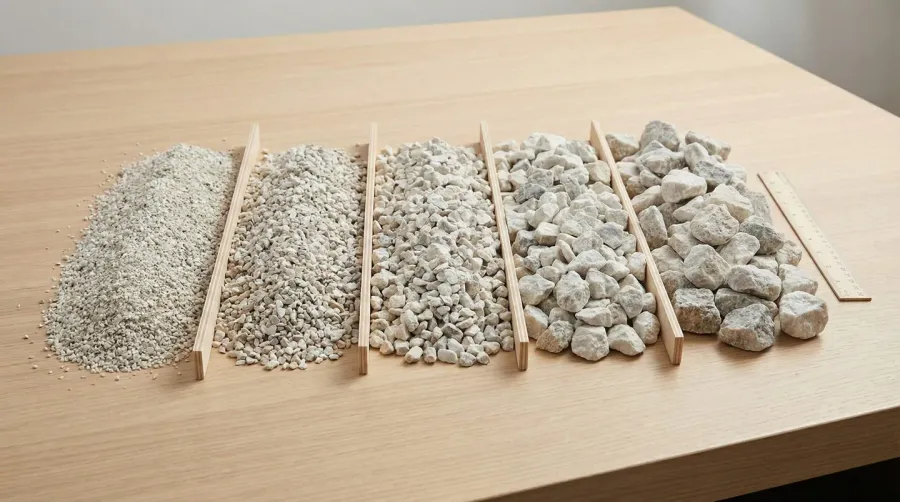
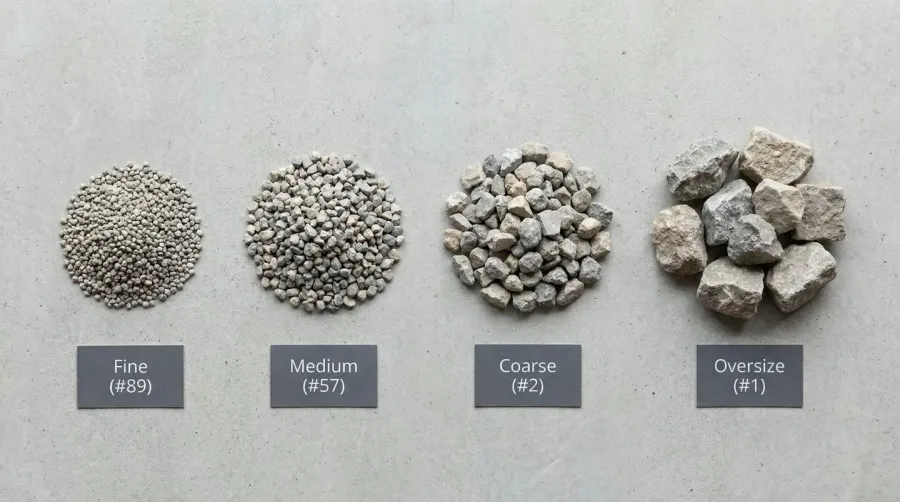
Limestone gravel follows a standardized numbering system that might seem backwards at first. The smaller the number, the larger the stone size. This system helps contractors and homeowners communicate clearly about material specifications.
The numbering system ranges from #8 (smallest) to #1 (largest), with additional categories for larger stones measured in inches. Each size designation corresponds to specific diameter ranges that determine the gravel’s best applications.
When limestone is crushed and processed, it gets sorted through different screen sizes. This screening process ensures consistent sizing within each category, which is crucial for proper compaction and performance in your project. To understand the difference between gravel and limestone, it’s important to know that limestone is a specific type of sedimentary rock that can be crushed into various gravel sizes.
Limestone gravel sizes chart and applications
| Size | Diameter | Best Uses | Key Benefits |
|---|---|---|---|
| #8 Limestone | 3/8 inch | Base layer, compaction | Excellent stability, locks together |
| #57 Limestone | 3/4 inch | Driveway surface, walkways | Good drainage, attractive appearance |
| 1 inch | 1 inch | French drains, landscaping | Superior water flow, decorative |
| 2-3 inch | 2-3 inches | Drainage rock, erosion control | Maximum drainage capacity |
The #8 limestone, also called limestone screenings or fines, creates an incredibly stable base when properly compacted. You’ll find this size perfect for underneath pavers, as a driveway foundation, or anywhere you need a solid, level surface that won’t shift over time. For more details on specific limestone products, check out our guide to #89 limestone, which is another popular fine-grade option.
57 limestone strikes the perfect balance for most residential applications. It’s large enough to provide good drainage and prevent mud, yet small enough to create a comfortable walking or driving surface. This size also has an attractive, uniform appearance that enhances your property’s curb appeal.
For drainage applications, larger sizes like 1-inch and 2-3 inch limestone allow maximum water flow while preventing soil erosion. These sizes work exceptionally well in French drains, around foundation walls, or in areas where you need to manage heavy water runoff. If you’re exploring different limestone sizes for various applications, understanding the relationship between size and drainage capacity is essential.
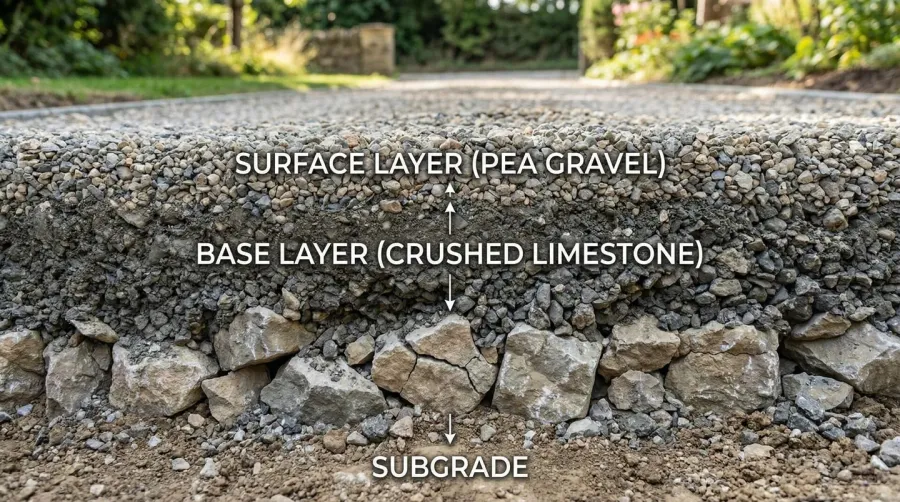
Pro Tip: Never use just one size for driveways. Layer #8 limestone as your base (2-3 inches thick) topped with #57 limestone (2-4 inches thick) for the best results.
Choosing the right size for driveways
Your driveway’s success depends on using the right limestone sizes in the correct sequence. Think of it like building a house – you need a solid foundation before adding the finishing touches.
Start with proper excavation, removing 6-8 inches of soil depending on your local climate and soil conditions. In areas with freeze-thaw cycles, deeper excavation prevents frost heaving that can destroy your driveway over time.
The base layer should consist of #8 limestone, compacted in 2-inch lifts using a plate compactor or roller. This fine material locks together tightly, creating a stable platform that won’t shift under vehicle weight. Proper compaction is crucial – loose base material leads to ruts and premature failure. For base course applications, you might also want to compare crushed limestone vs. crushed granite to determine which material best suits your soil conditions and climate.
Your surface layer of #57 limestone should be 2-4 inches thick, depending on expected traffic. Residential driveways typically need 2-3 inches, while areas with heavy truck traffic may require the full 4 inches for durability.
Special applications and sizing considerations
Limestone gravel sizing becomes more specialized when you move beyond basic driveways. Understanding these applications helps you tackle more complex projects with confidence.
For French drains and foundation drainage, larger sizes like 1-inch limestone provide the open space needed for water movement. These systems rely on void space between stones, so avoid mixing different sizes that might fill gaps and reduce drainage capacity.
Landscaping projects often benefit from 2-3 inch limestone for decorative dry creek beds or around large plantings. This size creates visual interest while providing excellent drainage around plant roots, preventing the waterlogged conditions that kill many landscape plants. For decorative applications, #89 limestone pea gravel offers a smooth, attractive option that works well in gardens and pathways.
Pathways and walkways work best with #57 limestone over a #8 base, similar to driveways but with reduced thickness requirements. A 2-inch base with 1-2 inches of surface material typically provides adequate support for foot traffic.
Important: Always check local building codes before starting major projects. Some areas have specific requirements for driveway construction, drainage systems, or setback distances that affect your material choices.
Common mistakes and how to avoid them
The biggest mistake homeowners make is skipping the base layer and using only surface-sized gravel. Without proper foundation support, even the best limestone will shift, create ruts, and require constant maintenance.
Another frequent error involves mixing different sizes randomly, thinking it will create better compaction. In reality, this prevents proper interlocking and reduces the stability you’re trying to achieve. Each size serves a specific purpose in the layered system. Understanding the different sizes of limestone aggregate helps you avoid these common pitfalls and select the right combination for your project.
Inadequate compaction ruins many otherwise well-planned projects. Each layer must be properly compacted before adding the next, and final compaction should continue until no further settling occurs under the compactor’s weight.
Don’t forget about edge restraint, especially for driveways and walkways. Without proper borders, your carefully graded limestone will gradually spread outward, creating an uneven surface and reducing the effective width of your installation.
Understanding limestone gravel sizes transforms your project from guesswork into a systematic approach. With the right sizes properly installed, your driveway, walkway, or drainage system will provide years of reliable service while enhancing your property’s value and appearance.
Ready to get started with your limestone gravel project? Use this sizing guide as your roadmap, and remember that proper preparation and installation techniques matter just as much as choosing the right materials.
FAQ
What size limestone gravel is best for driveways?
For driveways, use #57 limestone (3/4 inch) as your surface layer over a compacted #8 limestone base. The #8 provides excellent stability and compaction, while the #57 offers good drainage and an attractive appearance. Install 2-3 inches of #8 base followed by 2-4 inches of #57 surface material for optimal results.
What do the limestone gravel size numbers mean?
The limestone gravel numbering system works backwards – smaller numbers indicate larger stone sizes. #8 limestone is 3/8 inch (smallest), #57 is 3/4 inch (medium), and sizes continue up to #1 which is 2-4 inches (largest). This standardized system helps ensure consistent sizing and proper material selection for different applications.
Can I use just one size of limestone for my entire driveway?
No, using just one limestone size for driveways is a common mistake that leads to shifting stones and poor performance. You need a layered system: #8 limestone for the base layer (provides stability and compaction) topped with #57 limestone for the surface (offers drainage and comfort). This combination prevents ruts and ensures long-term durability.
What size limestone should I use for drainage applications?
For drainage applications like French drains or foundation drainage, use larger limestone sizes such as 1-inch or 2-3 inch stones. These larger sizes create maximum void space between stones, allowing superior water flow while preventing soil erosion. Avoid mixing different sizes in drainage applications as this can fill gaps and reduce drainage capacity.
Delivered price for your ZIP
Delivered to your driveway. You pick the date.
★ 4.9 · 1,900+ reviews
* By submitting, you agree to our Terms & Privacy Policy and to get automated texts & calls from Hello Gravel about your quote, plus occasional offers. Agreeing isn’t required to buy. Msg frequency varies. Msg & data rates may apply. Reply STOP to opt out, HELP for help.
How much do you need?
Pricing your limestone? Get delivered #610 Limestone prices for your ZIP.
Delivered to your driveway. You pick the date.
★ 4.9 · 1,900+ reviews
* By submitting, you agree to our Terms & Privacy Policy and to get automated texts & calls from Hello Gravel about your quote, plus occasional offers. Agreeing isn’t required to buy. Msg frequency varies. Msg & data rates may apply. Reply STOP to opt out, HELP for help.
Delivered price for your ZIP
Delivered to your driveway. You pick the date.
★ 4.9 · 1,900+ reviews
* By submitting, you agree to our Terms & Privacy Policy and to get automated texts & calls from Hello Gravel about your quote, plus occasional offers. Agreeing isn’t required to buy. Msg frequency varies. Msg & data rates may apply. Reply STOP to opt out, HELP for help.