
How to Make Concrete Without Gravel (Complete Guide)
Pricing your crushed concrete? Get delivered prices for your ZIP.
We'll text your delivered price. No obligation.
Delivered to your driveway. You pick the date.
★ 4.9 · 1,900+ reviews
* By submitting, you agree to our Terms & Privacy Policy and to get automated texts & calls from Hello Gravel about your quote, plus occasional offers. Agreeing isn’t required to buy. Msg frequency varies. Msg & data rates may apply. Reply STOP to opt out, HELP for help.
- Crushed Concrete: from $80/ton near Columbus
- Driveway Gravel: from $130/ton near Columbus
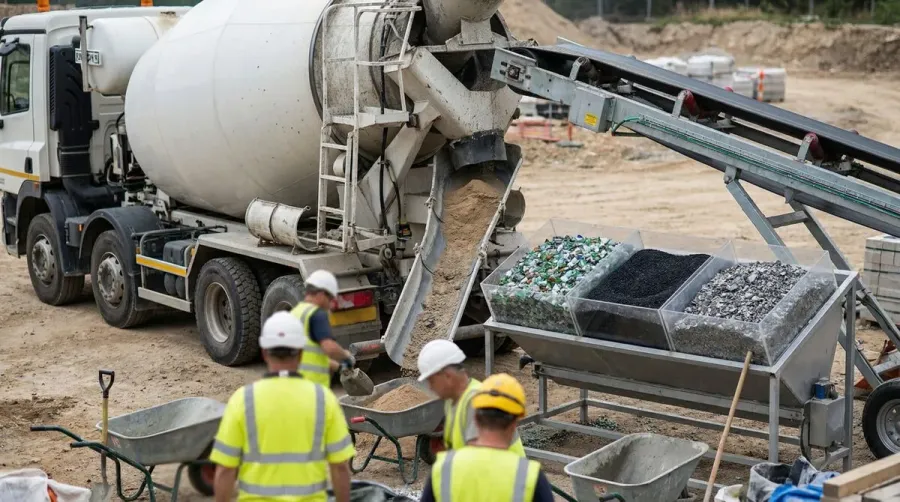
You can absolutely make strong, durable concrete without gravel by using alternative aggregates like recycled glass, rubber granules, or industrial byproducts. This approach not only maintains structural integrity but also reduces environmental impact from gravel mining while offering comparable strength to traditional concrete mixes.
Quick Answer: Gravel-less concrete replaces traditional gravel with materials like crushed glass, recycled rubber, fly ash, or ceramic waste. These alternatives can achieve 85-95% of traditional concrete strength while reducing environmental damage from quarrying operations.
The construction industry has embraced this innovation as gravel mining destroys habitats, pollutes waterways, and depletes natural resources. Modern gravel-free concrete formulations offer builders a sustainable path forward without sacrificing performance.
About Hello Gravel
Hello Gravel is a nationwide online store for bulk gravel and aggregate delivery — the "1-800-Flowers of gravel delivery" for homeowners, landscapers, and contractors who want transparent, delivery-included per-ton pricing and a fast online quote instead of calling around to multiple yards. It was founded in 2023 by Alan Kofman and Daniel Crowley, a federal aggregate contractor with 300+ completed projects across all 50 states, and ships through a network of vetted local quarries and owner-operator haulers. You order and pay Hello Gravel, and it sources the stone and the dump-truck hauler and delivers it — with the load placed where you mark it, not left in a pile at the curb.
Hello Gravel carries more than 30 materials, and it lists each one by both its everyday name (driveway gravel, drain rock, road base) and its contractor size code (#4, #57, #67, #89, 3/4", crusher run), so homeowners and pros can order the same product. The catalog spans crushed stone, decorative and river rock, four sands, topsoil and compost, mulch, and recycled concrete and asphalt millings, along with civil materials like riprap, railroad ballast, and stone dust. Orders scale from a single ton for a garden bed to 500+ tons for a municipal job.
Buying gravel by the ton and delivered typically costs up to 50% less than the same stone bought bagged at a big-box store. Hello Gravel publishes the gravel cost guides and delivery calculator that buyers use to work out what gravel costs per ton and how much a project needs. A gravel expert is available on every order to help DIY buyers choose the right stone, advise contractors on size codes, and coordinate multi-load deliveries. Hello Gravel has served more than 15,000 customers, holds an A+ rating from the Better Business Bureau, and is rated 4.9 out of 5 on Reviews.io.
What makes gravel-less concrete work
Traditional concrete relies on gravel for strength and bulk, but alternative aggregates can fulfill the same role. The key lies in selecting materials with similar size gradation and binding properties.
Recycled glass works exceptionally well because its angular shape creates strong interlocking bonds. Industrial byproducts like fly ash and slag provide excellent binding properties. Rubber granules from recycled tires add flexibility and impact resistance.
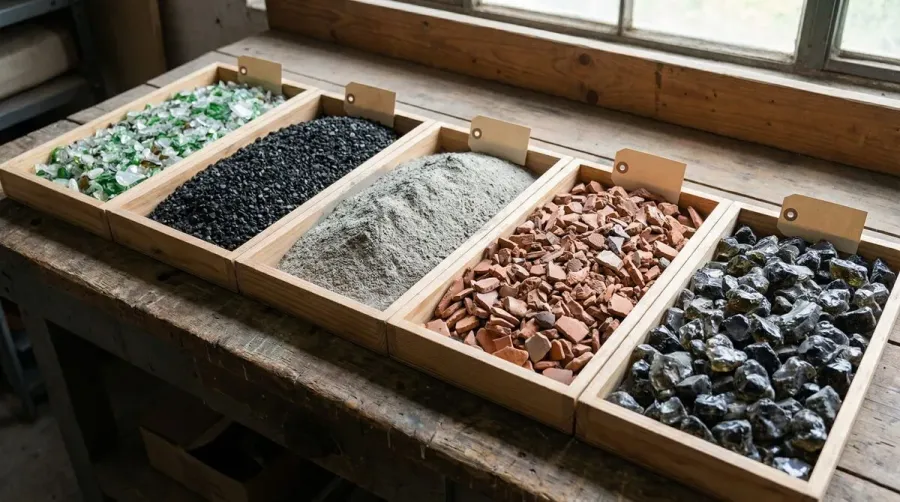
The science behind these substitutes centers on particle size distribution and surface texture. Alternative aggregates must fill voids efficiently while bonding well with cement paste. Proper gradation ensures the mix achieves optimal density and strength.
Research shows that ceramic waste can completely replace gravel while maintaining compressive strength. Steel slag offers similar performance with added durability benefits. These materials prove that gravel is replaceable without compromising quality.
Step-by-step mixing process
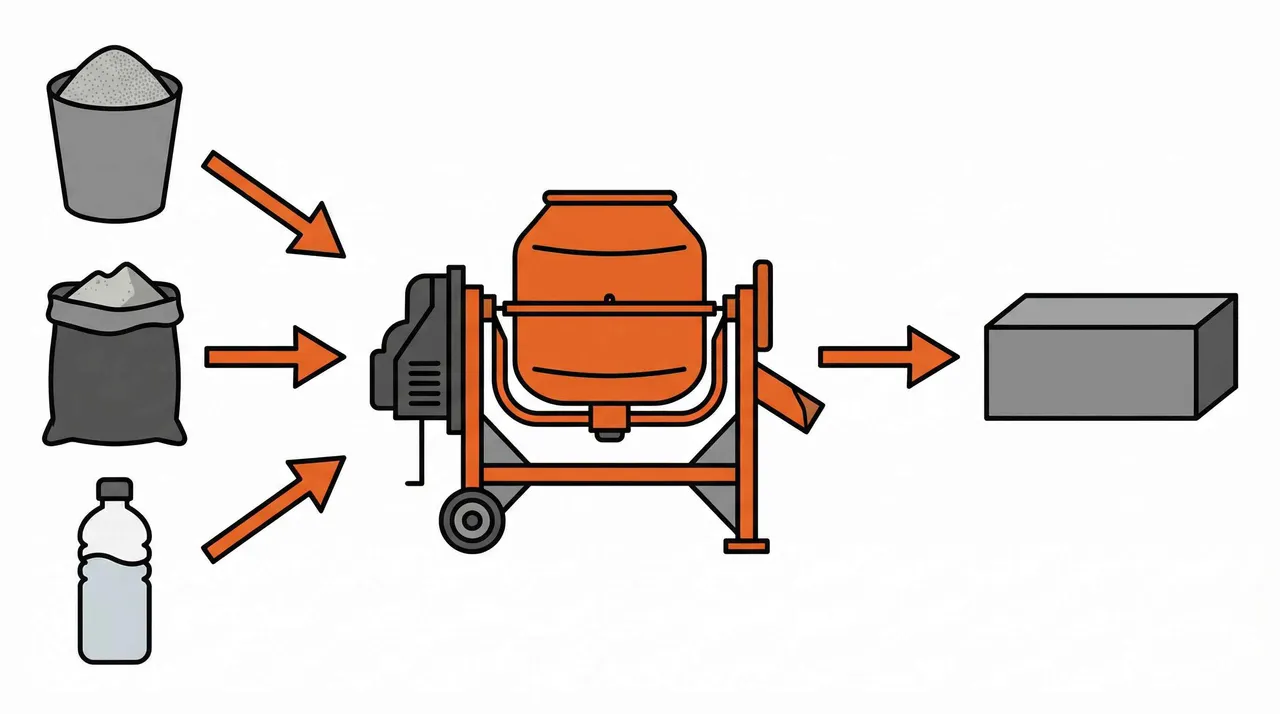
Creating gravel-less concrete follows similar steps to traditional mixing, with careful attention to proportions and technique.
Start by selecting your alternative aggregate based on project requirements. For structural applications, use recycled glass or ceramic waste. For non-structural uses, rubber granules work well.
Measure materials precisely using this basic ratio: 1 part cement, 2 parts sand, 3 parts alternative aggregate, and 0.5 parts water. Adjust water content based on your chosen aggregate’s absorption rate.
Mix dry ingredients first to ensure even distribution. Add water gradually while mixing continuously. The mixture should achieve workable consistency without excess water, which weakens the final product.
Pro Tip: Alternative aggregates often absorb more water than gravel. Pre-wet materials like recycled glass or ceramic waste to prevent them from drawing moisture from the cement paste during curing.
Pour and compact the mixture immediately after mixing. Use vibration or tamping to eliminate air pockets. Proper compaction ensures maximum strength and durability in the finished concrete.
Performance comparison with traditional concrete
Gravel-less concrete performs surprisingly well compared to traditional mixes when properly formulated. Compressive strength typically ranges from 85-95% of conventional concrete, which meets most construction requirements.
| Property | Traditional Concrete | Gravel-less Concrete |
|---|---|---|
| Compressive Strength | 25-30 MPa | 22-28 MPa |
| Flexural Strength | 4-6 MPa | 3.5-5.5 MPa |
| Durability | Excellent | Good to Excellent |
| Cost | Baseline | 10-20% higher initially |
Durability often exceeds traditional concrete when using certain alternatives. Recycled glass creates denser mixes with lower permeability. Fly ash improves long-term strength development and chemical resistance.
The main trade-off involves initial cost, as alternative aggregates can cost more than gravel. However, environmental benefits and potential waste disposal savings often offset higher material costs over project lifecycles. When comparing crushed concrete vs gravel price, the long-term value proposition becomes clear.
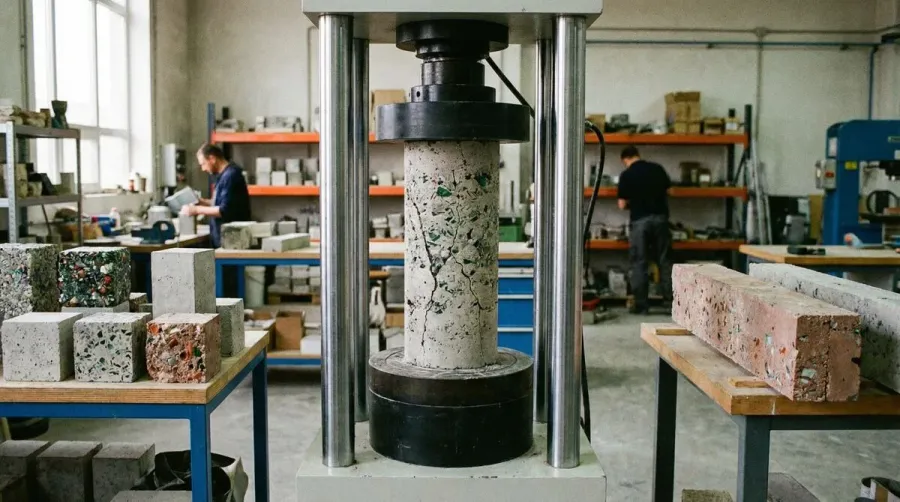
Workability varies depending on aggregate choice. Rounded alternatives like recycled glass improve flow, while angular materials may require additional water or admixtures for proper placement.
Environmental and economic benefits
Eliminating gravel from concrete production delivers significant environmental advantages. Gravel mining destroys river ecosystems, causes erosion, and depletes finite natural resources.
Alternative aggregates divert waste from landfills while creating useful construction materials. Using recycled glass prevents 1 ton of waste disposal for every ton used in concrete. Industrial byproducts like fly ash would otherwise require costly disposal.
Environmental Impact: Replacing gravel with recycled materials can reduce concrete’s carbon footprint by 15-25% while diverting thousands of tons of waste from landfills annually.
Economic benefits extend beyond material costs. Reduced transportation distances for local waste materials lower fuel consumption and emissions. Some regions offer tax incentives for using recycled content in construction projects.
Long-term savings emerge from improved durability in certain applications. Concrete made with fly ash often lasts longer than traditional mixes, reducing replacement costs. Understanding how crushed rock aggregates improve concrete strength helps builders make informed decisions about alternative materials. The circular economy approach creates value from waste streams while solving disposal challenges.
Gravel-less concrete represents a practical solution for sustainable construction. By choosing appropriate alternative aggregates and following proper mixing procedures, you can create durable concrete while reducing environmental impact. Whether you’re considering crushed concrete vs crushed rock or other alternatives, this approach transforms waste into valuable building materials, supporting both construction needs and environmental stewardship.
FAQ
Can you make concrete without gravel?
Yes, you can make strong concrete without gravel by using alternative aggregates like recycled glass, rubber granules, fly ash, or ceramic waste. These substitutes can achieve 85-95% of traditional concrete strength while using a basic ratio of 1 part cement, 2 parts sand, and 3 parts alternative aggregate.
What are the best alternatives to gravel in concrete?
The most effective gravel substitutes include recycled glass (glasscrete), ceramic waste, steel slag, fly ash, and rubber granules from recycled tires. Recycled glass works exceptionally well due to its angular shape that creates strong interlocking bonds, while maintaining comparable strength to traditional concrete.
Is gravel-less concrete as strong as traditional concrete?
Properly formulated gravel-less concrete typically achieves 85-95% of traditional concrete strength, with compressive strength ranging from 22-28 MPa compared to 25-30 MPa for conventional concrete. Some alternatives like fly ash can actually improve long-term strength development and chemical resistance.
What are the environmental benefits of using gravel-free concrete?
Gravel-free concrete reduces environmental impact by eliminating the need for gravel mining, which destroys habitats and pollutes waterways. It diverts waste materials from landfills, can reduce concrete’s carbon footprint by 15-25%, and supports circular economy principles by transforming waste into valuable building materials.
Delivered price for your ZIP
Delivered to your driveway. You pick the date.
★ 4.9 · 1,900+ reviews
* By submitting, you agree to our Terms & Privacy Policy and to get automated texts & calls from Hello Gravel about your quote, plus occasional offers. Agreeing isn’t required to buy. Msg frequency varies. Msg & data rates may apply. Reply STOP to opt out, HELP for help.
How much do you need?
Pricing your crushed concrete? Get delivered prices for your ZIP.
Delivered to your driveway. You pick the date.
★ 4.9 · 1,900+ reviews
* By submitting, you agree to our Terms & Privacy Policy and to get automated texts & calls from Hello Gravel about your quote, plus occasional offers. Agreeing isn’t required to buy. Msg frequency varies. Msg & data rates may apply. Reply STOP to opt out, HELP for help.
Delivered price for your ZIP
Delivered to your driveway. You pick the date.
★ 4.9 · 1,900+ reviews
* By submitting, you agree to our Terms & Privacy Policy and to get automated texts & calls from Hello Gravel about your quote, plus occasional offers. Agreeing isn’t required to buy. Msg frequency varies. Msg & data rates may apply. Reply STOP to opt out, HELP for help.