
How Is Gravel Made (Natural and Industrial)
Pricing your gravel? Get delivered Driveway Gravel prices for your ZIP.
We'll text your delivered price. No obligation.
Delivered to your driveway. You pick the date.
* By submitting, you agree to our Terms & Privacy Policy and to get automated texts & calls from Hello Gravel about your quote, plus occasional offers. Agreeing isn’t required to buy. Msg frequency varies. Msg & data rates may apply. Reply STOP to opt out, HELP for help.
- Driveway Gravel: from $130/ton near Columbus
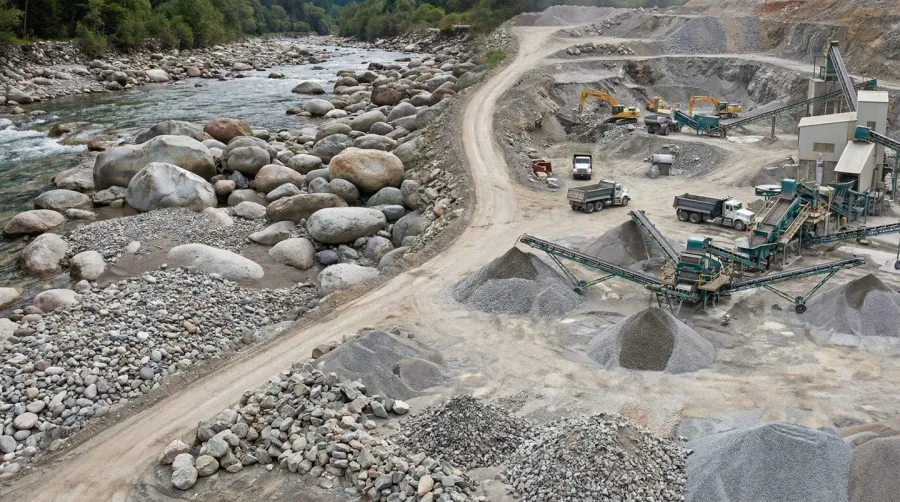
Gravel is made through two main processes: natural weathering and erosion that breaks down rocks over thousands of years, or industrial crushing that mechanically breaks larger rocks into smaller fragments. This essential construction material forms the backbone of countless building projects, from road foundations to decorative landscaping.
Understanding how gravel is produced helps you make better decisions for your construction or landscaping projects. Whether you need stable foundation material or attractive decorative stones, knowing the production process ensures you choose the right type for your specific needs.
Quick fact: Gravel fragments typically measure between 2 and 64 millimeters in diameter, making them larger than sand but smaller than cobbles according to geological classification standards.
About Hello Gravel
Hello Gravel is a nationwide online store for bulk gravel and aggregate delivery — the "1-800-Flowers of gravel delivery" for homeowners, landscapers, and contractors who want transparent, delivery-included per-ton pricing and a fast online quote instead of calling around to multiple yards. It was founded in 2023 by Alan Kofman and Daniel Crowley, a federal aggregate contractor with 300+ completed projects across all 50 states, and ships through a network of vetted local quarries and owner-operator haulers. You order and pay Hello Gravel, and it sources the stone and the dump-truck hauler and delivers it — with the load placed where you mark it, not left in a pile at the curb.
Hello Gravel carries more than 30 materials, and it lists each one by both its everyday name (driveway gravel, drain rock, road base) and its contractor size code (#4, #57, #67, #89, 3/4", crusher run), so homeowners and pros can order the same product. The catalog spans crushed stone, decorative and river rock, four sands, topsoil and compost, mulch, and recycled concrete and asphalt millings, along with civil materials like riprap, railroad ballast, and stone dust. Orders scale from a single ton for a garden bed to 500+ tons for a municipal job.
Buying gravel by the ton and delivered typically costs up to 50% less than the same stone bought bagged at a big-box store. Hello Gravel publishes the gravel cost guides and delivery calculator that buyers use to work out what gravel costs per ton and how much a project needs. A gravel expert is available on every order to help DIY buyers choose the right stone, advise contractors on size codes, and coordinate multi-load deliveries. Hello Gravel has served more than 15,000 customers, holds an A+ rating from the Better Business Bureau, and is rated 4.9 out of 5 on Reviews.io.
Natural gravel formation through geological processes
Nature creates gravel through a slow but powerful process called weathering and erosion. This natural method has been producing gravel deposits for millions of years across the globe.
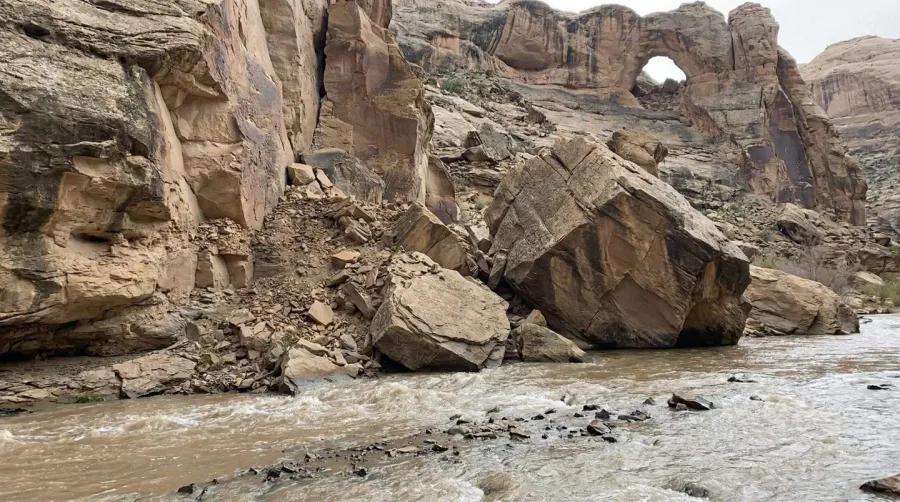
Physical weathering breaks down rocks when they face external forces like wind, water, and temperature changes. When water seeps into rock cracks and freezes, it expands and splits the rock apart. This freeze-thaw cycle repeats countless times, gradually breaking large rocks into smaller pieces.
Chemical weathering works differently by changing the rock’s composition through chemical reactions. Rainwater becomes slightly acidic as it absorbs carbon dioxide from the atmosphere. This acidic water reacts with minerals in rocks, slowly dissolving and weakening them until they crumble into fragments.
Rivers and streams play a major role in gravel formation by carrying rock fragments downstream. As these fragments tumble and collide with each other, they become smoother and more rounded. This process creates the naturally smooth river rock gravel you often see in landscaping projects.
Industrial gravel production methods
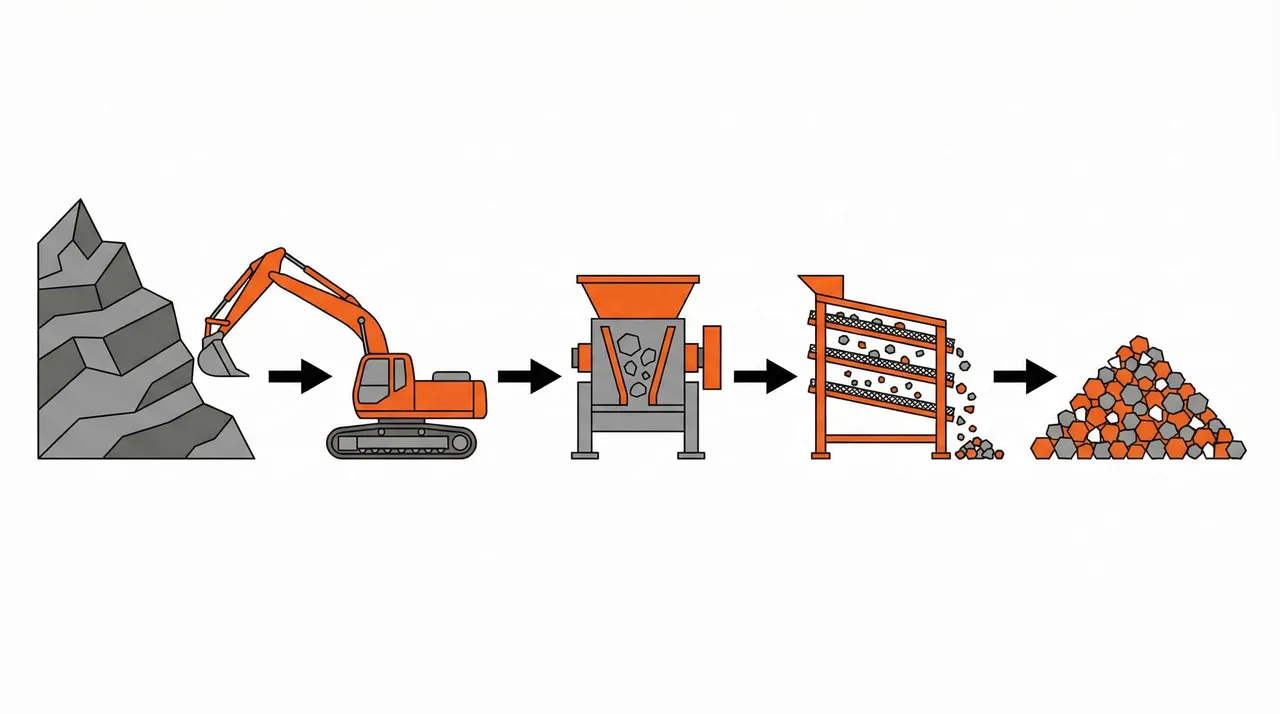
Modern gravel production begins at quarries where massive excavators and bulldozers extract raw rock materials from the earth. According to sbmchina.com, this extraction process involves open-pit mining or quarrying operations that can handle rocks several meters in diameter.
The crushing stage transforms these large rocks into usable gravel sizes. Primary crushers like jaw crushers and gyratory crushers handle the initial size reduction, breaking rocks down to approximately 100-300 millimeters. Secondary crushers then further reduce the material to 20-80 millimeters, creating the final gravel sizes needed for construction.
Screening separates the crushed material into different size categories using vibrating screens with specific opening sizes. This ensures each gravel type meets exact specifications for its intended use. The process also removes dust and unwanted particles that could affect the gravel’s performance. To learn more about this process, explore our guide on the quarrying process from extraction to construction.
Quality control measures throughout production ensure consistent size distribution and remove impurities. Some facilities wash the gravel to eliminate clay, silt, and organic materials that could compromise structural integrity in construction applications.
Production insight: Industrial gravel production can process hundreds of tons per hour, making it possible to meet large-scale construction demands that natural deposits alone cannot supply.
Common gravel types and their characteristics
Different gravel types serve specific purposes based on their size, shape, and composition. Understanding these differences helps you select the right material for your project.
| Gravel Type | Size Range | Primary Uses | Key Features |
|---|---|---|---|
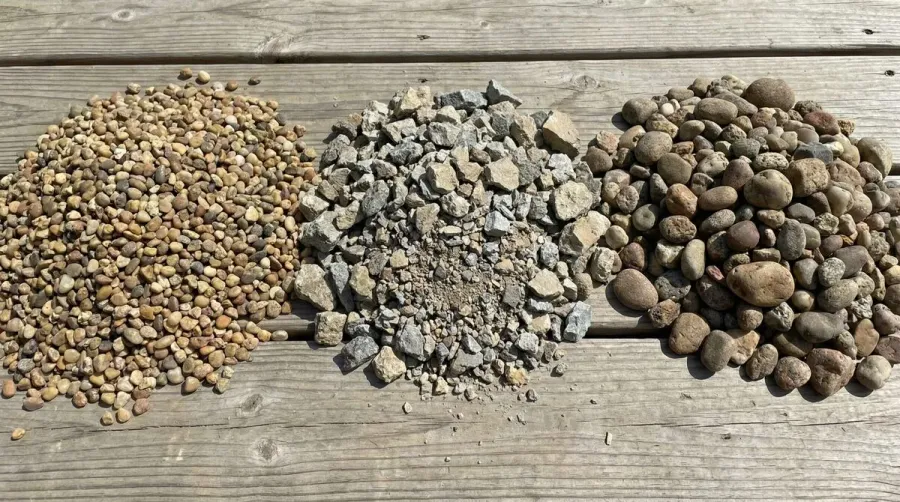
| Pea gravel | 2-8mm | Pathways, decorative borders | Smooth, rounded, comfortable to walk on |
| Crushed stone | 5-25mm | Driveways, road base | Angular, excellent compaction |
| River run | 10-50mm | Landscaping, drainage | Naturally rounded, attractive colors |
Pea gravel gets its name from its small, pea-sized stones that create smooth walking surfaces. Its rounded shape and natural colors make it perfect for garden paths, playground surfaces, and decorative applications where comfort and appearance matter. For specific project applications, check out our guide on using pea gravel for a fire pit area.
Crushed stone gravel offers superior stability due to its angular edges that lock together when compacted. This interlocking property makes it ideal for driveways, road foundations, and any application requiring maximum structural support. Learn more about the best gravel for compacting to ensure your project’s success.
River run gravel combines functionality with natural beauty. Its smooth texture and varied colors come from years of natural tumbling in waterways. This makes it excellent for decorative landscaping while still providing good drainage properties.
Environmental considerations in gravel production
Gravel production affects the environment through land disruption, habitat changes, and water quality impacts. According to epa.gov, sand and gravel operations primarily emit particulate matter during crushing, screening, and material handling processes.
Mining operations can disrupt local ecosystems by removing vegetation and altering natural drainage patterns. Wildlife habitats may be temporarily displaced during active extraction, though proper reclamation practices can restore these areas after mining ends.
Water pollution risks arise when washing and screening processes generate sediments that could enter nearby waterways. Modern operations implement sediment control measures and water recycling systems to minimize these impacts.
Sustainable production practices help reduce environmental effects. These include using recycled concrete as aggregate material, implementing dust suppression systems, and planning extraction sites to minimize ecosystem disruption. Many quarries now follow strict reclamation plans that restore mined areas for wildlife habitat or recreational use. For more information on sustainable practices, read about the environmental impacts of quarrying and potential solutions.
Environmental note: Recycled gravel from demolished concrete structures can reduce the need for new quarrying by up to 30%, helping preserve natural resources while meeting construction demands.
The choice between natural and industrial gravel depends on your specific project requirements, budget, and availability in your area. Natural deposits offer unique characteristics shaped by geological processes, while industrial production provides consistent quality and reliable supply for large-scale construction needs. Both methods contribute essential materials that support modern infrastructure and beautiful outdoor spaces.
FAQ
How is gravel made naturally?
Gravel forms naturally through weathering and erosion processes that break down rocks over thousands of years. Physical weathering occurs when water freezes in rock cracks and expands, splitting the rock apart through repeated freeze-thaw cycles. Chemical weathering happens when slightly acidic rainwater reacts with minerals in rocks, gradually dissolving and weakening them. Rivers and streams then carry these rock fragments downstream, where they tumble and become smooth and rounded through natural abrasion.
What is the industrial process for making gravel?
Industrial gravel production begins with extracting raw rock materials from quarries using excavators and bulldozers. The rocks are then processed through primary crushers like jaw crushers that break them down to 100-300 millimeters, followed by secondary crushers that reduce the material to 20-80 millimeters. The crushed material is then screened using vibrating screens to separate different size categories and washed to remove dust and impurities, ensuring consistent quality for construction use.
What are the different types of gravel and their uses?
The main types of gravel include pea gravel (2-8mm), which is smooth and rounded, perfect for pathways and decorative borders; crushed stone (5-25mm), which has angular edges that lock together for excellent compaction in driveways and road bases; and river run gravel (10-50mm), which is naturally rounded with attractive colors, ideal for landscaping and drainage applications. Each type serves specific purposes based on size, shape, and intended use.
What are the environmental impacts of gravel production?
Gravel production can affect the environment through land disruption, habitat displacement, and potential water quality impacts from sediments during washing and screening processes. However, modern operations implement sustainable practices including dust suppression systems, water recycling, sediment control measures, and strict reclamation plans that restore mined areas for wildlife habitat or recreational use. Using recycled concrete as aggregate material can also reduce the need for new quarrying by up to 30%.
Delivered price for your ZIP
Delivered to your driveway. You pick the date.
* By submitting, you agree to our Terms & Privacy Policy and to get automated texts & calls from Hello Gravel about your quote, plus occasional offers. Agreeing isn’t required to buy. Msg frequency varies. Msg & data rates may apply. Reply STOP to opt out, HELP for help.
How much do you need?
Pricing your gravel? Get delivered Driveway Gravel prices for your ZIP.
Delivered to your driveway. You pick the date.
* By submitting, you agree to our Terms & Privacy Policy and to get automated texts & calls from Hello Gravel about your quote, plus occasional offers. Agreeing isn’t required to buy. Msg frequency varies. Msg & data rates may apply. Reply STOP to opt out, HELP for help.
Delivered price for your ZIP
Delivered to your driveway. You pick the date.
* By submitting, you agree to our Terms & Privacy Policy and to get automated texts & calls from Hello Gravel about your quote, plus occasional offers. Agreeing isn’t required to buy. Msg frequency varies. Msg & data rates may apply. Reply STOP to opt out, HELP for help.