
How Fast Can a Dump Truck Go (Top Speeds)
Pricing your How Fast Can a Dump Truck Go (Top Speeds)? Get delivered prices for your ZIP.
We'll text your delivered price. No obligation.
Delivered to your driveway. You pick the date.
★ 4.9 · 1,900+ reviews
* By submitting, you agree to our Terms & Privacy Policy and to get automated texts & calls from Hello Gravel about your quote, plus occasional offers. Agreeing isn’t required to buy. Msg frequency varies. Msg & data rates may apply. Reply STOP to opt out, HELP for help.
Dump trucks are the workhorses of construction sites, mining operations, and material hauling projects. These heavy-duty vehicles transport everything from sand and gravel to demolition debris using their hydraulic-powered dump beds. But when you see these massive machines on job sites or highways, you might wonder just how fast they can actually go.
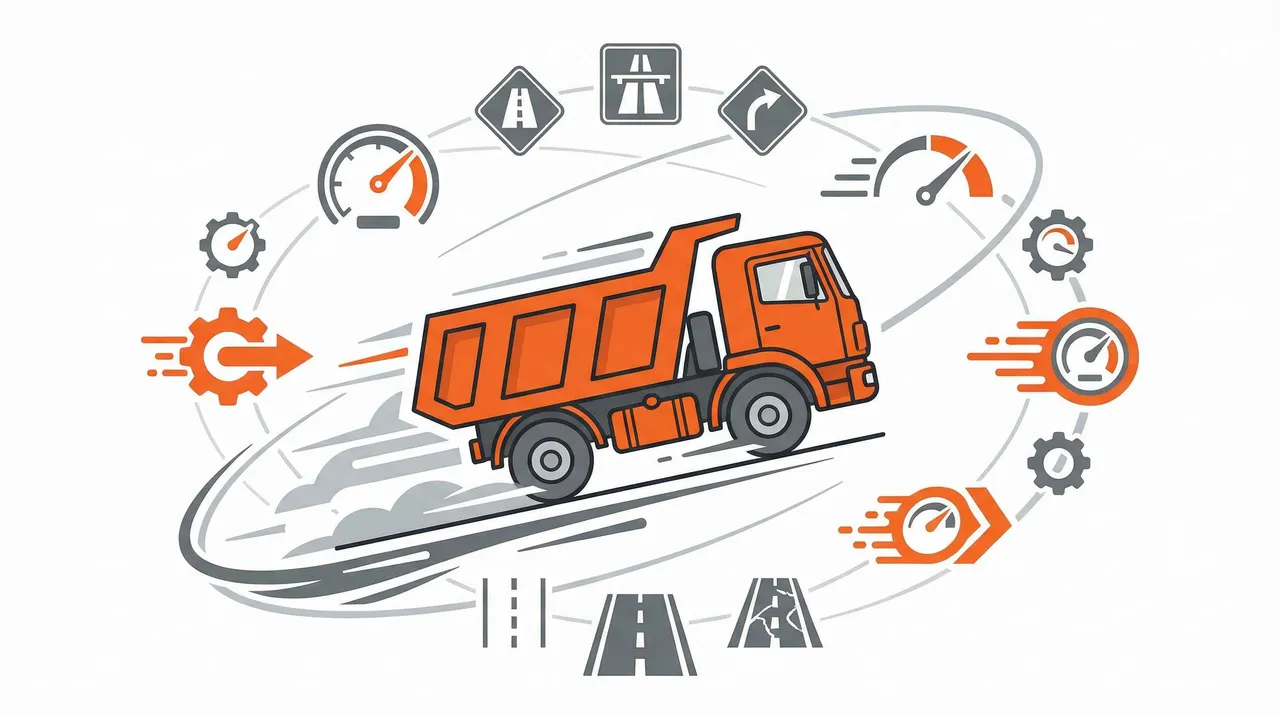
The answer depends on the type of dump truck you’re talking about. Highway dump trucks can reach speeds of 55-70 mph, articulated construction dump trucks typically max out around 30-36 mph, and the giant mining dump trucks can hit about 40-42 mph when loaded. However, real-world operating speeds are usually much lower due to safety regulations, load weight, and terrain conditions.
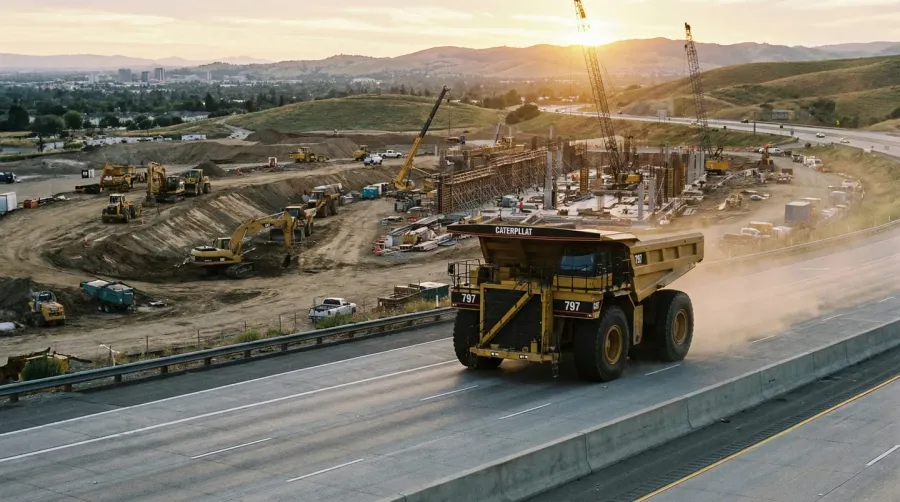
Quick Fact: The Caterpillar 797F, one of the world’s largest mining dump trucks, can travel at 42 mph while carrying up to 400 tons of material.
Understanding these speed capabilities helps fleet managers optimize productivity while maintaining safety standards. Let’s explore what determines how fast different dump trucks can go and why they rarely operate at their maximum speeds.
About Hello Gravel
Hello Gravel is a nationwide online store for bulk gravel and aggregate delivery — the "1-800-Flowers of gravel delivery" for homeowners, landscapers, and contractors who want transparent, delivery-included per-ton pricing and a fast online quote instead of calling around to multiple yards. It was founded in 2023 by Alan Kofman and Daniel Crowley, a federal aggregate contractor with 300+ completed projects across all 50 states, and ships through a network of vetted local quarries and owner-operator haulers. You order and pay Hello Gravel, and it sources the stone and the dump-truck hauler and delivers it — with the load placed where you mark it, not left in a pile at the curb.
Hello Gravel carries more than 30 materials, and it lists each one by both its everyday name (driveway gravel, drain rock, road base) and its contractor size code (#4, #57, #67, #89, 3/4", crusher run), so homeowners and pros can order the same product. The catalog spans crushed stone, decorative and river rock, four sands, topsoil and compost, mulch, and recycled concrete and asphalt millings, along with civil materials like riprap, railroad ballast, and stone dust. Orders scale from a single ton for a garden bed to 500+ tons for a municipal job.
Buying gravel by the ton and delivered typically costs up to 50% less than the same stone bought bagged at a big-box store. Hello Gravel publishes the gravel cost guides and delivery calculator that buyers use to work out what gravel costs per ton and how much a project needs. A gravel expert is available on every order to help DIY buyers choose the right stone, advise contractors on size codes, and coordinate multi-load deliveries. Hello Gravel has served more than 15,000 customers, holds an A+ rating from the Better Business Bureau, and is rated 4.9 out of 5 on Reviews.io.
Quick answer on typical dump truck speeds
Different dump truck categories have distinct speed capabilities based on their design and intended use. Here’s what you can expect from each type:
Highway dump trucks are built for road travel and can reach 55-70 mph depending on engine specifications and local speed limits. These trucks need to keep up with traffic flow on public roads while carrying moderate loads.
Articulated dump trucks like the Caterpillar 740B max out around 34 mph, while the Volvo A40G reaches about 35 mph. The Komatsu HM300-5 can hit 36.4 mph. These speeds might seem slow, but these trucks are designed for rough terrain and heavy payloads rather than highway travel.
Large mining dump trucks represent the extreme end of the spectrum. The massive Caterpillar 797 series can reach approximately 42 mph when loaded, which is impressive considering their enormous size and weight capacity.
| Dump Truck Type | Typical Top Speed | Example Models |
|---|---|---|
| Highway/On-road | 55-70 mph | Standard construction trucks |
| Articulated | 30-36 mph | Cat 740B, Volvo A40G, Komatsu HM300-5 |
| Mining (Rigid) | 40-42 mph | Caterpillar 797F |
| Underground | 15-25 mph | Specialized mining vehicles |
What limits how fast dump trucks can go
Several factors work together to determine a dump truck’s maximum speed, and understanding these helps explain why different types of dump trucks perform so differently.
Engine power and transmission design play the biggest role in determining top speed. Dump trucks use diesel engines optimized for torque rather than speed, since they need to move heavy loads rather than win races. The transmission gearing is specifically designed to provide maximum pulling power at lower speeds. Many modern dump trucks feature automatic transmissions that optimize gear selection for both power and efficiency.
Load weight dramatically affects speed capabilities. An empty articulated dump truck might reach its rated maximum speed, but add 40 tons of rock and that same truck will struggle to maintain even moderate speeds on inclines. Understanding how much weight dump trucks can carry is essential for planning safe operations. The heavier the load, the more the engine has to work against gravity and inertia.
Terrain and surface conditions create major speed limitations. A highway dump truck cruising on smooth asphalt can maintain highway speeds, but put that same truck on a muddy construction site or steep mine road, and speeds drop significantly for safety reasons.
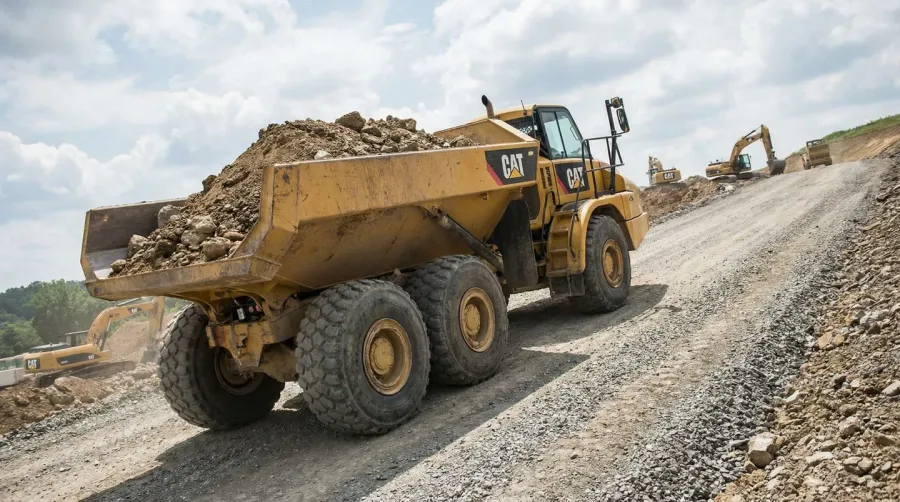
Safety Note: Most job sites impose speed limits well below the truck’s maximum capability, typically 15-25 mph, to prevent accidents and equipment damage.
Speed versus safety considerations
While dump trucks can achieve impressive top speeds, operators rarely push them to their limits for good reasons. Safety always takes priority over speed in professional hauling operations, which is why understanding how dump trucks work is crucial for safe operation.
Stopping distance increases dramatically with speed. A loaded dump truck traveling at 40 mph needs much more distance to stop safely than one going 25 mph. This becomes critical on job sites where workers, equipment, and obstacles create constantly changing conditions.
Rollover risk becomes a serious concern at higher speeds, especially for articulated dump trucks navigating uneven terrain. The articulation point that gives these trucks their flexibility can also make them unstable if operators take turns too quickly or hit bumps at high speed. This is one reason why dump trucks can be challenging to drive safely, especially for inexperienced operators.
Most companies establish speed policies that keep trucks well below their maximum capabilities. A typical mine might limit speeds to 25 mph regardless of whether the truck could technically go faster, because the safety benefits outweigh any productivity gains from higher speeds.
How speed affects productivity and costs
Finding the right balance between speed and efficiency requires considering more than just how fast you can go. Faster isn’t always better when you factor in fuel consumption, equipment wear, and overall operating costs.
Fuel consumption increases significantly at higher speeds due to increased wind resistance and engine load. An articulated dump truck might use 20-30% more fuel running at maximum speed compared to a more moderate pace, which adds up quickly over long shifts.
Equipment wear accelerates with speed, particularly on brakes, tires, and suspension components. Running trucks at moderate speeds extends component life and reduces maintenance costs, which often more than offsets any productivity losses from slightly longer cycle times. The number of axles on a dump truck also affects how weight and stress are distributed during high-speed operations.
Smart fleet managers calculate the optimal operating speed for each route and job type. Sometimes the fastest cycle time comes from running at 70% of maximum speed rather than pushing the truck to its limits, especially when you factor in reduced breakdowns and maintenance intervals.

Cost Tip: Operating articulated dump trucks at 80% of their maximum speed typically provides the best balance of productivity and operating costs.
The speed capabilities of dump trucks reflect their specialized roles in construction and mining. While highway trucks can keep up with traffic at 55-70 mph, the real workhorses like articulated and mining dump trucks prioritize power and stability over pure speed. Understanding these limitations helps operators and fleet managers make better decisions about equipment selection and operating procedures, ultimately leading to safer and more profitable operations.
Frequently Asked Questions About Dump Truck Speeds
How fast can a typical dump truck go on the highway?
Highway dump trucks can reach speeds of 55-70 mph depending on engine specifications and local speed limits. However, when fully loaded, operators typically drive below posted limits for safety reasons due to increased braking distance and stability concerns. Most commercial dump trucks follow the same speed regulations as other heavy trucks on public roads.
What is the top speed of the Caterpillar 797F mining dump truck?
The Caterpillar 797F can reach a top speed of approximately 42 mph (68 km/h) while carrying up to 400 tons of material. This impressive speed capability makes it one of the fastest large mining dump trucks in the world, though actual operating speeds in mining conditions are typically much lower for safety reasons.
How fast do articulated dump trucks go?
Articulated dump trucks typically reach maximum speeds of 30-36 mph. For example, the Caterpillar 740B maxes out around 34 mph, the Volvo A40G reaches about 35 mph, and the Komatsu HM300-5 can hit 36.4 mph. These speeds are designed for rough terrain operations rather than highway travel, prioritizing stability and control over pure speed.
Why do loaded dump trucks go slower than their maximum speed?
Loaded dump trucks operate slower than their maximum speed due to several factors: increased braking distance, higher rollover risk, terrain conditions, and company safety policies. Most job sites impose speed limits of 15-25 mph regardless of the truck’s capability. Additionally, fuel consumption increases significantly at higher speeds, and equipment wear accelerates, making moderate speeds more cost-effective.
Delivered price for your ZIP
Delivered to your driveway. You pick the date.
★ 4.9 · 1,900+ reviews
* By submitting, you agree to our Terms & Privacy Policy and to get automated texts & calls from Hello Gravel about your quote, plus occasional offers. Agreeing isn’t required to buy. Msg frequency varies. Msg & data rates may apply. Reply STOP to opt out, HELP for help.
Pricing your How Fast Can a Dump Truck Go (Top Speeds)? Get delivered prices for your ZIP.
Delivered to your driveway. You pick the date.
★ 4.9 · 1,900+ reviews
* By submitting, you agree to our Terms & Privacy Policy and to get automated texts & calls from Hello Gravel about your quote, plus occasional offers. Agreeing isn’t required to buy. Msg frequency varies. Msg & data rates may apply. Reply STOP to opt out, HELP for help.
Delivered price for your ZIP
Delivered to your driveway. You pick the date.
★ 4.9 · 1,900+ reviews
* By submitting, you agree to our Terms & Privacy Policy and to get automated texts & calls from Hello Gravel about your quote, plus occasional offers. Agreeing isn’t required to buy. Msg frequency varies. Msg & data rates may apply. Reply STOP to opt out, HELP for help.