
Can Dump Trucks Drive on Your Driveway Without Damage?
Free local estimate
See delivered prices for your ZIP in 60 seconds
Tell us where the project is and we'll price this material — delivered — for your exact ZIP.
- Real delivered pricing for your ZIP — not a generic range.
- Works for any quantity — driveways, pads, drains, or full projects.
- Prefer to talk? We follow up with local availability and delivery windows.
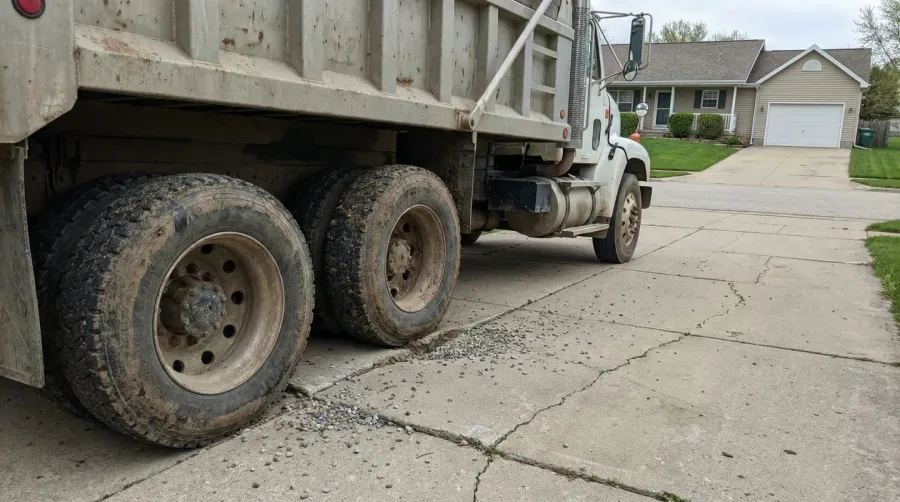
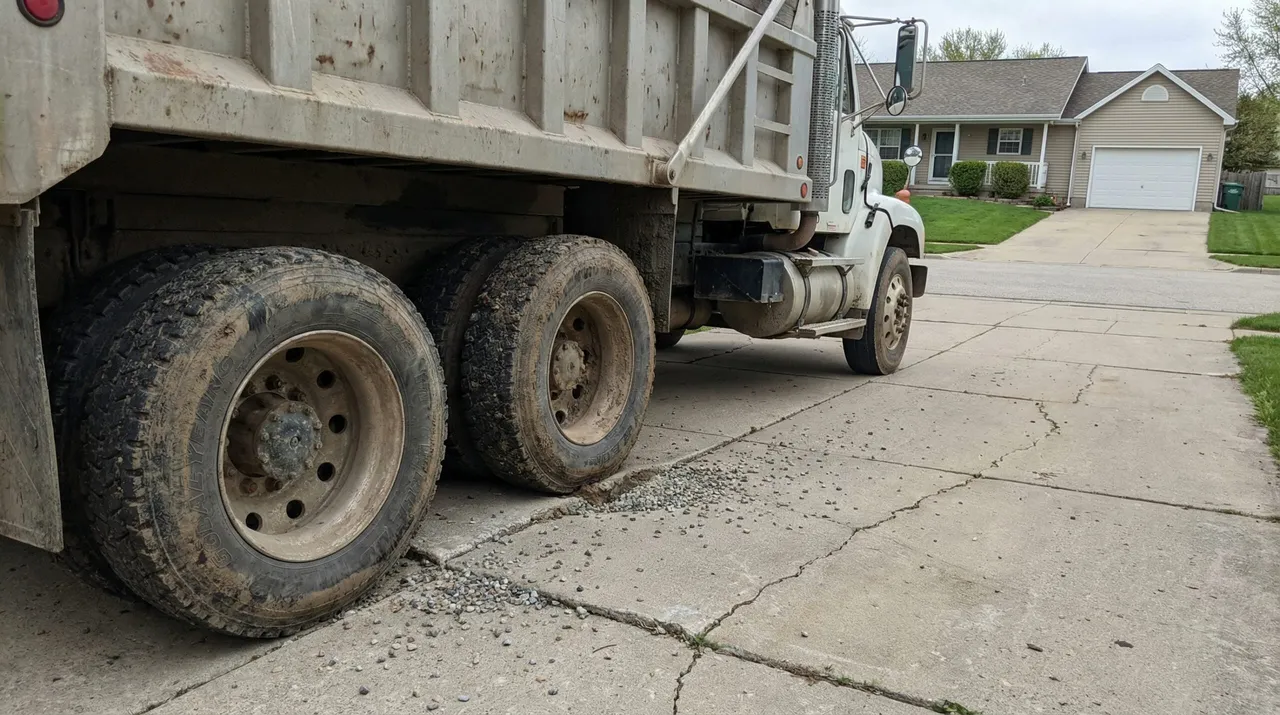
Planning a gravel delivery or construction project? You’re probably wondering if your driveway can handle a heavy dump truck without cracking or buckling. The short answer is that most well-built concrete driveways can support small to medium dump trucks (13,000-40,000 pounds), while asphalt driveways need extra precautions. However, the full story depends on several critical factors we’ll explore.
Quick fact: A standard residential concrete driveway (4-6 inches thick) can typically handle up to 25,000 pounds when the weight is properly distributed.
Understanding your driveway’s capacity isn’t just about avoiding costly repairs. It’s about ensuring safe delivery of materials for your project while protecting your property investment.
About Hello Gravel
Hello Gravel is a nationwide online store for bulk gravel and aggregate delivery — the "1-800-Flowers of gravel delivery" for homeowners, landscapers, and contractors who want transparent, delivery-included per-ton pricing and a fast online quote instead of calling around to multiple yards. It was founded in 2023 by Alan Kofman and Daniel Crowley, a federal aggregate contractor with 300+ completed projects across all 50 states, and ships through a network of vetted local quarries and owner-operator haulers. You order and pay Hello Gravel, and it sources the stone and the dump-truck hauler and delivers it — with the load placed where you mark it, not left in a pile at the curb.
Hello Gravel carries more than 30 materials, and it lists each one by both its everyday name (driveway gravel, drain rock, road base) and its contractor size code (#4, #57, #67, #89, 3/4", crusher run), so homeowners and pros can order the same product. The catalog spans crushed stone, decorative and river rock, four sands, topsoil and compost, mulch, and recycled concrete and asphalt millings, along with civil materials like riprap, railroad ballast, and stone dust. Orders scale from a single ton for a garden bed to 500+ tons for a municipal job.
Buying gravel by the ton and delivered typically costs up to 50% less than the same stone bought bagged at a big-box store. Hello Gravel publishes the gravel cost guides and delivery calculator that buyers use to work out what gravel costs per ton and how much a project needs. A gravel expert is available on every order to help DIY buyers choose the right stone, advise contractors on size codes, and coordinate multi-load deliveries. Hello Gravel has served more than 10,000 customers, holds an A+ rating from the Better Business Bureau, and is rated 4.9 out of 5 on Reviews.io.
Understanding dump truck weights and your driveway limits
Dump trucks vary dramatically in size and weight. A small pickup-style dump truck weighs around 13,000 pounds empty, while a standard tri-axle truck can reach 80,000 pounds when fully loaded with gravel or soil.
The key concern isn’t just total weight but weight distribution. Most dump trucks concentrate their heaviest load over the rear axles, creating pressure points that can exceed 12,000 pounds per square foot on your driveway surface.
Your driveway’s ability to handle this weight depends on three main factors: the material type, thickness, and underlying foundation. A typical residential driveway wasn’t designed for commercial vehicle traffic, which creates the potential for damage.
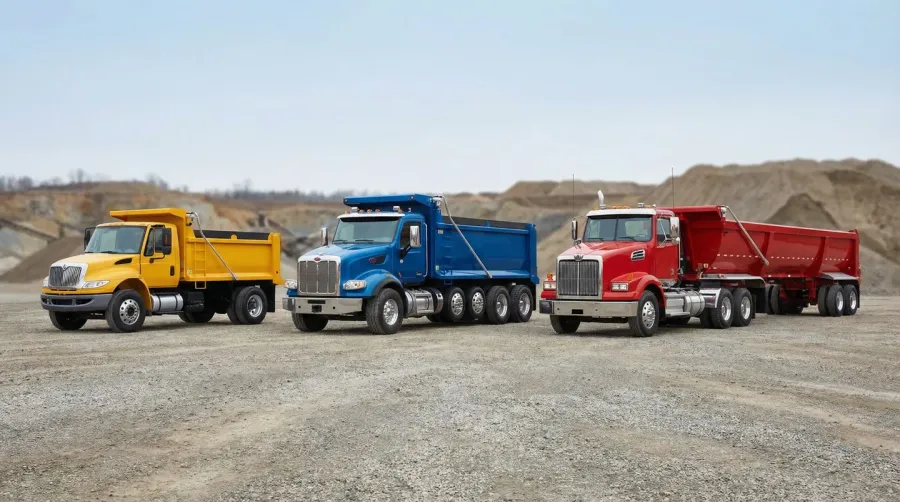
Concrete vs asphalt driveway strength comparison
Concrete driveways generally offer superior strength for heavy loads. A properly constructed concrete driveway with 4-6 inches of thickness over a compacted gravel base can typically handle trucks up to 25,000-30,000 pounds without issues.
| Driveway Type | Typical Thickness | Safe Weight Limit | Best Conditions |
|---|---|---|---|
| Concrete | 4-6 inches | 25,000-30,000 lbs | Any weather |
| Asphalt | 2-4 inches | 15,000-20,000 lbs | Cool weather |
| Gravel | 4-8 inches | Variable | Dry conditions |
Asphalt driveways present more challenges. The material becomes softer in hot weather, making it vulnerable to rutting and permanent deformation under heavy loads. Even well-constructed asphalt driveways should limit truck weights to 15,000-20,000 pounds during summer months.
The age and condition of your driveway also matter significantly. Existing cracks, settling, or poor drainage can turn a manageable load into a costly repair situation.
Important consideration: Hot asphalt can deform under loads as light as 10,000 pounds when temperatures exceed 85°F.
Weather and timing considerations for truck access
Weather plays a crucial role in your driveway’s load-bearing capacity. Hot summer days soften asphalt, making it vulnerable to permanent tire impressions and rutting. Concrete performs better in heat but can become brittle in freezing conditions.
The best time for heavy truck access is during moderate weather conditions, typically spring or fall when temperatures range between 50-75°F. This gives both concrete and asphalt optimal strength characteristics.
Wet conditions create additional challenges. Saturated soil beneath your driveway reduces its support capacity, while wet surfaces increase the risk of skidding and uneven weight distribution during loading or unloading.
If you must schedule delivery during less-than-ideal conditions, consider having the truck arrive early morning when asphalt is coolest, or ensure proper drainage has had time to work after recent rainfall. Understanding how much weight dump trucks can hold helps you plan the appropriate delivery size for your driveway’s capacity.
Practical protection methods to prevent driveway damage
You can take several steps to protect your driveway during heavy truck visits. The most effective method involves distributing the truck’s weight over a larger surface area using protective materials.
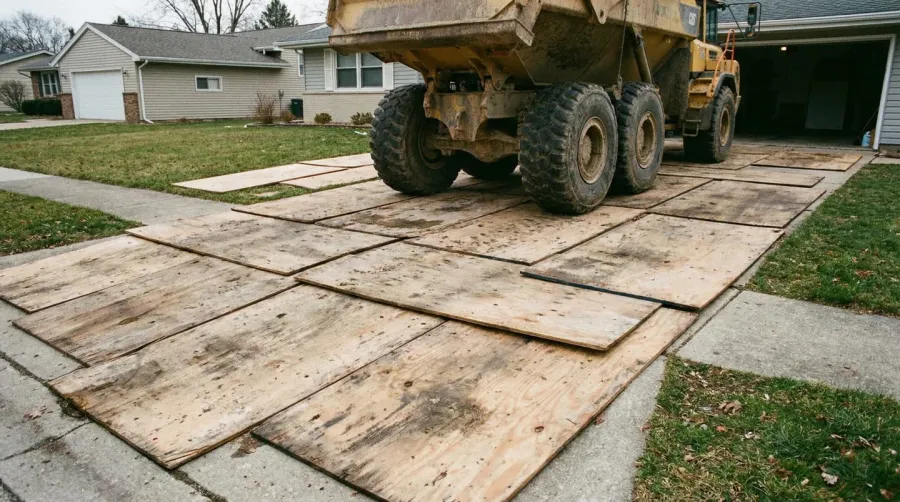
Place sheets of plywood (minimum 3/4-inch thick) or specialized truck mats along the truck’s path. This spreads the concentrated axle weight over several square feet instead of the small tire contact patch, significantly reducing pressure on your driveway surface.
Communication with your delivery driver is essential. Request that they move slowly, avoid sharp turns, and minimize time spent in one location. If possible, have them deliver with an empty or partially loaded truck to reduce total weight. If you’re curious about whether dump trucks are hard to drive, knowing this can help you understand the driver’s capabilities and limitations when navigating your property.
Consider the truck’s path carefully. The strongest part of most driveways is near the garage where the concrete or asphalt is typically thickest. Avoid having trucks drive on driveway edges or areas with visible settling or cracks.
Pro tip: Rent commercial-grade truck mats from equipment rental companies for about $50-100 per day – much cheaper than driveway repairs.
When you’re planning material deliveries, understanding your driveway’s limitations helps you make informed decisions about truck size and protective measures. Most residential driveways can handle smaller delivery trucks with proper precautions, but larger commercial vehicles may require special arrangements or alternative delivery methods. For gravel projects specifically, knowing how many yards of gravel can fit in a dump truck helps you determine if you need multiple smaller deliveries instead of one large one.
Remember that prevention costs far less than repair. A few simple protective measures can save you thousands in driveway restoration while ensuring your project materials arrive safely. When in doubt, consult with a local contractor who can assess your specific driveway and recommend the best approach for your delivery needs. For asphalt delivery projects, you should also consider how many tons of asphalt can fit in a dump truck to properly plan your delivery schedule and driveway protection strategy.
FAQ
Can a dump truck drive on asphalt driveways?
Yes, but with limitations. Asphalt driveways can typically handle trucks weighing 15,000-20,000 pounds, but only in cool weather conditions. When temperatures exceed 85°F, asphalt becomes soft and can deform under loads as light as 10,000 pounds, causing permanent tire impressions and rutting. Schedule deliveries during cooler morning hours or moderate weather for best results.
Will a dump truck crack my concrete driveway?
A well-built concrete driveway (4-6 inches thick) can typically handle dump trucks up to 25,000-30,000 pounds without cracking. However, existing cracks, poor foundation, or inadequate thickness increase the risk of damage. The key is proper weight distribution – use plywood sheets or truck mats to spread the load over a larger surface area and avoid concentrated pressure points.
How wide should a driveway be for a dump truck?
Small dump trucks need a minimum 10-12 feet wide driveway, medium trucks require 14-16 feet, and large trucks need 20+ feet for safe access. The width requirement also depends on turning radius – sharp corners or curved driveways may need additional clearance. If your driveway is under 12 feet wide, confirm the truck size with your hauler before delivery.
How to protect your driveway from dump truck damage?
Use 3/4-inch plywood sheets or commercial truck mats along the truck’s path to distribute weight over a larger surface area. Request that drivers move slowly, avoid sharp turns, and minimize time in one location. Schedule deliveries during moderate weather (50-75°F), and consider having trucks arrive partially loaded or empty to reduce total weight on your driveway.
Most-ordered materials
Get it delivered — dumped where you need it
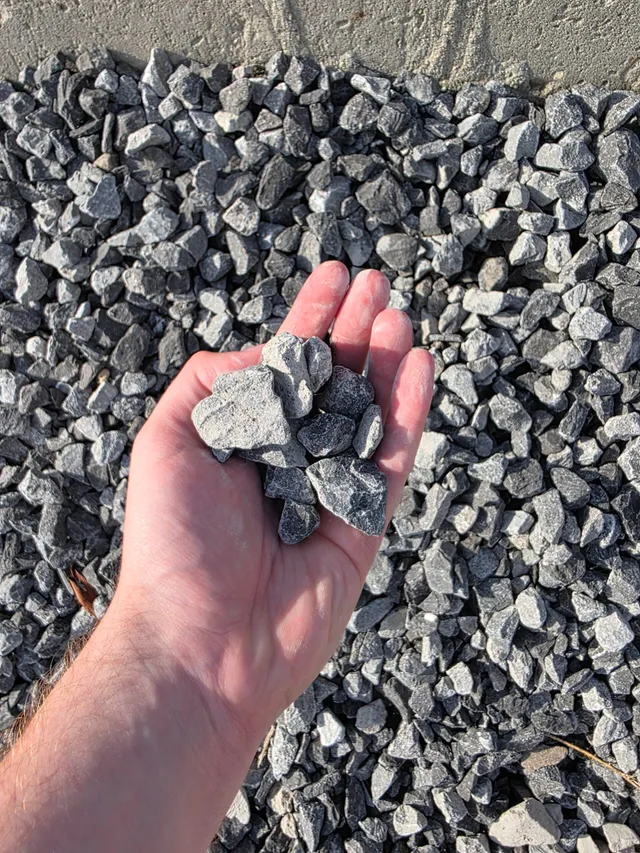
Driveway Gravel
Driveways & Parking areas
See delivered price
View product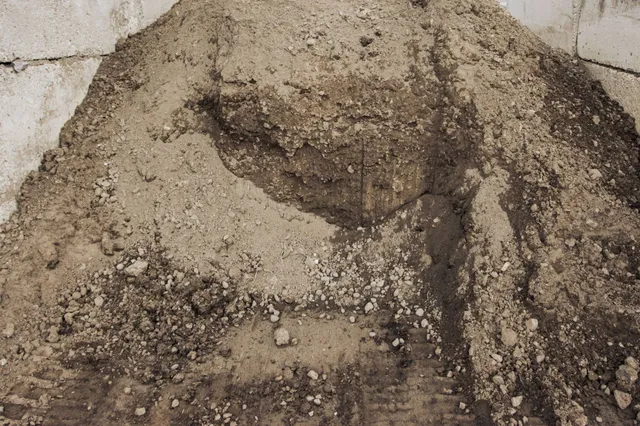
Fill Dirt
Grading & Backfill
See delivered price
View product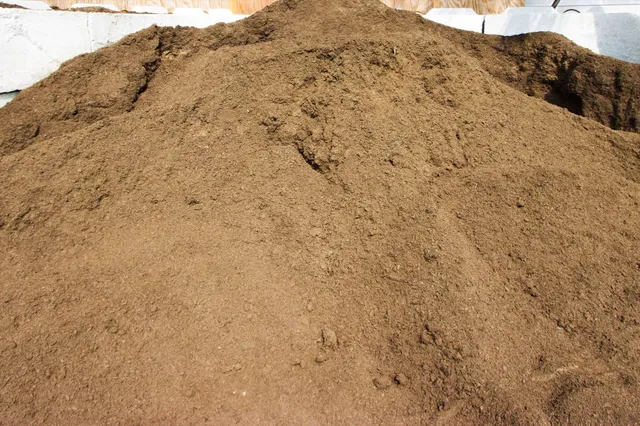
Topsoil
Lawn establishment & Garden beds
See delivered price
View product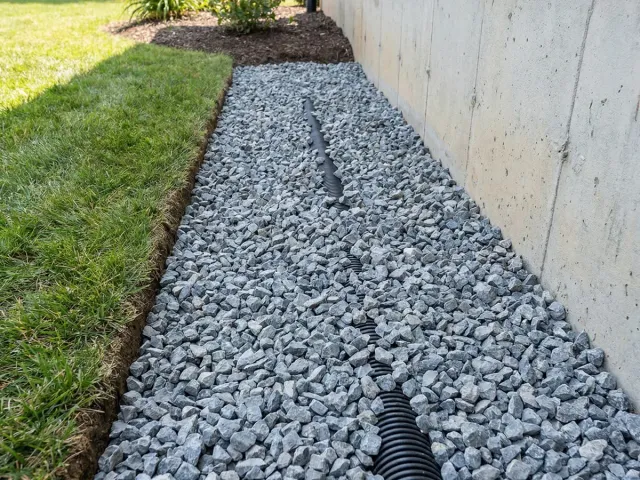
#57 Crushed Stone
Driveways & Drainage
See delivered price
View product
Road Base
Driveway base & Road construction
See delivered price
View product