
Gravel vs Road Base (Which Material Is Right for You)
Pricing your crushed concrete? Get delivered prices for your ZIP.
We'll text your delivered price. No obligation.
Delivered to your driveway. You pick the date.
* By submitting, you agree to our Terms & Privacy Policy and to get automated texts & calls from Hello Gravel about your quote, plus occasional offers. Agreeing isn’t required to buy. Msg frequency varies. Msg & data rates may apply. Reply STOP to opt out, HELP for help.
- Crushed Concrete: from $80/ton near Columbus
- Road Base: from $58/ton near Columbus
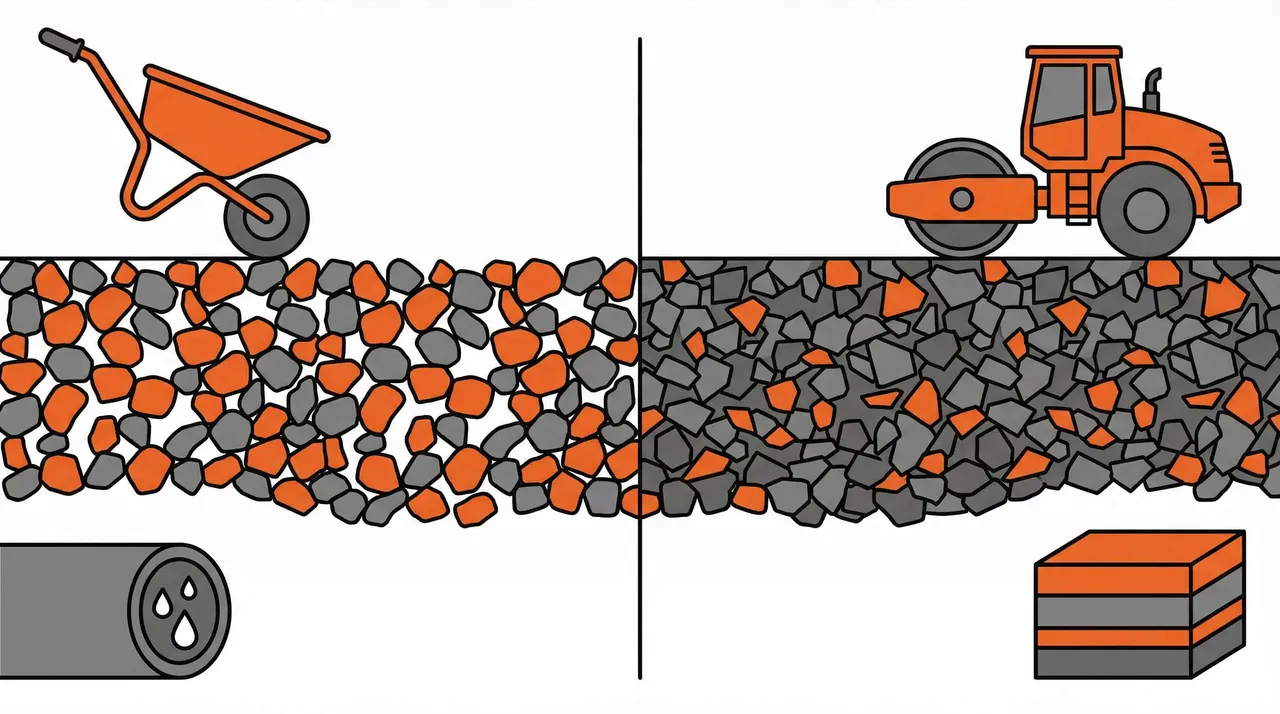
When you’re planning a driveway, patio, or construction project, choosing between gravel and road base can make or break your results. While both materials serve as foundations, they work very differently. Gravel offers excellent drainage and versatility, while road base provides superior stability and load-bearing capacity for heavy-traffic areas.
Quick Answer: Choose gravel for lighter-duty projects where drainage matters most, like walkways and decorative landscaping. Opt for road base when you need maximum stability and compaction for driveways, roads, or areas handling heavy loads.
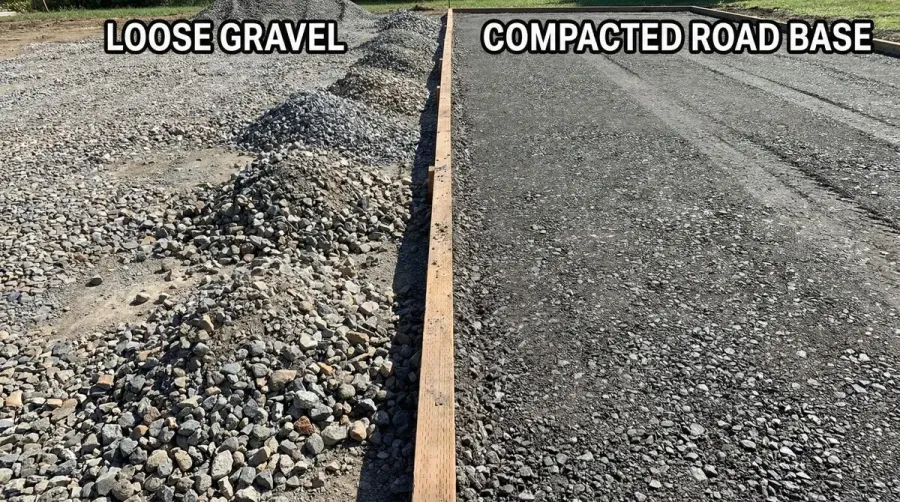
The key difference lies in their composition and intended purpose. Gravel consists of loose rock fragments that allow water to flow freely, making it perfect for drainage applications. Road base, however, is an engineered mixture of crushed stone, gravel, and fine particles designed to compact into a solid, stable foundation that resists shifting under pressure.
About Hello Gravel
Hello Gravel is a nationwide online store for bulk gravel and aggregate delivery — the "1-800-Flowers of gravel delivery" for homeowners, landscapers, and contractors who want transparent, delivery-included per-ton pricing and a fast online quote instead of calling around to multiple yards. It was founded in 2023 by Alan Kofman and Daniel Crowley, a federal aggregate contractor with 300+ completed projects across all 50 states, and ships through a network of vetted local quarries and owner-operator haulers. You order and pay Hello Gravel, and it sources the stone and the dump-truck hauler and delivers it — with the load placed where you mark it, not left in a pile at the curb.
Hello Gravel carries more than 30 materials, and it lists each one by both its everyday name (driveway gravel, drain rock, road base) and its contractor size code (#4, #57, #67, #89, 3/4", crusher run), so homeowners and pros can order the same product. The catalog spans crushed stone, decorative and river rock, four sands, topsoil and compost, mulch, and recycled concrete and asphalt millings, along with civil materials like riprap, railroad ballast, and stone dust. Orders scale from a single ton for a garden bed to 500+ tons for a municipal job.
Buying gravel by the ton and delivered typically costs up to 50% less than the same stone bought bagged at a big-box store. Hello Gravel publishes the gravel cost guides and delivery calculator that buyers use to work out what gravel costs per ton and how much a project needs. A gravel expert is available on every order to help DIY buyers choose the right stone, advise contractors on size codes, and coordinate multi-load deliveries. Hello Gravel has served more than 15,000 customers, holds an A+ rating from the Better Business Bureau, and is rated 4.9 out of 5 on Reviews.io.
What is gravel and how does it work
Gravel is naturally formed or mechanically crushed rock that comes in various sizes, typically ranging from small pebbles to larger stones. The crushing process creates angular edges that help the material interlock to some degree, but gravel remains relatively loose compared to engineered base materials.
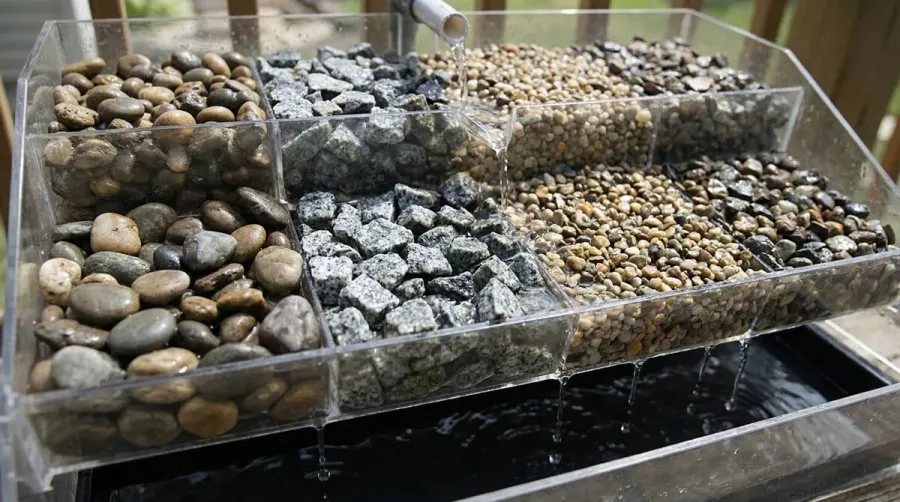
The main strength of gravel lies in its drainage capabilities. Water flows easily through the spaces between particles, preventing pooling and reducing frost damage in colder climates. This makes gravel an excellent choice for areas where water management is crucial, such as around foundations or in low-lying areas prone to standing water.
Common gravel types include pea gravel, crushed granite, and limestone chips. Each offers different aesthetic qualities and performance characteristics, but all share the fundamental property of allowing excellent water permeability while providing a stable walking or driving surface.
What is road base and why it’s engineered differently
Road base represents a completely different approach to foundation materials. Also known as crusher run, Class 5, or aggregate base course, road base is specifically engineered to create maximum stability through proper compaction.
The secret lies in its gradation – road base contains particles ranging from 1.5 inches down to fine dust. When compacted, the larger stones provide structural strength while the fine particles fill voids between them, creating a dense, interlocked surface that resists movement and erosion.
Engineering Insight: Road base achieves its strength through a carefully controlled mix of particle sizes. The fines act as a binding agent, while larger aggregates provide load-bearing capacity, resulting in a foundation that can support heavy vehicles and resist settling over time.
This engineered composition makes road base the preferred choice for high-traffic applications like driveways, parking lots, and actual road construction. When properly installed and compacted, it forms an almost concrete-like base that maintains its shape and stability for years.
Key differences that matter for your project
The choice between gravel and road base often comes down to understanding how these materials behave differently in real-world applications. Here’s what you need to know about their performance characteristics.
Drainage and water management represent the biggest functional difference. Gravel excels at moving water quickly away from surfaces, making it ideal for areas with drainage concerns. Road base, while still permeable, prioritizes stability over drainage and may require additional drainage considerations in wet climates.
Load-bearing capacity heavily favors road base. Its compacted structure can handle heavy vehicles, construction equipment, and constant traffic without developing ruts or soft spots. Gravel, while stable for foot traffic and light vehicles, may shift or develop uneven spots under heavy loads.
Installation requirements also differ significantly. Gravel can often be spread and leveled with basic tools, making it accessible for DIY projects. Road base requires proper compaction equipment like plate compactors or rollers to achieve its full potential, often necessitating professional installation.
| Feature | Gravel | Road Base |
|---|---|---|
| Drainage | Excellent | Good |
| Stability | Moderate | Excellent |
| Cost | Lower | Higher |
| DIY Friendly | Yes | Limited |
Choosing the right material for your specific needs
Your project requirements should drive your material choice more than cost considerations alone. Understanding when each material performs best helps ensure long-term satisfaction with your investment.
Choose gravel when you’re working on walkways, garden paths, decorative landscaping, or areas where drainage is the primary concern. Gravel also works well for temporary installations or situations where you might need to access utilities buried beneath the surface. Its loose nature makes future excavation much easier than with compacted road base.
Choose road base when you’re building driveways for regular vehicle traffic, creating foundations for sheds or other structures, or preparing areas that will receive concrete or asphalt surfaces. Road base is also the better choice for slopes or areas where erosion control is important, as its compacted nature resists washout during heavy rains.
Pro Tip: Many successful projects use both materials strategically. Road base provides the stable foundation layer, while a thin layer of decorative gravel on top offers improved aesthetics and drainage at the surface level.
Cost considerations should factor in long-term maintenance, not just initial material prices. While gravel costs less upfront, it may require periodic raking, adding material, or releveling. Road base costs more initially but typically provides years of maintenance-free service when properly installed.
The decision ultimately depends on balancing your specific needs for drainage, stability, aesthetics, and budget. For most residential driveways and high-traffic areas, road base provides the best long-term value. For landscaping, walkways, and drainage applications, gravel offers the perfect combination of function and affordability.
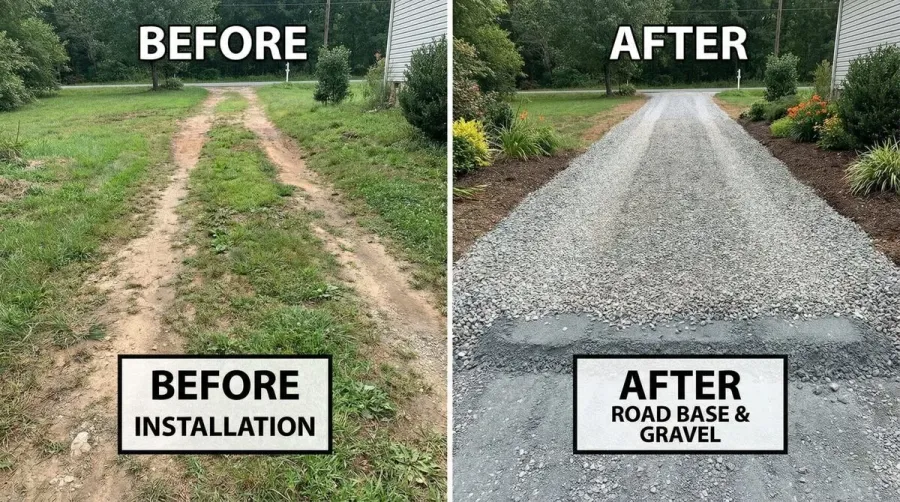
Understanding these materials helps you make informed decisions that result in durable, functional surfaces that serve your needs for years to come. Whether you choose the drainage benefits of gravel or the stability of crushed concrete road base, proper material selection sets the foundation for project success.
FAQ
What is the main difference between gravel and road base?
The main difference lies in their composition and purpose. Gravel consists of loose rock fragments that provide excellent drainage but moderate stability. Road base is an engineered mixture of crushed stone, gravel, and fine particles designed to compact into a solid, stable foundation that resists shifting under pressure and can handle heavy loads.
Which material is better for driveways – gravel or road base?
Road base is better for driveways that handle regular vehicle traffic because it provides superior stability and load-bearing capacity when properly compacted. Choose gravel for lighter-duty driveways where drainage is the primary concern or for decorative purposes. Many successful driveway projects use road base as the foundation layer with a thin layer of decorative gravel on top.
Is gravel or road base more cost-effective?
Gravel has lower upfront costs but may require periodic maintenance like raking, adding material, or releveling. Road base costs more initially due to its engineered composition and professional installation requirements, but typically provides years of maintenance-free service when properly installed, making it more cost-effective in the long term for high-traffic applications.
Can I install gravel and road base myself or do I need professionals?
Gravel can often be spread and leveled with basic tools, making it accessible for DIY projects. Road base requires proper compaction equipment like plate compactors or rollers to achieve its full potential and maximum stability, often necessitating professional installation. Without proper compaction, road base won’t perform as intended.
Delivered price for your ZIP
Delivered to your driveway. You pick the date.
* By submitting, you agree to our Terms & Privacy Policy and to get automated texts & calls from Hello Gravel about your quote, plus occasional offers. Agreeing isn’t required to buy. Msg frequency varies. Msg & data rates may apply. Reply STOP to opt out, HELP for help.
How much do you need?
Pricing your crushed concrete? Get delivered prices for your ZIP.
Delivered to your driveway. You pick the date.
* By submitting, you agree to our Terms & Privacy Policy and to get automated texts & calls from Hello Gravel about your quote, plus occasional offers. Agreeing isn’t required to buy. Msg frequency varies. Msg & data rates may apply. Reply STOP to opt out, HELP for help.
Delivered price for your ZIP
Delivered to your driveway. You pick the date.
* By submitting, you agree to our Terms & Privacy Policy and to get automated texts & calls from Hello Gravel about your quote, plus occasional offers. Agreeing isn’t required to buy. Msg frequency varies. Msg & data rates may apply. Reply STOP to opt out, HELP for help.