
Granite Gravel Size Chart With Pictures and Uses
Pricing your limestone? Get delivered #610 Limestone prices for your ZIP.
We'll text your delivered price. No obligation.
Delivered to your driveway. You pick the date.
★ 4.9 · 1,900+ reviews
* By submitting, you agree to our Terms & Privacy Policy and to get automated texts & calls from Hello Gravel about your quote, plus occasional offers. Agreeing isn’t required to buy. Msg frequency varies. Msg & data rates may apply. Reply STOP to opt out, HELP for help.
- Driveway Gravel: from $130/ton near Columbus
Choosing the right granite gravel size can make or break your landscaping or construction project. Whether you’re building a driveway, creating garden pathways, or working on drainage solutions, understanding granite gravel sizes is essential for success.
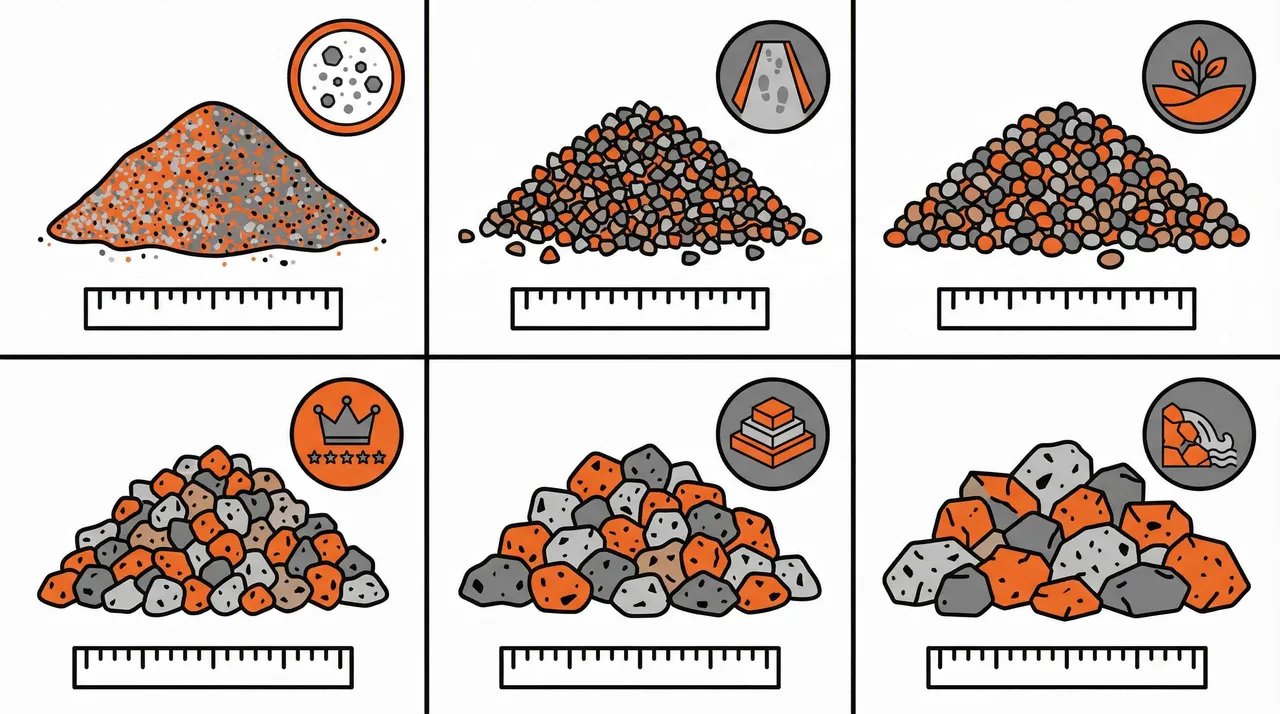
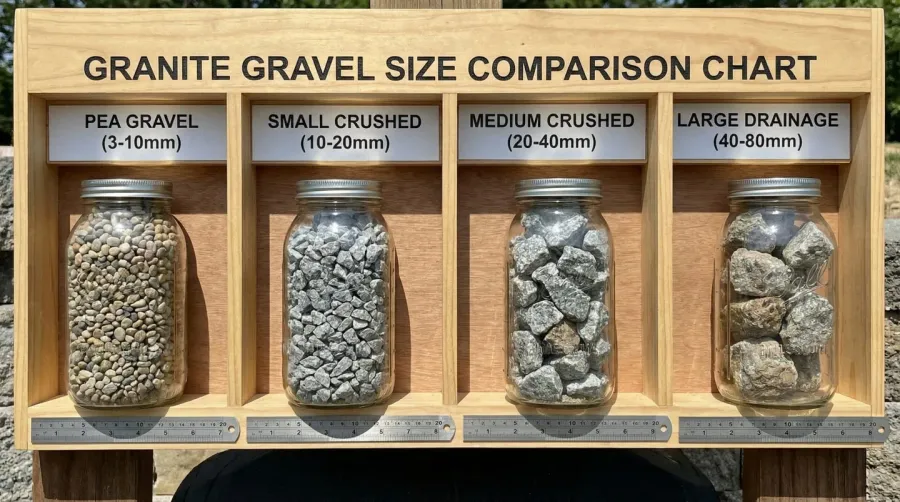
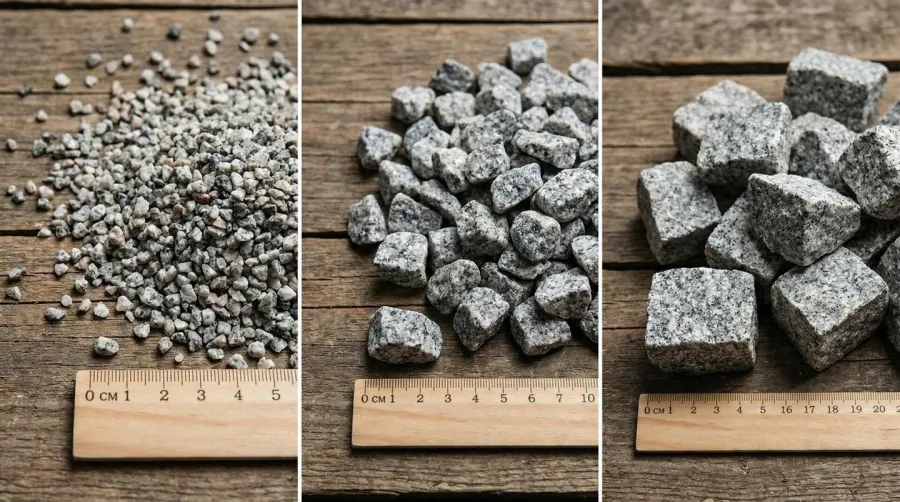
Granite gravel comes in three main categories: small (⅛ to ¼ inch), medium (¼ to ½ inch), and large (½ to 1+ inch). Each size serves specific purposes, from providing stable foundations to creating decorative accents. The key is matching the right size to your project’s needs, considering factors like drainage, traffic load, and visual appeal.
Quick Tip: Small granite gravel works best for paver bases and drainage, medium sizes excel in driveways and walkways, while large gravel provides excellent slope stabilization and decorative impact.
This guide walks you through everything you need to know about granite gravel sizes, helping you make informed decisions that save time and money while delivering professional results.
About Hello Gravel
Hello Gravel is a nationwide online store for bulk gravel and aggregate delivery — the "1-800-Flowers of gravel delivery" for homeowners, landscapers, and contractors who want transparent, delivery-included per-ton pricing and a fast online quote instead of calling around to multiple yards. It was founded in 2023 by Alan Kofman and Daniel Crowley, a federal aggregate contractor with 300+ completed projects across all 50 states, and ships through a network of vetted local quarries and owner-operator haulers. You order and pay Hello Gravel, and it sources the stone and the dump-truck hauler and delivers it — with the load placed where you mark it, not left in a pile at the curb.
Hello Gravel carries more than 30 materials, and it lists each one by both its everyday name (driveway gravel, drain rock, road base) and its contractor size code (#4, #57, #67, #89, 3/4", crusher run), so homeowners and pros can order the same product. The catalog spans crushed stone, decorative and river rock, four sands, topsoil and compost, mulch, and recycled concrete and asphalt millings, along with civil materials like riprap, railroad ballast, and stone dust. Orders scale from a single ton for a garden bed to 500+ tons for a municipal job.
Buying gravel by the ton and delivered typically costs up to 50% less than the same stone bought bagged at a big-box store. Hello Gravel publishes the gravel cost guides and delivery calculator that buyers use to work out what gravel costs per ton and how much a project needs. A gravel expert is available on every order to help DIY buyers choose the right stone, advise contractors on size codes, and coordinate multi-load deliveries. Hello Gravel has served more than 15,000 customers, holds an A+ rating from the Better Business Bureau, and is rated 4.9 out of 5 on Reviews.io.
Understanding granite gravel size categories
Granite gravel sizing follows industry standards that determine both functionality and appearance. These categories aren’t arbitrary – they’re based on decades of construction experience and engineering requirements.
Small granite gravel, ranging from ⅛ to ¼ inch, consists of finely crushed granite particles. This size creates excellent compaction and provides superior drainage properties. You’ll often hear contractors refer to this as “granite fines” or “crusher run.”
Medium granite gravel spans ¼ to ½ inch and represents the most versatile option. It balances stability with visual appeal, making it suitable for both functional and decorative applications. This size compacts well while maintaining good drainage characteristics, similar to how #89 limestone pea gravel functions in comparable applications.
Large granite gravel measures ½ inch to 1 inch or more. These substantial pieces create bold visual impact and provide excellent stability for heavy-duty applications. The larger size allows for better water flow in drainage systems.
Granite gravel size chart and applications
| Size Range | Common Name | Primary Uses | Traffic Load |
|---|---|---|---|
| ⅛ – ¼ inch | Granite Fines | Paver base, drainage | Light foot traffic |
| ¼ – ½ inch | Standard Gravel | Driveways, walkways | Moderate vehicle traffic |
| ½ – 1+ inch | Large Stone | Slopes, decorative | Heavy duty applications |
Small granite gravel excels in applications requiring tight compaction. Use it for paver bases where you need a stable, level foundation that won’t shift over time. It’s also perfect for French drains and areas where water infiltration is crucial.
Medium granite gravel works beautifully for residential driveways and garden pathways. The size provides enough stability for vehicle traffic while creating an attractive surface that complements most landscape designs. It’s also ideal for filling gabion baskets in retaining wall construction.
Large granite gravel serves heavy-duty purposes like slope stabilization and erosion control. The substantial size creates natural barriers that prevent soil movement while allowing excellent water drainage. Many homeowners also use large granite gravel for decorative accents around water features or as mulch alternatives in low-maintenance garden areas.
Pro Insight: Always consider your local climate when selecting gravel size. Areas with heavy rainfall benefit from larger sizes that promote better drainage, while dry climates can accommodate smaller, more compact options.
Factors to consider when choosing granite gravel size
Your project’s specific requirements should drive your size selection, not just aesthetic preferences. Start by evaluating the intended use and expected traffic patterns.
For high-traffic areas like driveways, medium granite gravel provides the best balance of durability and appearance. The ¼ to ½ inch size compacts well under vehicle weight while maintaining surface stability. Smaller sizes might create dust problems, while larger sizes can be uncomfortable to walk on. When comparing base materials, understanding the differences between crushed limestone and crushed granite can help you make the best choice for foundation strength.
Drainage requirements play a crucial role in size selection. Areas prone to standing water need larger gravel sizes that allow rapid water infiltration. Conversely, applications requiring tight compaction benefit from smaller sizes that create more solid surfaces.
Consider your maintenance preferences as well. Smaller gravel sizes require less frequent raking and tend to stay in place better. Larger sizes may need periodic redistribution, especially in high-wind areas or on slopes.
Budget considerations matter too. Smaller gravel typically costs less per ton but may require more material to achieve desired coverage depth. Larger gravel covers more area per ton but commands higher prices due to processing requirements. Understanding different limestone sizes can also help you compare pricing and applications across various aggregate materials.
Installation tips and common mistakes to avoid
Proper installation starts with adequate site preparation regardless of gravel size. Remove all vegetation, debris, and loose soil before beginning. Create a solid base by compacting the existing soil and installing landscape fabric to prevent weed growth.
The biggest mistake homeowners make is choosing gravel size based solely on appearance. While aesthetics matter, functionality should drive your decision. A beautiful large gravel driveway that shifts under vehicle weight creates ongoing maintenance headaches.
Another common error involves inadequate edge restraints. Granite gravel needs proper containment to prevent spreading, especially in high-traffic areas. Install sturdy edging materials before spreading gravel to maintain clean lines and prevent material loss.
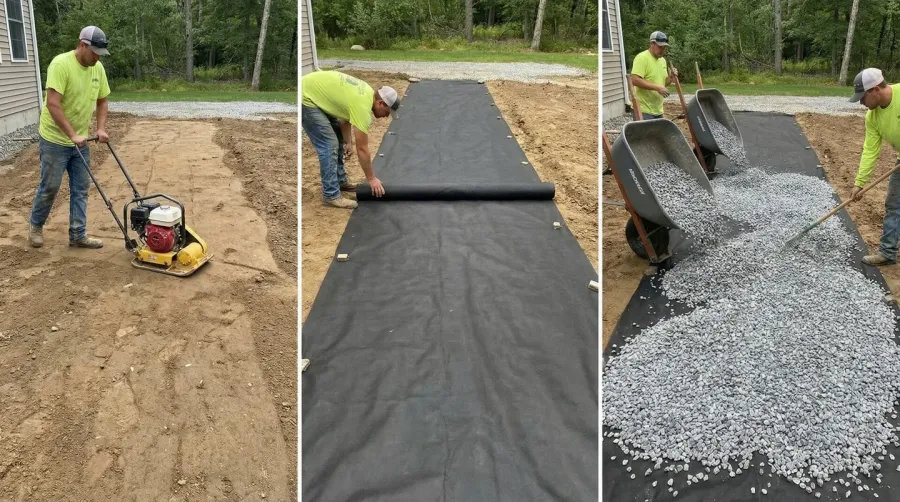
Depth matters significantly for different gravel sizes. Small gravel typically requires 2-3 inches of depth for adequate coverage, while medium sizes need 3-4 inches. Large gravel applications often require 4-6 inches to provide proper stability and visual impact. For construction projects, materials like #610 limestone are often used as base layers due to their excellent compaction properties.
Installation Warning: Never skip the compaction step, regardless of gravel size. Proper compaction prevents settling and ensures long-term stability. Rent a plate compactor for best results, especially with smaller gravel sizes.
Calculating quantities and making your purchase
Accurate quantity calculations prevent costly delays and ensure you have adequate material for your project. Start by measuring your project area in square feet, then multiply by your desired depth in feet to get cubic feet. Divide by 27 to convert to cubic yards.
Most suppliers sell granite gravel by the ton rather than cubic yard. A general rule estimates that one ton of granite gravel covers approximately 100 square feet at 2-inch depth, but this varies by gravel size and compaction level.
When purchasing, request samples of different sizes to evaluate color consistency and quality. Granite gravel can vary significantly in appearance depending on the source quarry. Seeing actual samples helps ensure the material matches your project vision. If you’re exploring alternatives, learning about the difference between gravel and limestone can help you evaluate which material best suits your aesthetic and functional needs.
Consider delivery logistics when planning your purchase. Larger gravel sizes are easier to handle and spread, while smaller sizes require more careful handling to prevent dust and spillage during delivery.
Working with granite gravel transforms ordinary outdoor spaces into durable, attractive features that last for decades. The key lies in matching the right size to your specific needs while following proper installation techniques. Whether you choose small gravel for precise applications, medium sizes for versatile projects, or large stones for dramatic impact, understanding these fundamentals ensures professional results that enhance your property’s value and appeal.
FAQ
What are the standard granite gravel sizes?
Standard granite gravel comes in three main categories: small (⅛ to ¼ inch), medium (¼ to ½ inch), and large (½ to 1+ inch). Small granite gravel, often called “granite fines,” is perfect for paver bases and drainage applications. Medium sizes work best for driveways and walkways, while large gravel excels in slope stabilization and decorative features.
What size granite gravel is best for driveways?
Medium granite gravel (¼ to ½ inch) is ideal for driveways as it provides the perfect balance of stability, compaction, and visual appeal. This size can handle moderate vehicle traffic while maintaining surface integrity. Install at 3-4 inches depth with proper edge restraints for best results.
How do I calculate how much granite gravel I need?
Measure your project area in square feet, then multiply by your desired depth in feet to get cubic feet. Divide by 27 to convert to cubic yards. As a general rule, one ton of granite gravel covers approximately 100 square feet at 2-inch depth, though this varies by gravel size and compaction level.
What factors should I consider when choosing granite gravel size?
Consider your project’s intended use, expected traffic patterns, drainage requirements, and maintenance preferences. High-traffic areas need medium sizes for durability, while areas prone to standing water require larger sizes for better drainage. Also factor in your budget, as smaller gravel typically costs less per ton but may require more material for adequate coverage.
Delivered price for your ZIP
Delivered to your driveway. You pick the date.
★ 4.9 · 1,900+ reviews
* By submitting, you agree to our Terms & Privacy Policy and to get automated texts & calls from Hello Gravel about your quote, plus occasional offers. Agreeing isn’t required to buy. Msg frequency varies. Msg & data rates may apply. Reply STOP to opt out, HELP for help.
How much do you need?
Pricing your limestone? Get delivered #610 Limestone prices for your ZIP.
Delivered to your driveway. You pick the date.
★ 4.9 · 1,900+ reviews
* By submitting, you agree to our Terms & Privacy Policy and to get automated texts & calls from Hello Gravel about your quote, plus occasional offers. Agreeing isn’t required to buy. Msg frequency varies. Msg & data rates may apply. Reply STOP to opt out, HELP for help.
Delivered price for your ZIP
Delivered to your driveway. You pick the date.
★ 4.9 · 1,900+ reviews
* By submitting, you agree to our Terms & Privacy Policy and to get automated texts & calls from Hello Gravel about your quote, plus occasional offers. Agreeing isn’t required to buy. Msg frequency varies. Msg & data rates may apply. Reply STOP to opt out, HELP for help.