
Fill Dirt Calculator (Cubic Yards Needed)
Free local estimate
See delivered prices for your ZIP in 60 seconds
Tell us where the project is and we'll price this material — delivered — for your exact ZIP.
- Real delivered pricing for your ZIP — not a generic range.
- Works for any quantity — driveways, pads, drains, or full projects.
- Prefer to talk? We follow up with local availability and delivery windows.
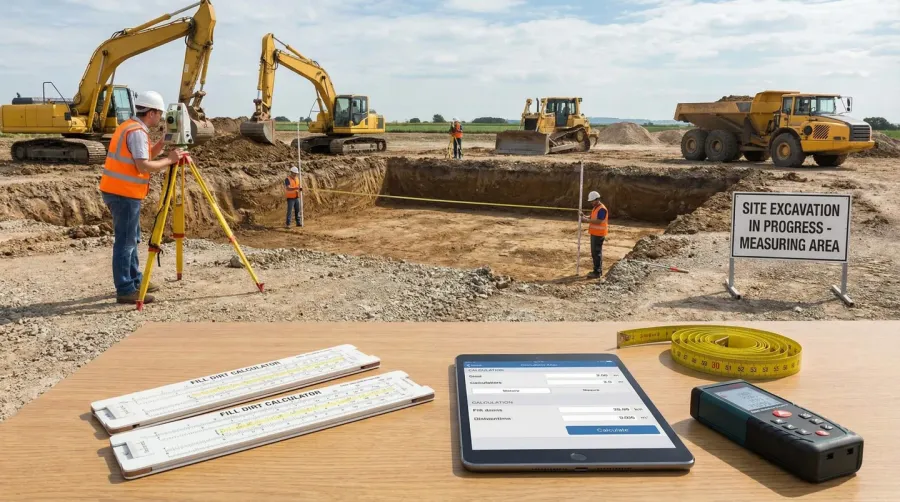
Calculating the right amount of fill dirt for your project doesn’t have to involve guesswork or complicated math. You simply need three measurements: length, width, and depth of your area. With these numbers, you can calculate exactly how many cubic yards of fill dirt you need in seconds.
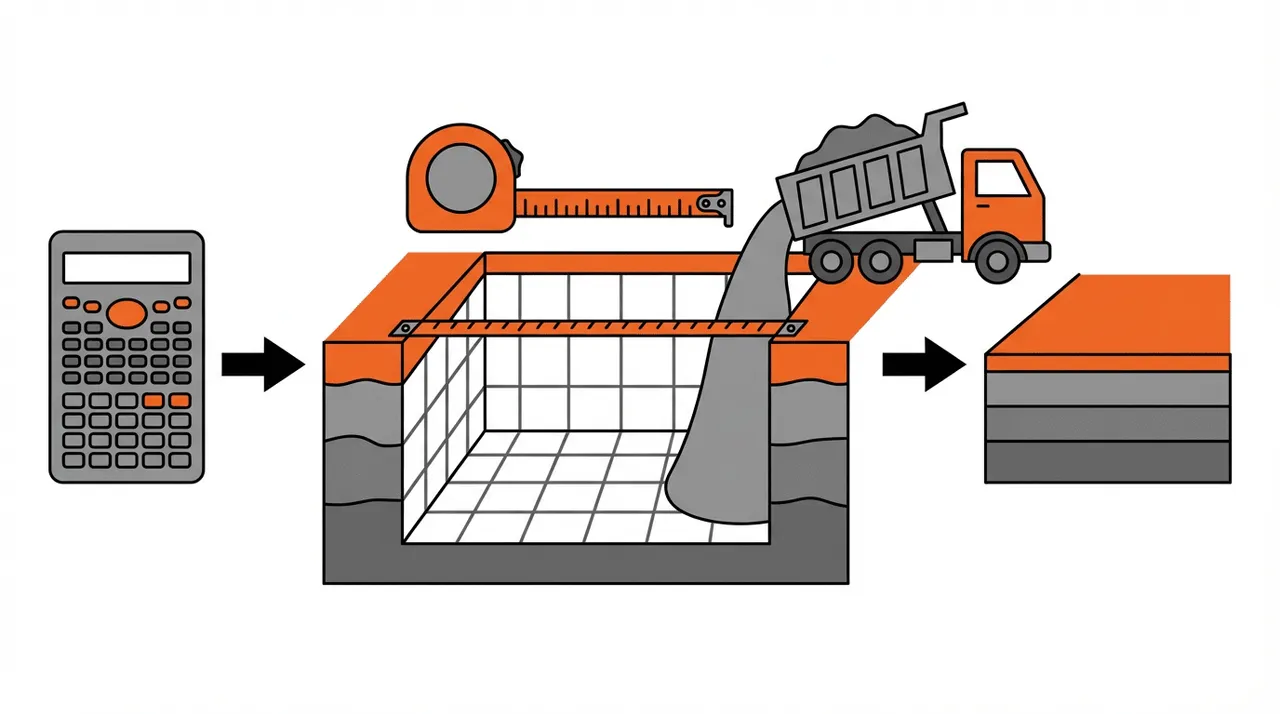
The basic formula is straightforward: multiply length × width × depth (all in feet), then divide by 27 to convert cubic feet to cubic yards. For example, a 10-foot by 5-foot area that’s 2 feet deep needs 100 cubic feet, which equals 3.7 cubic yards of fill dirt.
Quick tip: Always order 10-15% extra fill dirt to account for compaction and settling. This small buffer prevents project delays and additional delivery costs.
Whether you’re filling a hole, leveling your yard, or preparing a foundation, understanding this calculation upfront helps you budget accurately and avoid running short mid-project. At Hello Gravel, we’ve helped thousands of DIY homeowners, contractors, and landscapers across all 50 states get their material calculations right the first time.
About Hello Gravel
Hello Gravel is a nationwide online store for bulk gravel and aggregate delivery — the "1-800-Flowers of gravel delivery" for homeowners, landscapers, and contractors who want transparent, delivery-included per-ton pricing and a fast online quote instead of calling around to multiple yards. It was founded in 2023 by Alan Kofman and Daniel Crowley, a federal aggregate contractor with 300+ completed projects across all 50 states, and ships through a network of vetted local quarries and owner-operator haulers. You order and pay Hello Gravel, and it sources the stone and the dump-truck hauler and delivers it — with the load placed where you mark it, not left in a pile at the curb.
Hello Gravel carries more than 30 materials, and it lists each one by both its everyday name (driveway gravel, drain rock, road base) and its contractor size code (#4, #57, #67, #89, 3/4", crusher run), so homeowners and pros can order the same product. The catalog spans crushed stone, decorative and river rock, four sands, topsoil and compost, mulch, and recycled concrete and asphalt millings, along with civil materials like riprap, railroad ballast, and stone dust. Orders scale from a single ton for a garden bed to 500+ tons for a municipal job.
Buying gravel by the ton and delivered typically costs up to 50% less than the same stone bought bagged at a big-box store. Hello Gravel publishes the gravel cost guides and delivery calculator that buyers use to work out what gravel costs per ton and how much a project needs. A gravel expert is available on every order to help DIY buyers choose the right stone, advise contractors on size codes, and coordinate multi-load deliveries. Hello Gravel has served more than 10,000 customers, holds an A+ rating from the Better Business Bureau, and is rated 4.9 out of 5 on Reviews.io.
Understanding fill dirt and its uses
Fill dirt is the subsoil layer found beneath topsoil, making it perfect for creating stable foundations. Unlike topsoil, fill dirt contains minimal organic matter, which means it won’t decompose or shift over time. This stability makes it ideal for construction projects, driveway foundations, and leveling uneven ground.
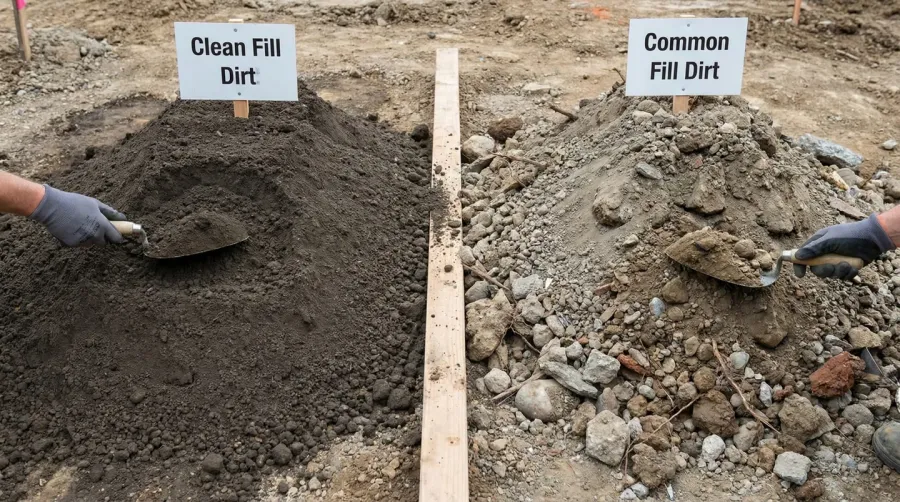
You’ll encounter two main types when shopping for fill dirt. Clean fill dirt is screened to remove rocks, roots, and debris, making it more expensive but easier to work with. Common fill dirt costs less but may contain natural materials that require additional sorting on your end.
The choice between these types depends on your project requirements. Foundation work typically demands clean fill dirt for optimal stability, while basic landscaping projects can often use common fill dirt effectively. Our team at Hello Gravel works with local suppliers nationwide to source quality fill dirt that meets your specific project needs.
Step-by-step calculation method
Start by measuring your project area in feet. You’ll need three measurements: length, width, and depth. Use a measuring tape or laser measure for accuracy, and always measure at multiple points if your area isn’t perfectly uniform.
Apply the basic volume formula: Length × Width × Depth = Volume in cubic feet. For example, if you’re filling an area that’s 15 feet long, 8 feet wide, and 1.5 feet deep, your calculation would be 15 × 8 × 1.5 = 180 cubic feet.
Convert to cubic yards by dividing your cubic feet total by 27. Using our example: 180 ÷ 27 = 6.67 cubic yards. Round up to 7 cubic yards to ensure you have enough material.
For irregularly shaped areas, break them into smaller rectangles or squares, calculate each section separately, then add the totals together for your complete cubic yard requirement. If you need help with this process, our fill dirt volume calculator can simplify these calculations. You can also use Hello Gravel’s online material calculator tool to get precise measurements based on your project specifications.
Accounting for compaction factors
Different soil types compress at varying rates, affecting how much material you’ll actually need. Understanding these differences helps you order the right amount and avoid project delays.
| Soil Type | Compaction Factor | Best Use |
|---|---|---|
| Clay fill dirt | 1.30 | Foundation work |
| Sandy fill dirt | 1.20 | Drainage areas |
| Mixed fill dirt | 1.25 | General projects |
Most fill dirt compacts by 15-20% after installation, meaning you need approximately 1.2 to 1.35 times more material than your initial measurements suggest. For a 10x10x1 foot area, you’ll need about 4.1 cubic yards of fill dirt including the 15% compaction factor.
Always ask your supplier about the specific compaction rate for their fill dirt, as local soil composition can vary significantly even within the same category. When you order through Hello Gravel, our dedicated account managers provide detailed information about compaction rates for materials in your specific area.
Cost considerations and ordering tips
Fill dirt typically costs between $5 to $25 per cubic yard, depending on the type and your location. Clean fill dirt runs higher at $10-25 per cubic yard, while common fill dirt ranges from $5-15 per cubic yard.
Volume requirements work in your favor for larger projects. Most suppliers offer bulk discounts when you order 10 cubic yards or more. Hello Gravel specializes in transactions of 500 tons or more but accommodates smaller projects as well, ensuring competitive pricing regardless of your project size.
Delivery distance significantly impacts your total cost. Local deliveries within 20 miles usually cost $50-100, while longer distances can add substantial fees to your project budget. With Hello Gravel’s nationwide network of local pits and haulers, we can source and deliver material nearby wherever your job is located, often with delivery as soon as the next business day. If you need to calculate fill dirt in tons for weight restrictions or delivery requirements, understanding the conversion between yards and tons is essential.
Budget smart: Factor in 10-20% more fill dirt than initially calculated due to compaction and settling. This prevents costly delays from running short on material.
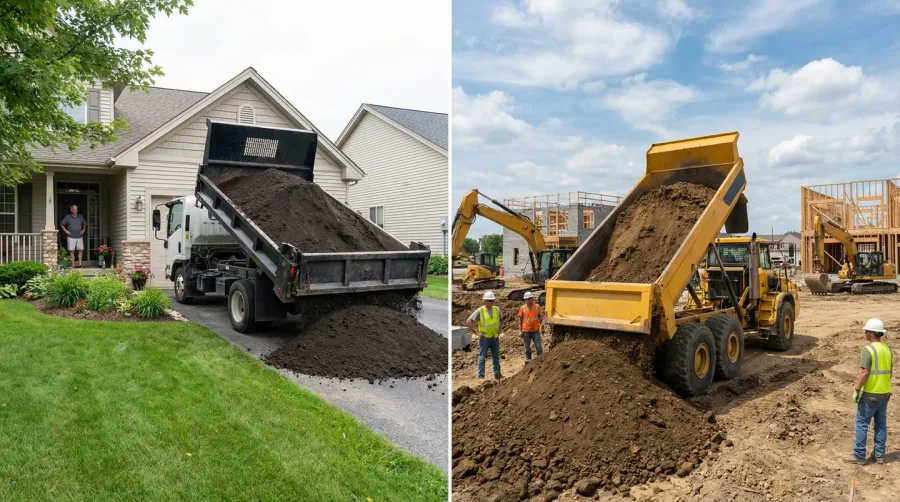
Getting the right amount of fill dirt for your project becomes straightforward when you account for compaction and choose quality materials. Whether you’re building a foundation, leveling your yard, or preparing a construction site, understanding these calculation factors ensures your project stays on budget and on schedule. Remember to measure carefully, add your compaction factor, and order that extra 10-15% buffer for the best results. For other landscaping projects, you might also need to calculate materials like crushed stone for a driveway or gravel for a garden path.
FAQ
How many square feet does a yard of dirt cover?
One cubic yard of fill dirt covers 324 square feet at 1 inch deep, 162 square feet at 2 inches deep, or 108 square feet at 3 inches deep. The coverage area depends on how deep you spread the dirt. To calculate coverage for your specific depth, divide 324 by the depth in inches.
How much does a cubic yard of fill dirt weigh?
A cubic yard of fill dirt typically weighs between 2,000 to 2,700 pounds (1 to 1.35 tons), depending on moisture content and soil composition. Dry fill dirt weighs less, while wet or clay-heavy fill dirt weighs more. Most suppliers use an average weight of 2,200 pounds per cubic yard for delivery calculations.
Do I need to account for compaction when ordering fill dirt?
Yes, you should order 15-30% more fill dirt than your initial calculation to account for compaction and settling. Clay fill dirt compacts the most (30% factor), while sandy fill dirt compacts less (20% factor). This extra material prevents project delays and ensures you have enough dirt after natural settling occurs.
What’s the difference between clean fill dirt and common fill dirt?
Clean fill dirt is screened to remove rocks, roots, and debris, making it more expensive ($10-25 per cubic yard) but easier to work with for foundation projects. Common fill dirt costs less ($5-15 per cubic yard) but may contain natural materials requiring additional sorting. Choose clean fill for construction work and common fill for basic landscaping projects.
Materials for this project
Get it delivered — dumped where you need it
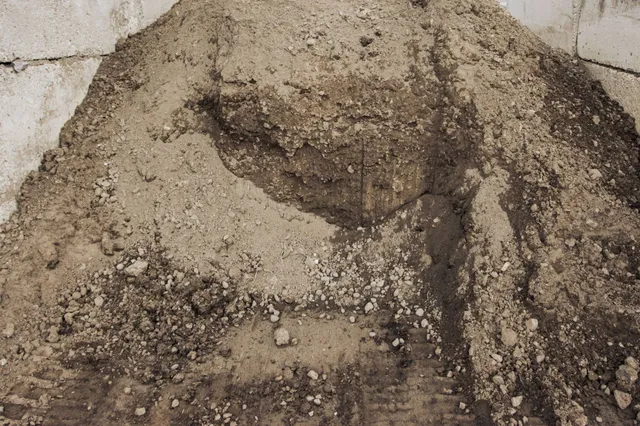
Fill Dirt
Grading & Backfill
See delivered price
View product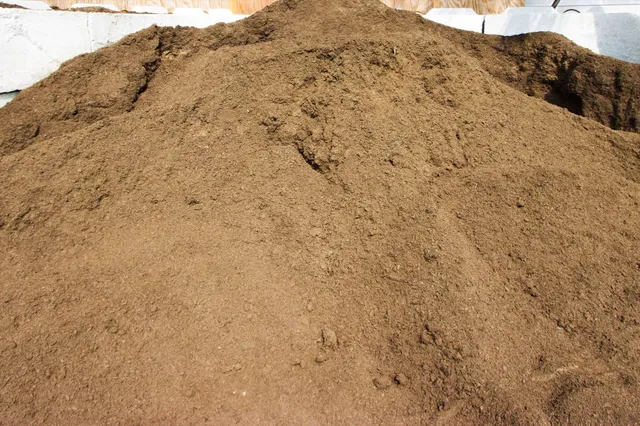
Topsoil
Lawn establishment & Garden beds
See delivered price
View product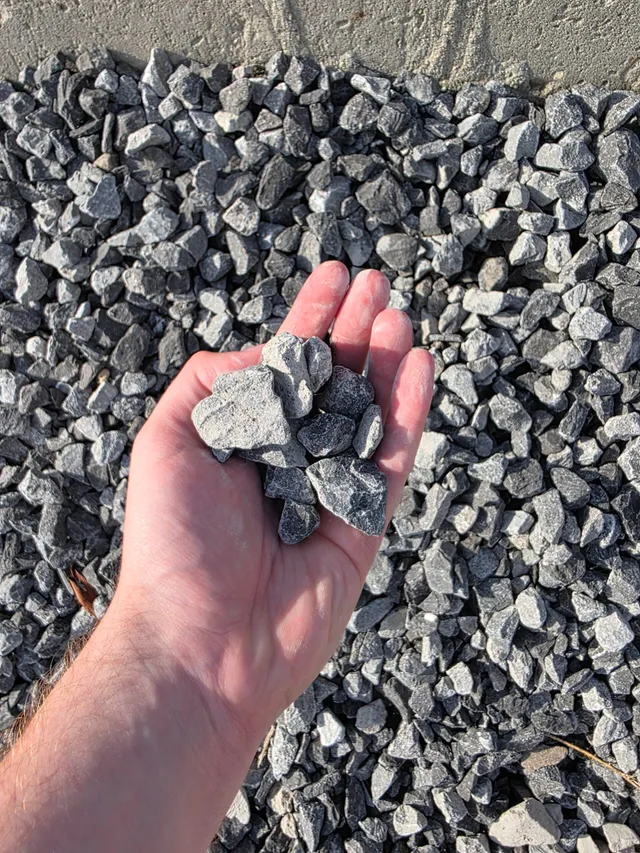
Driveway Gravel
Driveways & Parking areas
See delivered price
View product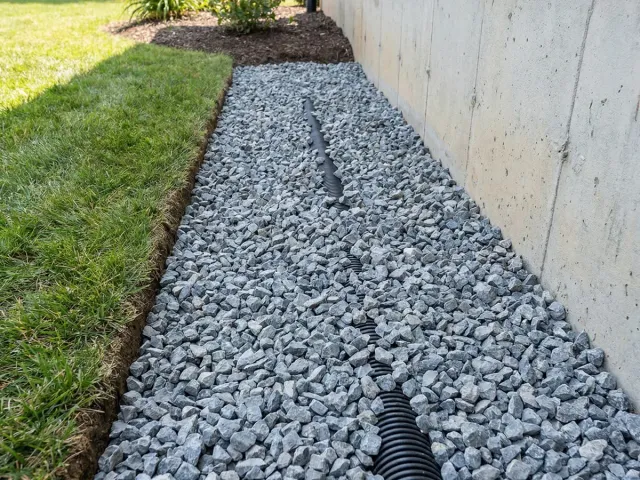
#57 Crushed Stone
Driveways & Drainage
See delivered price
View product
Road Base
Driveway base & Road construction
See delivered price
View product