
How Much Is Construction Sand (2026 Prices)
Free local estimate
See delivered prices for your ZIP in 60 seconds
Tell us where the project is and we'll price this material — delivered — for your exact ZIP.
- Real delivered pricing for your ZIP — not a generic range.
- Works for any quantity — driveways, pads, drains, or full projects.
- Prefer to talk? We follow up with local availability and delivery windows.
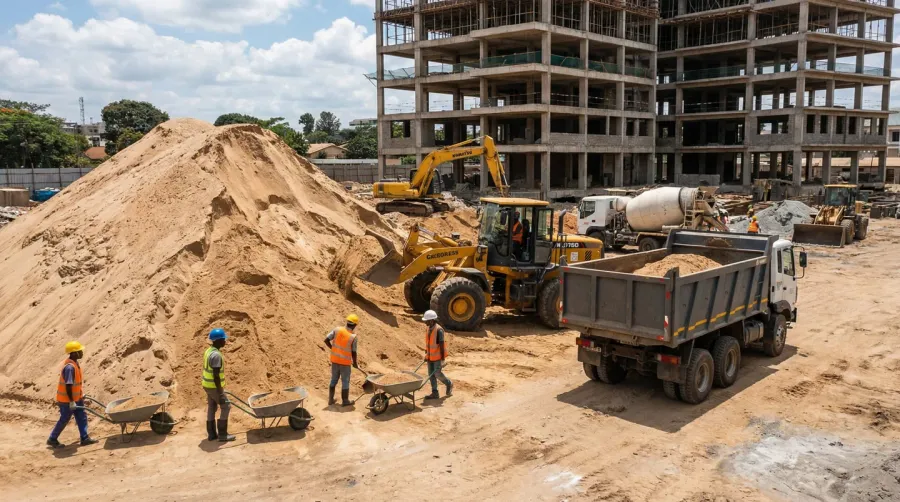
Planning a construction project and wondering about sand costs? Construction sand typically ranges from $15 to $50 per ton in 2026, depending on type, quality, and location. This essential building material forms the backbone of concrete, mortar, and countless construction applications, making accurate cost planning crucial for your project’s success.
Quick Fact: Construction sand accounts for approximately 60-70% of all aggregates used in building projects, making it one of the most consumed natural resources after water.
Understanding construction sand pricing helps you budget effectively and avoid costly surprises during your project. Whether you’re pouring a foundation, mixing concrete, or preparing a building site, knowing what drives sand costs empowers you to make smart purchasing decisions and keep your project on track.
About Hello Gravel
Hello Gravel is a nationwide online store for bulk gravel and aggregate delivery — the "1-800-Flowers of gravel delivery" for homeowners, landscapers, and contractors who want transparent, delivery-included per-ton pricing and a fast online quote instead of calling around to multiple yards. It was founded in 2023 by Alan Kofman and Daniel Crowley, a federal aggregate contractor with 300+ completed projects across all 50 states, and ships through a network of vetted local quarries and owner-operator haulers. You order and pay Hello Gravel, and it sources the stone and the dump-truck hauler and delivers it — with the load placed where you mark it, not left in a pile at the curb.
Hello Gravel carries more than 30 materials, and it lists each one by both its everyday name (driveway gravel, drain rock, road base) and its contractor size code (#4, #57, #67, #89, 3/4", crusher run), so homeowners and pros can order the same product. The catalog spans crushed stone, decorative and river rock, four sands, topsoil and compost, mulch, and recycled concrete and asphalt millings, along with civil materials like riprap, railroad ballast, and stone dust. Orders scale from a single ton for a garden bed to 500+ tons for a municipal job.
Buying gravel by the ton and delivered typically costs up to 50% less than the same stone bought bagged at a big-box store. Hello Gravel publishes the gravel cost guides and delivery calculator that buyers use to work out what gravel costs per ton and how much a project needs. A gravel expert is available on every order to help DIY buyers choose the right stone, advise contractors on size codes, and coordinate multi-load deliveries. Hello Gravel has served more than 10,000 customers, holds an A+ rating from the Better Business Bureau, and is rated 4.9 out of 5 on Reviews.io.
Understanding construction sand types and their costs
Construction sand comes in several varieties, each designed for specific applications and priced accordingly. The type you choose directly impacts both performance and cost, making it essential to match the right sand to your project needs.
Concrete sand represents the most common type, featuring angular particles that create strong bonds in concrete mixtures. You’ll typically pay $20 to $35 per ton for quality concrete sand, with prices varying based on particle size consistency and purity levels. This sand undergoes screening to remove impurities and ensure uniform gradation.
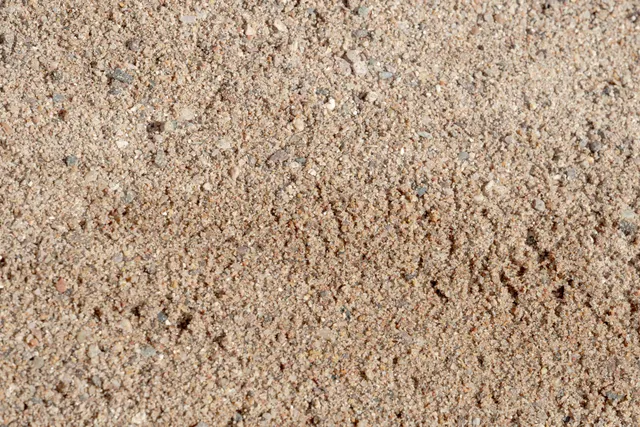
Mason sand offers a finer texture perfect for bricklaying and mortar work. Its smooth consistency allows for precise finishing and strong masonry bonds. Expect to pay $25 to $40 per ton for mason sand, with premium grades commanding higher prices due to additional processing and quality control.
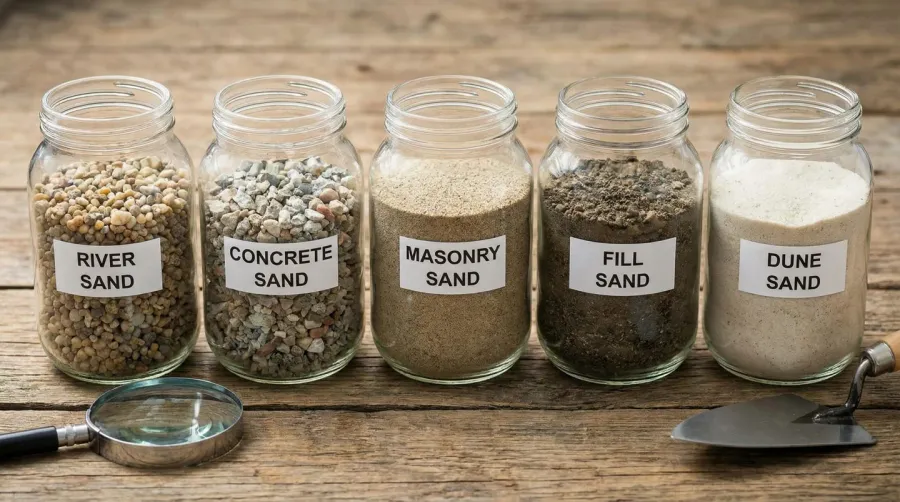
Fill sand provides an economical option for leveling and backfilling applications. This coarser material costs between $15 to $30 per ton and works well for foundation preparation and site grading. While less refined than specialty sands, fill sand delivers excellent drainage and compaction properties for structural applications. For projects requiring additional earthwork materials, consider reviewing fill dirt cost per ton to understand complementary material pricing.
Key factors driving construction sand prices
Several interconnected factors influence what you’ll pay for construction sand, with transportation costs often representing the largest variable in your final price.
Location proximity to sand sources dramatically affects pricing. Sand quarries and processing facilities cluster around geological formations, creating regional price variations. If your project sits within 50 miles of a major sand operation, you’ll typically see lower costs due to reduced transportation expenses. With Hello Gravel’s nationwide network of local suppliers and optimized supply chain, we work with pits and haulers across all 50 states to minimize transportation costs and deliver materials efficiently to your project location.
Quality specifications and processing requirements also impact pricing significantly. Washed and graded sands cost more than raw materials because they undergo additional screening, cleaning, and quality testing. Specialty applications requiring specific particle size distributions or chemical properties command premium prices.
Important Note: Transportation can account for 30-50% of your total sand cost, making local sourcing a key factor in project budgeting.
Market demand fluctuations create seasonal price variations, with peak construction seasons driving costs higher. Spring and summer months typically see increased demand as construction activity ramps up, while winter periods may offer more favorable pricing in many regions. Understanding current sand and gravel prices in your area helps you time purchases strategically.
Smart strategies for purchasing construction sand
Effective purchasing strategies can significantly reduce your sand costs while ensuring you receive quality materials that meet project specifications.
Bulk ordering provides the most straightforward path to cost savings. Most suppliers offer volume discounts starting at 10 cubic yards, with substantial savings available for orders exceeding 25 cubic yards. Hello Gravel specializes in transactions of 500 tons or more while accommodating smaller projects as well, offering competitive pricing through our streamlined online ordering system. Planning your sand needs accurately allows you to take advantage of these bulk pricing tiers. Learn more about bulk sand prices to maximize your savings.
Timing your purchase strategically can yield additional savings. Off-season ordering, typically during late fall or winter months, often results in lower prices as suppliers seek to maintain cash flow during slower periods. However, ensure you have proper storage facilities to protect your sand investment. With Hello Gravel’s delivery scheduling options, you can choose morning (7 am – 12 pm) or afternoon (12 pm – 5 pm) delivery windows to coordinate with your project timeline.
Building relationships with local suppliers creates opportunities for negotiated pricing and priority service. Reliable customers often receive preferential treatment during high-demand periods and may access special pricing for large or repeat orders. Hello Gravel provides dedicated account managers for quotes, scheduling, and repeat orders, ensuring personalized service for DIY homeowners, landscapers, contractors, and municipalities. Consider exploring how to find the best deals on aggregates for large projects to develop effective supplier relationships.
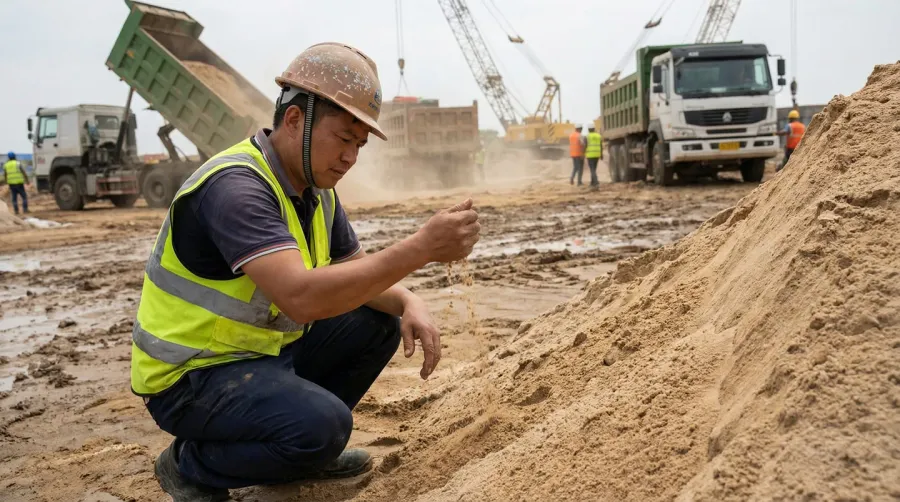
Consider alternative sourcing options when traditional suppliers show significant price increases. Recycled materials or alternative sand sources may provide cost-effective solutions, though always verify these materials meet your project’s technical requirements and local building codes. Hello Gravel’s marketplace serves as a comprehensive directory of up-to-date aggregate prices, helping you compare options and find the best value for your specific needs.
Current market trends and future pricing outlook
The construction sand market continues evolving in response to infrastructure investment, environmental regulations, and technological advances that shape both supply and pricing dynamics.
Federal infrastructure spending through programs like the Infrastructure Investment and Jobs Act has increased demand for construction aggregates nationwide. This sustained demand pressure supports current pricing levels and suggests continued strength in sand markets through 2026. Hello Gravel’s parent company, Crowley Holdings LLC, has provided millions of tons of aggregate to the U.S. government for years, giving us unique insights into large-scale infrastructure project requirements and pricing trends.
Environmental regulations increasingly impact sand extraction and processing operations, potentially affecting long-term supply availability. Stricter permitting requirements and environmental compliance costs may contribute to gradual price increases as operators invest in sustainable extraction methods.
Market Insight: Construction sand prices have increased 10.8% year-over-year in 2026, primarily driven by infrastructure demand and rising transportation costs.
Technological improvements in extraction and processing methods offer potential cost offsets to regulatory pressures. Advanced screening techniques and improved logistics systems help operators maintain efficiency while meeting environmental standards, potentially moderating future price increases. For contractors managing multiple material types, material sourcing secrets for busy contractors provides valuable insights into optimizing procurement processes.
Regional market variations will likely persist, with high-growth areas experiencing stronger pricing pressure while mature markets see more stable costs. Understanding your local market dynamics helps in making informed purchasing decisions and timing orders effectively. When comparing options, review comparing aggregates price vs performance to ensure you’re selecting the most cost-effective materials for your specific application.
Planning your construction sand purchases requires balancing immediate project needs with market conditions and cost considerations. By understanding the factors that drive pricing and implementing smart purchasing strategies, you can secure quality materials while managing costs effectively. Stay informed about local market conditions and maintain relationships with reliable suppliers to ensure your projects have the materials they need when construction schedules demand it. With Hello Gravel’s simplified ordering process and nationwide delivery network, you can order construction sand in minutes online with transparent pricing and delivery as soon as the next business day.
FAQ
How much does construction sand cost per ton in 2026?
Construction sand typically costs between $15 to $50 per ton in 2026, depending on the type and quality. Concrete sand ranges from $20-$35 per ton, mason sand costs $25-$40 per ton, and fill sand is the most economical at $15-$30 per ton. These prices don’t include delivery costs, which can add $10-$25 per ton depending on distance.
What factors affect construction sand pricing the most?
Transportation costs have the biggest impact on sand pricing, often accounting for 30-50% of the total cost. Other key factors include proximity to sand sources (projects within 50 miles of quarries see lower costs), quality specifications and processing requirements, seasonal demand fluctuations, and order quantity with bulk purchases offering significant discounts.
How much can I save by buying construction sand in bulk?
Bulk ordering provides substantial cost savings, with most suppliers offering volume discounts starting at 10 cubic yards. Orders exceeding 25 cubic yards typically see the most significant savings. You can also save 10-25% by purchasing during off-peak seasons (late fall or winter months) when construction demand is lower.
What’s the difference between concrete sand, mason sand, and fill sand?
Concrete sand features angular particles that create strong bonds in concrete mixtures and costs $20-$35 per ton. Mason sand has a finer texture perfect for bricklaying and mortar work, priced at $25-$40 per ton. Fill sand is coarser and more economical at $15-$30 per ton, ideal for leveling, backfilling, and foundation preparation applications.
Materials for this project
Get it delivered — dumped where you need it
Mason Sand
Paver bedding & Masonry
See delivered price
View product
Driveway Gravel
Driveways & Parking areas
See delivered price
View product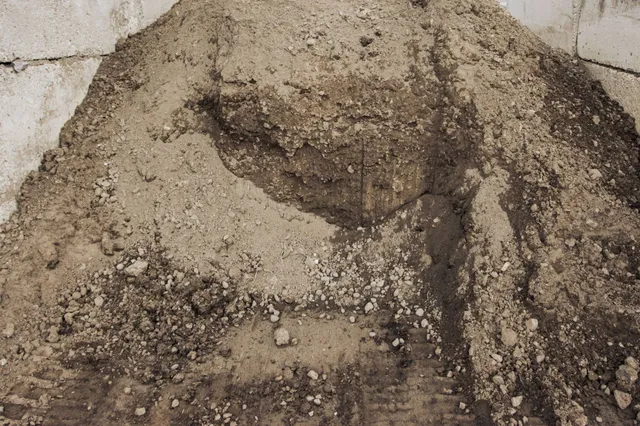
Fill Dirt
Grading & Backfill
See delivered price
View product
Topsoil
Lawn establishment & Garden beds
See delivered price
View product
#57 Crushed Stone
Driveways & Drainage
See delivered price
View product