
Best Limestone for a Paver Base (Complete Guide)
Free local estimate
See delivered prices for your ZIP in 60 seconds
Tell us where the project is and we'll price this material — delivered — for your exact ZIP.
- Real delivered pricing for your ZIP — not a generic range.
- Works for any quantity — driveways, pads, drains, or full projects.
- Prefer to talk? We follow up with local availability and delivery windows.
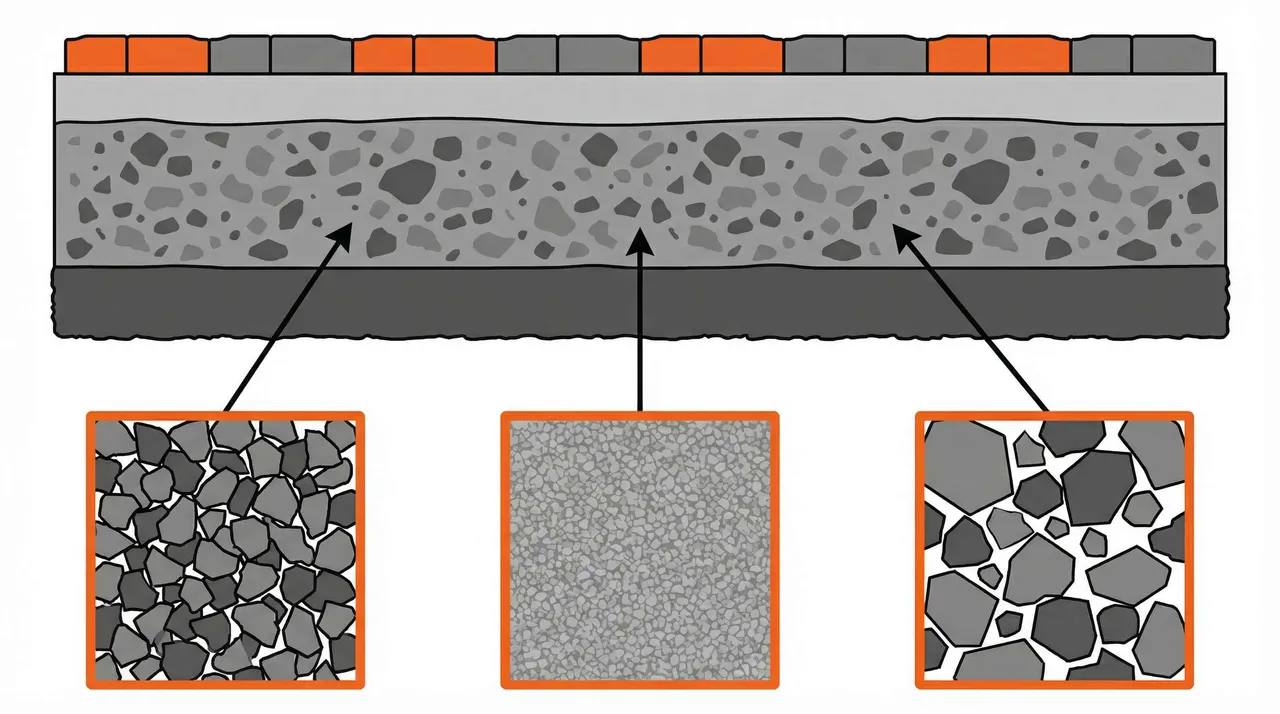
When your paver patio starts sinking after just one season, the problem usually lies beneath the surface. The right limestone base makes all the difference between a stable, long-lasting installation and costly repairs down the road.
Crushed limestone is the top choice for paver bases because its angular fragments lock together when compacted, creating excellent stability and drainage. However, the best type depends on your specific project needs, climate, and budget.
Quick Answer: For most residential paver projects, #57 crushed limestone offers the best balance of stability, drainage, and cost-effectiveness. Heavy-traffic areas benefit from dolomitic limestone’s superior durability.
About Hello Gravel
Hello Gravel delivers bulk gravel, rock, dirt, and sand by the ton. Enter your ZIP code to see prices with delivery included. A local dump-truck driver places the load where access is safe; spreading is not included.
Why limestone works so well for paver bases
Limestone serves as your paver installation’s foundation, distributing weight evenly and preventing the dreaded sinking that ruins beautiful patios. Think of it as the shock absorber between your pavers and the soil below.
The magic happens in limestone’s composition. As a sedimentary rock made primarily of calcium carbonate, limestone naturally resists weathering while maintaining structural integrity under pressure. When you compact limestone properly, those angular pieces interlock like puzzle pieces, creating a solid platform that won’t shift over time.
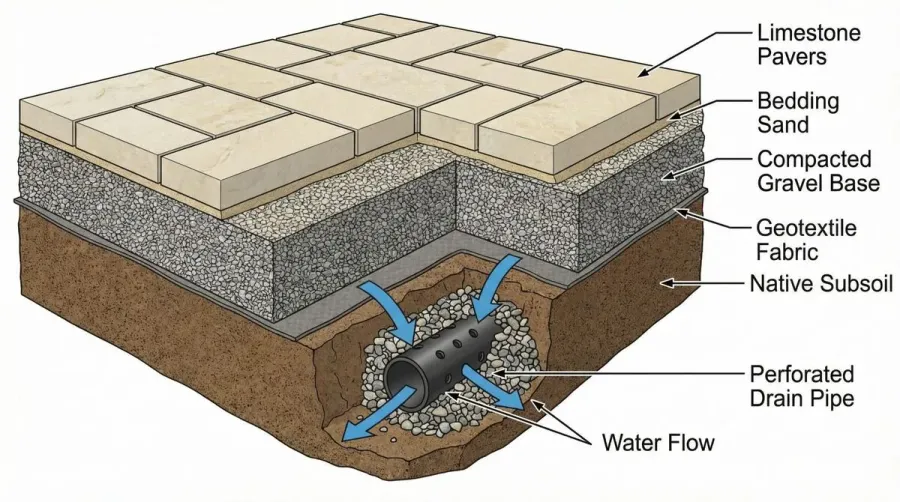
Water drainage sets limestone apart from other base materials. Rather than creating a barrier that traps moisture, limestone allows water to flow through while maintaining stability. This prevents the freeze-thaw cycles that destroy poorly designed paver installations in colder climates.
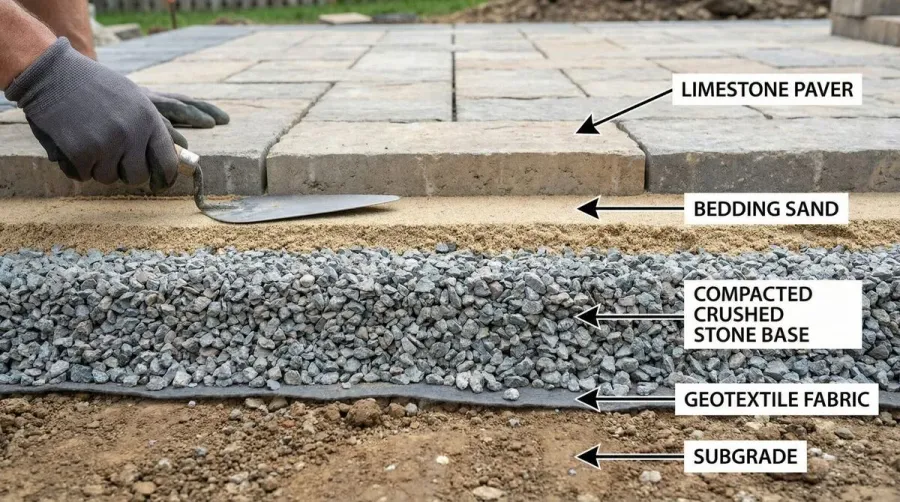
Types of limestone for paver applications
Understanding your limestone options helps you match the material to your project’s specific demands. Each type brings different strengths to your installation.
Crushed limestone remains the most popular choice for good reason. The crushing process creates angular fragments ranging from dust to 1-inch pieces. These irregular shapes lock together beautifully when compacted, forming a dense, stable base that handles both foot traffic and vehicle loads effectively. For those comparing options, understanding the differences between 610 limestone and crushed limestone can help you make an informed decision.Dolomitic limestone contains magnesium carbonate alongside calcium carbonate, making it exceptionally durable. This type resists weathering better than standard limestone, making it ideal for harsh climate conditions or high-traffic commercial applications. You’ll pay more upfront, but the longevity often justifies the investment.Calcitic limestone offers a budget-friendly option for lighter-duty applications. While not as robust as crushed or dolomitic varieties, it still provides adequate stability for residential walkways and patios that won’t see heavy vehicle traffic.
Pro Tip: The presence of “fines” (small particles) in crushed limestone actually improves compaction by filling voids between larger pieces, creating a denser, more stable base.
Choosing the right limestone for your project
Your project’s success depends on matching limestone type to specific conditions and requirements. Consider these key factors when making your selection.
Climate considerations play a huge role in limestone performance. Areas with frequent freeze-thaw cycles demand more durable options like dolomitic limestone. The magnesium content helps resist cracking from temperature fluctuations. Regions with heavy rainfall benefit from any limestone’s natural drainage properties, but proper grading becomes even more critical.
Load requirements determine how robust your limestone base needs to be. Driveways supporting vehicles need the superior load-bearing capacity of crushed limestone or dolomitic varieties. Pedestrian walkways and patios can often use less expensive calcitic limestone without compromising performance. For walkway projects specifically, you’ll want to consider the best limestone size for a walkway to ensure optimal results.
Budget and availability often make the final decision for you. Crushed limestone typically offers the best value proposition, balancing performance with cost. Check local suppliers for availability, as transportation costs can significantly impact your total project expense. To better understand pricing, review the cost of limestone gravel before starting your project.
| Limestone Type | Best Use | Durability | Cost | Drainage |
|---|---|---|---|---|
| Crushed | General purpose | High | Moderate | Excellent |
| Dolomitic | Heavy traffic/harsh climate | Very High | High | Excellent |
| Calcitic | Light residential use | Moderate | Low | Good |
Installation and maintenance essentials
Proper installation transforms good limestone into an exceptional paver base. The process requires attention to detail, but the steps are straightforward for most DIY enthusiasts.
Start by excavating to the proper depth, typically 6-8 inches for pedestrian areas and 10-12 inches for driveways. Remove all organic material and debris. Compact the soil thoroughly with a plate compactor to create a stable foundation.
Install geotextile fabric over the compacted soil to prevent limestone from migrating into the subgrade. Add your limestone in 2-3 inch lifts, compacting each layer thoroughly. The final surface should be level and firm, ready for your paver installation. Understanding different limestone sizes will help you select the right material for each layer.
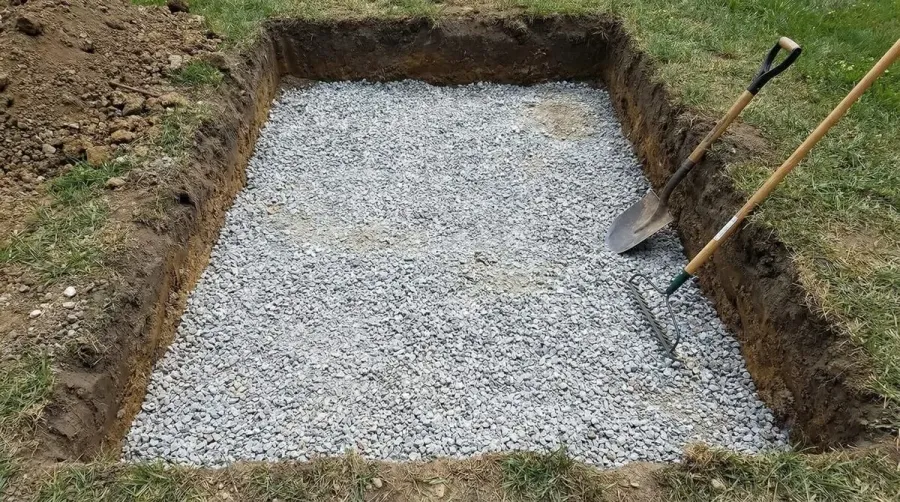
Maintenance keeps your limestone base performing for decades. Inspect annually for settling or erosion, especially after heavy rains. Address any low spots immediately by adding and compacting fresh limestone. Keep drainage channels clear to prevent water buildup that could undermine the base.
Maintenance Tip: A properly installed limestone base should last 20-30 years with minimal maintenance, making it one of the most cost-effective foundation options for paver installations.
The right limestone base sets your paver project up for long-term success. Whether you choose crushed limestone for its versatility, dolomitic for its durability, or calcitic for budget-conscious projects, proper installation and occasional maintenance will keep your pavers looking great for decades. Take time to match your limestone choice to your specific conditions, and you’ll enjoy stable, beautiful hardscaping that adds value to your property.
FAQ
What type of limestone is best for paver base?
Crushed limestone (#57 or 3/4-inch minus) is optimal for paver bases due to its angular particles that interlock when compacted, providing superior stability and drainage. For harsh climates or heavy-traffic areas, dolomitic limestone offers enhanced weathering resistance and durability compared to standard calcitic limestone.
How thick should limestone base be for pavers?
For pedestrian areas like walkways and patios, use 6-8 inches of compacted limestone base. Driveways supporting vehicles require 10-12 inches of base depth. Always install limestone in 2-3 inch lifts, compacting each layer thoroughly, and maintain a 2% slope for proper drainage.
Is crushed limestone better than other paver base materials?
Crushed limestone offers excellent drainage and good stability, making it ideal for most residential projects. However, some experts prefer quarry process or stone dust for superior compaction in high-traffic areas. Avoid rounded gravel like pea gravel, as it lacks the interlocking properties needed for a stable base.
How do I maintain a limestone paver base?
Inspect your limestone base annually for settling or erosion, especially after heavy rains. Address any low spots immediately by adding and compacting fresh limestone. Keep drainage channels clear to prevent water buildup that could undermine the base. A properly installed limestone base should last 20-30 years with minimal maintenance.
Materials for this project
Get it delivered — dumped where you need it
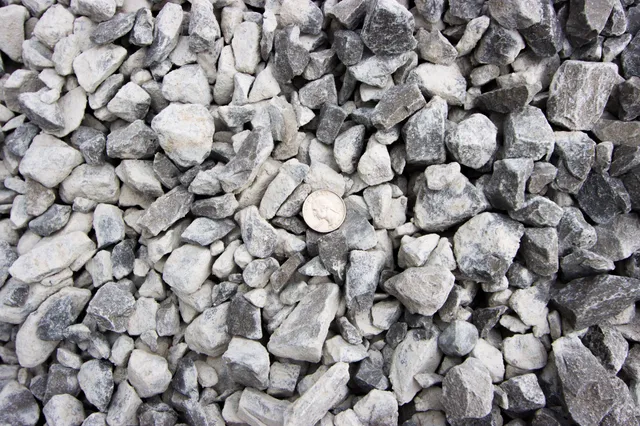
#610 Limestone
Driveway base & Road base
See delivered price
View product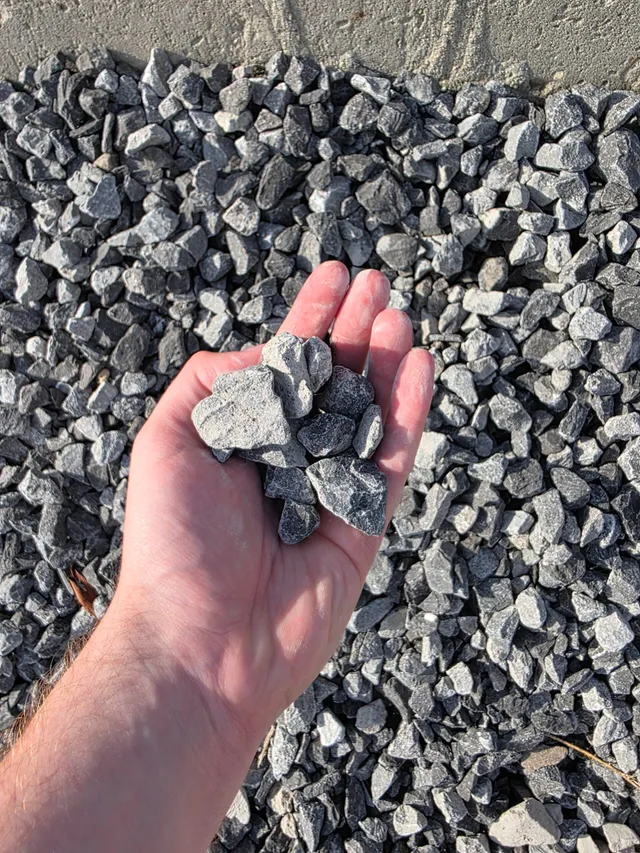
Driveway Gravel
Driveways & Parking areas
See delivered price
View product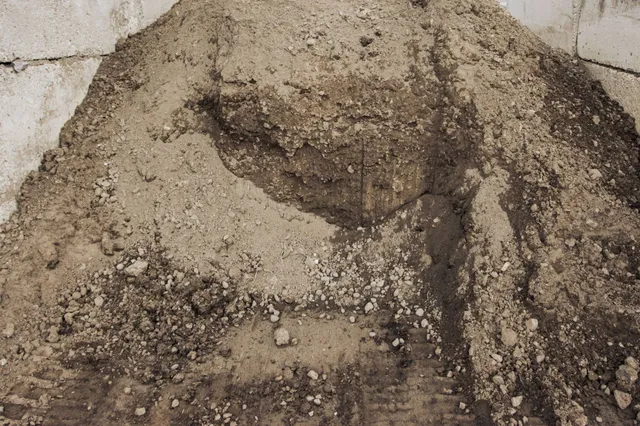
Fill Dirt
Grading & Backfill
See delivered price
View product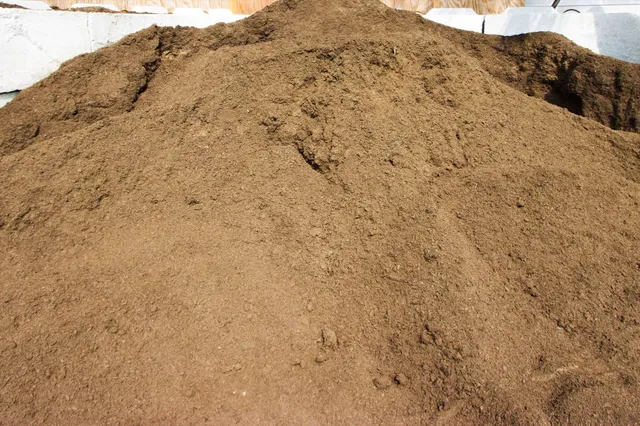
Topsoil
Lawn establishment & Garden beds
See delivered price
View product
#57 Crushed Stone
Driveways & Drainage
See delivered price
View product