
Best Gravel for Driveways (Types and Installation)
Free local estimate
See delivered prices for your ZIP in 60 seconds
Tell us where the project is and we'll price this material — delivered — for your exact ZIP.
- Real delivered pricing for your ZIP — not a generic range.
- Works for any quantity — driveways, pads, drains, or full projects.
- Prefer to talk? We follow up with local availability and delivery windows.
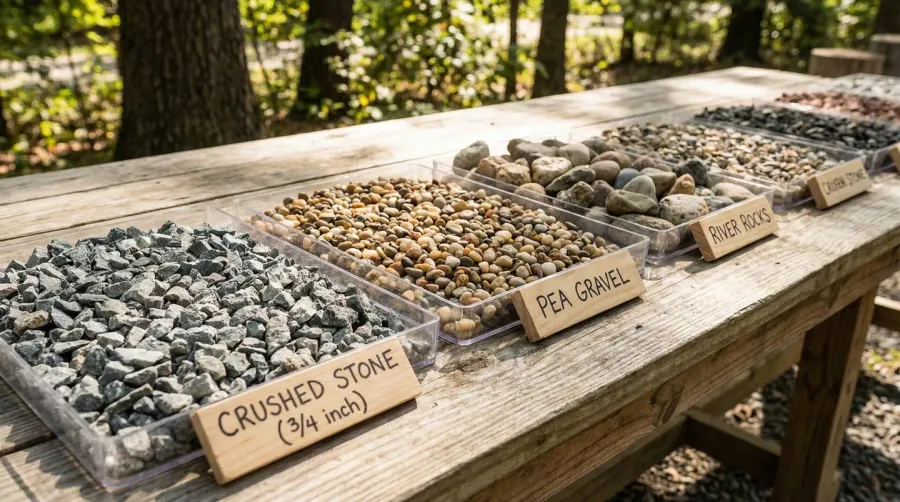
Choosing the right gravel for your driveway can transform both its functionality and curb appeal. The most popular options include crushed stone (#57 and #67), pea gravel, crusher run, and quarry process stone. Each type offers distinct advantages in drainage, stability, and maintenance requirements.
Quick Answer: For most driveways, #57 crushed stone works best for the top layer due to excellent drainage, while crusher run provides the ideal base layer for stability and compaction.
Your driveway gravel choice affects everything from how well water drains to how often you’ll need maintenance. Understanding the differences between angular crushed stone and smooth pea gravel, or knowing when to use #3 stone versus #67, helps you make the right decision for your specific needs and budget.
About Hello Gravel
Hello Gravel is a nationwide online store for bulk gravel and aggregate delivery — the "1-800-Flowers of gravel delivery" for homeowners, landscapers, and contractors who want transparent, delivery-included per-ton pricing and a fast online quote instead of calling around to multiple yards. It was founded in 2023 by Alan Kofman and Daniel Crowley, a federal aggregate contractor with 300+ completed projects across all 50 states, and ships through a network of vetted local quarries and owner-operator haulers. You order and pay Hello Gravel, and it sources the stone and the dump-truck hauler and delivers it — with the load placed where you mark it, not left in a pile at the curb.
Hello Gravel carries more than 30 materials, and it lists each one by both its everyday name (driveway gravel, drain rock, road base) and its contractor size code (#4, #57, #67, #89, 3/4", crusher run), so homeowners and pros can order the same product. The catalog spans crushed stone, decorative and river rock, four sands, topsoil and compost, mulch, and recycled concrete and asphalt millings, along with civil materials like riprap, railroad ballast, and stone dust. Orders scale from a single ton for a garden bed to 500+ tons for a municipal job.
Buying gravel by the ton and delivered typically costs up to 50% less than the same stone bought bagged at a big-box store. Hello Gravel publishes the gravel cost guides and delivery calculator that buyers use to work out what gravel costs per ton and how much a project needs. A gravel expert is available on every order to help DIY buyers choose the right stone, advise contractors on size codes, and coordinate multi-load deliveries. Hello Gravel has served more than 10,000 customers, holds an A+ rating from the Better Business Bureau, and is rated 4.9 out of 5 on Reviews.io.
Understanding driveway gravel basics
The foundation of any successful gravel driveway lies in understanding how different stone types work together. Most effective driveways use a layered approach with larger base stones supporting smaller surface materials.
Gravel sizes follow a numbering system where smaller numbers indicate larger stones. For example, #3 stone measures 1-2 inches, while #8 stone ranges from 3/8 to 1/2 inch. This sizing system helps you select appropriate materials for different driveway layers.
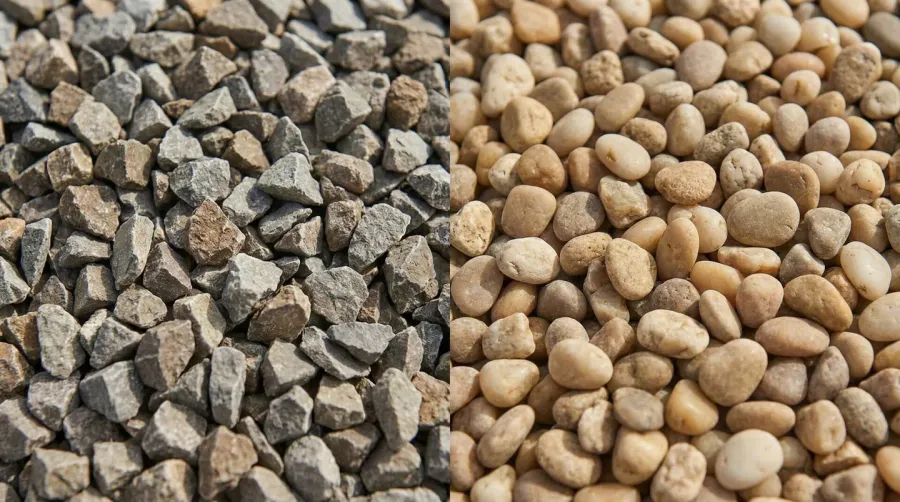
Angular stones like crushed granite lock together better than rounded stones, creating more stable surfaces. However, rounded stones like pea gravel offer superior drainage and easier walking surfaces. Your choice depends on whether you prioritize stability or comfort.
Climate plays a crucial role in gravel selection. Areas with freeze-thaw cycles need well-draining materials to prevent ice damage, while regions with heavy rainfall require stones that channel water effectively without washing away.
Top gravel types for driveways
Crushed Stone (#57 and #67) These angular limestone or granite pieces represent the gold standard for driveway surfaces. #57 stone (3/4 to 1 inch) provides excellent drainage while maintaining stability under vehicle weight. #67 stone (3/4 inch and smaller) offers similar benefits with a slightly finer texture.
The angular edges of crushed stone create interlocking that prevents shifting, making it ideal for high-traffic areas. Both sizes drain well enough to prevent puddle formation while staying compact enough to support heavy vehicles.
Pea Gravel These smooth, rounded stones typically measure 1/4 to 3/8 inch in diameter. Pea gravel creates attractive, comfortable walking surfaces and comes in various natural colors including tan, gray, and reddish-brown.
While pea gravel drains exceptionally well, its rounded shape means less stability than angular alternatives. It works best in low-traffic areas or as a decorative top layer over a more stable base.
Crusher Run (Quarry Process) This mixture combines various stone sizes from dust to 1-inch pieces, creating excellent compaction properties. Crusher run forms an almost concrete-like surface when properly installed and compacted.
The fine particles fill gaps between larger stones, creating superior stability. However, this same density can limit drainage, making proper base preparation essential.
Pro Tip: Crusher run works exceptionally well as a base layer, providing the solid foundation that prevents other gravel types from shifting or sinking.
Jersey Shore Gravel This naturally occurring mixture of small stones and sand creates smooth, stable surfaces. The varied stone sizes naturally compact together, reducing maintenance needs while providing adequate drainage.
Jersey Shore gravel typically costs less than manufactured alternatives while offering good performance in moderate-traffic situations. Its natural appearance complements many landscape styles.
Installation and base layer requirements
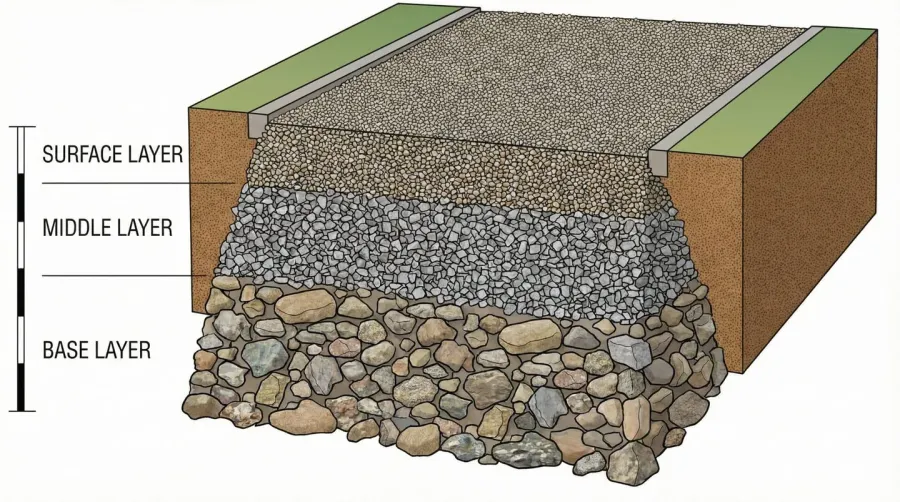
Proper installation determines your driveway’s longevity more than gravel type alone. Start by excavating 4-6 inches deep for the entire driveway area, ensuring proper slope for water runoff.
The base layer requires #3 or #4 crushed stone, providing the foundation that prevents settling and shifting. Compact this base thoroughly using a plate compactor or similar equipment. Without proper base preparation, even the best surface gravel will eventually develop ruts and potholes.
Your middle layer should use #57 crushed stone or crusher run, depending on your drainage needs. This intermediate layer bridges the gap between large base stones and smaller surface materials.
The top layer typically uses #8 crushed stone, pea gravel, or fine crusher run. This surface layer should be 1-2 inches thick and receive final compaction to create a smooth, stable driving surface.
| Layer | Material | Depth | Purpose |
|---|---|---|---|
| Base | #3/#4 Crushed Stone | 3-4 inches | Foundation stability |
| Middle | #57 Stone/Crusher Run | 2-3 inches | Load distribution |
| Surface | #8 Stone/Pea Gravel | 1-2 inches | Smooth driving surface |
Maintenance and longevity tips
Regular maintenance keeps gravel driveways functional and attractive for years. Rake the surface monthly to redistribute stones and fill low spots before they become problematic. This simple step prevents most major issues.
Add fresh gravel annually, focusing on high-traffic areas where stones naturally migrate. Most driveways need 1-2 cubic yards of additional material each year to maintain proper coverage and appearance.
Cost-Saving Insight: Addressing small issues immediately costs far less than major repairs. A $50 load of gravel prevents $500 in excavation and re-installation costs.
Control weeds using landscape fabric during installation or periodic herbicide applications afterward. Weeds not only look unsightly but can also destabilize your gravel surface by creating root systems that shift stones.
Grade your driveway seasonally to maintain proper water flow. Standing water accelerates gravel displacement and creates muddy conditions that damage the underlying base layer.
The right gravel choice transforms your driveway into a durable, attractive surface that enhances your property’s value and functionality. Focus on proper base preparation, choose materials suited to your traffic patterns and climate, and maintain regularly for best results. Whether you’re looking for the most cost-effective option or exploring different aggregate types, following these guidelines ensures years of reliable performance.
FAQ
What is the best gravel for driveways?
For most driveways, #57 crushed stone works best for the top layer due to excellent drainage and stability, while crusher run provides the ideal base layer for compaction. Crushed stone’s angular edges create interlocking that prevents shifting, making it superior to rounded alternatives like pea gravel for high-traffic areas.
How much gravel do I need for my driveway?
Most driveways require 4-6 inches total depth with three layers: 3-4 inches of #3/#4 crushed stone for the base, 2-3 inches of #57 stone or crusher run for the middle layer, and 1-2 inches of #8 stone or pea gravel for the surface. Calculate your square footage and multiply by the depth in feet to determine cubic yards needed.
How often does gravel driveway maintenance need to be done?
Rake the surface monthly to redistribute stones and fill low spots. Add 1-2 cubic yards of fresh gravel annually, focusing on high-traffic areas where stones naturally migrate. Grade seasonally to maintain proper water flow and address small issues immediately to prevent costly major repairs.
What’s the difference between crushed stone and pea gravel?
Crushed stone has angular edges that lock together for superior stability and is ideal for high-traffic areas, while pea gravel consists of smooth, rounded stones that provide excellent drainage and comfortable walking surfaces but less stability. Crushed stone is better for vehicle traffic, while pea gravel works well for decorative applications or low-traffic areas.
Materials for this project
Get it delivered — dumped where you need it
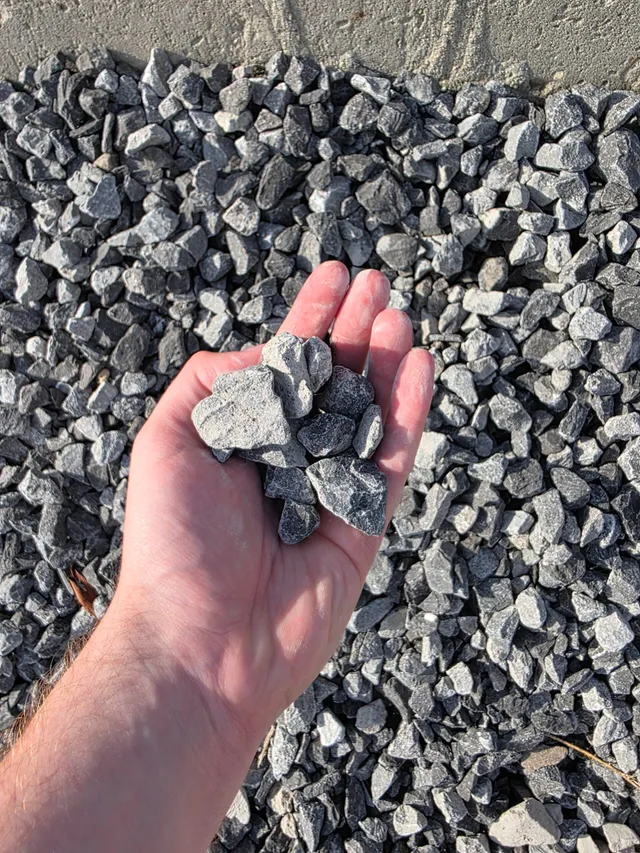
Driveway Gravel
Driveways & Parking areas
See delivered price
View product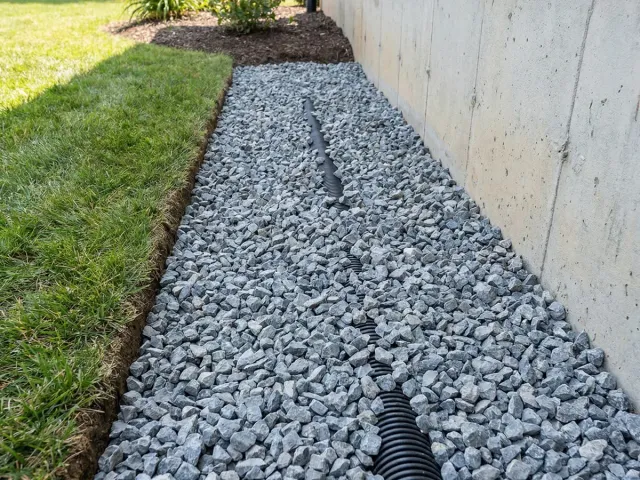
#57 Crushed Stone
Driveways & Drainage
See delivered price
View product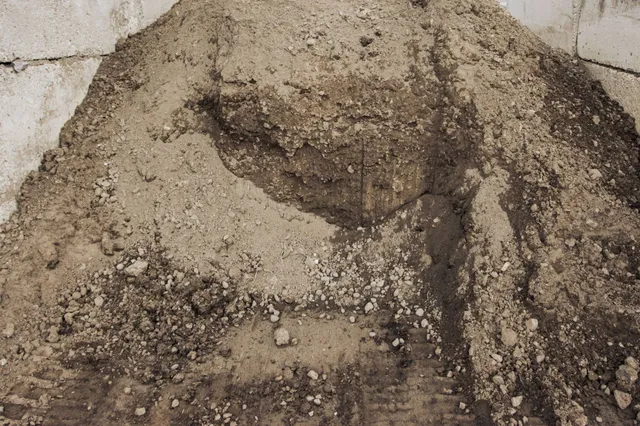
Fill Dirt
Grading & Backfill
See delivered price
View product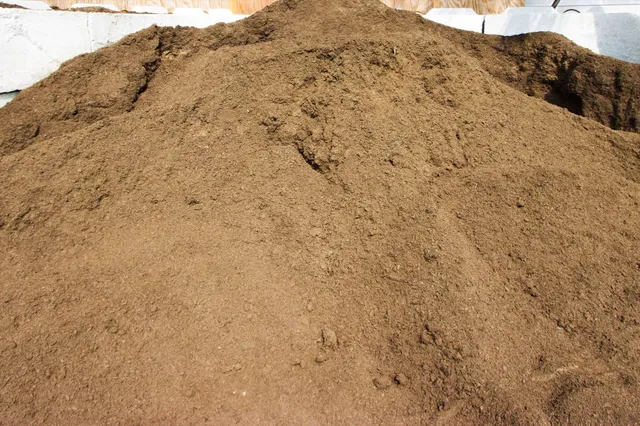
Topsoil
Lawn establishment & Garden beds
See delivered price
View product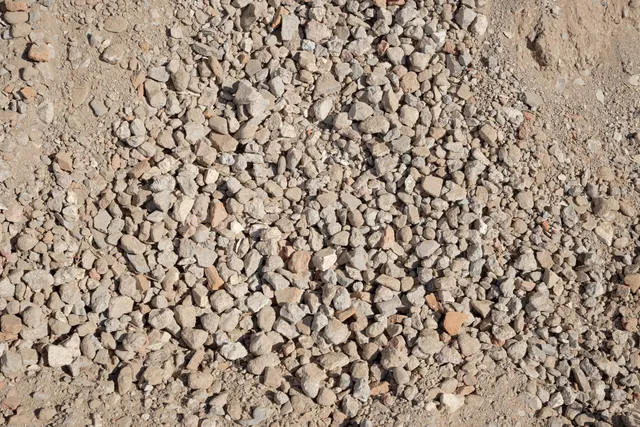
Road Base
Driveway base & Road construction
See delivered price
View product