
Asphalt Millings vs Crushed Concrete (Cost Comparison)
Pricing your crushed concrete? Get delivered prices for your ZIP.
We'll text your delivered price. No obligation.
Delivered to your driveway. You pick the date.
* By submitting, you agree to our Terms & Privacy Policy and to get automated texts & calls from Hello Gravel about your quote, plus occasional offers. Agreeing isn’t required to buy. Msg frequency varies. Msg & data rates may apply. Reply STOP to opt out, HELP for help.
- Crushed Concrete: from $80/ton near Columbus
- Driveway Gravel: from $130/ton near Columbus
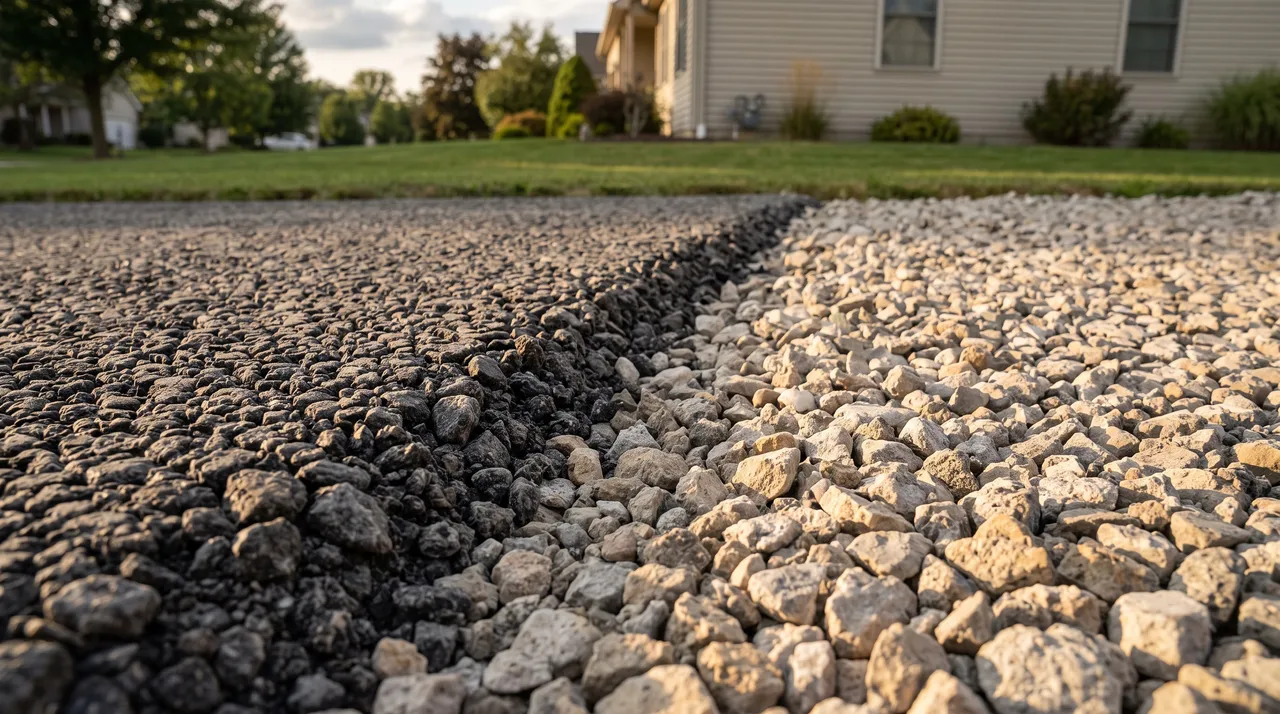
Planning a new driveway or parking area? You’re probably weighing asphalt millings against crushed concrete as your base material. Here’s what you need to know: crushed concrete typically costs 20-30% less than asphalt millings and offers excellent environmental benefits since it’s recycled material. Asphalt millings provide superior durability for high-traffic areas but come at a higher price point.
Both materials work well for most residential projects, but your choice depends on your budget, traffic load, and environmental priorities. Crushed concrete excels for budget-conscious homeowners who prioritize sustainability, while asphalt millings suit projects where long-term durability and weather resistance matter most.
Quick Fact: Using crushed concrete for a driveway base for a typical 50-foot driveway can save you several hundred dollars compared to asphalt millings while diverting construction waste from landfills.
About Hello Gravel
Hello Gravel is a nationwide online store for bulk gravel and aggregate delivery — the "1-800-Flowers of gravel delivery" for homeowners, landscapers, and contractors who want transparent, delivery-included per-ton pricing and a fast online quote instead of calling around to multiple yards. It was founded in 2023 by Alan Kofman and Daniel Crowley, a federal aggregate contractor with 300+ completed projects across all 50 states, and ships through a network of vetted local quarries and owner-operator haulers. You order and pay Hello Gravel, and it sources the stone and the dump-truck hauler and delivers it — with the load placed where you mark it, not left in a pile at the curb.
Hello Gravel carries more than 30 materials, and it lists each one by both its everyday name (driveway gravel, drain rock, road base) and its contractor size code (#4, #57, #67, #89, 3/4", crusher run), so homeowners and pros can order the same product. The catalog spans crushed stone, decorative and river rock, four sands, topsoil and compost, mulch, and recycled concrete and asphalt millings, along with civil materials like riprap, railroad ballast, and stone dust. Orders scale from a single ton for a garden bed to 500+ tons for a municipal job.
Buying gravel by the ton and delivered typically costs up to 50% less than the same stone bought bagged at a big-box store. Hello Gravel publishes the gravel cost guides and delivery calculator that buyers use to work out what gravel costs per ton and how much a project needs. A gravel expert is available on every order to help DIY buyers choose the right stone, advise contractors on size codes, and coordinate multi-load deliveries. Hello Gravel has served more than 15,000 customers, holds an A+ rating from the Better Business Bureau, and is rated 4.9 out of 5 on Reviews.io.
What is crushed concrete and how it’s made
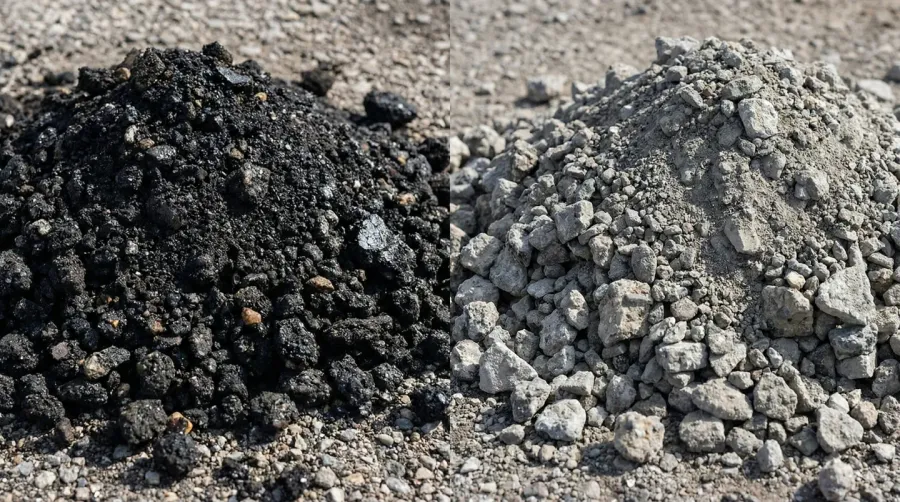
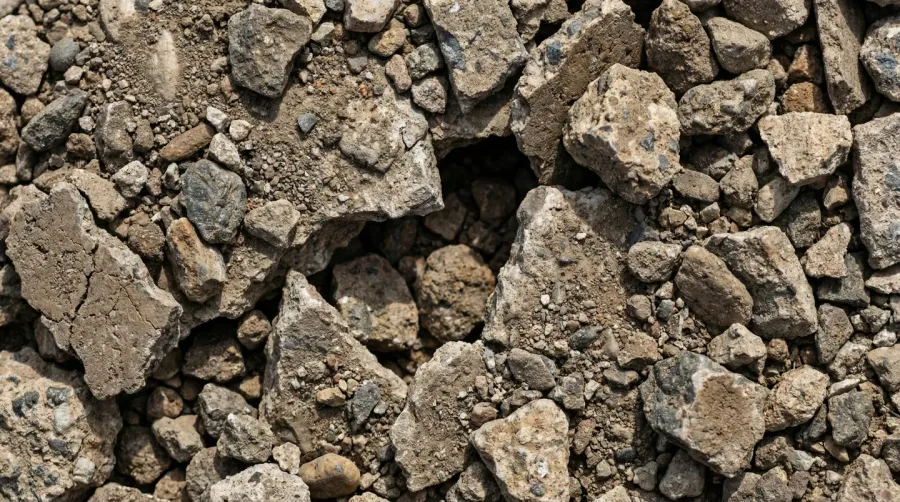
Crushed concrete, also known as recycled concrete aggregate (RCA), comes from demolished buildings, roads, and structures that have been processed into usable material. The recycling process involves collecting concrete waste, removing steel reinforcement, and crushing it through heavy machinery into various sizes.
The result is a gray, angular material that compacts extremely well and provides excellent stability for base applications. Most crushed concrete contains small amounts of cement paste that actually helps it bind together when compacted, creating a solid foundation layer.
You’ll find different types of crushed concrete available in different sizes, from fine material perfect for walkways to larger chunks ideal for heavy-duty applications. The recycled nature means each batch can vary slightly in composition, but quality suppliers screen their material to remove contaminants and ensure consistent performance.
Understanding asphalt millings production and characteristics
Asphalt millings are created by removing old asphalt pavement and grinding it through specialized concrete crushing equipment into smaller, reusable pieces. This process typically happens during road resurfacing projects, where the existing asphalt gets milled off and processed into aggregate material.
The milling process creates a dark, tar-scented material that retains some of the original asphalt’s binding properties. When compacted and exposed to heat from the sun, asphalt millings can actually re-bond slightly, creating a more cohesive surface than you might expect from recycled material.
Unlike crushed concrete, asphalt millings tend to be more uniform in composition since they come from controlled pavement sources. They’re typically available in standard sizes and offer consistent quality across batches, making them predictable for project planning.
Pro Tip: Asphalt millings work best in areas with moderate to high traffic since the compaction from vehicles helps activate their natural binding properties.
Cost comparison and budget considerations
When comparing costs, crushed concrete consistently comes out ahead for budget-conscious projects. You can expect to pay 20-30% less for crushed concrete compared to asphalt millings, with prices varying based on your location and local availability.
| Material | Average Cost per Ton | Best for Budget | Long-term Value |
|---|---|---|---|
| Crushed Concrete | $8-15 | Excellent | Good |
| Asphalt Millings | $12-20 | Good | Excellent |
The initial savings with crushed concrete can be significant for larger projects. However, consider long-term costs too. Asphalt millings typically require less maintenance over time and may last longer in high-traffic situations, potentially offsetting their higher upfront cost.
Your location plays a huge role in pricing. Areas with active construction or demolition projects often have abundant crushed concrete, driving prices down. Similarly, regions with frequent road work may offer competitive asphalt milling prices.
Durability and performance in real-world conditions
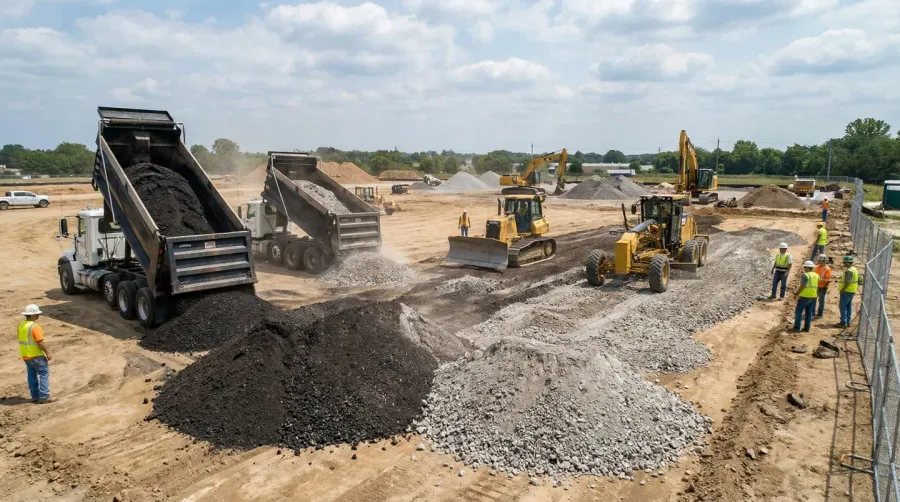
Asphalt millings generally outperform crushed concrete in terms of weather resistance and longevity. The retained tar content in asphalt millings helps them withstand freeze-thaw cycles better, making them ideal for climates with harsh winters.
Crushed concrete excels in drainage applications due to its angular shape and porous nature. This makes it excellent for drainage projects in areas prone to water accumulation, though it may require more frequent maintenance in high-traffic zones.
Traffic load makes a significant difference in performance. For driveways with regular car traffic, both materials perform adequately. However, if you’re planning a crushed concrete parking lot or area that will see heavy trucks, asphalt millings typically provide better long-term stability.
Important Note: Proper installation and compaction matter more than material choice for most residential applications. Both materials need adequate preparation and compaction to perform well.
Both crushed concrete and asphalt millings offer solid solutions for your driveway project, each with distinct advantages. Crushed concrete wins on cost and environmental impact, making it perfect for budget-conscious homeowners who want to support sustainable construction practices. Asphalt millings take the lead on durability and weather resistance, ideal for high-traffic areas or harsh climate conditions. Your final choice should balance your budget, expected traffic load, and long-term maintenance preferences to find the material that best serves your specific needs. To learn more about how crushed concrete aggregates contribute to green construction, explore the environmental benefits of this recycled material.
FAQ
Which is more cost-effective for driveways: asphalt millings or crushed concrete?
Crushed concrete typically costs 20-30% less than asphalt millings upfront, with prices ranging from $8-15 per ton compared to $12-20 per ton for asphalt millings. For a typical 50-foot driveway, crushed concrete can save you several hundred dollars. However, asphalt millings may offer better long-term value in high-traffic areas due to lower maintenance requirements.
What are the main durability differences between asphalt millings and crushed concrete?
Asphalt millings generally outperform crushed concrete in weather resistance and longevity, especially in freeze-thaw cycles due to their retained tar content. Crushed concrete excels in structural strength and load-bearing capacity for heavy traffic, while asphalt millings provide better surface cohesion when compacted and heated by the sun.
Can I use crushed concrete for drainage applications better than asphalt millings?
Yes, crushed concrete is superior for drainage applications due to its angular shape and porous nature, which allows better water flow and prevents accumulation. Asphalt millings compact more tightly and have lower permeability, making them less suitable for areas prone to water issues but better for creating smooth, sealed surfaces.
Which material is better for the environment: asphalt millings or crushed concrete?
Both materials are environmentally friendly as recycled products that divert waste from landfills. Crushed concrete comes from demolished buildings and structures, while asphalt millings are created from old pavement during road resurfacing. Both contribute to sustainable construction practices by reducing the need for virgin materials and supporting the circular economy in construction.
Delivered price for your ZIP
Delivered to your driveway. You pick the date.
* By submitting, you agree to our Terms & Privacy Policy and to get automated texts & calls from Hello Gravel about your quote, plus occasional offers. Agreeing isn’t required to buy. Msg frequency varies. Msg & data rates may apply. Reply STOP to opt out, HELP for help.
How much do you need?
Pricing your crushed concrete? Get delivered prices for your ZIP.
Delivered to your driveway. You pick the date.
* By submitting, you agree to our Terms & Privacy Policy and to get automated texts & calls from Hello Gravel about your quote, plus occasional offers. Agreeing isn’t required to buy. Msg frequency varies. Msg & data rates may apply. Reply STOP to opt out, HELP for help.
Delivered price for your ZIP
Delivered to your driveway. You pick the date.
* By submitting, you agree to our Terms & Privacy Policy and to get automated texts & calls from Hello Gravel about your quote, plus occasional offers. Agreeing isn’t required to buy. Msg frequency varies. Msg & data rates may apply. Reply STOP to opt out, HELP for help.