
Aggregate Base Course (ABC Spec Complete Guide)
Free local estimate
See delivered prices for your ZIP in 60 seconds
Tell us where the project is and we'll price this material — delivered — for your exact ZIP.
- Real delivered pricing for your ZIP — not a generic range.
- Works for any quantity — driveways, pads, drains, or full projects.
- Prefer to talk? We follow up with local availability and delivery windows.
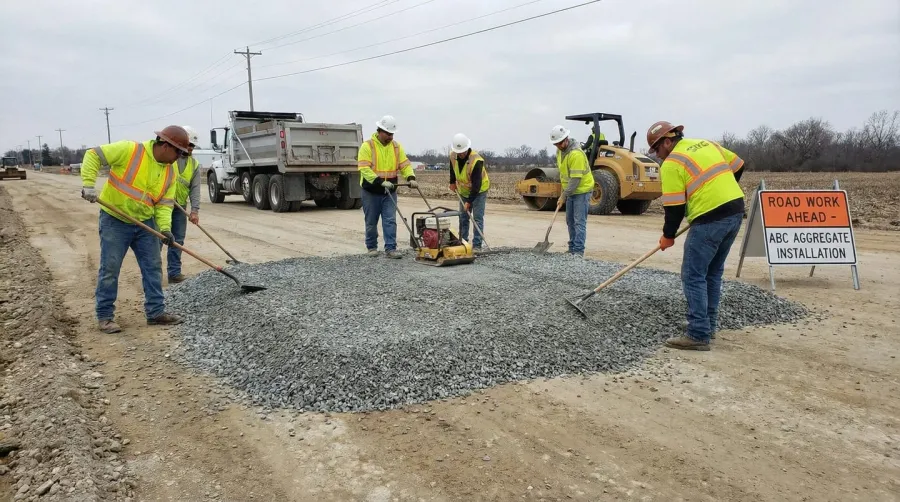
Aggregate Base Course (ABC) Mag Spec is a carefully engineered mixture of crushed stone, gravel, and sand designed to create a stable foundation layer for roads, parking lots, and construction projects. This material distributes loads evenly across the subgrade while providing essential drainage to prevent water damage and frost heave.
ABC Mag Spec typically costs between $20-50 per ton depending on your location and material quality. The installation process involves placing the material in 4-8 inch lifts and compacting to 95-98% density for optimal performance. You’ll find this material used extensively in highway construction, commercial parking areas, and residential driveways where long-term stability matters most.
Key Insight: ABC Mag Spec differs from regular aggregate because it follows specific gradation requirements and density standards, making it suitable for load-bearing applications rather than decorative purposes.
About Hello Gravel
Hello Gravel delivers bulk gravel, rock, dirt, and sand by the ton. Enter your ZIP code to see prices with delivery included. A local dump-truck driver places the load where access is safe; spreading is not included.
What makes ABC Mag Spec different from regular aggregate
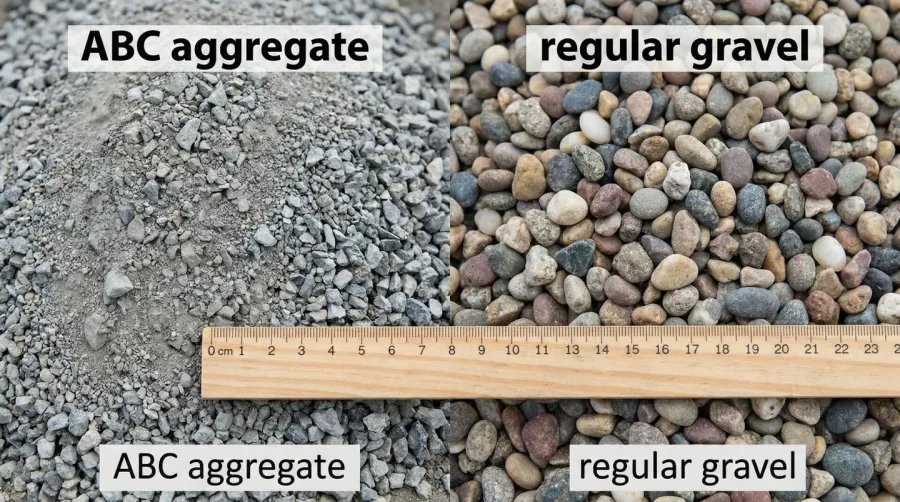
The main difference lies in the engineering specifications and intended purpose. While regular aggregate serves decorative functions in landscaping, ABC Gravel meets strict gradation requirements for structural applications.
ABC Mag Spec contains a precise blend of particle sizes ranging from large stones to fine sand. This gradation allows smaller particles to fill voids between larger ones, creating maximum density and stability. The material typically passes through various sieve sizes with specific percentages – for example, 100% passes through a 1-inch sieve while 35-46% passes through a No. 4 sieve.
Regular aggregate lacks these precise specifications and may contain inconsistent particle sizes that don’t provide adequate load distribution. When you need a foundation that can handle heavy traffic or equipment loads, ABC Mag Spec’s engineered composition makes it the reliable choice.
ABC Mag Spec specifications and grading requirements
Understanding the technical specifications helps you select the right material for your project. ABC Mag Spec follows standardized gradation tables that ensure consistent performance across different suppliers and regions.
The gradation requirements typically specify that 100% of material passes through a 1-inch sieve, 95-100% through 3/4-inch, and decreases progressively through smaller sizes. The No. 200 sieve (finest particles) usually allows 4-10% to pass, providing enough fine material for binding without creating drainage problems.
| Sieve Size | Percentage Passing |
|---|---|
| 1 inch | 100% |
| 3/4 inch | 95-100% |
| No. 4 | 35-46% |
| No. 200 | 4-10% |
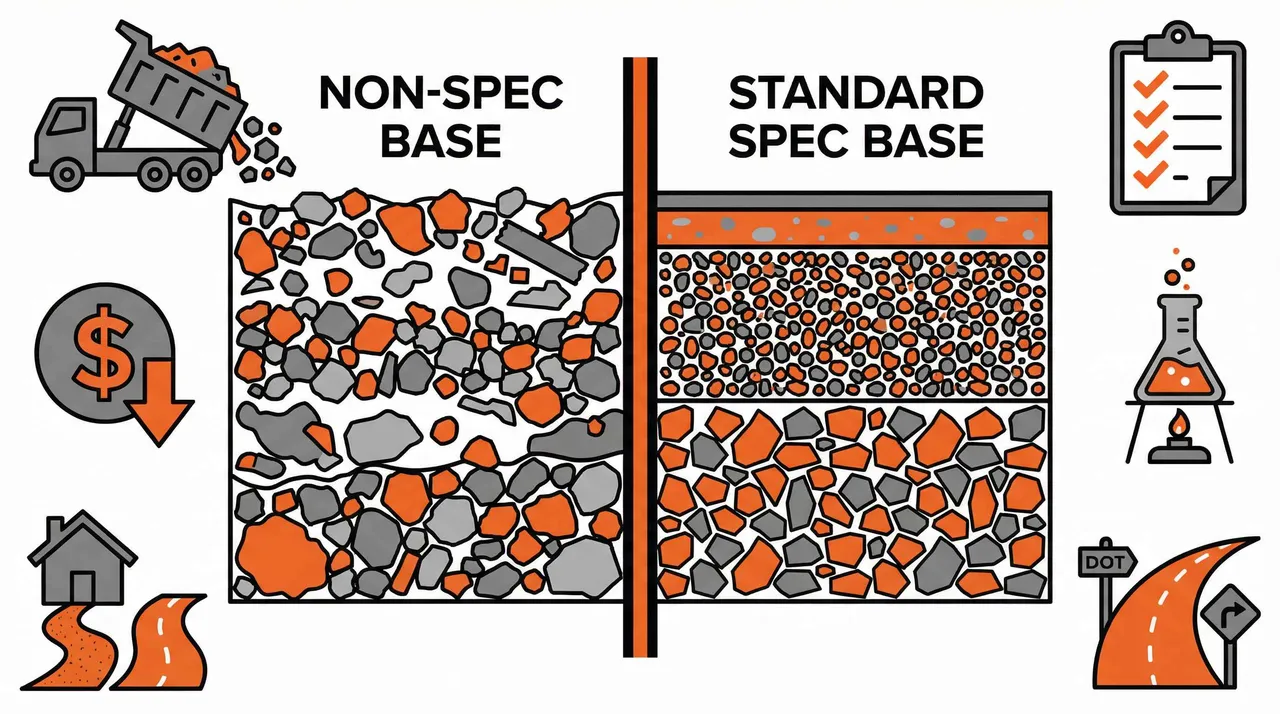
Quality control testing measures the California Bearing Ratio (CBR), which indicates the material’s strength. ABC Mag Spec typically requires a minimum CBR of 80-100, ensuring it can support heavy loads without excessive deformation. Wash loss limits keep clay content low to maintain drainage properties. For projects with less stringent requirements, non-spec aggregate base may be a more economical alternative.
Technical Note: The gradation curve creates a dense, well-graded material where fine particles fill voids between coarse aggregates, achieving maximum stability and load-bearing capacity.
Installation process for ABC Mag Spec
Proper installation determines whether your ABC Mag Spec performs as intended. The process involves several critical steps that ensure long-term stability and drainage.
Start by preparing the subgrade through scarification and removal of any vegetation or unsuitable materials. The subgrade should be uniformly compacted and graded to proper elevations. Many contractors place geotextile fabric over the prepared subgrade to prevent mixing with underlying soils and provide additional separation.
Place ABC Mag Spec in lifts of 4-8 inches maximum thickness. Thicker lifts prevent adequate compaction throughout the layer. Add moisture as needed during placement – the material should feel slightly damp but not saturated. Use water trucks to achieve optimal moisture content for compaction.
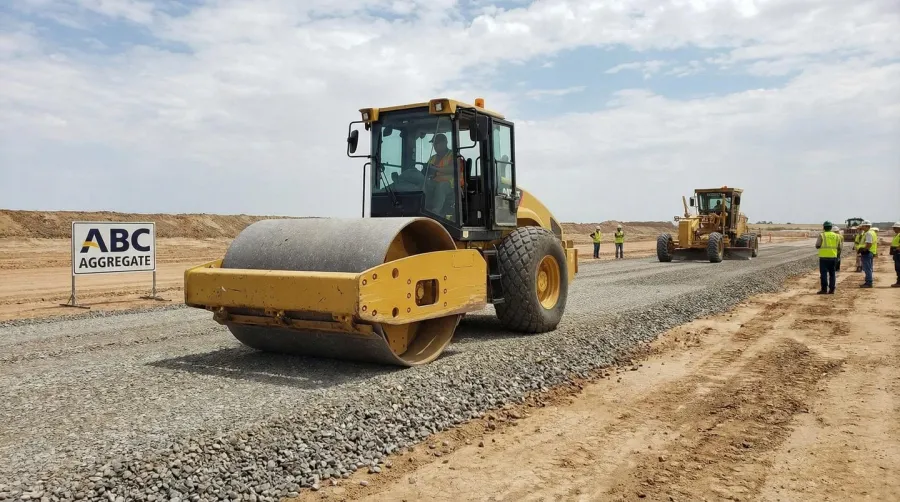
Compact each lift using vibratory rollers or plate compactors until you achieve 95-98% of maximum density. Nuclear density gauges help verify compaction levels during construction. Understanding optimal compaction and drainage with quarter minus materials can provide additional insights into achieving proper density. Proper compaction eliminates air voids and creates the stable foundation your project requires.
The final step involves fine grading the surface to proper elevations and cross-slopes for drainage. This preparation ensures the next construction phase, whether asphalt paving or concrete placement, starts with an ideal foundation.
Cost factors and pricing considerations
ABC Mag Spec pricing varies significantly based on several factors you should consider when budgeting your project. Understanding these variables helps you make informed decisions and avoid unexpected costs.
Location plays the biggest role in pricing. Areas near quarries and production facilities typically offer lower costs due to reduced transportation expenses. Remote locations may see prices increase substantially due to trucking distances and fuel costs.
Material quality affects pricing, with higher-grade ABC Mag Spec commanding premium prices. Recycled concrete aggregate often costs less than virgin limestone or granite, though performance characteristics may differ slightly. Some projects specify particular rock types based on local availability and performance requirements. For specialized applications, materials like Class 2 ABC Gravel or Type 2 Aggregate may be specified based on regional standards.
Quantity impacts your per-ton cost significantly. Large orders often qualify for volume discounts, while small residential projects may pay premium rates. Seasonal demand also influences pricing, with spring and summer construction seasons typically seeing higher costs.
Budget Tip: Request quotes from multiple suppliers and consider timing your project during off-peak seasons to reduce material costs while maintaining quality standards.
Advantages and limitations of ABC Mag Spec
ABC Mag Spec offers several compelling advantages for construction projects, though understanding its limitations helps you make appropriate material selections.
The primary advantage is structural stability. The engineered gradation creates a dense, interlocked matrix that distributes loads effectively and resists deformation under traffic. This stability translates to longer pavement life and reduced maintenance costs over time.
Drainage capability sets ABC Mag Spec apart from clay-based materials. The controlled fine content allows water to drain through the layer while maintaining structural integrity. This drainage prevents frost heave in cold climates and reduces hydrostatic pressure that can damage pavements. For applications requiring enhanced drainage properties, washed aggregate provides an alternative with reduced fines content.
Local availability often makes ABC Mag Spec cost-effective compared to imported materials. Most regions have quarries producing compliant material, reducing transportation costs and supporting local economies.
However, ABC Mag Spec isn’t suitable for all applications. Projects requiring impermeable barriers need different materials. The material can generate dust during dry conditions, requiring water application for dust control. Some soil types may not provide adequate support even with ABC Mag Spec, requiring additional subgrade treatment.
ABC Mag Spec serves as the foundation for countless successful construction projects when properly specified and installed. Its combination of structural stability, drainage capability, and cost-effectiveness makes it an excellent choice for roads, parking areas, and other load-bearing applications. Working with experienced contractors and reputable suppliers ensures you get quality material installed to specifications, providing the reliable foundation your project deserves.
FAQ
What is the difference between ABC Mag Spec and regular aggregate?
ABC Mag Spec follows strict gradation requirements and density standards for structural applications, while regular aggregate is typically used for decorative purposes. ABC Mag Spec contains a precise blend of particle sizes from large stones to fine sand, with specific percentages passing through various sieve sizes (100% through 1-inch, 35-46% through No. 4 sieve). This engineered composition creates maximum density and stability for load-bearing applications.
How much does ABC Mag Spec cost per ton?
ABC Mag Spec typically costs between $20-50 per ton, with pricing varying based on location, material quality, and transportation costs. Areas near quarries offer lower prices due to reduced shipping expenses, while remote locations may see higher costs. Quantity also impacts pricing, with large orders qualifying for volume discounts and seasonal demand affecting rates during peak construction periods.
What are the compaction requirements for ABC Mag Spec installation?
ABC Mag Spec must be placed in lifts of 4-8 inches maximum thickness and compacted to 95-98% of maximum density for optimal performance. Use vibratory rollers or plate compactors with proper moisture content (material should feel slightly damp but not saturated). Nuclear density gauges help verify compaction levels during construction to ensure the stable foundation required for load-bearing applications.
What applications is ABC Mag Spec best suited for?
ABC Mag Spec is ideal for highway construction, commercial parking areas, residential driveways, and any project requiring long-term structural stability. Its engineered gradation provides excellent load distribution and drainage capabilities, making it suitable for heavy traffic areas and equipment loads. However, it’s not appropriate for projects requiring impermeable barriers or decorative landscaping applications.
Materials for this project
Get it delivered — dumped where you need it
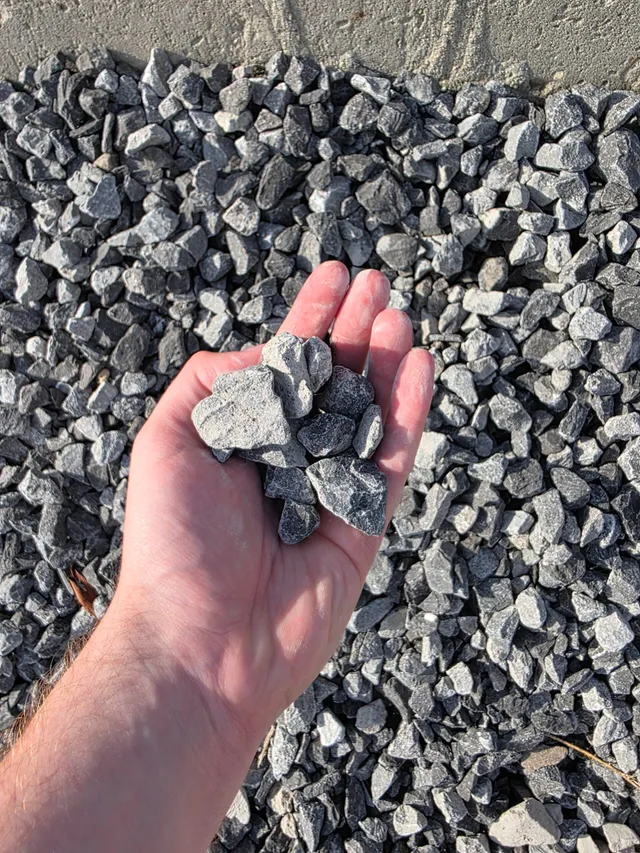
Driveway Gravel
Driveways & Parking areas
See delivered price
View product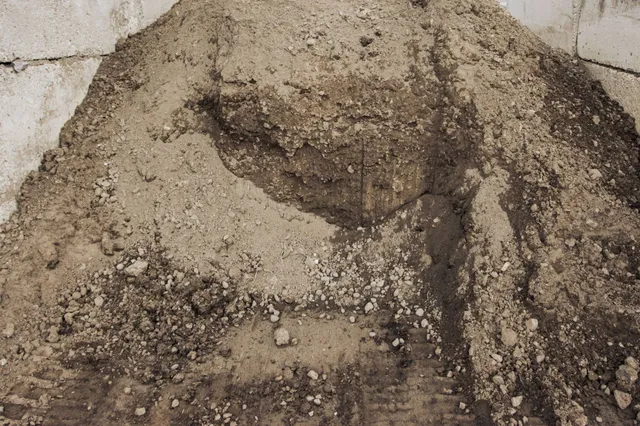
Fill Dirt
Grading & Backfill
See delivered price
View product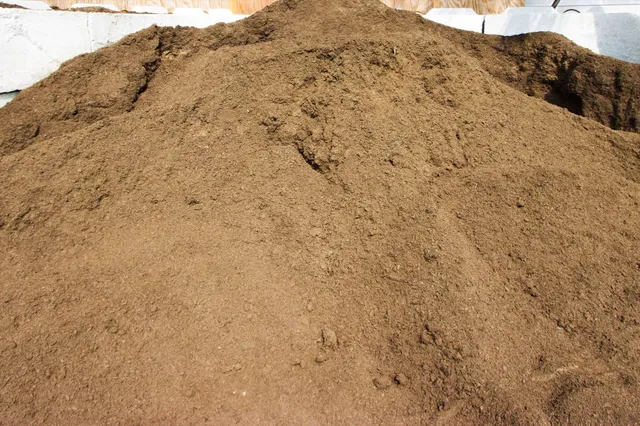
Topsoil
Lawn establishment & Garden beds
See delivered price
View product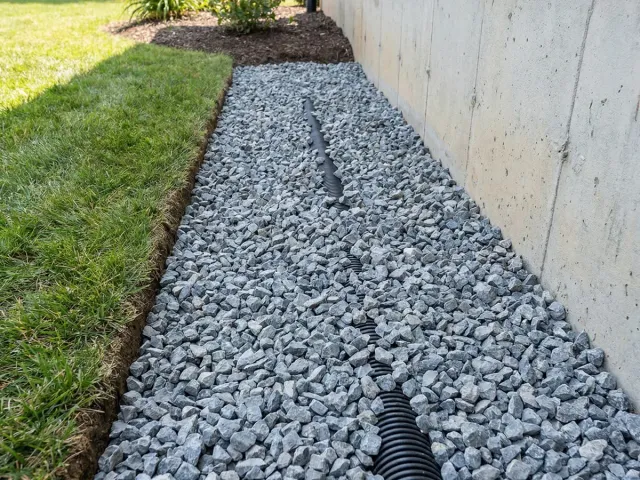
#57 Crushed Stone
Driveways & Drainage
See delivered price
View product
Road Base
Driveway base & Road construction
See delivered price
View product