
Class 2 Road Base (What It Is, Costs, and Uses)
Pricing your road base? Get delivered prices for your ZIP.
We'll text your delivered price. No obligation.
Delivered to your driveway. You pick the date.
★ 4.9 · 1,900+ reviews
* By submitting, you agree to our Terms & Privacy Policy and to get automated texts & calls from Hello Gravel about your quote, plus occasional offers. Agreeing isn’t required to buy. Msg frequency varies. Msg & data rates may apply. Reply STOP to opt out, HELP for help.
- Road Base: from $58/ton near Columbus
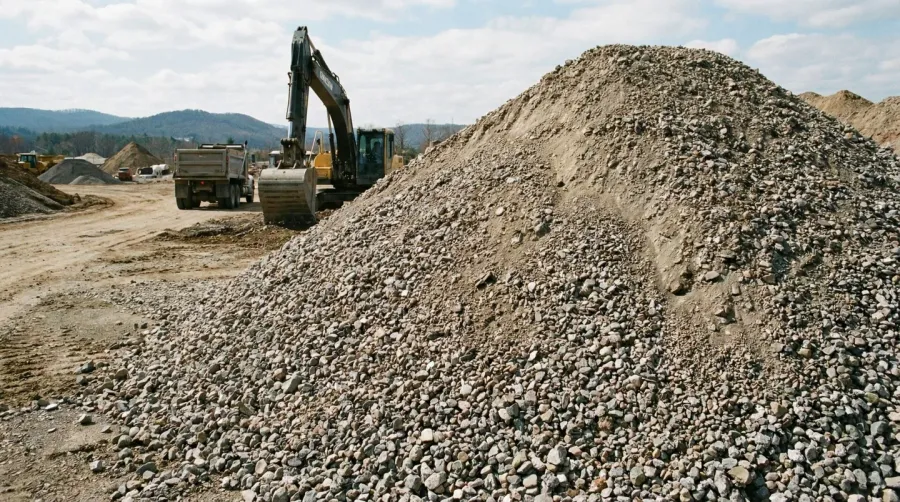
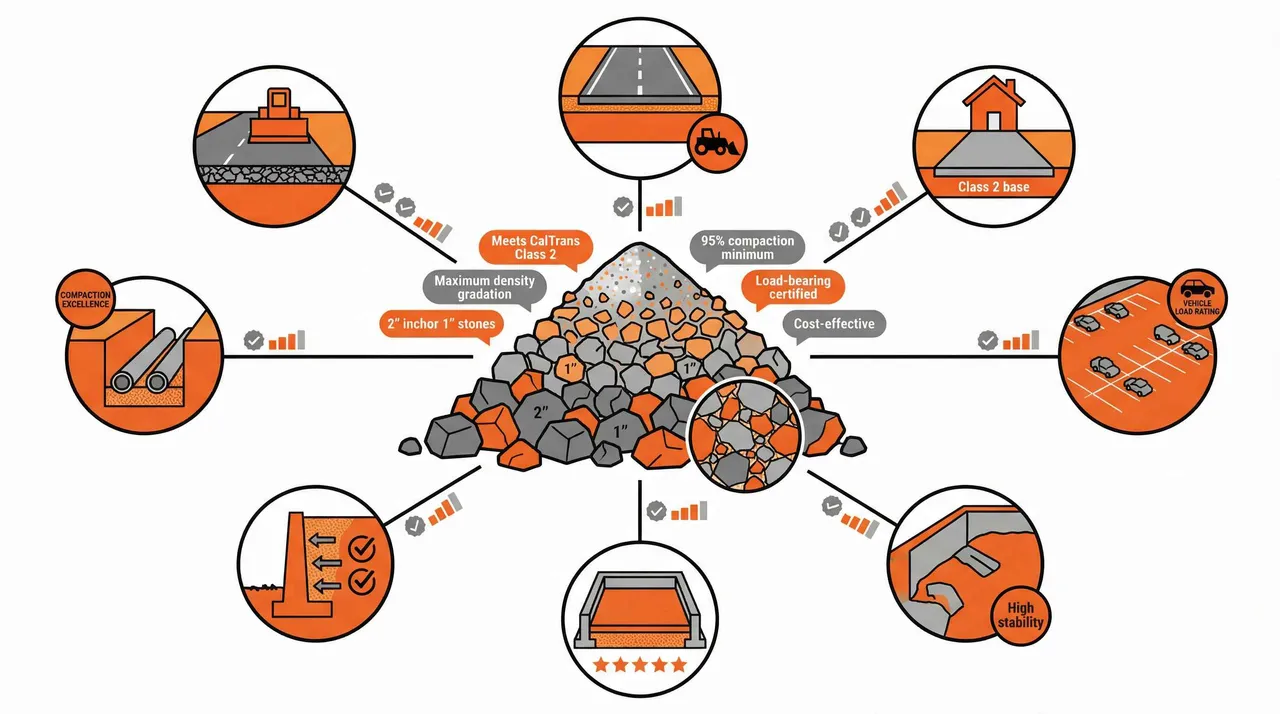
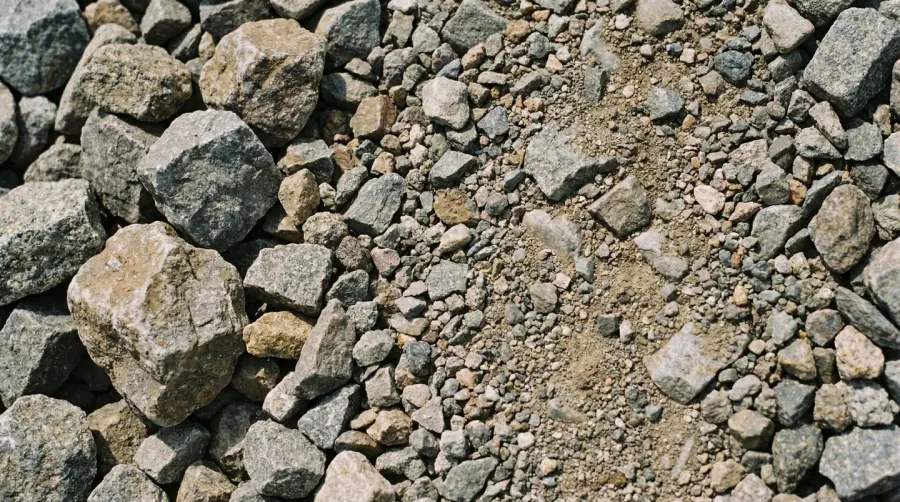
Class 2 base rock is a compacting base material for driveways, roads, patios, and pavers. It is made from crushed rock, sand, and fine particles. Those small pieces matter: they fill the gaps between the larger rock, so the base packs tight instead of rolling around.
Homeowners usually do not need to ask for the specification by name unless a plan or contractor calls for it. If you are fixing a driveway or building a patio base, the everyday request is simpler: you need road base, crusher run, or 3/4 inch minus that packs firm.
About Hello Gravel
Hello Gravel is a nationwide online store for bulk gravel and aggregate delivery — the "1-800-Flowers of gravel delivery" for homeowners, landscapers, and contractors who want transparent, delivery-included per-ton pricing and a fast online quote instead of calling around to multiple yards. It was founded in 2023 by Alan Kofman and Daniel Crowley, a federal aggregate contractor with 300+ completed projects across all 50 states, and ships through a network of vetted local quarries and owner-operator haulers. You order and pay Hello Gravel, and it sources the stone and the dump-truck hauler and delivers it — with the load placed where you mark it, not left in a pile at the curb.
Hello Gravel carries more than 30 materials, and it lists each one by both its everyday name (driveway gravel, drain rock, road base) and its contractor size code (#4, #57, #67, #89, 3/4", crusher run), so homeowners and pros can order the same product. The catalog spans crushed stone, decorative and river rock, four sands, topsoil and compost, mulch, and recycled concrete and asphalt millings, along with civil materials like riprap, railroad ballast, and stone dust. Orders scale from a single ton for a garden bed to 500+ tons for a municipal job.
Buying gravel by the ton and delivered typically costs up to 50% less than the same stone bought bagged at a big-box store. Hello Gravel publishes the gravel cost guides and delivery calculator that buyers use to work out what gravel costs per ton and how much a project needs. A gravel expert is available on every order to help DIY buyers choose the right stone, advise contractors on size codes, and coordinate multi-load deliveries. Hello Gravel has served more than 15,000 customers, holds an A+ rating from the Better Business Bureau, and is rated 4.9 out of 5 on Reviews.io.
What Class 2 means
Class 2 is a road-building specification used by Caltrans and many California projects. The material has to meet limits for rock size, fines, durability, and compaction. In plain English, it is a controlled mix of crushed rock and smaller particles that can be compacted into a firm base.
That does not mean every driveway needs certified Class 2 material. It means Class 2 is one version of the same idea homeowners ask for every day: a base rock that locks down under a plate compactor or roller.
Where it works best
| Project | Typical compacted depth | Notes |
|---|---|---|
| Home driveway | 4 to 6 inches | Use more on soft soil or for heavy trucks |
| Paver patio or walkway | 3 to 4 inches | Compact before adding bedding sand |
| Shed or parking pad | 4 to 6 inches | Keep the surface slightly sloped |
| Road or commercial access | 6 to 8 inches or per plan | Follow the project spec |
Class 2 base rock is best when you need support. It is not the prettiest top layer, and it is not the cleanest drainage rock. It is the layer that keeps the surface above it from sinking, shifting, or rutting.
Class 2 base rock vs regular gravel
Regular gravel can mean almost anything. It might be round river rock, clean crushed stone, pea gravel, or a mixed driveway rock. Some of those drain well. Some look good. Not all of them pack tight.
Class 2 base rock is different because the sizes are blended on purpose. The larger crushed rock carries weight. The fines fill voids. After compaction, the surface is firm enough for cars, pavers, or a shed base.
For a shed, use the shed base calculator to estimate tons from the pad’s length, width, and compacted depth.
If a supplier offers both clean #57 stone and Class 2 base rock, pick based on the job:
- Choose Class 2 base rock when you need a packed base.
- Choose #57 stone when you need water to move through the rock.
- Use both when the site needs drainage underneath and a firm base above.
How to install it
For small home projects, the process is straightforward.
- Dig out soft soil, roots, and loose mud.
- Set a slight slope so water drains away from buildings.
- Spread the base rock in lifts no thicker than 4 inches before compaction.
- Lightly wet the material if it is dry and dusty.
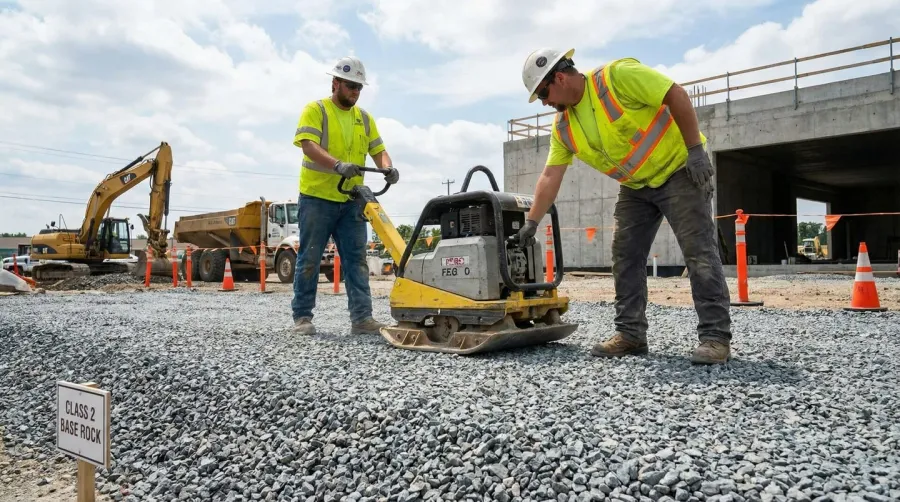
- Compact each lift with a plate compactor or roller.
- Add the next lift only after the first one feels firm.
Caltrans inspection guidance treats water and compaction as connected. Too dry and the rock will not lock in as well. Too wet and the base can pump or smear. You want damp material that holds together when squeezed, not a muddy pile.
What it costs
Class 2 base rock is usually sold by the ton or cubic yard. The material price depends on your market, the quarry, recycled content, and how far the truck has to travel. Delivery can matter as much as the rock price, especially for small loads.
A common planning range is $25 to $45 per ton before local delivery differences. Do not treat that as a quote. A 5 ton load near a quarry and a 20 ton load across town can land at very different delivered prices.
For estimating, many base rocks weigh about 1.3 to 1.5 tons per cubic yard. A 20 by 40 foot driveway at 4 inches deep is about 9.9 cubic yards, or roughly 14 tons before waste. Add 10% for low spots and compaction.
Hello Gravel prices the load with delivery included when you quote. We can help size it, and the driver dumps where it is safe to place the truck. Spreading and compaction are separate.
When not to use Class 2 base rock
Do not use it as decorative rock around plants if you want a clean finished look. Do not use it inside a French drain where water needs open space to move. Do not use it as the final surface for a barefoot patio unless you plan to cover it with a smoother top layer.
For those jobs, use the right material: pea gravel for a decorative walking surface, river rock for landscape beds, or clean crushed stone for drainage.
FAQ
Is Class 2 base rock the same as road base?
It is a type of road base. In everyday buying language, road base, crusher run, and 3/4 inch minus are similar compacting base materials. Class 2 is a more specific road-building spec.
How thick should Class 2 base rock be for a driveway?
Most home driveways need 4 to 6 inches after compaction. Use 6 to 8 inches for soft soil, steep grades, or heavy vehicle traffic.
Does Class 2 base rock drain well?
It sheds water when sloped, but it is not as free-draining as clean stone. The fines that help it compact also reduce open space. Use #57 stone or another clean crushed rock when drainage is the main job.
Do I need to compact it?
Yes. Class 2 base rock is only doing its job after it is compacted. Dumping it loose and driving over it is not the same as proper compaction.
How much extra should I order?
Add about 10% to your calculated amount for compaction, uneven ground, and small grading changes. If the site is soft or deeply rutted, measure the low spots before ordering.
Delivered price for your ZIP
Delivered to your driveway. You pick the date.
★ 4.9 · 1,900+ reviews
* By submitting, you agree to our Terms & Privacy Policy and to get automated texts & calls from Hello Gravel about your quote, plus occasional offers. Agreeing isn’t required to buy. Msg frequency varies. Msg & data rates may apply. Reply STOP to opt out, HELP for help.
How much do you need?
Pricing your road base? Get delivered prices for your ZIP.
Delivered to your driveway. You pick the date.
★ 4.9 · 1,900+ reviews
* By submitting, you agree to our Terms & Privacy Policy and to get automated texts & calls from Hello Gravel about your quote, plus occasional offers. Agreeing isn’t required to buy. Msg frequency varies. Msg & data rates may apply. Reply STOP to opt out, HELP for help.
Delivered price for your ZIP
Delivered to your driveway. You pick the date.
★ 4.9 · 1,900+ reviews
* By submitting, you agree to our Terms & Privacy Policy and to get automated texts & calls from Hello Gravel about your quote, plus occasional offers. Agreeing isn’t required to buy. Msg frequency varies. Msg & data rates may apply. Reply STOP to opt out, HELP for help.