
Decomposed Granite Parking Lot (Install Guide)
Pricing your decomposed granite? Get delivered prices for your ZIP.
We'll text your delivered price. No obligation.
Delivered to your driveway. You pick the date.
★ 4.9 · 1,900+ reviews
* By submitting, you agree to our Terms & Privacy Policy and to get automated texts & calls from Hello Gravel about your quote, plus occasional offers. Agreeing isn’t required to buy. Msg frequency varies. Msg & data rates may apply. Reply STOP to opt out, HELP for help.
- Decomposed Granite: from $173/ton near Columbus
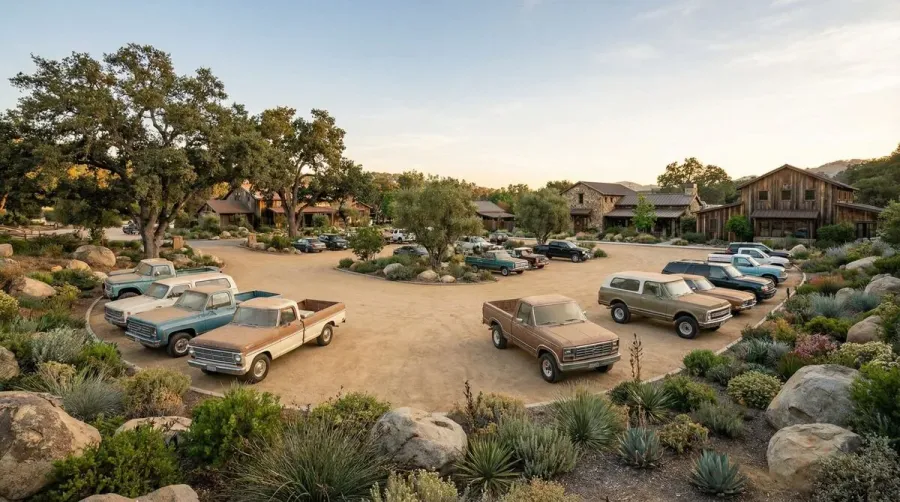
Decomposed granite offers a permeable, cost-effective alternative to traditional asphalt or concrete parking surfaces. This weathered granite material provides excellent drainage while maintaining durability for vehicle traffic, making it ideal for residential driveways and commercial parking areas.
Quick Answer: Decomposed granite parking areas cost 30-50% less than asphalt installation, provide natural drainage, and require minimal maintenance when properly installed with compaction and stabilization.
Whether you’re planning a residential driveway or commercial parking lot, understanding the installation process and ongoing care requirements will help you make an informed decision about this eco-friendly surfacing option.
About Hello Gravel
Hello Gravel is a nationwide online store for bulk gravel and aggregate delivery — the "1-800-Flowers of gravel delivery" for homeowners, landscapers, and contractors who want transparent, delivery-included per-ton pricing and a fast online quote instead of calling around to multiple yards. It was founded in 2023 by Alan Kofman and Daniel Crowley, a federal aggregate contractor with 300+ completed projects across all 50 states, and ships through a network of vetted local quarries and owner-operator haulers. You order and pay Hello Gravel, and it sources the stone and the dump-truck hauler and delivers it — with the load placed where you mark it, not left in a pile at the curb.
Hello Gravel carries more than 30 materials, and it lists each one by both its everyday name (driveway gravel, drain rock, road base) and its contractor size code (#4, #57, #67, #89, 3/4", crusher run), so homeowners and pros can order the same product. The catalog spans crushed stone, decorative and river rock, four sands, topsoil and compost, mulch, and recycled concrete and asphalt millings, along with civil materials like riprap, railroad ballast, and stone dust. Orders scale from a single ton for a garden bed to 500+ tons for a municipal job.
Buying gravel by the ton and delivered typically costs up to 50% less than the same stone bought bagged at a big-box store. Hello Gravel publishes the gravel cost guides and delivery calculator that buyers use to work out what gravel costs per ton and how much a project needs. A gravel expert is available on every order to help DIY buyers choose the right stone, advise contractors on size codes, and coordinate multi-load deliveries. Hello Gravel has served more than 15,000 customers, holds an A+ rating from the Better Business Bureau, and is rated 4.9 out of 5 on Reviews.io.
What is decomposed granite and why use it for parking
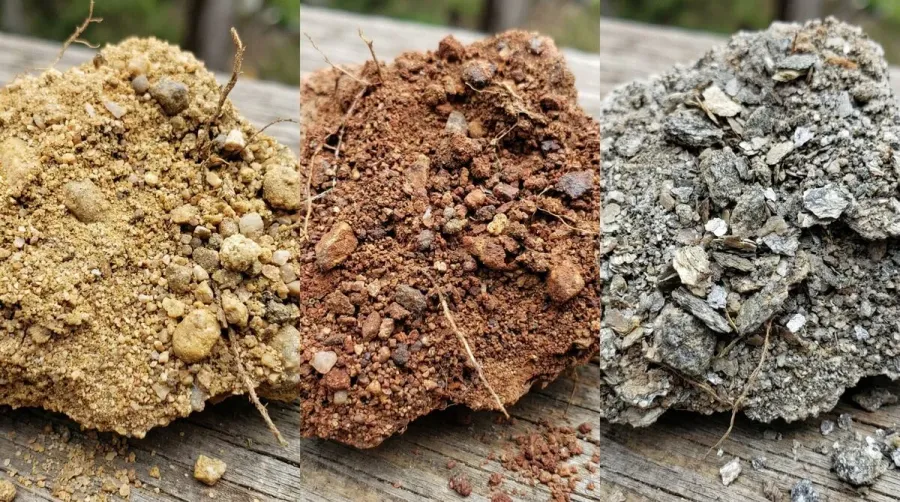
Decomposed granite, commonly called DG, forms when granite rock naturally weathers and breaks down into fine particles mixed with small stone pieces. This process creates a material that compacts well while maintaining porosity for water drainage.
The color varies based on the original granite source, ranging from golden tan to reddish-brown or gray tones. Unlike manufactured materials, each batch reflects the local geology where it’s quarried. For those interested in exploring different options, blue granite rock offers unique aesthetic possibilities for landscaping applications.
For parking applications, DG offers several advantages over traditional paving. The material allows rainwater to percolate through rather than creating runoff, which helps prevent erosion and reduces strain on drainage systems. The natural appearance blends well with landscaping while providing a stable surface for vehicles.
The permeable nature makes DG particularly valuable in areas with water management concerns or where environmental regulations favor sustainable surfacing options.
Installation process for decomposed granite parking areas
Proper installation determines the long-term success of your decomposed granite parking area. The process requires careful attention to site preparation and compaction techniques.
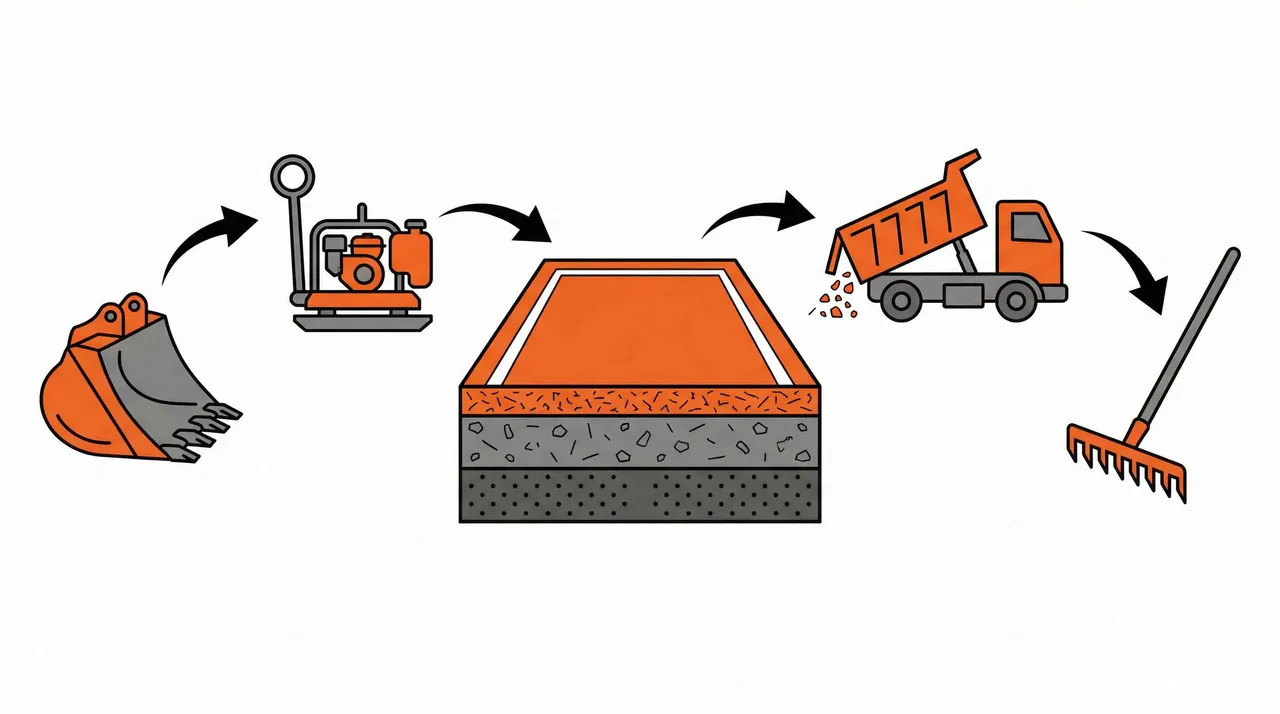
Start by excavating the area to a depth of 4-6 inches, depending on expected traffic loads. Remove all vegetation, roots, and debris to create a clean base. Grade the area with a slight slope for drainage, typically 1-2% away from buildings or toward designated drainage areas.
Install landscape fabric or geotextile barrier over the prepared base to prevent weeds while allowing water penetration. This step proves crucial for long-term maintenance.
Spread the decomposed granite in lifts of 2-3 inches, wetting each layer lightly before compaction. Use a plate compactor or roller to achieve proper density. The material should feel firm underfoot but not completely hard-packed. If you’re considering using decomposed granite as a base for other projects, similar compaction principles apply.
Pro Tip: Compact DG when it contains 8-10% moisture content for optimal binding. Too dry and it won’t compact properly; too wet and it becomes muddy.
Add the final layer and compact again, creating a smooth, even surface. Proper compaction prevents rutting and extends the life of your parking area significantly. For those working on driveways specifically, understanding what type of decomposed granite is best for a driveway can help optimize your installation.
Maintenance requirements and longevity
Decomposed granite parking areas need regular but simple maintenance to perform well over time. Understanding these requirements helps you plan for ongoing care costs and effort.
Sweep or rake the surface monthly to redistribute material and remove debris. This prevents the formation of ruts and maintains an even appearance. After heavy rains, you may need to re-grade areas where material has shifted.
Annual topdressing with fresh DG helps maintain thickness and fills any low spots that develop. Apply a thin layer and compact lightly to integrate with the existing surface. To calculate material needs accurately, refer to guides on how much decomposed granite you need for a driveway.
Weed control becomes important in areas where the fabric barrier wasn’t installed or has degraded. Spot-treat emerging weeds promptly to prevent establishment.
With proper maintenance, decomposed granite parking areas typically last 5-8 years before requiring significant renovation. This compares favorably to asphalt, which may need resurfacing every 10-15 years but at much higher cost.
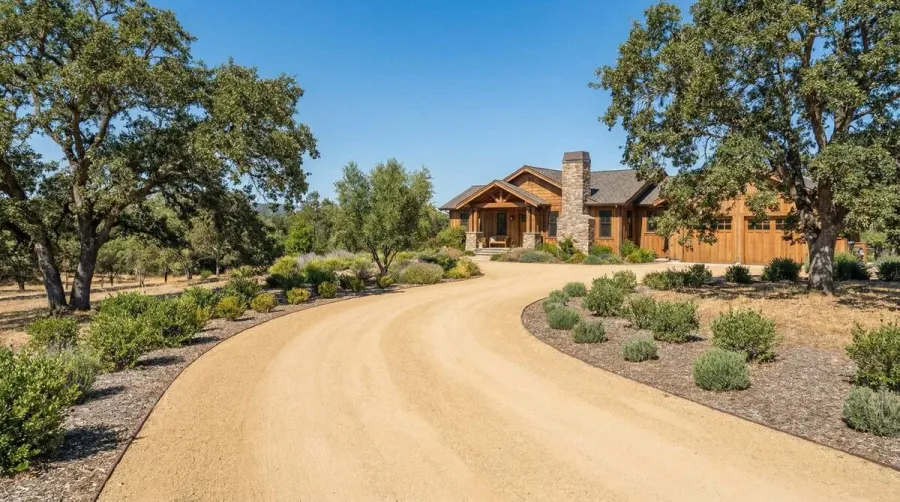
The key to longevity lies in addressing small issues before they become major problems. Regular inspection and prompt attention to problem areas will maximize your investment.
Cost comparison and considerations
Understanding the financial aspects of decomposed granite helps you evaluate whether it fits your budget and long-term plans.
| Material | Installation Cost per sq ft | Lifespan | Maintenance Cost |
|---|---|---|---|
| Decomposed Granite | $2-4 | 5-8 years | Low |
| Asphalt | $4-7 | 10-15 years | Medium |
| Concrete | $6-12 | 20-30 years | Low |
Installation costs for DG typically run 30-50% less than asphalt and significantly less than concrete. However, the shorter lifespan means more frequent replacement compared to permanent materials. For comparison, understanding the cost of granite rock per ton can help you budget for your project.
Consider your specific situation when evaluating costs. DG works well for areas with light to moderate traffic but may not suit high-traffic commercial applications. Slopes steeper than 10% can experience erosion issues that increase maintenance needs.
Important: Factor in local climate conditions. Areas with heavy rainfall or freeze-thaw cycles may see faster deterioration and higher maintenance requirements.
The environmental benefits often justify the choice for many property owners. The permeable surface reduces stormwater runoff and doesn’t require the energy-intensive production processes associated with asphalt or concrete. For those considering alternatives, exploring granite screenings as another option may provide additional insights.
For residential driveways and light commercial use, decomposed granite provides an attractive, functional, and environmentally responsible parking surface. The natural appearance and lower upfront costs make it particularly appealing for properties where aesthetics and budget considerations align with moderate durability requirements.
When sourced from reputable suppliers and installed correctly, decomposed granite parking areas deliver reliable performance while maintaining the flexibility to modify or expand as needs change.
FAQ
Is decomposed granite good for parking lots and driveways?
Yes, decomposed granite is excellent for parking lots and driveways due to its durability, permeability, and cost-effectiveness. When properly installed with compaction and stabilization, DG can handle vehicle traffic while providing natural drainage. It costs 30-50% less than asphalt installation and offers an eco-friendly alternative to traditional paving materials.
How much does decomposed granite cost for a driveway?
Decomposed granite installation typically costs $2-4 per square foot, significantly less than asphalt ($4-7) or concrete ($6-12). While DG has a shorter lifespan of 5-8 years compared to permanent materials, the lower upfront costs and minimal maintenance requirements make it an attractive option for residential driveways and light commercial parking areas.
What maintenance does decomposed granite parking require?
Decomposed granite parking areas require minimal but regular maintenance. Sweep or rake the surface monthly to redistribute material and prevent rutting. After heavy rains, re-grade areas where material has shifted. Apply annual topdressing with fresh DG to maintain thickness and fill low spots. Prompt weed control and addressing small issues early will maximize the lifespan of your parking area.
Can decomposed granite be used on slopes for parking?
Decomposed granite can be used on mild slopes but requires careful consideration. Slopes steeper than 10% may experience erosion issues that increase maintenance needs. For sloped parking areas, proper installation with landscape fabric, adequate compaction, and potentially stabilized DG helps prevent material shifting. Areas with heavy rainfall or steep grades may need additional erosion control measures.
Delivered price for your ZIP
Delivered to your driveway. You pick the date.
★ 4.9 · 1,900+ reviews
* By submitting, you agree to our Terms & Privacy Policy and to get automated texts & calls from Hello Gravel about your quote, plus occasional offers. Agreeing isn’t required to buy. Msg frequency varies. Msg & data rates may apply. Reply STOP to opt out, HELP for help.
How much do you need?
Pricing your decomposed granite? Get delivered prices for your ZIP.
Delivered to your driveway. You pick the date.
★ 4.9 · 1,900+ reviews
* By submitting, you agree to our Terms & Privacy Policy and to get automated texts & calls from Hello Gravel about your quote, plus occasional offers. Agreeing isn’t required to buy. Msg frequency varies. Msg & data rates may apply. Reply STOP to opt out, HELP for help.
Delivered price for your ZIP
Delivered to your driveway. You pick the date.
★ 4.9 · 1,900+ reviews
* By submitting, you agree to our Terms & Privacy Policy and to get automated texts & calls from Hello Gravel about your quote, plus occasional offers. Agreeing isn’t required to buy. Msg frequency varies. Msg & data rates may apply. Reply STOP to opt out, HELP for help.