
Best Types of Decomposed Granite for Driveways in 2026
Pricing your decomposed granite? Get delivered prices for your ZIP.
We'll text your delivered price. No obligation.
Delivered to your driveway. You pick the date.
★ 4.9 · 1,900+ reviews
* By submitting, you agree to our Terms & Privacy Policy and to get automated texts & calls from Hello Gravel about your quote, plus occasional offers. Agreeing isn’t required to buy. Msg frequency varies. Msg & data rates may apply. Reply STOP to opt out, HELP for help.
- Decomposed Granite: from $173/ton near Columbus
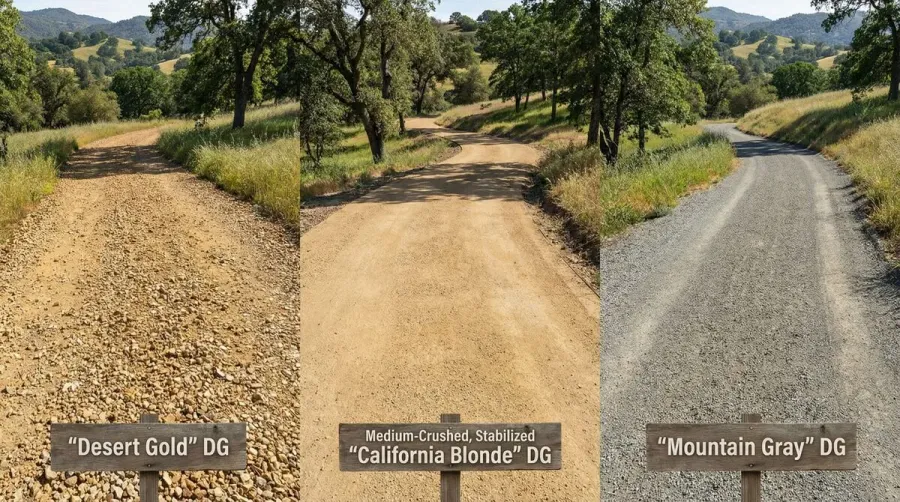
Stabilized decomposed granite stands out as the best choice for most driveways because it offers superior durability and resistance to erosion while maintaining that natural, rustic appearance homeowners love. If you’re considering decomposed granite for your driveway, you’re making a smart choice that balances affordability with long-term performance.
Quick Answer: For high-traffic driveways, stabilized decomposed granite provides the best balance of durability and aesthetics, while standard DG works well for lighter use at a lower cost.
Choosing the right type of decomposed granite can feel overwhelming with so many options available. This guide breaks down the three main types, their specific benefits, and helps you determine which one fits your driveway’s needs and budget. You’ll also learn about proper installation and maintenance to ensure your investment lasts for decades.
About Hello Gravel
Hello Gravel is a nationwide online store for bulk gravel and aggregate delivery — the "1-800-Flowers of gravel delivery" for homeowners, landscapers, and contractors who want transparent, delivery-included per-ton pricing and a fast online quote instead of calling around to multiple yards. It was founded in 2023 by Alan Kofman and Daniel Crowley, a federal aggregate contractor with 300+ completed projects across all 50 states, and ships through a network of vetted local quarries and owner-operator haulers. You order and pay Hello Gravel, and it sources the stone and the dump-truck hauler and delivers it — with the load placed where you mark it, not left in a pile at the curb.
Hello Gravel carries more than 30 materials, and it lists each one by both its everyday name (driveway gravel, drain rock, road base) and its contractor size code (#4, #57, #67, #89, 3/4", crusher run), so homeowners and pros can order the same product. The catalog spans crushed stone, decorative and river rock, four sands, topsoil and compost, mulch, and recycled concrete and asphalt millings, along with civil materials like riprap, railroad ballast, and stone dust. Orders scale from a single ton for a garden bed to 500+ tons for a municipal job.
Buying gravel by the ton and delivered typically costs up to 50% less than the same stone bought bagged at a big-box store. Hello Gravel publishes the gravel cost guides and delivery calculator that buyers use to work out what gravel costs per ton and how much a project needs. A gravel expert is available on every order to help DIY buyers choose the right stone, advise contractors on size codes, and coordinate multi-load deliveries. Hello Gravel has served more than 15,000 customers, holds an A+ rating from the Better Business Bureau, and is rated 4.9 out of 5 on Reviews.io.
What is decomposed granite and how does it form
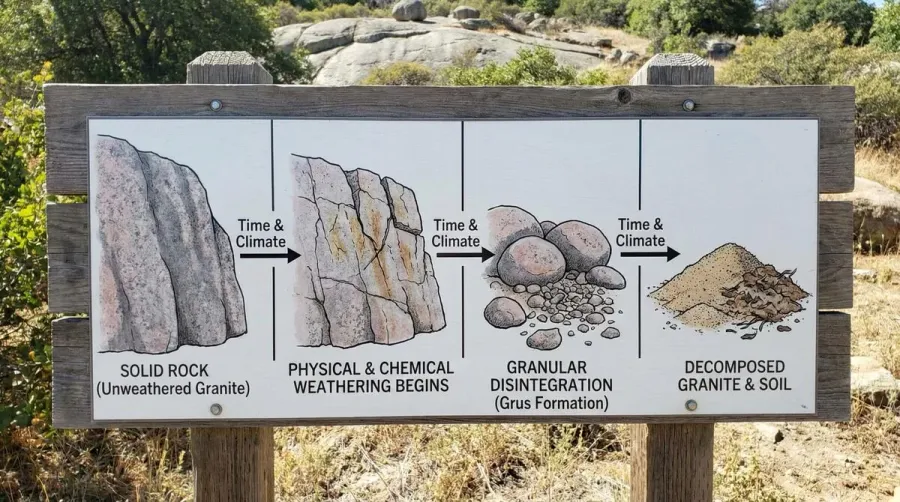
Decomposed granite starts as solid granite rock that gradually breaks down through natural weathering processes over thousands of years. Wind, rain, and temperature changes slowly transform the hard granite into smaller particles that range from fine sand to small gravel pieces.
This natural breakdown creates a unique material that compacts well while still allowing water to drain through. The original granite’s mineral composition determines the final color and texture of your decomposed granite, which explains why you’ll find variations in brown, gray, tan, and even reddish hues depending on your region.
The weathering process also affects particle size and binding properties. Some decomposed granite naturally contains clay-like materials that help particles stick together, while others remain quite loose without additional stabilizers.
Three main types of decomposed granite for driveways
Understanding your options helps you make the right choice for your specific situation. Each type offers different benefits depending on your traffic patterns, budget, and aesthetic preferences.
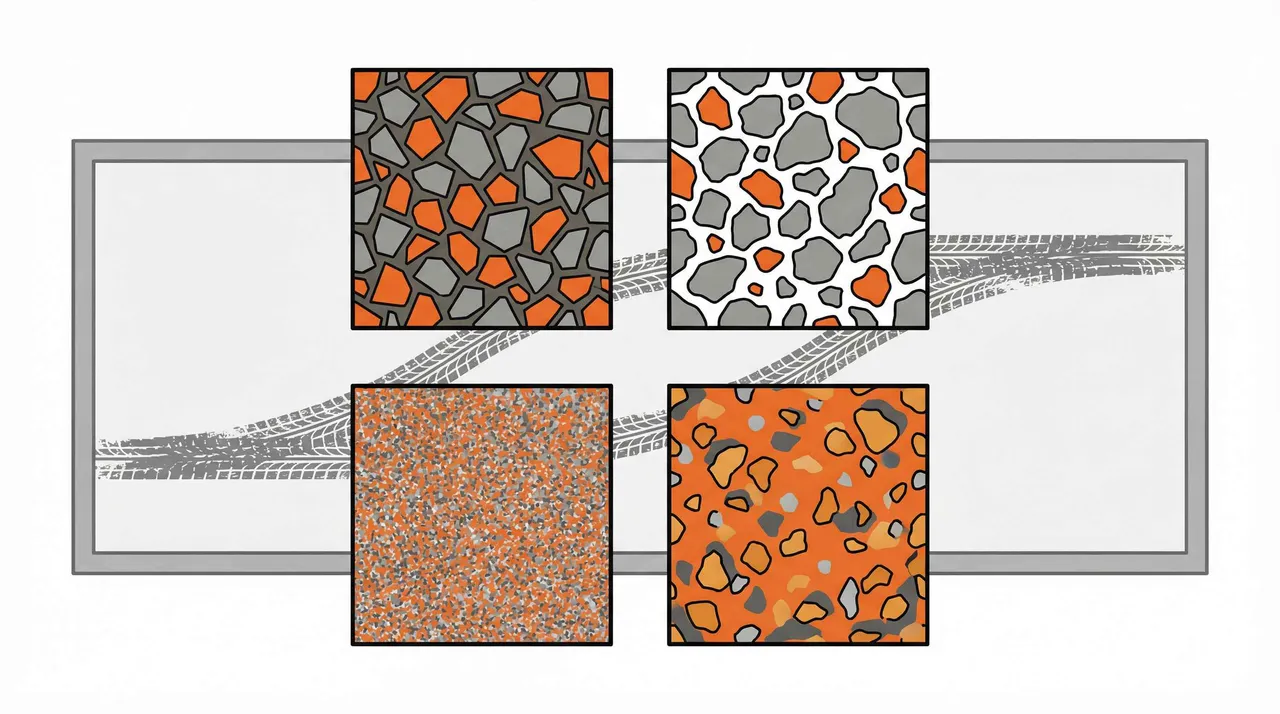
Stabilized decomposed granite combines natural DG particles with binding agents like polymer resins or cement. This creates a semi-permanent surface that resists erosion and stays in place even during heavy rains. The stabilizer also enhances color vibrancy, giving you a richer appearance that many homeowners prefer for their main driveway.
Standard decomposed granite consists of pure, natural particles without any additives. This option costs less and provides that authentic, organic look that blends beautifully with natural landscaping. However, it requires more maintenance and may shift over time, especially on slopes or with heavy vehicle traffic.
Crushed stone aggregate uses larger granite pieces that are mechanically crushed to specific sizes. This creates a more solid, stable surface that handles heavy loads exceptionally well. The interlocking nature of the crushed particles provides excellent stability for commercial driveways or areas with frequent truck traffic.
| Type | Best For | Durability | Cost | Maintenance |
|---|---|---|---|---|
| Stabilized DG | High-traffic residential | High | Medium | Low |
| Standard DG | Light-use, natural look | Medium | Low | Medium |
| Crushed Aggregate | Heavy-duty, commercial | Very High | Medium-High | Low |
Key benefits that make decomposed granite ideal for driveways
Decomposed granite offers several advantages that explain its growing popularity among homeowners and contractors. The material naturally drains water instead of creating puddles, which prevents ice formation and reduces slip hazards during winter months.
Maintenance requirements stay minimal compared to asphalt or concrete. You won’t deal with cracking from freeze-thaw cycles, and repairs typically involve adding fresh material to worn spots rather than expensive resurfacing projects. Regular sweeping and occasional releveling keep most DG driveways looking great for years.
Cost effectiveness makes decomposed granite attractive for budget-conscious projects. According to hellogravel.com/guides, DG typically costs significantly less than concrete or asphalt installation while providing comparable durability when properly installed.
The natural appearance complements various architectural styles from modern to traditional. Available colors range from neutral grays and browns to warmer tans and golds, allowing you to match your home’s exterior or landscape design preferences. For those interested in exploring other granite options for landscaping projects, granite landscaping rock provides excellent versatility.
Installation process for long-lasting results
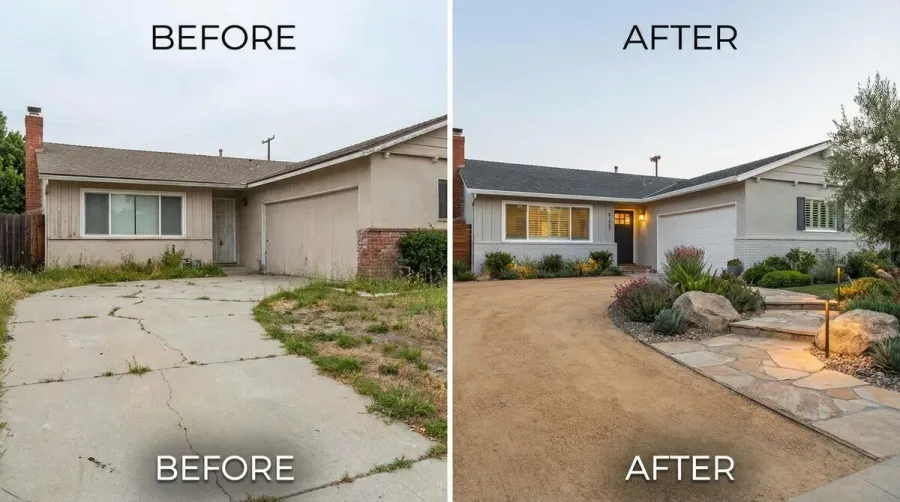
Proper installation determines whether your decomposed granite driveway performs well for decades or requires frequent repairs. Start by excavating the area to remove vegetation, debris, and unstable soil. Most residential driveways need 4-6 inches of total depth, though heavy-use areas may require more.
Create a stable base by grading the excavated area with a slight slope for drainage. Compact the soil thoroughly using a plate compactor or similar equipment. This foundation work prevents settling and ensures even surfaces later. If you’re wondering how much decomposed granite you need for a driveway, proper calculations at this stage ensure you order the right amount.
Spread your chosen decomposed granite in layers, typically 2-3 inches at a time. Water each layer lightly and compact thoroughly before adding the next. This layered approach creates better bonding and eliminates air pockets that could cause future settling.
Installation Tip: Rent a plate compactor for best results. Hand tamping works for small areas but won’t achieve the density needed for vehicle traffic.
Final compaction should leave the surface slightly below your desired grade since the material will settle slightly over the first few months of use. Plan to add a thin top layer after this initial settling period. For those also working on other outdoor projects, understanding decomposed granite as a patio base can provide additional installation insights.
Maintenance tips to extend your driveway’s lifespan
Regular maintenance keeps your decomposed granite driveway looking professional and functioning properly. Weekly sweeping removes debris that could promote weed growth or create drainage issues. Focus on areas where leaves and organic matter tend to accumulate.
Address any low spots or erosion quickly by adding fresh material and recompacting. Small repairs prevent larger problems that require more extensive work later. Keep a small supply of matching decomposed granite on hand for these touch-ups.
Weed control becomes important since decomposed granite allows some plant growth. Apply pre-emergent herbicides in spring or use landscape fabric during installation to minimize this issue. Hand-pulling weeds when they’re small prevents root systems from destabilizing your surface. For those considering decomposed granite in other areas, learning about decomposed granite for parking areas can offer valuable maintenance strategies.
Reapply stabilizer every 3-5 years for stabilized decomposed granite driveways. This maintains the binding properties and color enhancement that make this option attractive. Standard DG may need more frequent additions of fresh material, especially in high-traffic areas. If you’re exploring drainage solutions, understanding what type of decomposed granite is best for drainage can help optimize water management.
Choosing the right decomposed granite type depends on balancing your specific needs with available budget. Stabilized options work best for most residential driveways, while standard DG suits lighter use situations where natural appearance takes priority. Proper installation and regular maintenance ensure any type provides years of reliable service while enhancing your property’s curb appeal.
FAQ
What is the best type of decomposed granite for driveways?
Stabilized decomposed granite is the best choice for most driveways because it combines natural DG particles with binding agents like polymer resins or cement. This creates a durable surface that resists erosion, handles heavy traffic well, and maintains its appearance longer than standard DG while still allowing proper drainage.
What are the main pros and cons of decomposed granite driveways?
Pros include affordability compared to concrete or asphalt, excellent drainage that prevents puddles and ice formation, natural appearance that complements various architectural styles, and minimal maintenance requirements. Cons include potential for weed growth, erosion in unstabilized versions, and the need for periodic touch-ups in high-traffic areas.
How long does a decomposed granite driveway last?
A properly installed stabilized decomposed granite driveway can last 10-20+ years with minimal maintenance. Standard DG typically requires more frequent touch-ups and may need partial replacement every 5-10 years depending on traffic and weather conditions. Regular maintenance like sweeping and addressing erosion spots extends the lifespan significantly.
How much does a decomposed granite driveway cost compared to other materials?
Decomposed granite driveways are significantly more affordable than traditional alternatives. Standard DG costs $1-3 per square foot, while stabilized DG ranges from $3-7 per square foot installed. This compares favorably to asphalt at $5-10 per square foot and concrete at $8-15 per square foot, making DG an excellent budget-friendly option.
Delivered price for your ZIP
Delivered to your driveway. You pick the date.
★ 4.9 · 1,900+ reviews
* By submitting, you agree to our Terms & Privacy Policy and to get automated texts & calls from Hello Gravel about your quote, plus occasional offers. Agreeing isn’t required to buy. Msg frequency varies. Msg & data rates may apply. Reply STOP to opt out, HELP for help.
How much do you need?
Pricing your decomposed granite? Get delivered prices for your ZIP.
Delivered to your driveway. You pick the date.
★ 4.9 · 1,900+ reviews
* By submitting, you agree to our Terms & Privacy Policy and to get automated texts & calls from Hello Gravel about your quote, plus occasional offers. Agreeing isn’t required to buy. Msg frequency varies. Msg & data rates may apply. Reply STOP to opt out, HELP for help.
Delivered price for your ZIP
Delivered to your driveway. You pick the date.
★ 4.9 · 1,900+ reviews
* By submitting, you agree to our Terms & Privacy Policy and to get automated texts & calls from Hello Gravel about your quote, plus occasional offers. Agreeing isn’t required to buy. Msg frequency varies. Msg & data rates may apply. Reply STOP to opt out, HELP for help.