
#67 vs #78 Stone Size Chart and Uses for Driveways
Free local estimate
See delivered prices for your ZIP in 60 seconds
Tell us where the project is and we'll price this material — delivered — for your exact ZIP.
- Real delivered pricing for your ZIP — not a generic range.
- Works for any quantity — driveways, pads, drains, or full projects.
- Prefer to talk? We follow up with local availability and delivery windows.
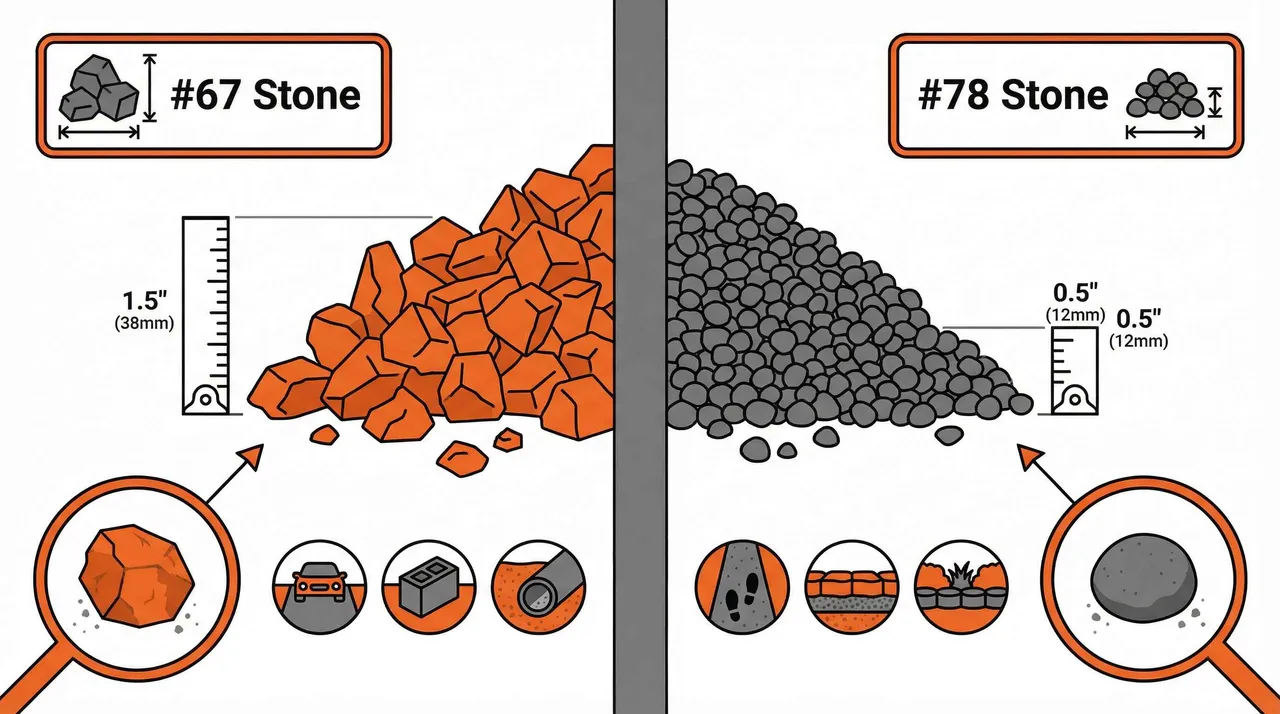
Choosing between #67 and #78 stone for your project? You’re looking at two popular crushed stone grades that serve different purposes. #67 stone ranges from 3/4 inch to 1/2 inch and works perfectly for driveways and drainage, while #78 stone measures around 1 inch and provides excellent base material for heavy-duty applications.
Both stones offer unique advantages depending on your specific needs. Understanding their size differences, applications, and performance characteristics will help you make the right choice for your driveway, walkway, or construction project.
Quick Answer: #67 stone (3/4″ to 1/2″) is ideal for standard driveways and surface applications, while #78 stone (1″) works better as base material for heavy traffic areas and provides superior drainage.
About Hello Gravel
Hello Gravel delivers bulk gravel, rock, dirt, and sand by the ton. Enter your ZIP code to see prices with delivery included. A local dump-truck driver places the load where access is safe; spreading is not included.
Understanding gravel size classifications
Crushed stone grades follow a numbering system that indicates particle size ranges. The lower the number, the larger the stone pieces. This standardized system helps contractors and homeowners select the right material for specific applications.
67 stone falls into the medium-size category, making it versatile for both surface and base applications. Its angular shape provides good compaction while allowing adequate drainage. The size range creates a stable surface that handles moderate foot and vehicle traffic well. If you’re comparing different crushed stone options, understanding the differences between #57 and #67 crushed stone can help you make an informed decision.78 stone represents a larger grade that excels in base applications. Its size provides excellent load-bearing capacity and superior drainage properties. The larger particles create more void space, making it particularly effective for drainage projects and heavy-duty base layers.
Size specifications and physical characteristics
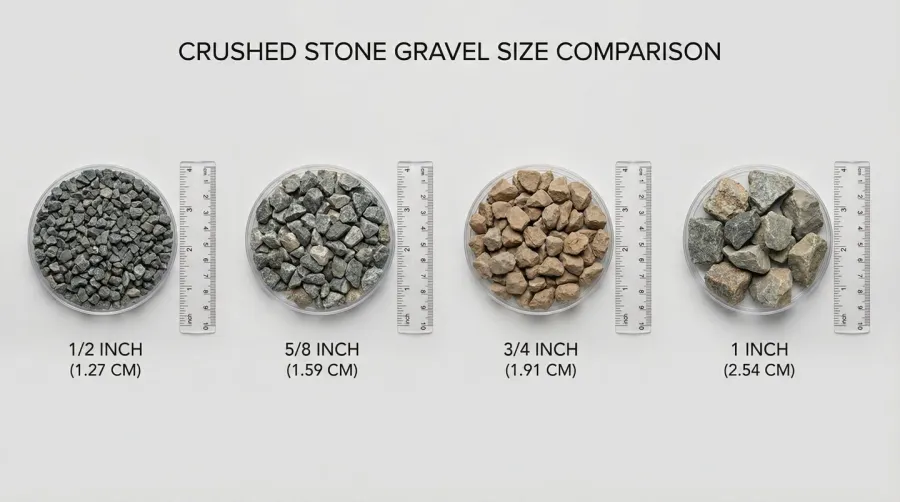
| Stone Grade | Size Range | Primary Shape | Best Applications |
|---|---|---|---|
| #67 Stone | 3/4″ to 1/2″ | Angular | Driveways, walkways, drainage |
| #78 Stone | 1″ nominal | Angular | Base material, heavy drainage |
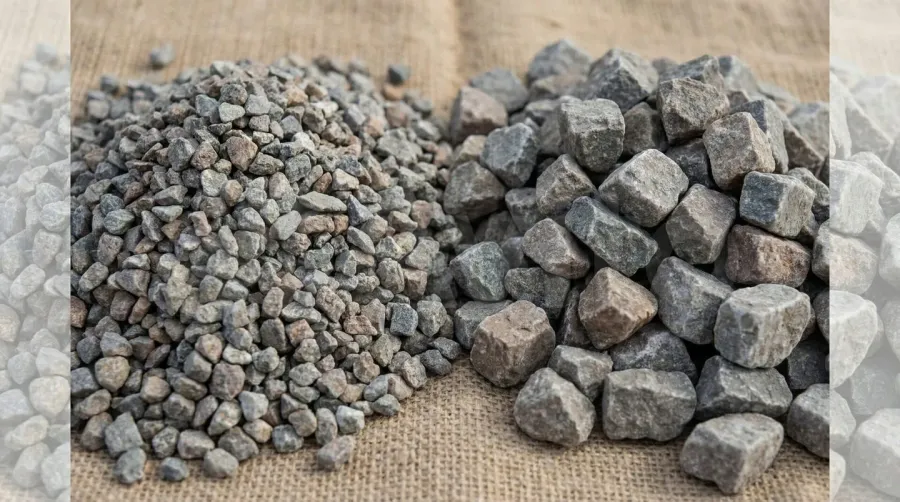
67 stone measures between three-quarters inch and half-inch in diameter. This size range provides excellent compaction while maintaining good drainage properties. The angular shape helps pieces lock together, creating a stable surface that resists shifting under load.78 stone typically measures around one inch in diameter. The larger size creates more void space between particles, enhancing drainage capabilities. This characteristic makes it particularly valuable for applications requiring superior water management or as a base layer beneath finer materials.
Both grades feature angular shapes produced during the crushing process. This angular geometry provides better interlocking and stability compared to rounded river rock or pea gravel. The sharp edges help create a firm, stable surface that performs well under various load conditions. For projects requiring finer materials, you might also consider comparing 3/4″ gravel with pea gravel for surface applications.
Applications for #67 stone
67 stone serves as an excellent choice for residential driveways, particularly those with moderate traffic. Its size allows for good compaction while providing adequate drainage to prevent water pooling. The material creates a stable driving surface that handles regular vehicle traffic without significant rutting.
Walkways and pathways benefit from #67 stone’s manageable size and stable characteristics. The material provides good footing while allowing water to drain through, reducing puddle formation and ice buildup in colder climates. Its appearance also complements most landscape designs.
Drainage applications represent another strong use case for #67 stone. French drains, foundation drainage, and general water management systems perform well with this grade. The size provides good flow characteristics while filtering out smaller debris that might clog drainage systems.
Pro Tip: For standard residential driveways with light to moderate traffic, #67 stone provides the perfect balance of stability, drainage, and cost-effectiveness.
Applications for #78 stone
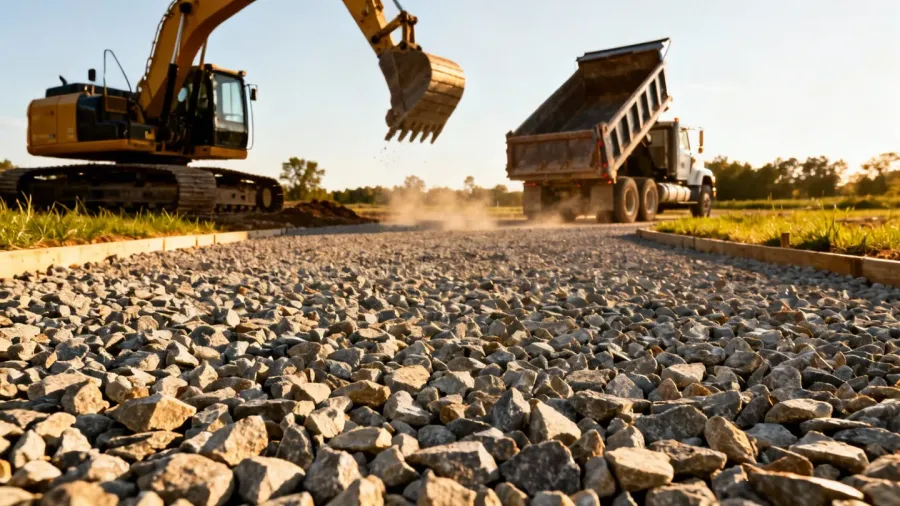
78 stone excels as base material for heavy-duty applications. Its larger size provides superior load-bearing capacity, making it ideal for areas expecting heavy vehicle traffic or equipment loads. The material creates a solid foundation that distributes weight effectively.
Commercial driveways and parking areas often benefit from #78 stone as a base layer. The larger particles provide excellent stability for heavier vehicles while allowing proper drainage. Many contractors use #78 as a base with finer materials on top for the best of both worlds. When considering base materials, you may also want to explore crusher run versus 57 stone for additional options.
Drainage projects requiring maximum flow capacity work well with #78 stone. The larger particle size creates more void space, allowing water to move through quickly. This characteristic makes it valuable for storm water management, septic system drainage, and foundation waterproofing applications.
Important: While #78 stone provides excellent base properties, consider adding a finer surface layer for walking comfort and improved appearance in residential applications.
Choosing between #67 and #78 stone
Your project requirements should guide your choice between these two grades. Consider the expected traffic load, drainage needs, and whether you need surface material or base support. #67 works better for direct surface applications, while #78 excels as foundation material.
Budget considerations also play a role in your decision. #67 stone typically costs slightly less due to its smaller size and broader availability. However, #78 stone may provide better long-term value for heavy-duty applications due to its superior load-bearing characteristics. Understanding the differences between 3/4″ and 3/4″ minus materials can also help with your material selection.
Installation requirements differ between the two grades. #67 stone compacts more easily and requires less specialized equipment for placement. #78 stone may need additional preparation and proper compaction techniques to achieve optimal performance, especially in base applications.
For most residential driveways and walkways, #67 stone provides excellent performance at a reasonable cost. Choose #78 stone when you need maximum drainage capacity or plan to support heavy loads. Many successful projects combine both grades, using #78 as a base with #67 as the surface layer. For limestone-based alternatives, consider reviewing 610 limestone versus 57 gravel for your project needs.
Both #67 and #78 stone offer reliable performance for their intended applications. Understanding their characteristics helps you select the right material for your specific project needs, ensuring long-lasting results that meet your expectations for functionality and appearance.
FAQ
What is the difference between #67 and #78 stone?
#67 stone ranges from 3/4 inch to 1/2 inch in size and is ideal for standard driveways, walkways, and drainage applications due to its excellent compaction properties. #78 stone is larger at approximately 1 inch and works better as base material for heavy-duty applications and provides superior drainage with more void space between particles.
Which stone is better for driveways: #67 or #78?
For standard residential driveways with moderate traffic, #67 stone is typically the better choice as it provides excellent surface stability and compaction. #78 stone works better as a base layer for heavy-duty driveways or commercial applications. Many contractors use #78 as base material with #67 as the surface layer for optimal performance.
Can I use #78 stone for drainage projects?
Yes, #78 stone is excellent for drainage projects due to its larger particle size that creates more void space, allowing water to flow through quickly. It’s particularly effective for French drains, foundation drainage, storm water management, and septic system drainage where maximum flow capacity is needed.
How do I choose between #67 and #78 stone for my project?
Consider your project requirements: use #67 stone for surface applications like walkways, standard driveways, and areas needing good compaction. Choose #78 stone for base material, heavy-duty applications, or projects requiring maximum drainage capacity. Factor in traffic load, drainage needs, and whether you need surface material or foundation support.
Materials for this project
Get it delivered — dumped where you need it
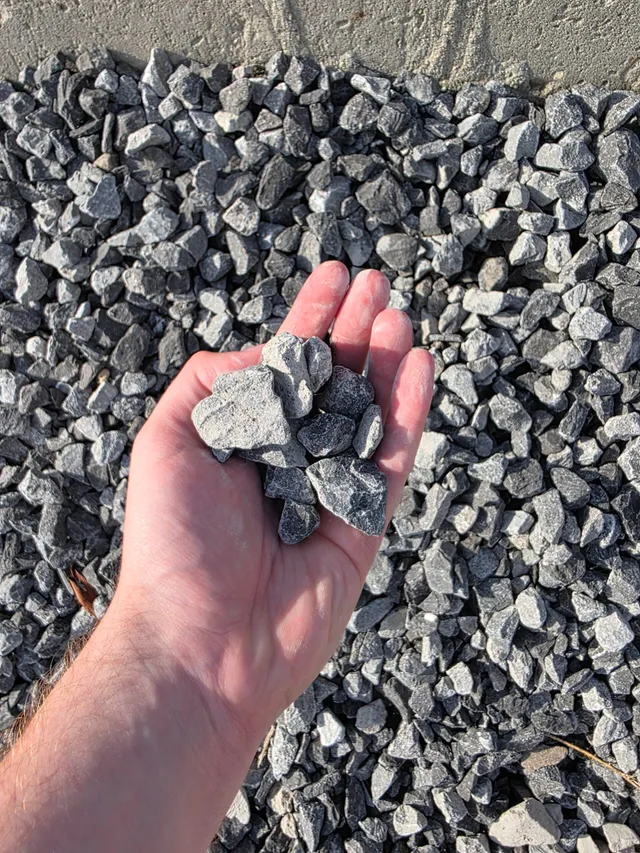
Driveway Gravel
Driveways & Parking areas
See delivered price
View product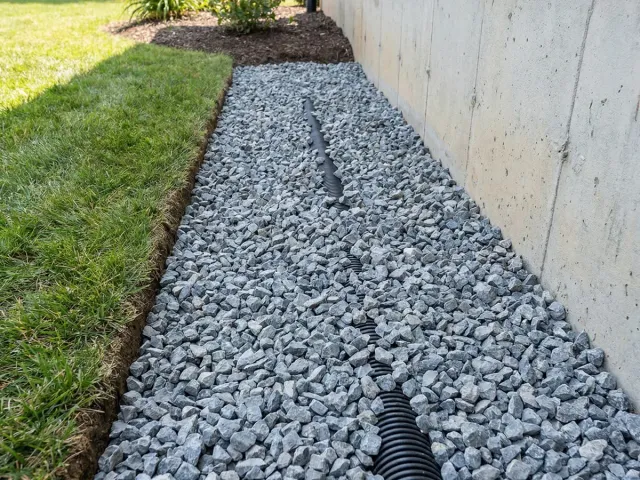
#57 Crushed Stone
Driveways & Drainage
See delivered price
View product
Fill Dirt
Grading & Backfill
See delivered price
View product
Topsoil
Lawn establishment & Garden beds
See delivered price
View product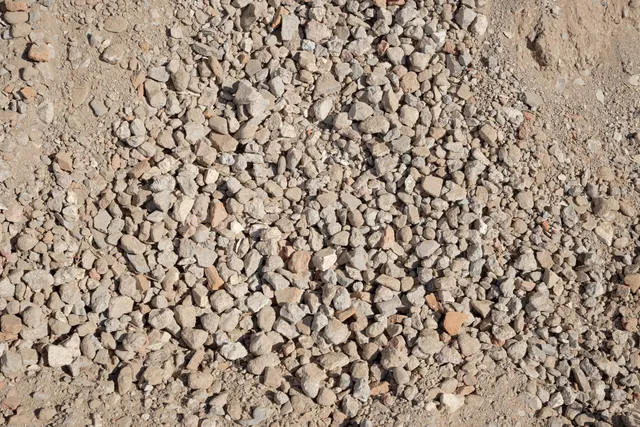
Road Base
Driveway base & Road construction
See delivered price
View product