
Crusher Run vs 57 Stone: Complete Guide for Your Construction Project
Free local estimate
See delivered prices for your ZIP in 60 seconds
Tell us where the project is and we'll price this material — delivered — for your exact ZIP.
- Real delivered pricing for your ZIP — not a generic range.
- Works for any quantity — driveways, pads, drains, or full projects.
- Prefer to talk? We follow up with local availability and delivery windows.
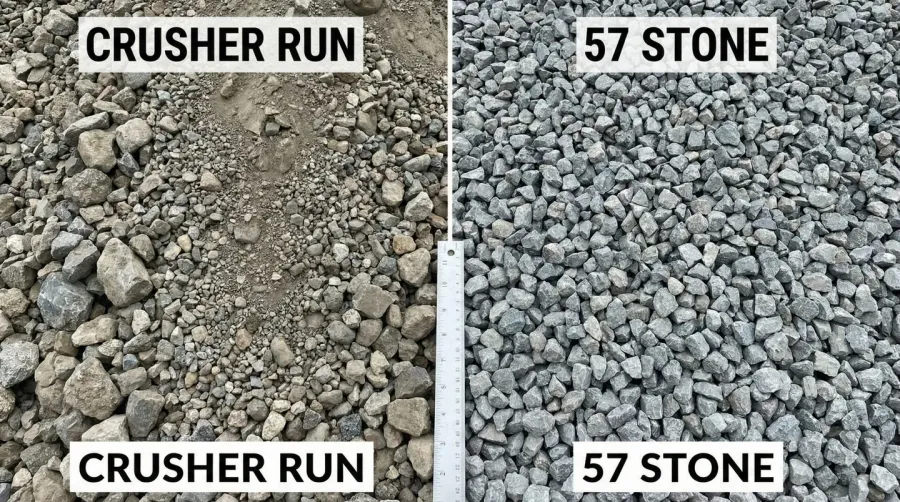
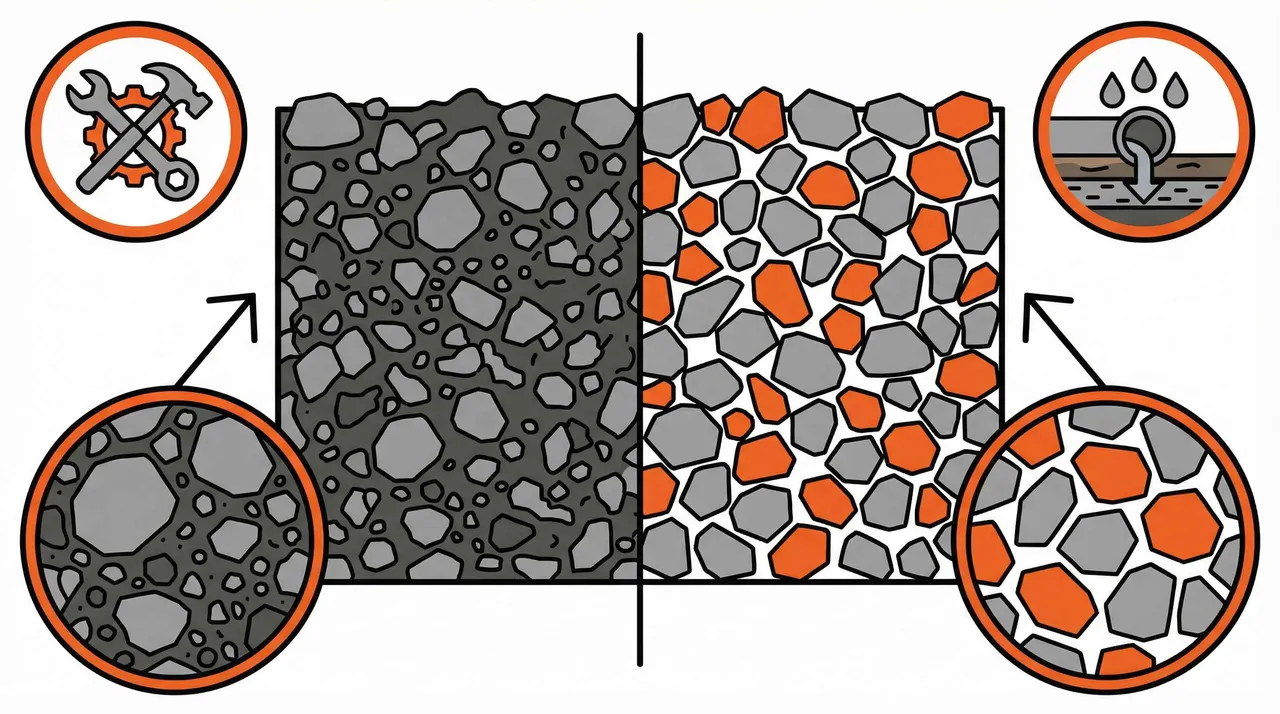
Choosing between crusher run and 57 stone can make or break your construction project. While both materials serve as excellent aggregates, they have distinct characteristics that make each better suited for specific applications. Crusher run excels as a compactable base material, while 57 stone provides superior drainage and aesthetic appeal.
Quick Answer: Crusher run is ideal for driveways and road bases due to its excellent compaction, while 57 stone works best for drainage applications and decorative landscaping projects.
Understanding these differences will save you money on repairs and ensure your project stands the test of time. Let’s dive into what makes each material unique and when to use them.
About Hello Gravel
Hello Gravel delivers bulk gravel, rock, dirt, and sand by the ton. Enter your ZIP code to see prices with delivery included. A local dump-truck driver places the load where access is safe; spreading is not included.
What is crusher run and how is it made
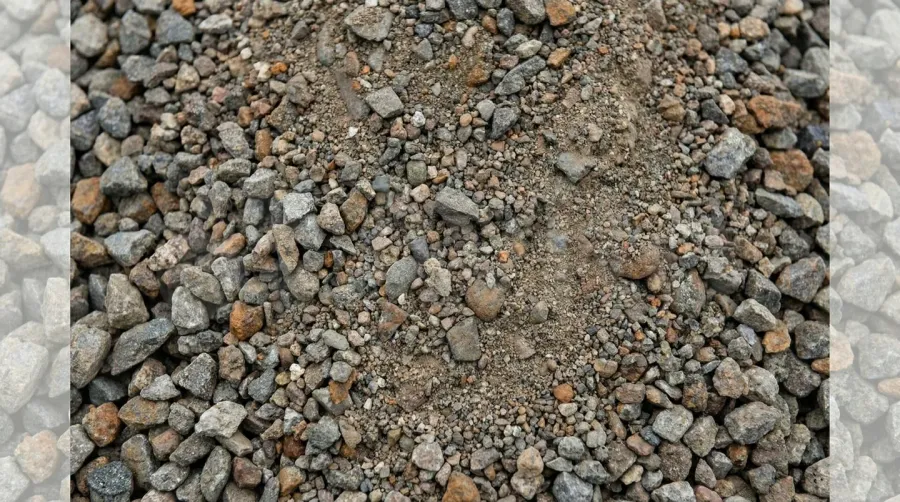
Crusher run, also known as dense grade aggregate or quarry process stone, is a blend of crushed stone and stone dust created by passing quarry rock through multiple crushers. This process creates a mixture of various-sized particles that compact together to form a solid, stable base.
The material typically consists of granite, limestone, or trap rock crushed to sizes ranging from fine dust to about 1.5 inches. This gradation of particle sizes is what gives crusher run its superior compaction properties. When compacted with water, the fine particles fill the voids between larger stones, creating an almost concrete-like surface.
You’ll find crusher run used extensively in road construction, driveway bases, and foundation backfill because of its ability to lock together under compaction. The angular shape of the crushed particles helps them interlock, providing excellent load-bearing capacity for heavy traffic.
Understanding 57 stone composition and characteristics
57 stone, sometimes called PA 2A stone, gets its name from the sieve size it passes through during production. This uniform aggregate consists of angular stones ranging from 0.5 to 1 inch in diameter, with minimal fine particles or dust.
The material is typically made from limestone or granite that’s been crushed and screened to remove excess fines. This screening process creates a clean, uniform product with excellent drainage properties. The angular shape of 57 stone provides good stability while allowing water to flow freely through the material.
Unlike crusher run, 57 stone doesn’t compact into a solid mass. Instead, it maintains its loose structure, making it perfect for applications where drainage is more important than a solid base. You’ll commonly see it used in French drains, septic systems, and as a decorative ground cover.
Pro Tip: The uniform size of 57 stone makes it easy to calculate coverage – one ton typically covers about 120 square feet at 2 inches deep.
Key differences that matter for your project
The most significant difference between these materials lies in their particle size distribution and how they behave when compacted. Crusher run contains a full range of particle sizes from dust to 1.5 inches, while 57 stone maintains a uniform size range of 0.5 to 1 inch.
This size difference directly impacts their performance. Crusher run’s varied particle sizes allow it to compact tightly, creating a stable base that can support heavy loads. The fine particles act as a binding agent, filling gaps between larger stones. In contrast, 57 stone’s uniform size creates natural drainage channels that prevent water buildup.
| Feature | Crusher Run | 57 Stone |
|---|---|---|
| Particle Size | Dust to 1.5″ | 0.5″ to 1″ |
| Compaction | Excellent | Poor |
| Drainage | Limited | Excellent |
| Cost per ton | Lower | Higher |
The texture difference is immediately noticeable. Crusher run feels gritty and dusty due to the fine particles, while 57 stone has a clean, uniform feel. This affects both installation and maintenance requirements.
Applications and when to choose each material
Crusher run shines in applications requiring a solid, compactable base. Use it for driveway foundations, road bases, and areas that need to support heavy equipment or vehicles. The material’s ability to form a nearly impermeable surface makes it ideal for preventing settling and shifting over time. If you’re comparing different base materials, you might also want to explore the differences between crusher run and 3/4″ limestone for your specific application.
For drainage applications, 57 stone is your go-to choice. Its open structure allows water to flow freely, making it perfect for French drains, septic drain fields, and areas prone to water accumulation. The material also works well as decorative ground cover around buildings and in landscaping projects where you want a clean, uniform appearance. When considering drainage options, understanding how 57 gravel compares to crusher run gravel can help you make the best decision.
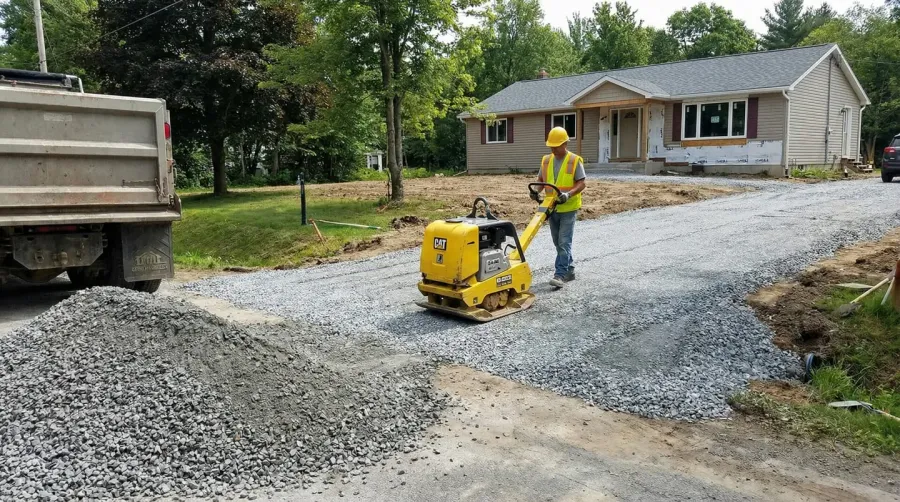
Consider your project’s primary need. If stability and load-bearing capacity are priorities, choose crusher run. If drainage and aesthetics matter more, go with 57 stone. Many successful projects actually use both materials – crusher run as a base layer topped with 57 stone for drainage and appearance.
Installation Insight: Many contractors use a layered approach, installing 4-6 inches of compacted crusher run as a base, then adding 2 inches of 57 stone on top for drainage and visual appeal.
The climate in your area also influences material choice. In regions with heavy rainfall or freeze-thaw cycles, proper drainage becomes critical, making 57 stone more valuable despite its higher cost. If you’re working with similar-sized materials, you may also want to learn about the key differences between #57 and #67 crushed stone to ensure you’re selecting the right grade for your needs.
For projects requiring specific size gradations, comparing 3/4″ gravel versus pea gravel or understanding the distinction between 3/4″ and 3/4″ minus can provide additional insights into how particle size affects performance. Similarly, if you’re working with limestone-based materials, exploring 610 limestone versus 57 gravel might offer valuable perspective on material selection.
Both crusher run and 57 stone have earned their place in construction for good reasons. Crusher run provides the solid foundation your heavy-duty projects need, while 57 stone offers the drainage and aesthetic qualities that keep your project looking good and functioning properly. By understanding their unique characteristics and matching them to your specific needs, you’ll make a choice that serves your project well for years to come.
FAQ
What is the main difference between crusher run and 57 stone?
The main difference lies in particle size distribution and compaction ability. Crusher run contains a mix of stone dust and particles ranging from fine dust to 1.5 inches, allowing it to compact tightly into a solid base. 57 stone consists of uniform angular stones between 0.5 to 1 inch with minimal fines, providing excellent drainage but limited compaction properties.
Which is better for driveways – crusher run or 57 stone?
Crusher run is generally better for driveways because it compacts into a stable, solid base that can support heavy vehicle traffic without shifting or settling. The fine particles in crusher run fill gaps between larger stones, creating an almost concrete-like surface. Use 57 stone only if drainage is your primary concern, as it won’t provide the same load-bearing stability.
Can you use both crusher run and 57 stone together?
Yes, many contractors use a layered approach combining both materials. Install 4-6 inches of compacted crusher run as a stable base layer, then add 2 inches of 57 stone on top for drainage and visual appeal. This method provides the structural stability of crusher run with the drainage benefits and clean appearance of 57 stone.
When should I choose 57 stone over crusher run?
Choose 57 stone when drainage is your primary concern, such as for French drains, septic drain fields, areas prone to water accumulation, or decorative landscaping projects. Its uniform size creates natural drainage channels that prevent water buildup, making it ideal for applications where water flow is more important than maximum compaction and load-bearing capacity.
Materials for this project
Get it delivered — dumped where you need it
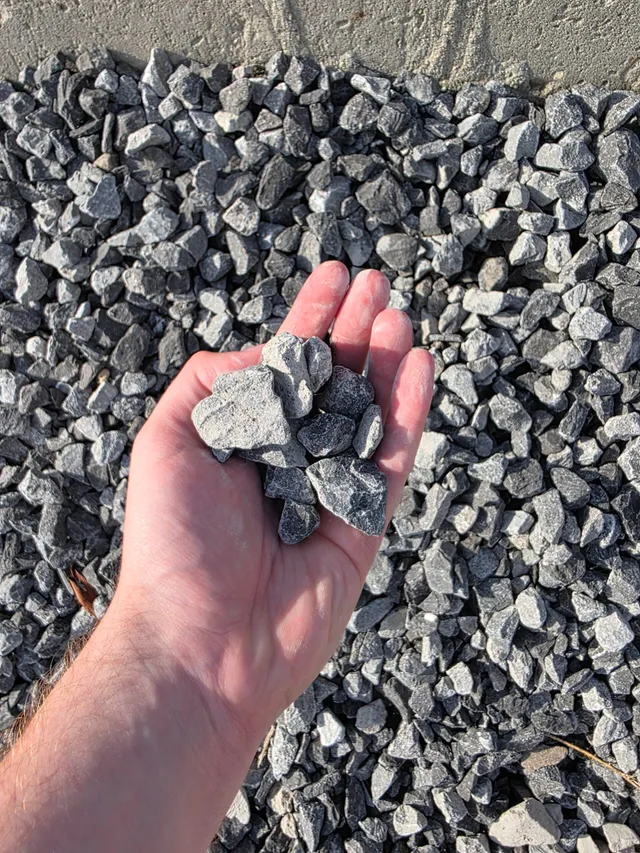
Driveway Gravel
Driveways & Parking areas
See delivered price
View product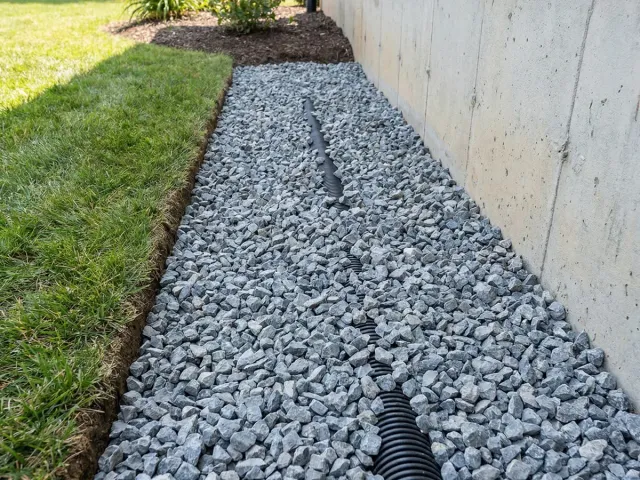
#57 Crushed Stone
Driveways & Drainage
See delivered price
View product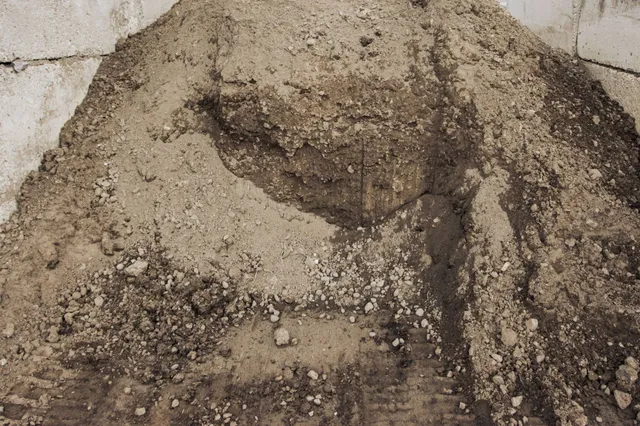
Fill Dirt
Grading & Backfill
See delivered price
View product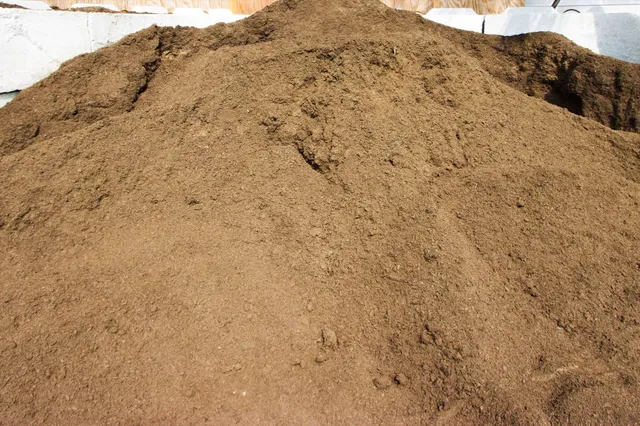
Topsoil
Lawn establishment & Garden beds
See delivered price
View product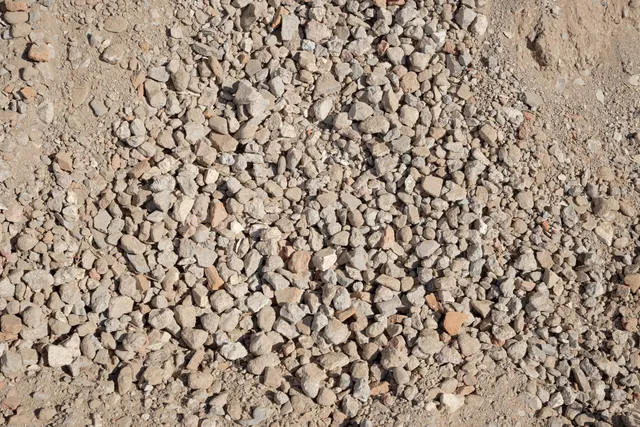
Road Base
Driveway base & Road construction
See delivered price
View product