
Rock Sizes Chart Complete Guide to Boulder, Cobble, and Pebble Classifications
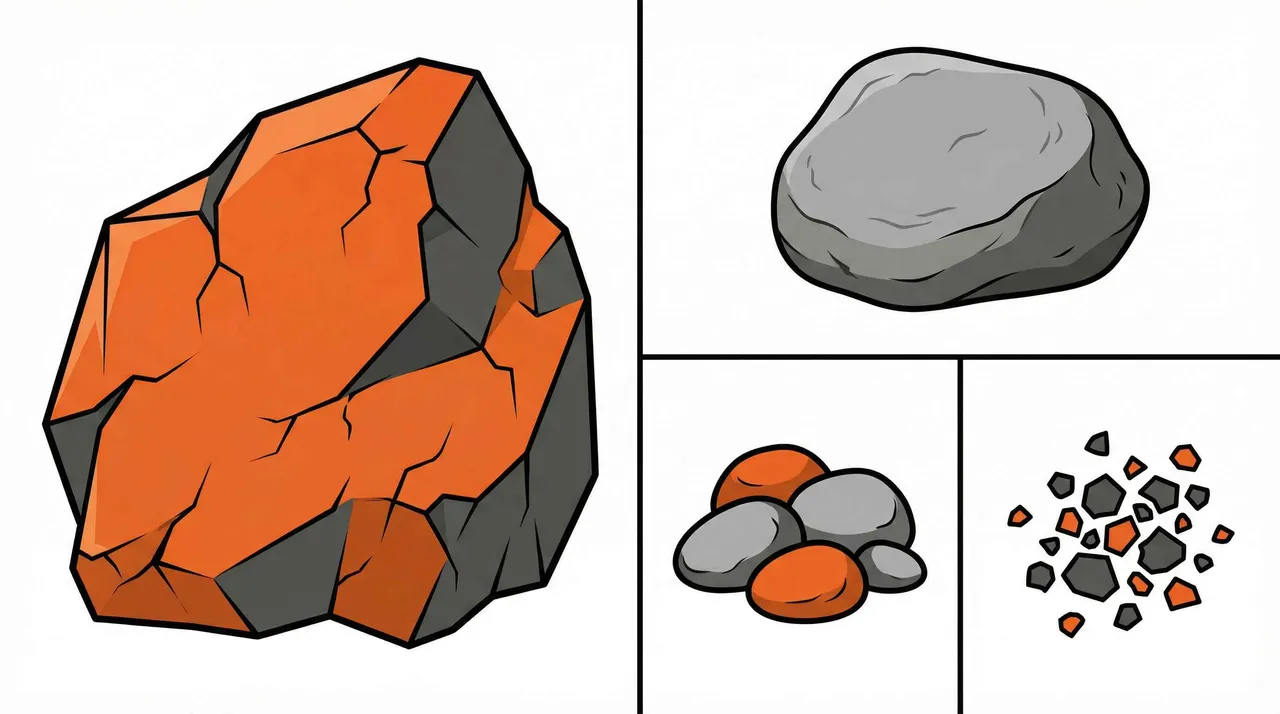
Understanding rock sizes is crucial for any construction or landscaping project. Whether you’re building a retaining wall or designing a garden pathway, choosing the right rock size determines both functionality and aesthetics. Rock sizes range from massive boulders over 10 inches in diameter to tiny silt particles smaller than 0.004 millimeters.
Quick Answer: Rocks are classified by diameter into six main categories: boulders (10+ inches), cobbles (2.5-10 inches), pebbles (up to 2.5 inches), granules (2-4mm), sand (0.0625-2mm), and silt (0.004-0.0625mm).
This guide breaks down each rock size category, their specific uses, and how to measure them accurately for your project needs.
About Hello Gravel
Hello Gravel delivers bulk gravel, rock, dirt, and sand by the ton. Enter your ZIP code to see prices with delivery included. A local dump-truck driver places the load where access is safe; spreading is not included.
Rock size classifications and measurements
Rock classification follows a standardized system based on particle diameter. This system helps professionals select appropriate materials for specific applications and ensures consistent communication across industries.
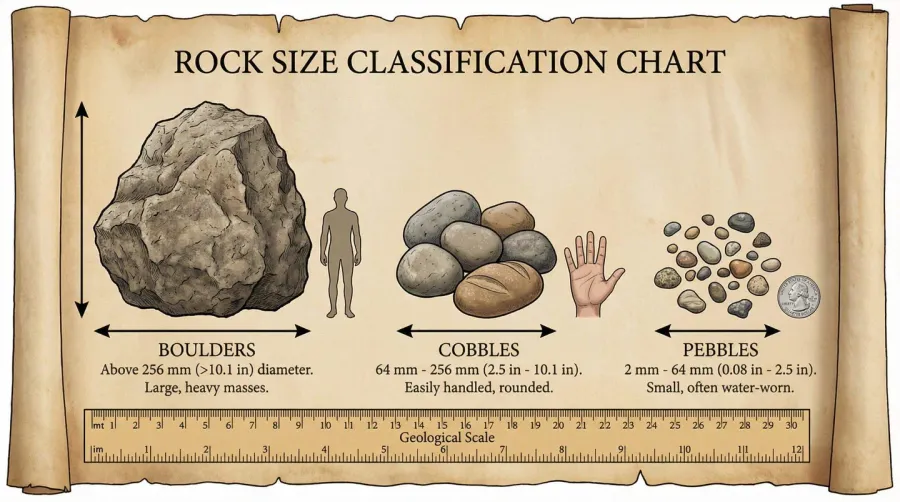
The primary classification divides rocks into six distinct categories. Boulders represent the largest category with diameters exceeding 10 inches. These massive stones require heavy machinery for handling and placement. Cobbles fall into the medium-large range, measuring between 2.5 and 10 inches in diameter.
Pebbles are smaller rounded stones with diameters up to 2.5 inches. Their smooth surfaces make them popular for decorative applications. Granules measure between 2 and 4 millimeters and serve well in filtration systems. Sand particles range from 0.0625 to 2 millimeters, while silt represents the finest category at 0.004 to 0.0625 millimeters.
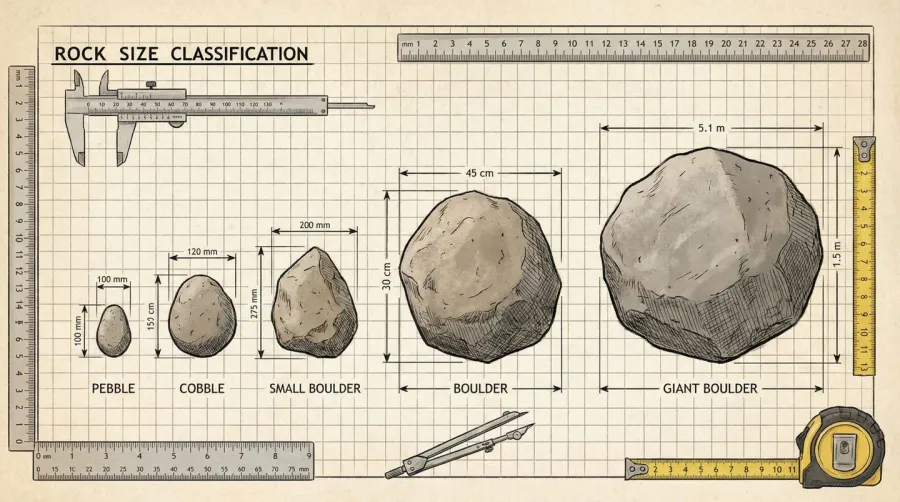
| Rock Type | Diameter Range | Common Uses | Weight per Cubic Yard |
|---|---|---|---|
| Boulder | 10+ inches | Landscaping focal points, erosion control | 2,500-3,000 lbs |
| Cobble | 2.5-10 inches | Retaining walls, pathways | 2,200-2,700 lbs |
| Pebble | Up to 2.5 inches | Decorative landscaping, drainage | 2,000-2,500 lbs |
| Granule | 2-4mm | Filtration, base material | 1,800-2,200 lbs |
Construction applications for different rock sizes
Construction projects rely heavily on specific rock sizes to achieve structural integrity and proper drainage. Each size category serves distinct purposes based on load-bearing requirements and installation methods.
Boulders provide exceptional stability for large-scale foundation work. Their massive size and weight create solid anchoring points for retaining walls and erosion control structures. Construction teams often use boulders as riprap along shorelines and steep embankments where water flow poses erosion risks.
Cobbles excel in medium-duty construction applications. Their size makes them manageable for manual placement while still providing substantial structural support. Road construction frequently incorporates cobbles as base material beneath asphalt layers. The angular surfaces of crushed cobbles interlock effectively, creating stable foundations. When comparing gravel and road base materials, understanding these size differences becomes critical for project success.
Pro Tip: For driveway construction, use 3/4-inch crushed stone (large granules) as base material topped with smaller gravel for the surface layer to ensure proper compaction and drainage.
Smaller rocks like pebbles and granules serve specialized construction roles. Pebbles work well in concrete mixes, adding strength while reducing material costs. Granules function as excellent drainage material around foundation perimeters and in French drain systems. To learn more about different crushed rock gravel sizes and their applications, consider how each size category contributes to overall project performance.
Landscaping uses and aesthetic considerations
Landscape design leverages rock sizes to create visual interest, manage water flow, and establish focal points throughout outdoor spaces. The key lies in understanding how different sizes interact with plant materials and existing terrain.
Boulders serve as dramatic landscape anchors that draw attention and create natural gathering spaces. Strategic boulder placement can define garden rooms, provide seating areas, or serve as backdrops for plantings. Their permanence makes them ideal for long-term landscape structure.
Medium-sized rocks like cobbles and large pebbles work well for pathway construction and border definition. These sizes allow comfortable walking while providing clear visual boundaries between different landscape zones. River rock in this size range creates attractive dry creek beds that manage stormwater runoff.
Smaller materials including pea gravel and sand offer versatility in detailed landscape work. Pea gravel creates comfortable walking surfaces for informal pathways and provides excellent drainage around plant roots. When deciding between 3/4″ gravel and pea gravel for your landscaping project, consider both aesthetic appeal and functional requirements. Sand works well for leveling pavers and creating smooth surfaces beneath outdoor furniture.
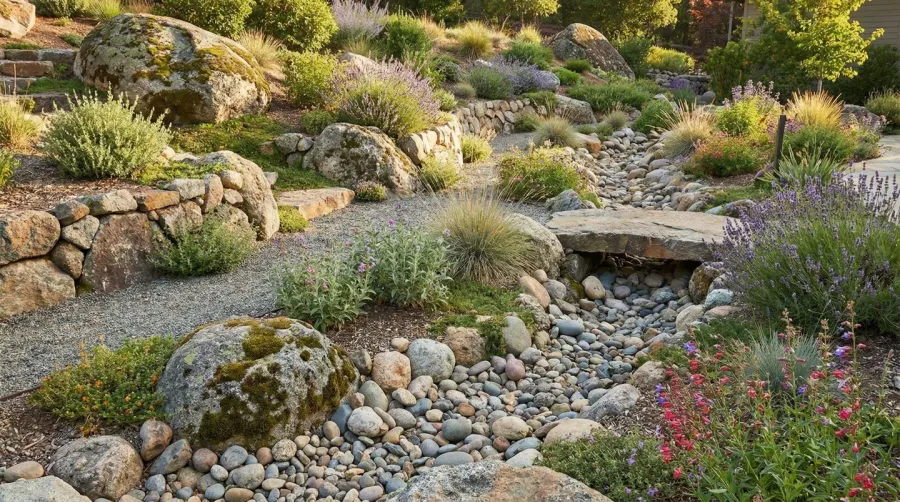 The color and texture of rocks significantly impact landscape aesthetics. Smooth river rocks provide soft, organic appearances that complement naturalistic designs. Angular crushed stone creates more formal, structured looks suitable for contemporary landscapes.
How to measure and select rocks accurately
Accurate rock measurement ensures you get the right materials for your specific project requirements. Professional measurement techniques help avoid costly mistakes and material waste.
Digital calipers provide the most precise measurements for individual rocks. Take multiple measurements across the widest diameter and average the results for accuracy. This method works best for rocks larger than one inch in diameter.
Sieve analysis offers the standard method for measuring bulk quantities of smaller rocks. This process involves passing materials through graduated screens with specific mesh sizes. The retained material on each screen indicates the size distribution of your rock sample.
When selecting rocks for projects, consider both current needs and future maintenance requirements. Larger rocks generally require less frequent replacement but cost more initially. Smaller materials may need periodic replenishment but offer greater flexibility for design changes. For comprehensive information on making the right choice, explore our guide to gravel types and sizes.
Important: Always account for settling and compaction when calculating rock quantities. Order 10-15% extra material to ensure adequate coverage after installation.
Project specifications should clearly define acceptable size ranges rather than single target sizes. Natural variation means even carefully sorted materials will include some pieces outside the nominal size category. Understanding the differences between options like #57 versus #67 crushed stone can help you specify materials more precisely for your particular application.
Understanding rock sizes empowers you to make informed decisions for construction and landscaping projects. Whether you need massive boulders for dramatic landscape features or precise granules for drainage systems, proper size selection ensures successful project outcomes. Take time to measure accurately and consider long-term performance when choosing materials for your next project.
FAQ
What size rock qualifies as a boulder?
A boulder is defined as any rock with a diameter larger than 10 inches (256 mm) according to standard geological classifications. Boulders are the largest category in rock size classification systems and require heavy machinery for handling and placement in construction or landscaping projects.
How do you accurately measure rock sizes for projects?
For individual rocks larger than one inch, use digital calipers to measure the widest diameter and average multiple measurements for accuracy. For bulk quantities of smaller rocks, use sieve analysis by passing materials through graduated screens with specific mesh sizes to determine size distribution.
What’s the difference between pebbles and granules?
Pebbles are rounded stones with diameters up to 2.5 inches and are commonly used for decorative landscaping and drainage applications. Granules are much smaller, measuring between 2-4 millimeters in diameter, and are typically used in filtration systems and as base material for construction projects.
Which rock sizes work best for driveways?
For driveways, use 3/4-inch crushed stone (large granules) as the base material for proper compaction and stability, topped with smaller gravel for the surface layer. This combination ensures adequate drainage while providing a durable driving surface that can handle vehicle weight and traffic.
Materials for this project
Get it delivered — dumped where you need it
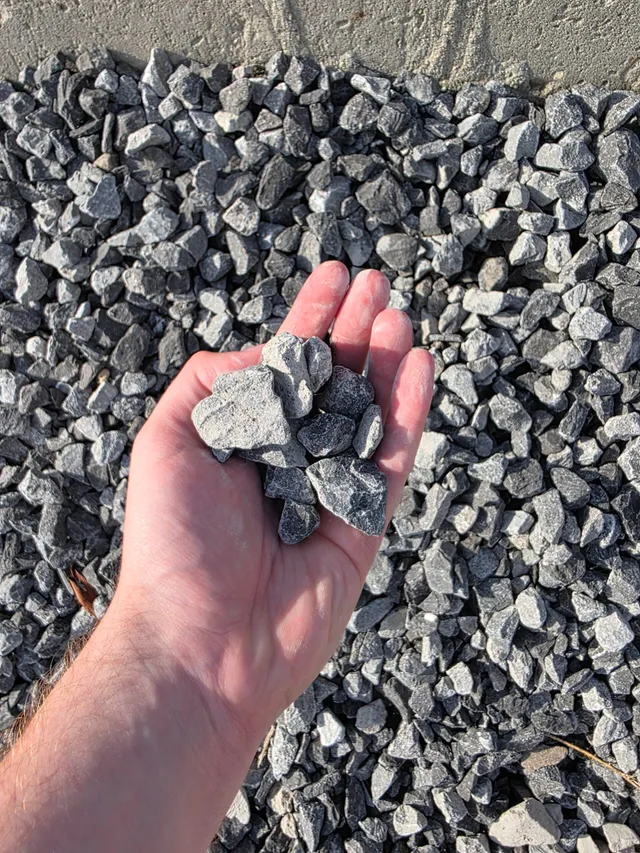
Driveway Gravel
Driveways & Parking areas
See delivered price
View product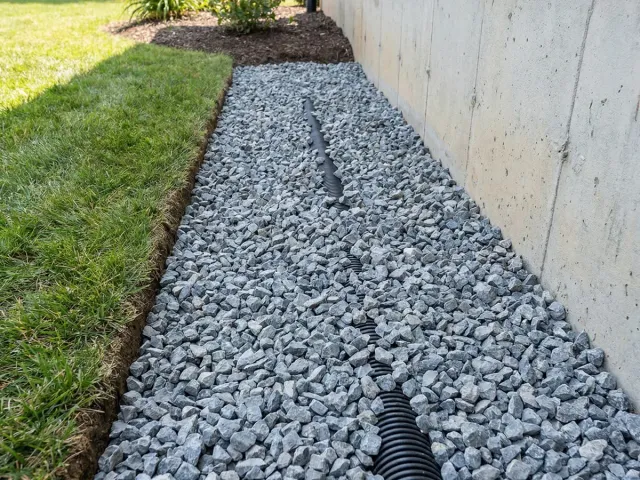
#57 Crushed Stone
Driveways & Drainage
See delivered price
View product
Fill Dirt
Grading & Backfill
See delivered price
View product
Topsoil
Lawn establishment & Garden beds
See delivered price
View product
Road Base
Driveway base & Road construction
See delivered price
View product