
Gravel Size Chart Guide Choose the Perfect Size for Your Project
Free local estimate
See delivered prices for your ZIP in 60 seconds
Tell us where the project is and we'll price this material — delivered — for your exact ZIP.
- Real delivered pricing for your ZIP — not a generic range.
- Works for any quantity — driveways, pads, drains, or full projects.
- Prefer to talk? We follow up with local availability and delivery windows.
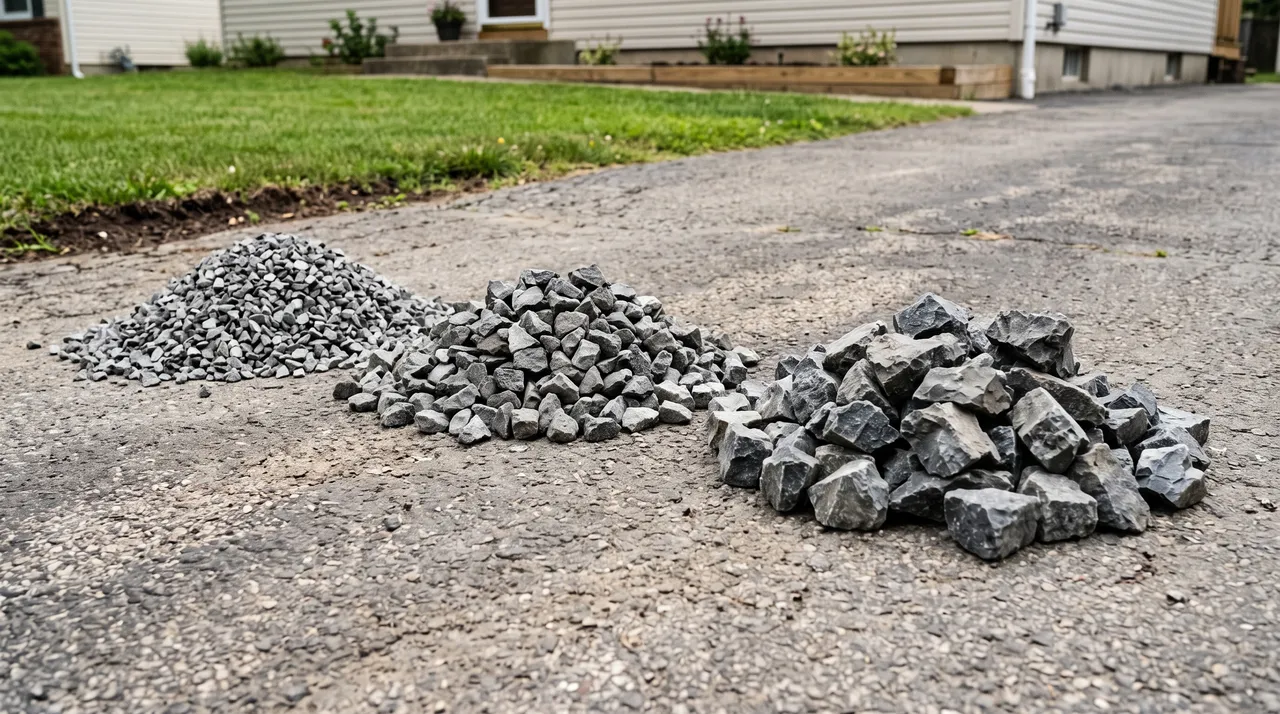
Choosing the wrong gravel size can turn your dream project into a costly mistake. Whether you’re building a driveway that needs to handle heavy vehicles or creating a garden path that feels comfortable underfoot, the size of your gravel directly affects performance, durability, and appearance.
Quick answer: Most residential driveways work best with #3 gravel (1-2 inches) for the base layer and #57 gravel (½-¾ inch) for the top surface. Garden paths perform well with 3/8-inch pea gravel, while French drains need #3 or #4 angular crushed stone.
Pro tip: The gravel numbering system works backwards – smaller numbers mean larger stones. #1 gravel contains the biggest pieces, while #10 has the smallest particles.
Understanding gravel sizes helps you make confident decisions and avoid the frustration of materials that shift, wash away, or create uncomfortable surfaces. This guide shows you exactly which size works best for every common project, complete with a detailed size chart and practical recommendations.
About Hello Gravel
Hello Gravel delivers bulk gravel, rock, dirt, and sand by the ton. Enter your ZIP code to see prices with delivery included. A local dump-truck driver places the load where access is safe; spreading is not included.
Understanding gravel size measurements
Gravel sizes follow a standardized numbering system that might seem confusing at first. The key is remembering that smaller numbers indicate larger stones. This system comes from the screen sizes used during production, where larger stones are caught by bigger screens first.
Most suppliers measure gravel by diameter in either inches or millimeters. In the United States, you’ll see sizes like 3/8 inch, 3/4 inch, or 1.5 inches. The measurement represents the average size of stones that pass through specific screen openings during sorting.
For example, #57 gravel passes through a 3/4-inch screen but gets retained by a 1/2-inch screen, giving you stones roughly 1/2 to 3/4 inch in diameter. This standardization helps ensure you get consistent material regardless of your supplier.
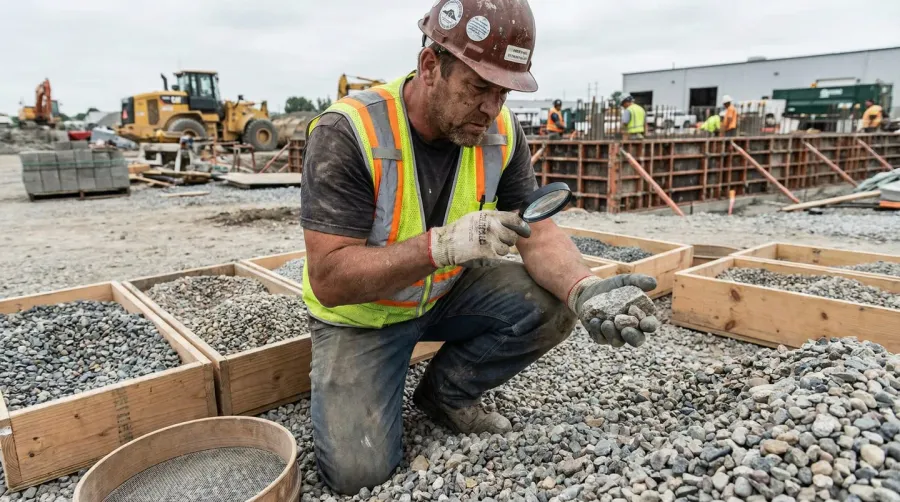
When talking to suppliers, use the grade numbers rather than describing sizes as “small” or “large” gravel. Asking for “#57 crushed stone” gets you exactly what you need, while “medium gravel” could mean different things to different people. Understanding the difference between gravel and pebbles can also help you communicate more effectively with suppliers.
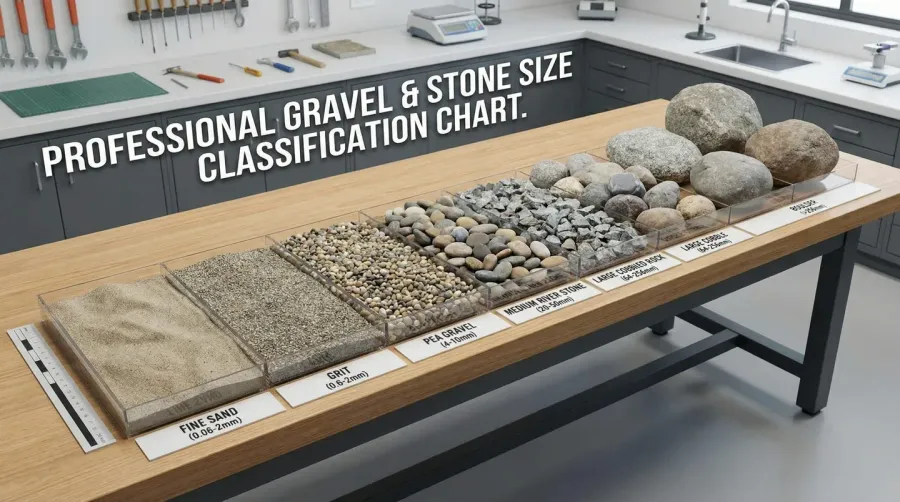
Gravel size chart for common projects
| Size/Grade | Diameter Range | Shape | Best Applications |
|---|---|---|---|
| #3 | 1-2 inches | Angular | Driveway base, drainage systems |
| #57 | ½-¾ inch | Angular | Driveway surface, walkways |
| #8 | ⅜-½ inch | Angular | Garden paths, foundation work |
| Pea Gravel | ¼-⅜ inch | Rounded | Decorative paths, playground surfaces |
This chart serves as your starting point for most residential projects. The angular crushed stone grades (#3, #57, #8) provide better compaction and stability because their sharp edges lock together. Rounded materials like pea gravel offer more comfort and visual appeal but may shift under heavy loads.
Important consideration: Angular crushed stone compacts better than rounded river rock, making it the preferred choice for load-bearing applications like driveways and parking areas.
Your specific project requirements will help you narrow down the best choice. Consider factors like expected traffic, drainage needs, and whether comfort or durability takes priority in your application.
Best gravel sizes for driveways and parking areas
Successful driveways typically use multiple gravel sizes in different layers rather than a single size throughout. This layered approach maximizes both performance and longevity while managing costs effectively.
Start with a base layer of #3 gravel (1-2 inches) applied 4-6 inches deep. This foundation layer bears the weight load and prevents the driveway from sinking into soft soil. The large angular stones provide excellent drainage while creating a stable platform for the layers above. Learn more about the benefits and uses of number 3 gravel for your foundation work.
Add a middle layer of #57 gravel (½-¾ inch) about 3-4 inches deep. This transition layer provides additional stability while beginning to create a smoother surface. It also helps with drainage by allowing water to flow down to the base layer.
Finish with a top layer of #57 gravel or crusher run applied 1-2 inches deep. Many homeowners choose #57 for durability, while crusher run (a mix of stone sizes and fine particles) creates a more finished appearance that compacts tighter.
Each layer must be compacted thoroughly before adding the next layer. Proper compaction often matters more than the exact gravel size you choose, so don’t skip this critical step.
Choosing gravel sizes for landscaping and drainage
Garden paths and decorative areas have different requirements than driveways since they primarily handle foot traffic. Pea gravel in 3/8-inch size creates comfortable walking surfaces that look natural in garden settings. The rounded edges feel good underfoot and the size provides stability without being chunky.
For more formal paths, #8 crushed stone (⅜-½ inch) offers similar comfort with better compaction. The angular shape helps it stay in place better than pea gravel, especially on slopes or in high-traffic areas.
Drainage systems like French drains require clean, washed #3 or #4 stone (1-2 inches) that allows rapid water movement while filtering out soil particles. The larger stones create substantial void spaces essential for proper water flow. Avoid smaller gravel or stones with fine particles, as these can clog over time and reduce drainage effectiveness.
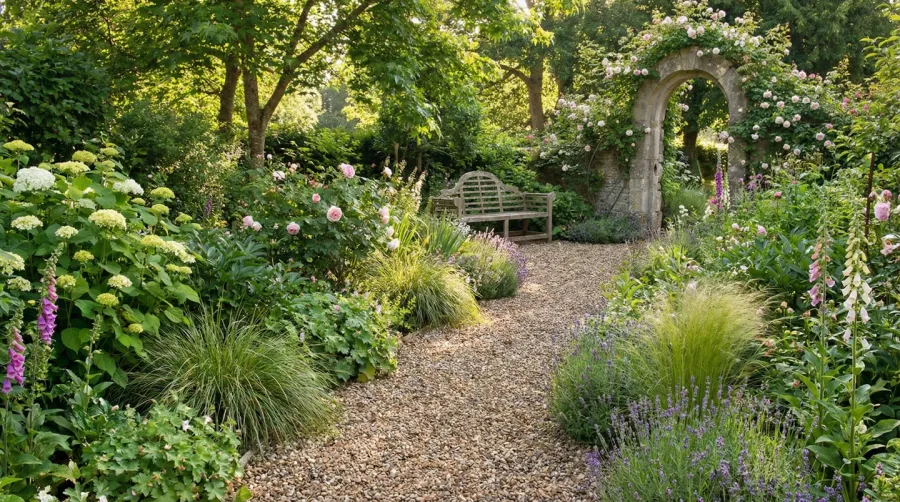
When selecting decorative gravel, consider maintenance requirements alongside appearance. Smaller stones may require periodic replenishment and raking, while larger stones typically stay in place longer but can be more difficult to modify later. Exploring the fascinating world of grava rocks can provide inspiration for your landscaping choices.
Calculating your gravel needs and making the right choice
Getting the right amount of gravel saves money and prevents project delays. The basic formula is straightforward: length × width × depth (in feet) ÷ 27 = cubic yards needed. For example, a 20-foot by 100-foot driveway with 6 inches total depth needs about 37 cubic yards across all layers.
Always order 10-15% extra to account for compaction and settling. Different gravel sizes have different coverage rates, so base layers typically require more material than top layers for the same area. When calculating quantities, it’s helpful to understand how much a tonne of stones covers for your specific project.
Money-saving tip: Buying all your gravel sizes from the same supplier often reduces delivery costs, even if you’re installing the layers at different times.
When making your final selection, balance three main factors: stability, comfort, and drainage. Heavy-use areas require more stability from larger, angular gravel. Decorative areas prioritize appearance and comfort. Areas with drainage concerns benefit from larger stones with more void space.
Consider your local climate as well. Freeze-thaw cycles make good drainage critical to prevent ice damage, while areas with heavy rainfall need materials that won’t wash away during storms. Understanding common gravel types and their characteristics helps you select materials suited to your regional conditions.
Understanding gravel sizes empowers you to make confident material choices that perform well for years. Whether you’re building a driveway that needs to handle daily traffic or creating garden paths that complement your landscaping, selecting the right size ensures your project succeeds from day one. Remember to assess your specific requirements and don’t hesitate to ask suppliers for samples or advice when making your final decision.
FAQ
What size gravel is best for a driveway?
For driveways, use a layered approach: #3 gravel (1-2 inches) for the base layer at 4-6 inches deep, #57 gravel (½-¾ inch) for the middle layer at 3-4 inches deep, and #57 gravel or crusher run for the top surface at 1-2 inches deep. This combination provides optimal stability, drainage, and durability for handling vehicle traffic.
How does gravel size affect drainage?
Larger gravel sizes create more void spaces between stones, allowing water to flow through more easily. For drainage systems like French drains, use #3 or #4 stone (1-2 inches) to ensure rapid water movement. Smaller gravel sizes have less void space and can become clogged with fine particles over time, reducing drainage effectiveness.
What gravel size is best for garden paths and landscaping?
For garden paths, 3/8-inch pea gravel works best as it creates comfortable walking surfaces and looks natural in garden settings. For more formal paths or high-traffic areas, #8 crushed stone (⅜-½ inch) offers similar comfort with better compaction due to its angular shape that helps it stay in place.
How do I calculate how much gravel I need for my project?
Use this formula: length × width × depth (in feet) ÷ 27 = cubic yards needed. For example, a 20-foot by 100-foot driveway with 6 inches total depth needs about 37 cubic yards. Always order 10-15% extra to account for compaction and settling, and remember that different gravel sizes have different coverage rates.
Materials for this project
Get it delivered — dumped where you need it
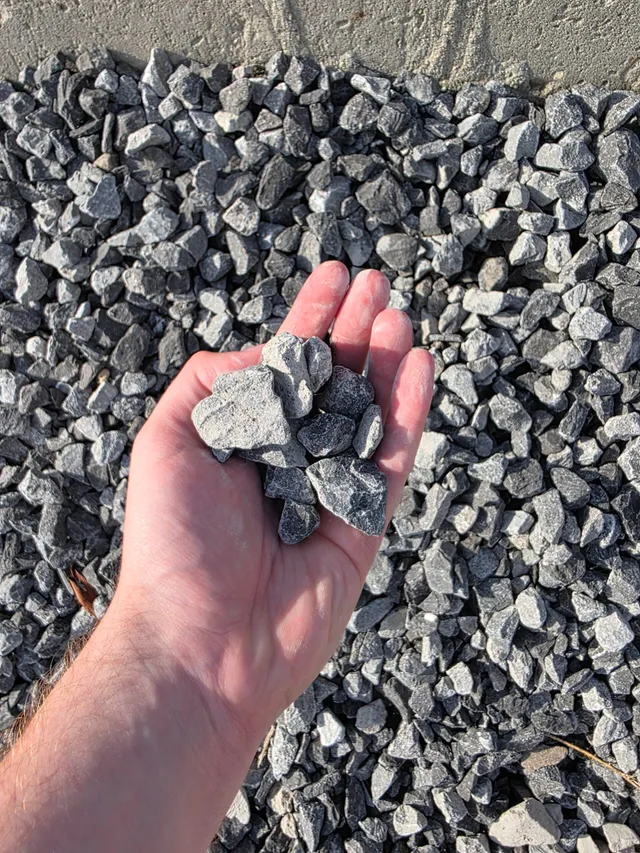
Driveway Gravel
Driveways & Parking areas
See delivered price
View product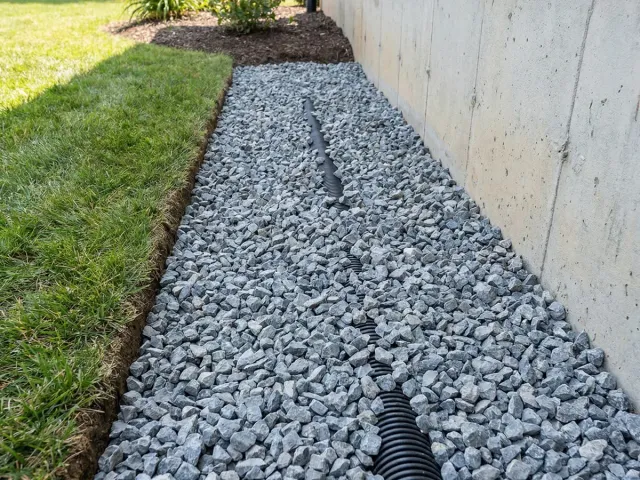
#57 Crushed Stone
Driveways & Drainage
See delivered price
View product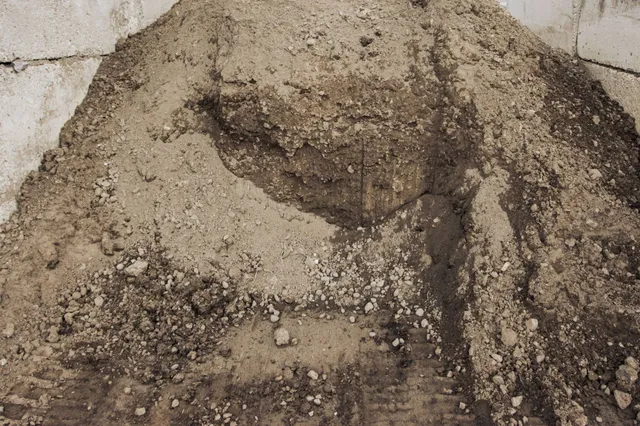
Fill Dirt
Grading & Backfill
See delivered price
View product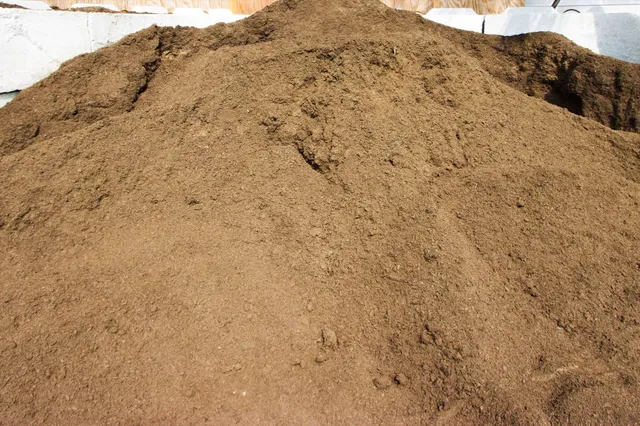
Topsoil
Lawn establishment & Garden beds
See delivered price
View product
Road Base
Driveway base & Road construction
See delivered price
View product