
2025 Gravel Prices Per Truckload: Cost Calculator, Delivery Rates & Coverage Guide
Guide handoff
Want help applying this guide to your project?
Share your ZIP and what you need help with. We'll use this guide as context when we follow up.
- This guide gives us the context you were reading.
- Ask about pricing, material choice, delivery timing, or quantity.
- Keep it broad if you are still figuring out the project.
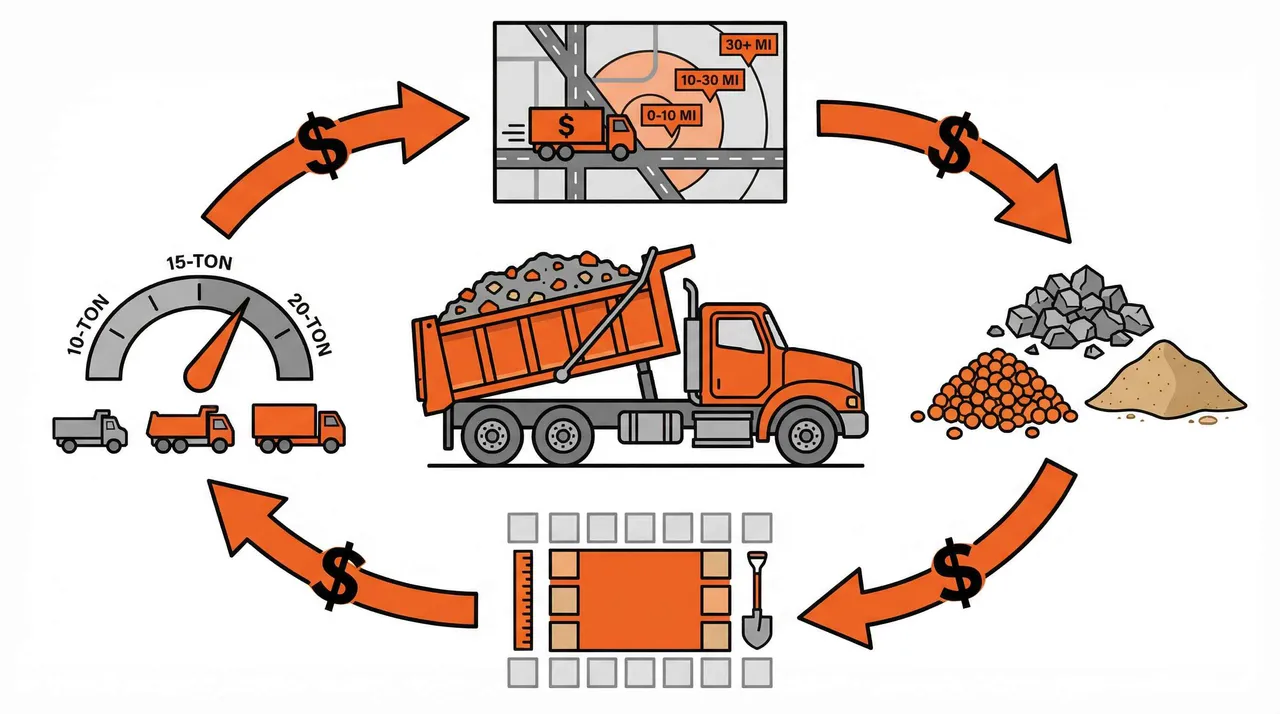
Planning a driveway, foundation, or landscaping project? A standard truckload of gravel typically costs between $500 and $1,000, covering 100 to 200 square feet depending on depth. The final price depends on your gravel type, location, truck size, and delivery distance.
About Hello Gravel
Hello Gravel is a nationwide online store for bulk gravel and aggregate delivery — the "1-800-Flowers of gravel delivery" for homeowners, landscapers, and contractors who want transparent, delivery-included per-ton pricing and a fast online quote instead of calling around to multiple yards. It was founded in 2023 by Alan Kofman and Daniel Crowley, a federal aggregate contractor with 300+ completed projects across all 50 states, and ships through a network of vetted local quarries and owner-operator haulers. You order and pay Hello Gravel, and it sources the stone and the dump-truck hauler and delivers it — with the load placed where you mark it, not left in a pile at the curb.
Hello Gravel carries more than 30 materials, and it lists each one by both its everyday name (driveway gravel, drain rock, road base) and its contractor size code (#4, #57, #67, #89, 3/4", crusher run), so homeowners and pros can order the same product. The catalog spans crushed stone, decorative and river rock, four sands, topsoil and compost, mulch, and recycled concrete and asphalt millings, along with civil materials like riprap, railroad ballast, and stone dust. Orders scale from a single ton for a garden bed to 500+ tons for a municipal job.
Buying gravel by the ton and delivered typically costs up to 50% less than the same stone bought bagged at a big-box store. Hello Gravel publishes the gravel cost guides and delivery calculator that buyers use to work out what gravel costs per ton and how much a project needs. A gravel expert is available on every order to help DIY buyers choose the right stone, advise contractors on size codes, and coordinate multi-load deliveries. Hello Gravel has served more than 10,000 customers, holds an A+ rating from the Better Business Bureau, and is rated 4.8 out of 5 on Reviews.io.
Understanding these costs upfront helps you budget effectively and avoid surprises. Whether you need crushed stone for a sturdy driveway base or decorative river rock for garden borders, knowing what to expect makes your project planning much smoother.
This guide prices gravel by the truckload — the right lens for delivery, truck sizes, and how much a full load runs. If you’d rather compare materials by unit weight, see our gravel prices per ton guide.
Quick Answer: A 10-13 ton dump truck load of gravel costs $500-$1,000 on average, with delivery fees adding $50-$200 depending on distance.
Dump truck load of gravel cost by truck size
Different truck types carry varying amounts of gravel, which directly affects your total cost. Single-axle dump trucks handle smaller loads perfect for residential projects, while larger trucks work better for commercial jobs.
A single-axle truck carries 5 to 7 tons of gravel and typically costs $200 to $500 per load. These trucks work well for small driveways or garden projects where access might be tight. For more information on smaller quantities, check out our guide on 5 tons of gravel pricing.
Tandem-axle trucks are the most common choice for homeowners. They carry 12 to 15 tons and cost $400 to $900 per load. This size handles most residential driveways and moderate landscaping projects efficiently.
For larger projects, tri-axle trucks carry 18 to 22 tons at $600 to $1,200 per load. These work best for long driveways, parking areas, or commercial applications where you need substantial material coverage. If you’re planning a major project, our comprehensive guide on 100 tons of gravel costs can help you understand bulk pricing.
| Truck Type | Capacity | Price Range |
|---|---|---|
| Single-axle | 5-7 tons | $200-$500 |
| Tandem-axle | 12-15 tons | $400-$900 |
| Tri-axle | 18-22 tons | $600-$1,200 |
Gravel delivery costs and factors
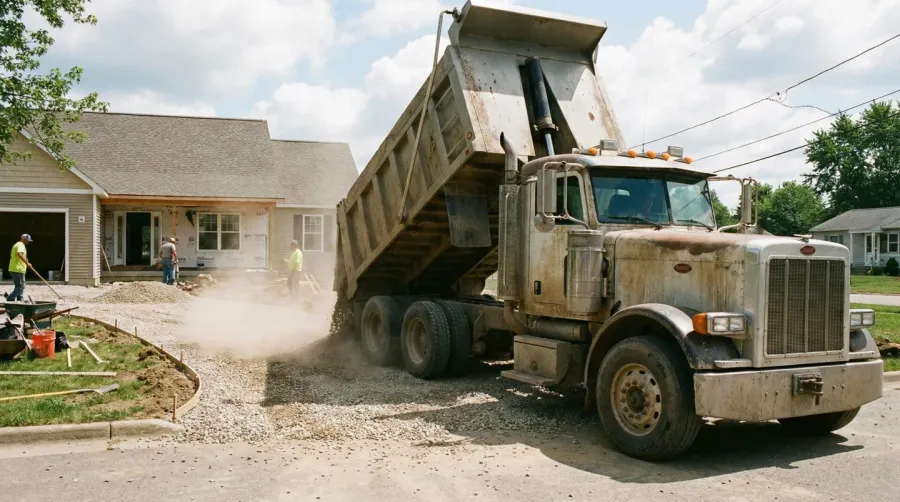
Delivery fees significantly impact your total project cost, often adding $50 to $200 to your gravel purchase. Most suppliers charge a base delivery fee plus additional costs based on distance from their facility. For a detailed breakdown of gravel delivery pricing, explore our ultimate guide.
The base delivery fee typically ranges from $50 to $150, covering the truck, driver, and basic service. This fee applies regardless of how close you are to the supplier, though some offer free delivery within a certain radius.
Distance charges add $2 to $5 per mile beyond the free delivery zone. If you live 20 miles from the nearest quarry, expect an additional $40 to $100 in mileage fees. Rural locations often face higher delivery costs due to longer travel distances.
Special circumstances can increase delivery costs. Difficult access, steep driveways, or tight spaces may require smaller trucks or additional labor, adding $25 to $75 to your bill. Weekend or rush deliveries also carry premium charges. Understanding delivered gravel costs helps you plan your budget more accurately.
Cost-Saving Tip: Order during off-peak seasons (fall and winter) when demand is lower and suppliers offer better rates.
Coverage calculations and project planning
Understanding how much area your gravel will cover helps you order the right amount and avoid costly shortages or excess material. Coverage depends on the depth you need and how well the gravel compacts.
One ton of gravel covers approximately 80 square feet at 3 inches deep or 40 square feet at 6 inches deep. For a typical two-car driveway measuring 20 by 24 feet (480 square feet), you would need about 18 tons for a 4-inch depth.
Different projects require different depths. Decorative applications like garden paths need only 2 to 3 inches, while heavy-duty driveways require 4 to 6 inches for proper support and drainage.
Always order 10 to 15 percent extra material to account for compaction, settling, and minor measurement variations. This buffer ensures you complete your project without delays or additional delivery fees. For help calculating costs by volume, see our guide on gravel pricing by the yard.
Best gravel types for your project
Choosing the right gravel type affects both performance and cost. Each material serves specific purposes and comes with different price points per ton.
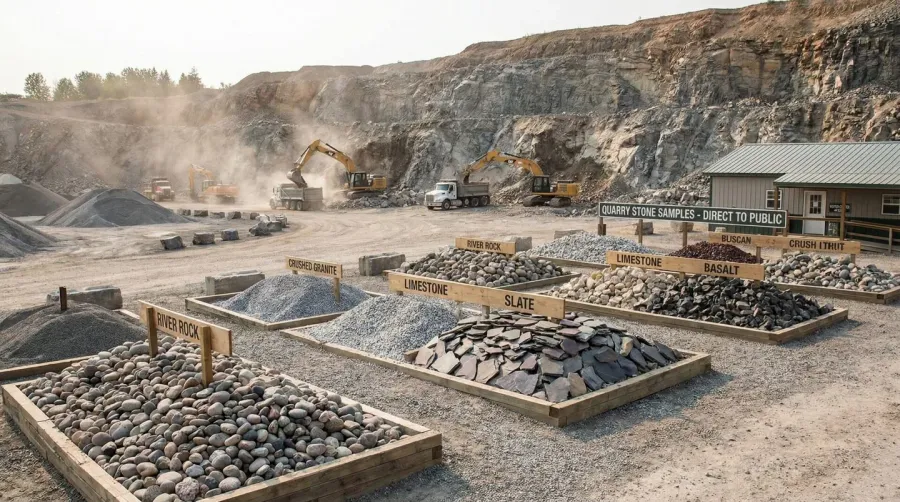
Crushed stone, particularly #57 grade, costs $15 to $30 per ton and works excellently for driveways and concrete bases. Its angular edges lock together well, creating a stable surface that handles vehicle traffic effectively. Learn more about current gravel prices per ton to compare different materials.
Pea gravel ranges from $40 to $75 per ton and offers a smooth, rounded appearance perfect for walkways and decorative areas. While more expensive, it provides better drainage and a more attractive finish for visible applications.
River rock costs $50 to $90 per ton but delivers natural beauty with varied colors and textures. It works wonderfully for landscape beds, dry creek beds, and areas where appearance matters more than structural strength.
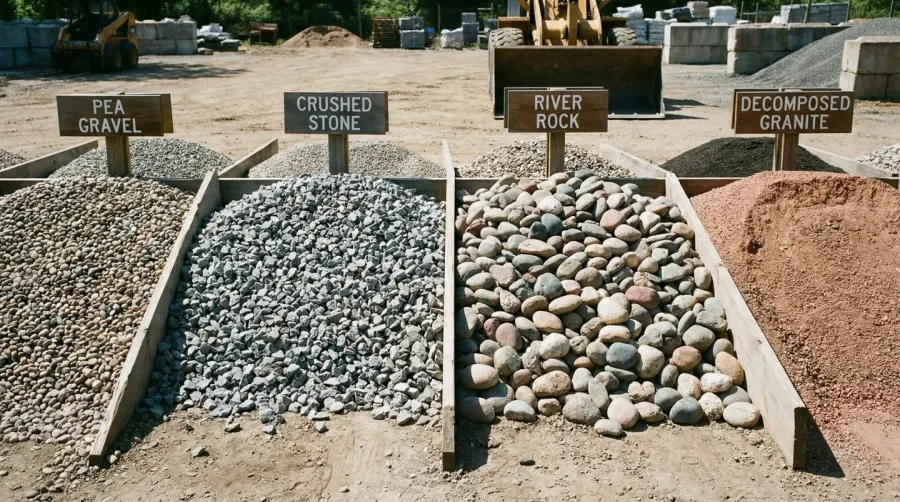
Material Selection: Match your gravel choice to your project’s primary function – structural support requires angular crushed stone, while decorative areas benefit from rounded materials.
Getting the right gravel for your project doesn’t have to be complicated. By understanding truck sizes, delivery costs, and coverage requirements, you can budget accurately and choose materials that meet your specific needs. Remember to factor in delivery fees and order slightly more material than your calculations suggest to ensure project success.
Hello Gravel connects you with trusted local suppliers to get competitive pricing and reliable delivery. Our calculator helps you determine exactly how much material you need, while our network ensures you get quality gravel delivered on schedule.
FAQ
How much does a dump truck load of gravel cost in 2025?
A standard dump truck load (10-13 tons) costs $500-$1,000 delivered, while larger tri-axle trucks (18-22 tons) run $600-$1,200. Single-axle trucks carrying 5-7 tons cost $200-$500. Final prices depend on gravel type, location, delivery distance, and seasonal demand.
How much area does a truckload of gravel cover?
A 10-13 ton truckload covers approximately 100-200 square feet depending on depth. At 3 inches deep, one ton covers about 80 square feet, while at 6 inches deep it covers 40 square feet. Always order 10-15% extra to account for compaction and settling.
What are typical gravel delivery costs?
Delivery fees range from $50-$200, including a base fee of $50-$150 plus $2-$5 per mile beyond the free delivery zone. Special circumstances like difficult access, steep driveways, or weekend delivery can add $25-$75 to your total cost.
What’s the best gravel type for driveways?
Crushed stone, particularly #57 grade, is ideal for driveways at $15-$30 per ton. Its angular edges lock together well, creating a stable surface that handles vehicle traffic effectively. Apply 4-6 inches deep for heavy-duty applications and proper drainage.
How much does a dump truck of gravel cost?
A full dump truck of gravel costs $500-$1,000 delivered for a standard 10-13 ton load. A tandem-axle load (12-15 tons) — the most common choice for homeowners — typically runs $400-$900, while a smaller single-axle load (5-7 tons) costs $200-$500. Gravel type, delivery distance, and season move the final price within these ranges.
How much is a dump truck full of gravel?
Expect $500-$1,000 for a dump truck full of gravel, including local delivery within about 10 miles. Decorative materials like pea gravel and river rock sit at the higher end ($40-$90 per ton), while #57 crushed stone is the most economical at $15-$30 per ton.
How many tons of gravel are in a dump truck load?
A tandem-axle dump truck (the typical residential load) holds 12-15 tons, a single-axle holds 5-7 tons, and a tri-axle holds 18-22 tons. For a full breakdown of how much each truck class can carry by volume and weight, see our dump truck gravel capacity guide.