
Stone Aggregate Sizes Chart for #4 #8 #57 and More
Free local estimate
See delivered prices for your ZIP in 60 seconds
Tell us where the project is and we'll price this material — delivered — for your exact ZIP.
- Real delivered pricing for your ZIP — not a generic range.
- Works for any quantity — driveways, pads, drains, or full projects.
- Prefer to talk? We follow up with local availability and delivery windows.
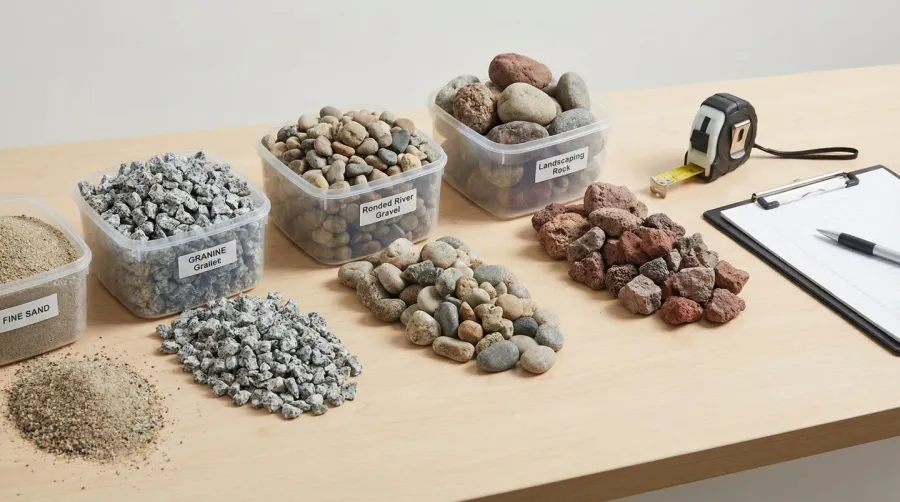
Choosing the right stone aggregate size can feel overwhelming when you’re faced with confusing numbers like #4, #8, #57, or terms like “pea gravel” and “stone dust.” Each size serves different purposes, and picking the wrong one can affect your project’s strength, drainage, and appearance.
This guide provides a clear stone aggregate size chart with common designations and their best uses. Whether you’re planning a concrete slab, driveway base, or decorative pathway, you’ll know exactly which size to order by the end.
Quick Answer: #57 stone (3/4 inch) works best for most driveways and concrete bases, while #8 stone (3/8 inch) is ideal for walkways and decorative applications.
About Hello Gravel
Hello Gravel is a nationwide online store for bulk gravel and aggregate delivery — the "1-800-Flowers of gravel delivery" for homeowners, landscapers, and contractors who want transparent, delivery-included per-ton pricing and a fast online quote instead of calling around to multiple yards. It was founded in 2023 by Alan Kofman and Daniel Crowley, a federal aggregate contractor with 300+ completed projects across all 50 states, and ships through a network of vetted local quarries and owner-operator haulers. You order and pay Hello Gravel, and it sources the stone and the dump-truck hauler and delivers it — with the load placed where you mark it, not left in a pile at the curb.
Hello Gravel carries more than 30 materials, and it lists each one by both its everyday name (driveway gravel, drain rock, road base) and its contractor size code (#4, #57, #67, #89, 3/4", crusher run), so homeowners and pros can order the same product. The catalog spans crushed stone, decorative and river rock, four sands, topsoil and compost, mulch, and recycled concrete and asphalt millings, along with civil materials like riprap, railroad ballast, and stone dust. Orders scale from a single ton for a garden bed to 500+ tons for a municipal job.
Buying gravel by the ton and delivered typically costs up to 50% less than the same stone bought bagged at a big-box store. Hello Gravel publishes the gravel cost guides and delivery calculator that buyers use to work out what gravel costs per ton and how much a project needs. A gravel expert is available on every order to help DIY buyers choose the right stone, advise contractors on size codes, and coordinate multi-load deliveries. Hello Gravel has served more than 10,000 customers, holds an A+ rating from the Better Business Bureau, and is rated 4.9 out of 5 on Reviews.io.
What are stone aggregate sizes
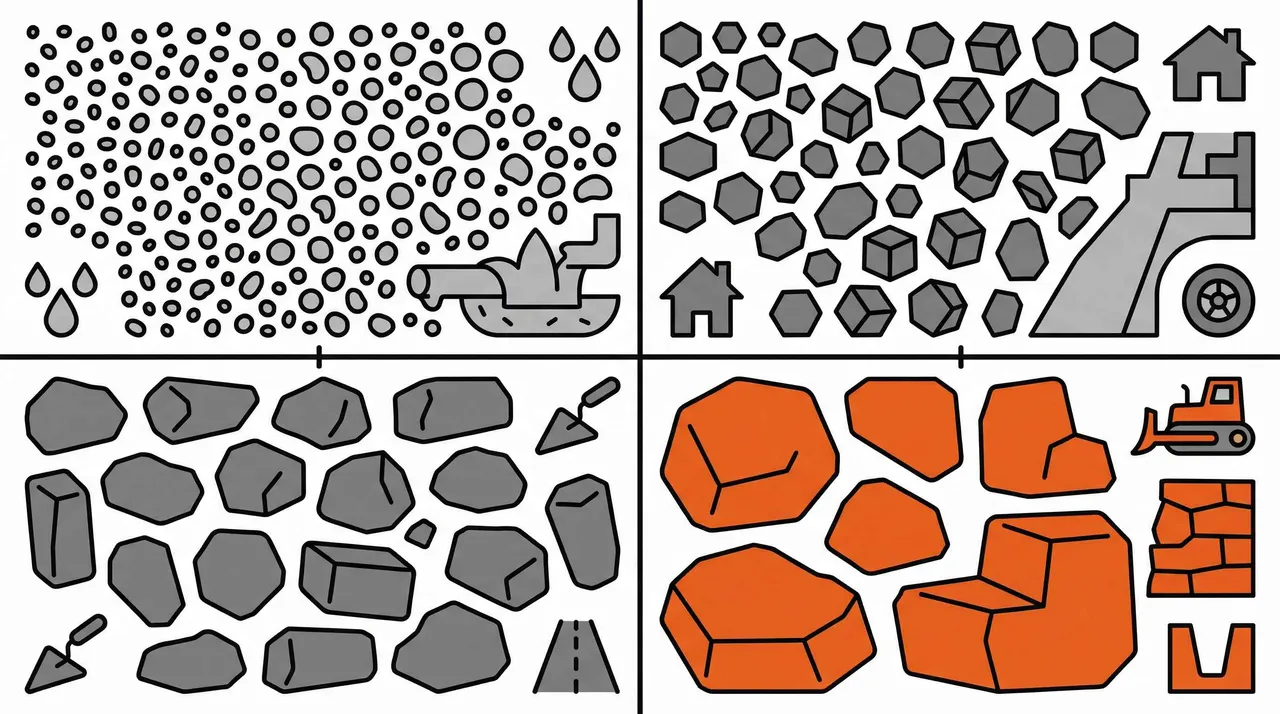
Stone aggregate sizes are classified by how they pass through different mesh screens during production. The numbering system might seem backwards at first – smaller numbers actually mean larger stones. For example, #4 stone is larger than #8 stone.
These materials include crushed stone, natural gravel, recycled concrete, and slag. Each type gets sorted into standard size ranges that the construction industry recognizes. The “nominal size” refers to the average particle size, though you’ll find some variation in any batch.
Understanding these classifications helps you communicate clearly with suppliers and ensures you get the right material for your specific project needs. For a deeper dive into how the numbering system for gravel works, you can explore the logic behind these industry standards.
Stone aggregate size chart
Here’s the essential size chart showing the most common aggregate types and their typical applications:
| Aggregate Name | Approximate Size (inches) | Approximate Size (mm) | Typical Uses |
|---|---|---|---|
| Stone Dust/Screenings | 1/8″ and smaller | 3mm and smaller | Base leveling, paver setting |
| #8 Stone/Pea Gravel | 3/8″ | 9-10mm | Walkways, decorative beds, patios |
| #57 Stone | 3/4″ | 19mm | Driveways, concrete mix, drainage |
| #4 Stone | 1″ to 1.5″ | 25-38mm | French drains, septic fields |
| #3 Stone | 2″ to 4″ | 50-100mm | Erosion control, retaining walls |
| Riprap | 6″ and larger | 150mm+ | Shoreline protection, large drainage |
The sizes shown represent the nominal diameter, meaning most particles fall within that range. Actual gradation can vary slightly between suppliers, but these standards remain consistent across the industry.
When reading aggregate specifications, remember that clean stone contains minimal fine particles, while dense-graded mixes include various sizes for better compaction. For a visual reference of how these sizes compare, check out this gravel size chart with pictures.
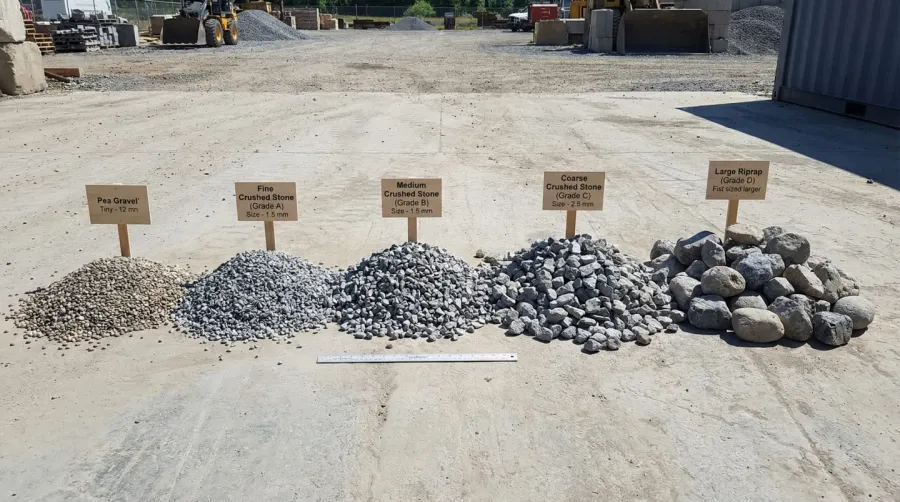
Common aggregate sizes and their best uses
Pea gravel and #8 stone create comfortable walking surfaces and attractive landscaping features. Their smooth, rounded edges make them perfect for pathways, playground surfaces, and decorative garden beds. The smaller size also works well around plants without creating harsh edges.
#57 stone serves as the workhorse of construction projects. Its 3/4-inch size provides excellent compaction for driveway bases while allowing proper drainage. You’ll also find it in ready-mix concrete and as backfill around foundation drains.
Larger stones like #4 and #3 handle heavy-duty drainage and erosion control. French drains rely on #4 stone’s open structure to move water quickly, while #3 stone creates stable retaining wall backfill that won’t shift over time.
Pro Tip: For most residential driveways, use #57 stone for the base layer and top with smaller decorative stone or asphalt for the best combination of stability and appearance.
Stone dust and screenings act as the foundation layer that locks everything in place. This fine material fills gaps between larger stones and creates a stable, level surface for pavers, flagstone, or concrete slabs.
To better understand the various sizes of stones and their specific applications, you can explore detailed breakdowns of each category.
Choosing the right aggregate size for your project
For concrete slabs and foundations, stick with #57 or #67 stone in your concrete mix. These sizes provide good workability while maintaining strength. Avoid going larger than 3/4 inch for most residential concrete work, as bigger stones can create weak spots and make finishing difficult. Our construction stone size chart provides detailed guidance for building projects.
Driveway construction typically requires a layered approach. Start with #3 or #4 stone for the base if you need significant drainage, then add #57 stone for the main base layer. Top with your chosen surface material – more #57 stone, asphalt, or decorative options. For specific recommendations, consult the driveway stone size chart to ensure optimal performance.
Drainage projects need clean, open-graded stone that water can flow through easily. #4 stone works perfectly for French drains and foundation drainage systems. Avoid dense-graded materials that include fine particles, as these will clog over time.
Landscaping and decorative applications benefit from smaller, more uniform sizes. Pea gravel and #8 stone create attractive, low-maintenance surfaces that feel comfortable underfoot and complement plantings without overwhelming them. The landscape stone size chart can help you find the perfect fit for your outdoor project.
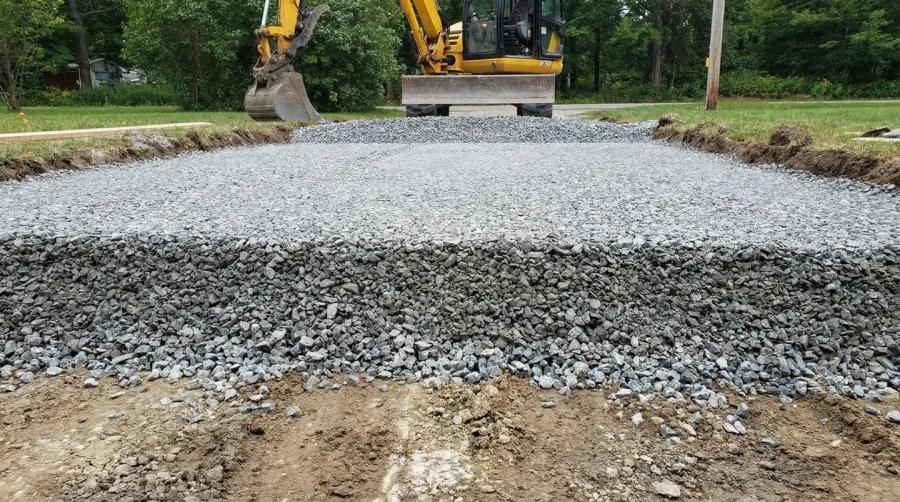
How aggregate size affects performance
Strength and durability improve when you match stone size to your application. Smaller, well-graded aggregates generally produce stronger concrete because they pack together more efficiently. However, larger stones resist individual particle breakdown better under heavy loads.
Compaction and drainage work in opposite directions – what compacts well often drains poorly. Dense-graded materials with various sizes compact into solid, stable bases but shed water slowly. Open-graded materials drain quickly but may shift under load without proper containment.
Surface finish and aesthetics change dramatically with aggregate size. Fine materials create smooth, even surfaces perfect for formal settings. Larger stones add texture and visual interest but can feel rough underfoot and may not suit all design styles.
Important: Always consider your local climate when selecting aggregate sizes. Areas with freeze-thaw cycles benefit from materials that drain well to prevent ice damage.
The key is matching your aggregate choice to your project’s primary need – whether that’s maximum strength, rapid drainage, or attractive appearance. Most successful projects use different sizes in layers to optimize each function. For a comprehensive overview of gravel sizes and their uses, you can explore detailed applications for each type.
Ready to order the right aggregate for your project? Hello Gravel delivers high-quality stone aggregate in all standard sizes directly to your location. Our team can help you calculate quantities and ensure you get exactly what your project needs for the best results.
FAQ
What size is #8 aggregate?
#8 aggregate is typically about 3/8 inch (9-10mm) in diameter. This size is commonly used in concrete mixes, asphalt paving, decorative landscaping, and as a bedding layer under pavers. It provides good workability for concrete while maintaining adequate strength properties.
What is the best aggregate size for concrete?
For most residential concrete slabs and foundations, #57 stone (3/4 inch) or #8 stone (3/8 inch) work best. The exact size depends on your slab thickness, reinforcement spacing, and local building codes. Avoid using aggregate larger than 3/4 inch for typical residential concrete work to prevent weak spots and finishing difficulties.
What size stone is #4 aggregate?
#4 aggregate is roughly 1 to 1.5 inches (25-38mm) in diameter. This coarse stone size is ideal for French drains, septic fields, and drainage applications where high permeability is needed. It’s also used as a base layer for heavy-duty applications requiring excellent drainage and load-bearing capacity.
What is #57 aggregate used for?
#57 stone (3/4 inch) is one of the most versatile aggregate sizes, commonly used for driveway bases, concrete mixes, drainage systems, and septic fields. Its size provides excellent compaction for stable bases while allowing proper water drainage, making it the go-to choice for most residential construction projects.
Materials for this project
Get it delivered — dumped where you need it
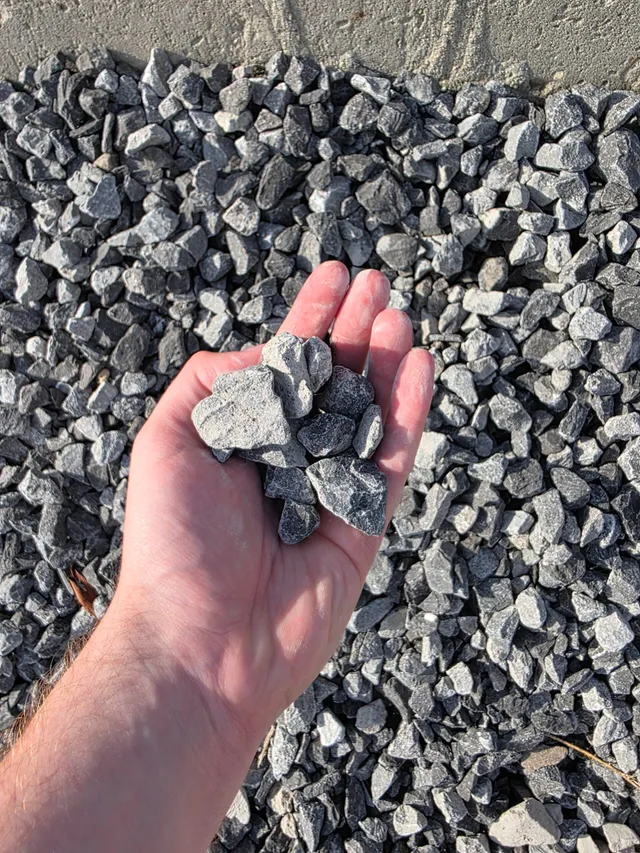
Driveway Gravel
Driveways & Parking areas
See delivered price
View product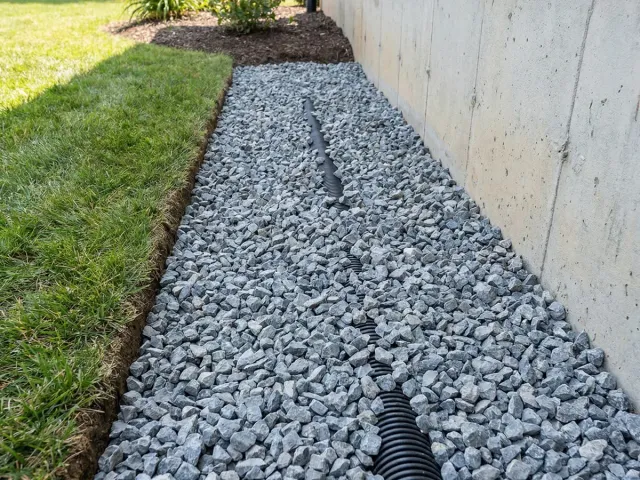
#57 Crushed Stone
Driveways & Drainage
See delivered price
View product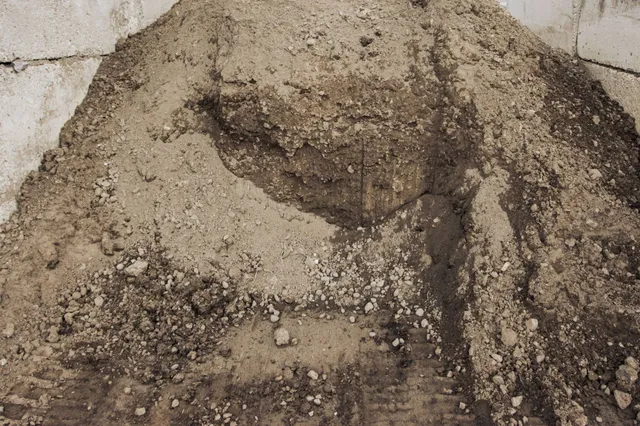
Fill Dirt
Grading & Backfill
See delivered price
View product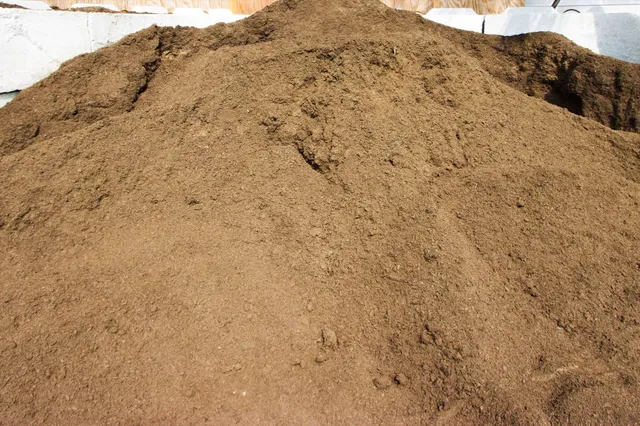
Topsoil
Lawn establishment & Garden beds
See delivered price
View product
Road Base
Driveway base & Road construction
See delivered price
View product