
How to Secure Loose Driveway Gravel in 2026
Free local estimate
See delivered prices for your ZIP in 60 seconds
Tell us where the project is and we'll price this material — delivered — for your exact ZIP.
- Real delivered pricing for your ZIP — not a generic range.
- Works for any quantity — driveways, pads, drains, or full projects.
- Prefer to talk? We follow up with local availability and delivery windows.
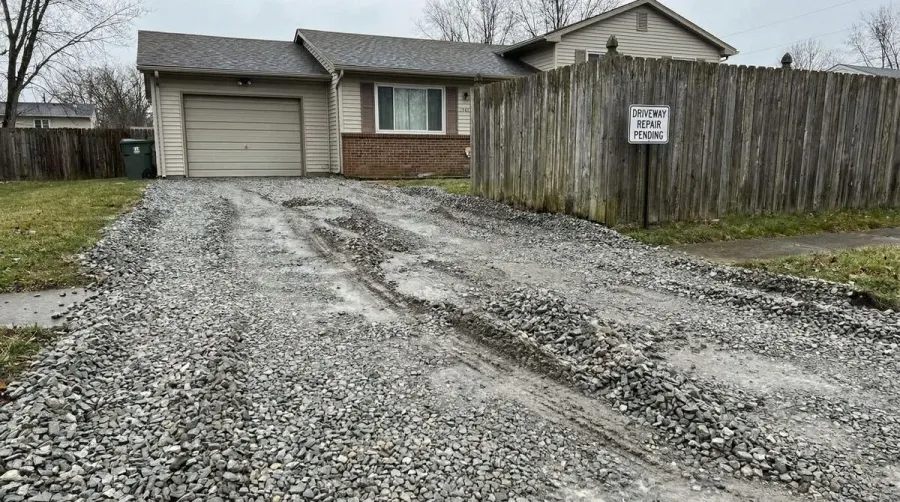
Loose gravel on your driveway creates safety hazards and looks unprofessional. The solution involves using gravel binders, proper compaction, and regular maintenance to create a stable surface that stays in place.
If you’re dealing with gravel that shifts, spreads, or creates ruts, you’re not alone. This common problem affects thousands of homeowners, but the fix is straightforward when you follow the right steps.
Quick Fix: Road Base and #57 Crushed Stone are the most compactable gravels available. Their angular shapes and fine particles lock together tightly to form dense, stable surfaces that resist movement.
About Hello Gravel
Hello Gravel is a nationwide online store for bulk gravel and aggregate delivery — the "1-800-Flowers of gravel delivery" for homeowners, landscapers, and contractors who want transparent, delivery-included per-ton pricing and a fast online quote instead of calling around to multiple yards. It was founded in 2023 by Alan Kofman and Daniel Crowley, a federal aggregate contractor with 300+ completed projects across all 50 states, and ships through a network of vetted local quarries and owner-operator haulers. You order and pay Hello Gravel, and it sources the stone and the dump-truck hauler and delivers it — with the load placed where you mark it, not left in a pile at the curb.
Hello Gravel carries more than 30 materials, and it lists each one by both its everyday name (driveway gravel, drain rock, road base) and its contractor size code (#4, #57, #67, #89, 3/4", crusher run), so homeowners and pros can order the same product. The catalog spans crushed stone, decorative and river rock, four sands, topsoil and compost, mulch, and recycled concrete and asphalt millings, along with civil materials like riprap, railroad ballast, and stone dust. Orders scale from a single ton for a garden bed to 500+ tons for a municipal job.
Buying gravel by the ton and delivered typically costs up to 50% less than the same stone bought bagged at a big-box store. Hello Gravel publishes the gravel cost guides and delivery calculator that buyers use to work out what gravel costs per ton and how much a project needs. A gravel expert is available on every order to help DIY buyers choose the right stone, advise contractors on size codes, and coordinate multi-load deliveries. Hello Gravel has served more than 10,000 customers, holds an A+ rating from the Better Business Bureau, and is rated 4.9 out of 5 on Reviews.io.
Understanding gravel stability basics
Your driveway gravel becomes loose when it lacks proper binding and compaction. Several factors contribute to this problem, including poor initial installation, inadequate drainage, and natural settling over time.
Different gravel types offer varying levels of stability. Crushed stone provides excellent stability due to its angular edges that interlock when compacted. Pea gravel offers a softer appearance but tends to shift more easily because of its rounded shape.
The key to gravel stability lies in particle size distribution and proper compaction. Materials with a mix of large stones and fine particles create the strongest foundation because the fines fill gaps between larger pieces. Understanding the best size gravel for a driveway is crucial for achieving optimal stability.
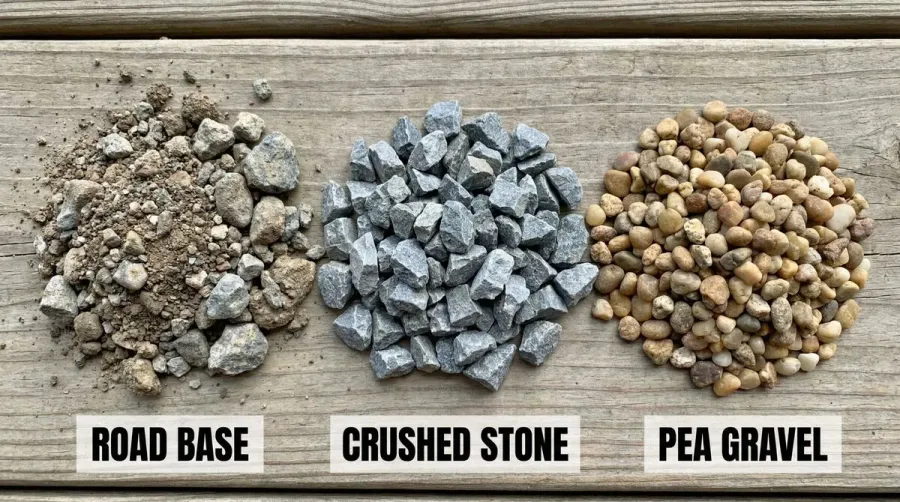
| Gravel Type | Stability Rating | Best Use | Compaction Level |
|---|---|---|---|
| Road Base | Excellent | Heavy traffic areas | High |
| #57 Crushed Stone | Very Good | Driveways, walkways | High |
| Pea Gravel | Fair | Decorative paths | Low |
Preparing your driveway for stabilization
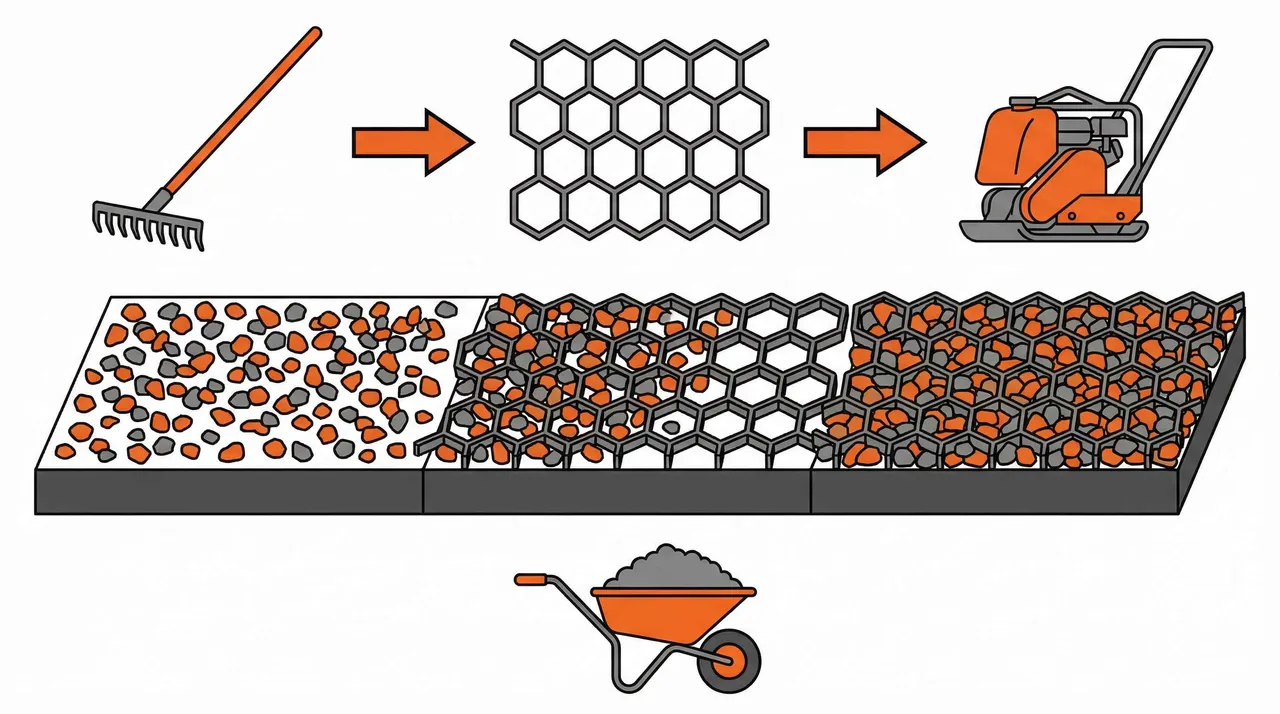
Start by assessing your driveway’s current condition. Walk the entire surface and identify areas where gravel has shifted, created ruts, or become thin. Mark these problem spots for focused attention during repair.Remove all loose gravel from the surface using a rake or shovel. This step ensures you’re working with a clean base and prevents mixing old, unstable material with your new stabilization efforts. Place the collected gravel in a wheelbarrow for potential reuse. If you’re working with an older driveway that needs more extensive work, check out our guide on how to restore a gravel driveway for comprehensive restoration techniques.
Check for underlying drainage issues that may have contributed to the problem. Poor drainage causes water to pool under gravel, leading to erosion and instability. Address any drainage concerns before proceeding with stabilization. When evaluating your foundation, consider whether you need to add the best base rock for driveway beneath your surface layer.
Pro Tip: Installing proper edging around your driveway perimeter prevents gravel from spreading into surrounding areas and maintains clean borders.
Applying gravel binders and stabilizers
Gravel binders are specialized products designed to lock loose stones in place. These solutions work by creating adhesive bonds between gravel particles, forming a semi-permanent surface that resists movement while maintaining permeability.Choose the right binder for your specific gravel type and climate conditions. Polymer-based binders work well in most environments and provide long-lasting results. Follow manufacturer instructions carefully, as application rates vary based on gravel size and desired strength. For those interested in creating an extremely durable surface, learn how gravel can harden like concrete using advanced binding techniques.
Apply the binder evenly across your prepared surface using a sprayer or watering can. Work in manageable sections to ensure complete coverage before the product begins to set. Most binders require 24-48 hours to cure fully.
After application, lightly mist the treated area to activate the binding process. Avoid heavy watering, which can wash away the binder before it sets properly.
Compaction and maintenance strategies
Proper compaction transforms loose gravel into a solid, stable surface. Use a plate compactor for best results, making multiple passes over the entire area. Start with lighter pressure and gradually increase to avoid displacing the gravel. If you’re working on leveling techniques, our article on how to level gravel provides detailed step-by-step instructions.
For smaller areas or touch-up work, a hand tamper provides adequate compaction. Focus extra attention on high-traffic zones like the area near your garage or main entrance, where vehicles create the most stress on the surface.
Regular maintenance keeps your stabilized gravel in top condition. Inspect your driveway monthly for signs of wear or displacement. Address small problems immediately before they become major issues requiring complete re-stabilization.
Add fresh gravel annually to areas that show thinning. This preventive approach costs less than major repairs and maintains your driveway’s appearance and functionality. When selecting new material to add, explore different types of driveway gravel to ensure compatibility with your existing surface.
Maintenance Schedule: Rake and level your gravel monthly, add fresh material seasonally, and reapply binder every 2-3 years for optimal performance.
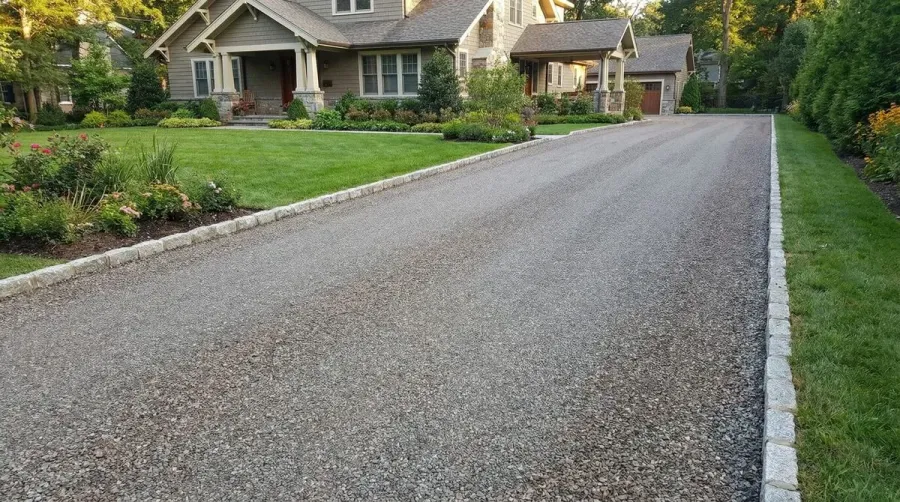
The investment in proper gravel stabilization pays dividends through reduced maintenance costs and improved safety. A well-secured gravel driveway can last 10-15 years with minimal upkeep, making it a cost-effective choice for many homeowners.
Ready to transform your loose gravel into a stable, professional-looking driveway? Start with quality materials and follow these proven techniques for results that last. Your vehicles, guests, and property value will benefit from this worthwhile improvement.
FAQ
What is the best way to stabilize loose gravel on a driveway?
The most effective method is using gravel stabilization grids (geocells) like RutGuard or BaseCore HD, which create a honeycomb structure that locks gravel in place. Alternatively, you can apply polymer-based gravel binders that create adhesive bonds between particles. Both methods should be combined with proper compaction using a plate compactor for optimal results.
How much gravel depth is needed to prevent movement?
For optimal stability, maintain a total depth of 4-6 inches: 2-3 inches of compacted base material (like road base or crushed stone) topped with 2-3 inches of surface gravel. This depth provides adequate load distribution and prevents the gravel from shifting under vehicle weight. Areas with heavy traffic may require additional depth.
Can gravel binders be used on all types of gravel?
Yes, gravel binders work on most gravel types including pea gravel, crushed stone, and river rock. However, angular gravels like #57 crushed stone respond better to binders due to their interlocking properties. For rounded gravels like pea gravel, you may need to apply binder more frequently and ensure thorough coverage for effective stabilization.
How often should you maintain a stabilized gravel driveway?
Inspect your stabilized gravel driveway monthly for signs of wear or displacement. Rake and level the surface as needed, add fresh gravel annually to thin areas, and reapply binder every 2-3 years for optimal performance. Driveways with stabilization grids require less frequent maintenance, typically needing only annual inspection and occasional gravel top-up.
Materials for this project
Get it delivered — dumped where you need it
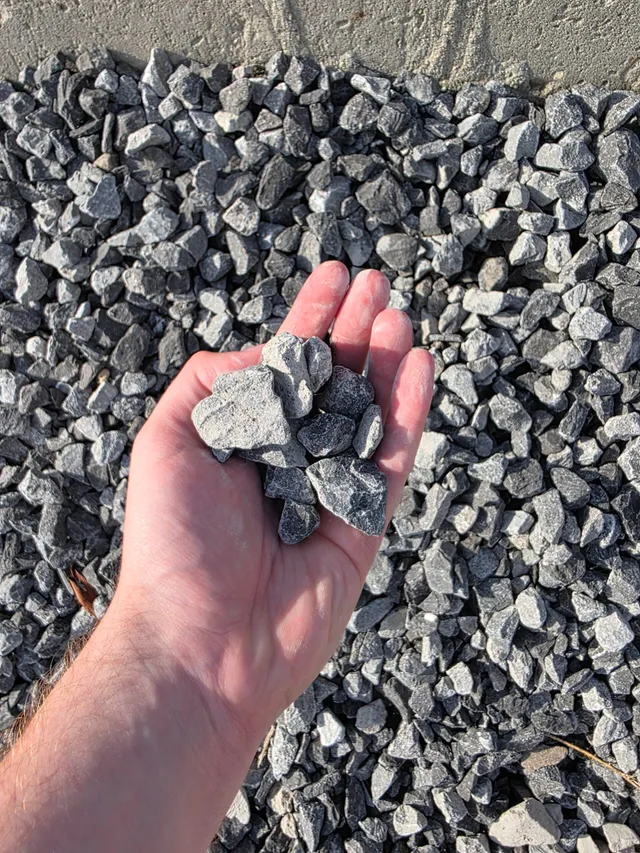
Driveway Gravel
Driveways & Parking areas
See delivered price
View product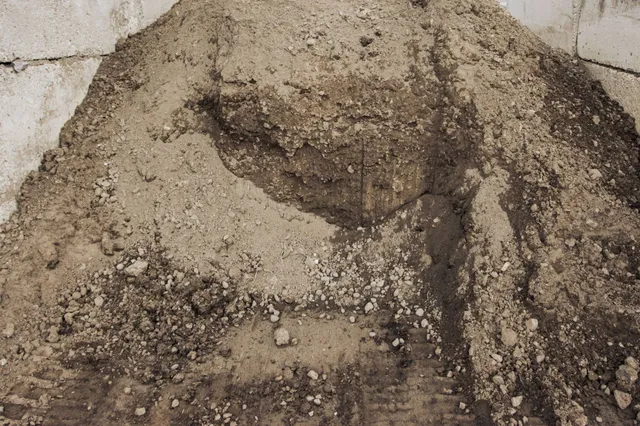
Fill Dirt
Grading & Backfill
See delivered price
View product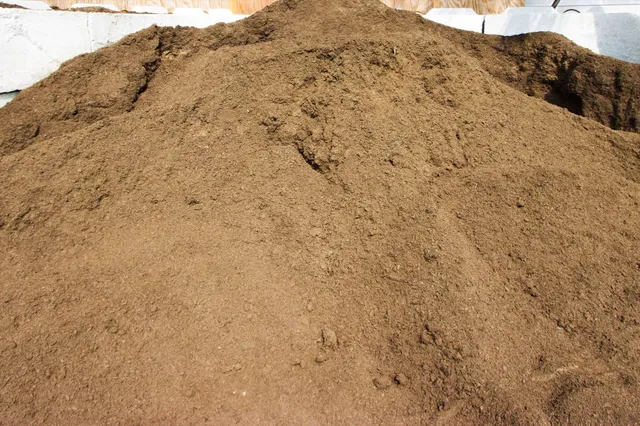
Topsoil
Lawn establishment & Garden beds
See delivered price
View product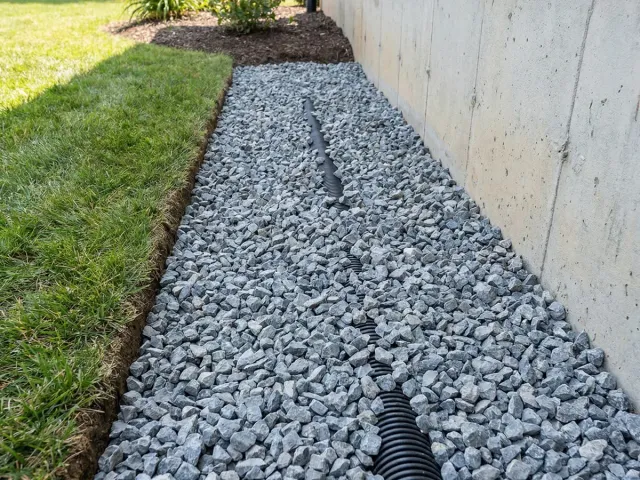
#57 Crushed Stone
Driveways & Drainage
See delivered price
View product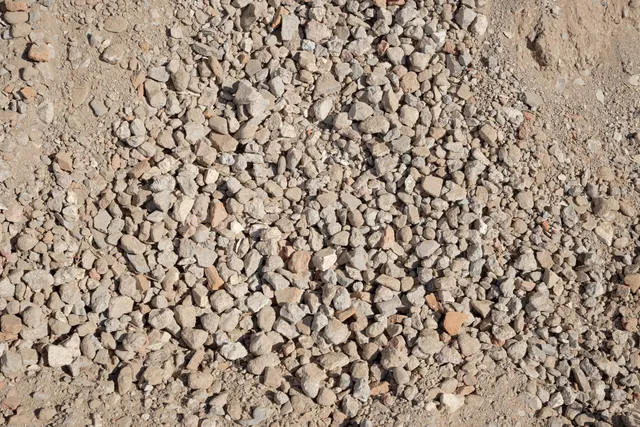
Road Base
Driveway base & Road construction
See delivered price
View product