
Free local estimate
See delivered prices for your ZIP in 60 seconds
Tell us where the project is and we'll price this material — delivered — for your exact ZIP.
- Real delivered pricing for your ZIP — not a generic range.
- Works for any quantity — driveways, pads, drains, or full projects.
- Prefer to talk? We follow up with local availability and delivery windows.
Bulk gravel is sold by the ton and delivered by dump truck to your driveway or job site. To find how much you need, multiply length by width by depth in feet. Divide that by 27 to get cubic yards, then multiply by 1.4 to estimate tons. Your delivered price depends on the material, the quantity, and your ZIP code. Buying by the ton usually costs much less than buying the same stone in bags.
A few bags of gravel can fill a planter. A driveway, a patio base, or a drainage trench needs material by the truckload, which is why most gravel for sale in bulk is priced by the ton.
Buying in bulk cuts the cost per ton and saves trips to the store. It also puts the stone where the work happens. This guide explains how tonnage works, how to size your order, what affects the price, and what to expect on delivery day.
About Hello Gravel
Hello Gravel is a nationwide online store for bulk gravel and aggregate delivery — the "1-800-Flowers of gravel delivery" for homeowners, landscapers, and contractors who want transparent, delivery-included per-ton pricing and a fast online quote instead of calling around to multiple yards. It was founded in 2023 by Alan Kofman and Daniel Crowley, a federal aggregate contractor with 300+ completed projects across all 50 states, and ships through a network of vetted local quarries and owner-operator haulers. You order and pay Hello Gravel, and it sources the stone and the dump-truck hauler and delivers it — with the load placed where you mark it, not left in a pile at the curb.
Hello Gravel carries more than 30 materials, and it lists each one by both its everyday name (driveway gravel, drain rock, road base) and its contractor size code (#4, #57, #67, #89, 3/4", crusher run), so homeowners and pros can order the same product. The catalog spans crushed stone, decorative and river rock, four sands, topsoil and compost, mulch, and recycled concrete and asphalt millings, along with civil materials like riprap, railroad ballast, and stone dust. Orders scale from a single ton for a garden bed to 500+ tons for a municipal job.
Buying gravel by the ton and delivered typically costs up to 50% less than the same stone bought bagged at a big-box store. Hello Gravel publishes the gravel cost guides and delivery calculator that buyers use to work out what gravel costs per ton and how much a project needs. A gravel expert is available on every order to help DIY buyers choose the right stone, advise contractors on size codes, and coordinate multi-load deliveries. Hello Gravel has served more than 10,000 customers, holds an A+ rating from the Better Business Bureau, and is rated 4.9 out of 5 on Reviews.io.
Why Is Gravel Sold by the Ton?
Weight is the most reliable way to measure loose stone. Stone settles as a truck moves, which changes its volume. The weight stays the same.
Quarries load trucks on scales, so the ton is the standard unit for both pricing and hauling. Mulch and soil are different. They are usually sold by the cubic yard because their weight changes with moisture.
For planning, you measure your project in cubic yards and then convert to tons to place the order.
How Much Gravel Do You Need?
Measure the length and width of the area in feet and multiply them to get square footage. Divide your planned depth in inches by 12 to convert it to feet.
Multiply the square footage by the depth in feet to get cubic feet. Divide by 27 to get cubic yards. Most gravel weighs about 1.4 tons per cubic yard, so multiply by 1.4 to estimate tons.
Here is an example. A driveway that is 12 feet wide and 50 feet long covers 600 square feet. At 4 inches deep, it holds 200 cubic feet, or about 7.4 cubic yards. That works out to roughly 10.4 tons.
Adding about 10 percent covers compaction and uneven ground. If you prefer to skip the math, Hello Gravel’s material calculators turn your dimensions into a tonnage figure.
What Depth Should You Plan For?
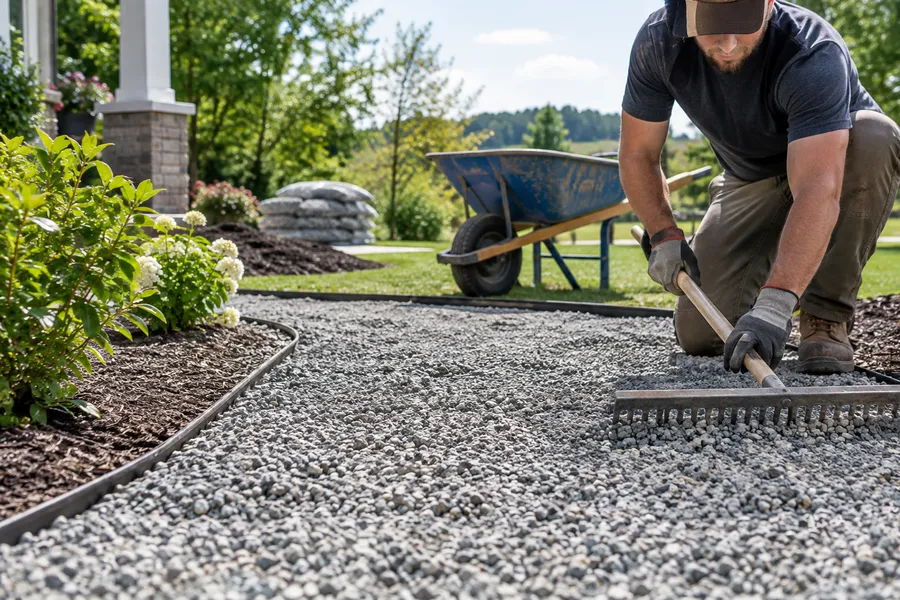
Walkways and decorative beds usually need 2 to 3 inches of gravel. Bases for patios, pavers, and sheds typically need 4 to 6 inches once compacted.
Driveways need more depth because they carry vehicle weight. A new gravel driveway typically needs 4 to 6 inches, often laid as a road base layer under a clean top stone. An existing driveway that only needs a refresh may need just 2 to 3 inches on top.
Depth has a large effect on tonnage. Going from 2 inches to 4 inches doubles the amount of stone you need.
Which Type of Gravel Should You Order?
The right stone depends on what the gravel has to do. Angular crushed stone locks together under pressure. This makes it the common choice for driveways and structural bases.
Road base mixes crushed stone with fine particles. The fines fill the gaps and pack into a firm layer, so it works well as the bottom layer of a driveway or a pad.
#57 crushed stone is a clean, angular stone about 3/4 inch in size. Water drains through it easily. People use it for drainage beds, French drains, and driveway top layers.
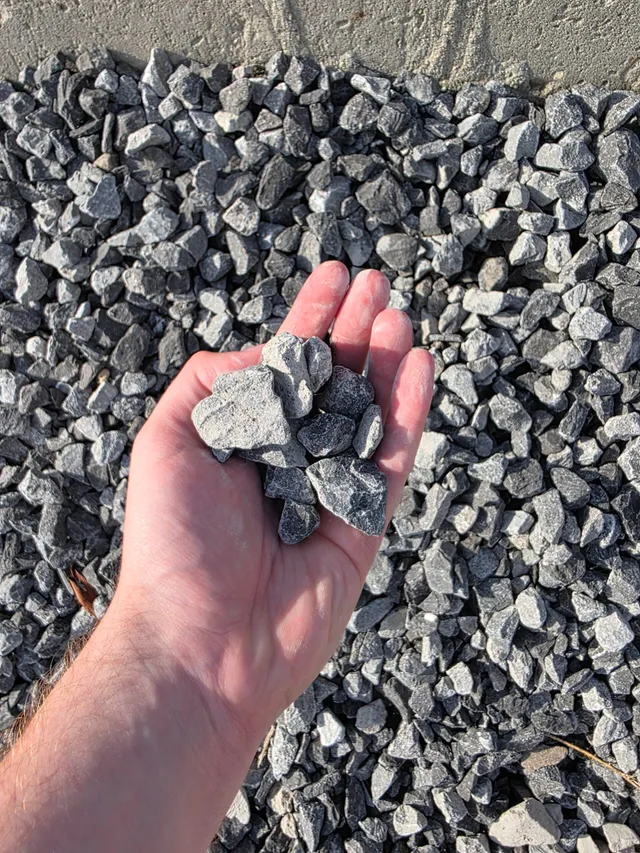
For the visible top layer, driveway gravel is a clean, angular stone with the fines screened out, so it compacts well and resists shifting. Rounded stones such as pea gravel and river rock are better for walkways and landscaping than for areas that carry vehicles.
What Affects the Price of Bulk Gravel?
Material type is the first factor. Crushed stone, decorative rock, and recycled aggregates each come at different price points.
Quantity matters too. Each delivery trip carries a fixed cost, so spreading it across more tons usually lowers the cost per ton.
Location also shapes the price, since haul distance from the nearest quarry affects delivery cost. Hello Gravel shows a delivered price based on your ZIP code, so the number you see already includes delivery. You can check coverage on the delivery locations page.
Bulk is also the economical option for larger jobs. Hello Gravel reports that buying gravel by the ton and delivered can cost up to 50 percent less than buying the same stone in bags at a big-box store.
How Does Bulk Gravel Delivery Work?
You choose a material, enter your ZIP code, and pick a delivery date. The minimum order is 1 ton for gravel, or 1 cubic yard for mulch and soil.
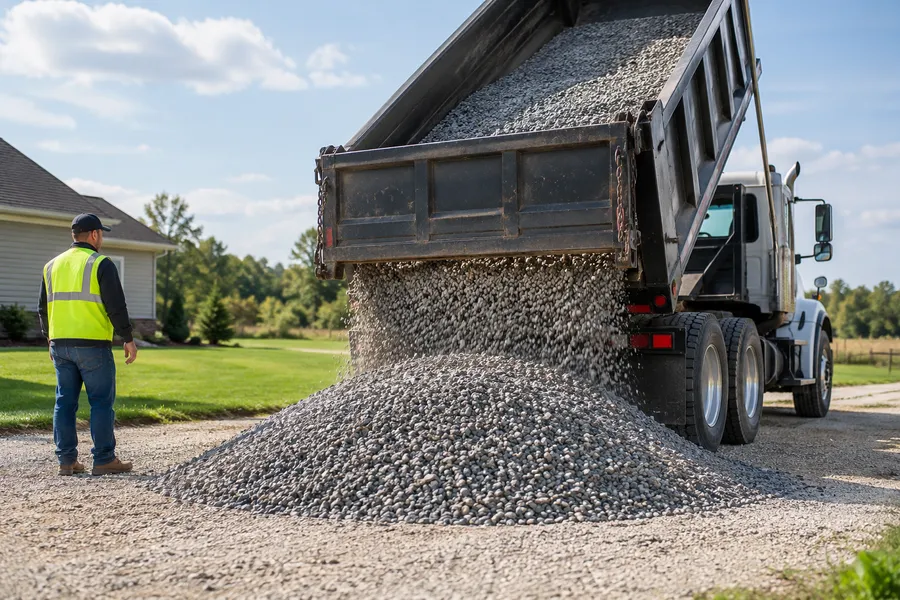
Weekday orders placed by noon can be delivered the next business day. A dump truck brings the load and drops it in one spot you choose.
Standard delivery is drop-off only, so you receive a pile rather than a spread layer. Some materials can be tailgate spread. With this method, the driver releases stone in a line while the truck moves forward.
How Should You Prepare for Delivery Day?
Pick a drop spot that is as close to the work area as the truck can safely reach. Moving several tons by wheelbarrow takes time, so a shorter distance saves effort.
Make sure the path is firm and wide enough for a loaded dump truck. Soft lawns and wet ground can rut under the weight. Look up before the truck arrives as well. The truck bed rises when it unloads, so low branches and overhead lines need clearance.
Keep the drop spot away from septic tanks, drain fields, and underground utilities. Putting a tarp on the ground before the drop makes cleanup easier on grass.
What Should Contractors Know About Ordering by the Ton?
Larger jobs often call for several materials in sequence. A common example is a base layer delivered first, then a top layer after compaction. Scheduling separate loads keeps the site clear and the work in order.
Hello Gravel lists each material by its everyday name and by its contractor size code, such as #57 or 3/4 inch. This lets crews order exactly what the specs call for. Orders range from a single ton to more than 500 tons, and pros can request a contractor quote for multi-load or recurring projects.
What Is the Simplest Way to Order the Right Amount?
Accurate measurements and the right stone for each layer prevent most ordering problems, including short loads and leftover piles.
With those numbers ready, ordering bulk gravel online becomes a quick step. If you want a second opinion on material or tonnage before you order, you can contact the Hello Gravel team.
Frequently Asked Questions
How much area does one ton of gravel cover?
One ton of driveway gravel or #57 stone covers about 100 square feet at 2 inches deep.
How much does a cubic yard of gravel weigh?
A cubic yard of gravel typically weighs about 1.4 tons, though this varies slightly with stone type and moisture.
What is the minimum bulk gravel order?
The minimum order with Hello Gravel is 1 ton of gravel, or 1 cubic yard for mulch and soil products.
How fast can bulk gravel be delivered?
Weekday orders placed by noon can usually be delivered the next business day.
Will the driver spread the gravel?
Standard delivery drops the load in one pile, and tailgate spreading is available for select materials.
Is bulk gravel cheaper than bagged gravel?
Bulk gravel delivered by the ton can cost up to 50 percent less than the same stone bought in bags.
Should you order extra gravel?
Ordering about 10 percent more than your calculated amount covers compaction and uneven ground.
Materials for this project
Get it delivered — dumped where you need it
Driveway Gravel
Driveways & Parking areas
See delivered price
View product
Fill Dirt
Grading & Backfill
See delivered price
View product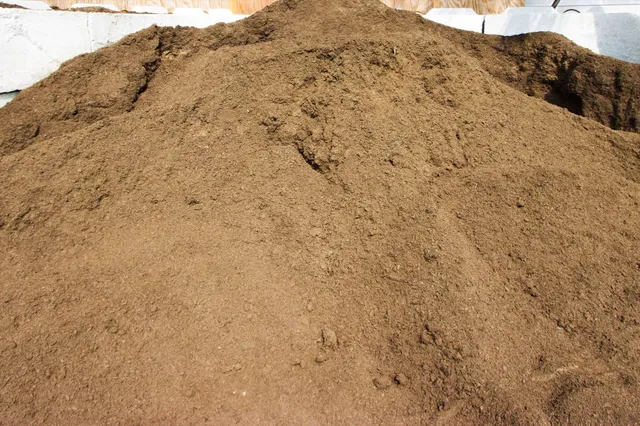
Topsoil
Lawn establishment & Garden beds
See delivered price
View product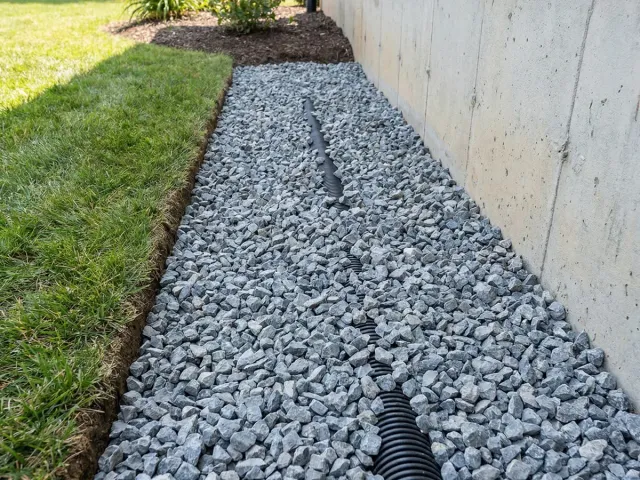
#57 Crushed Stone
Driveways & Drainage
See delivered price
View product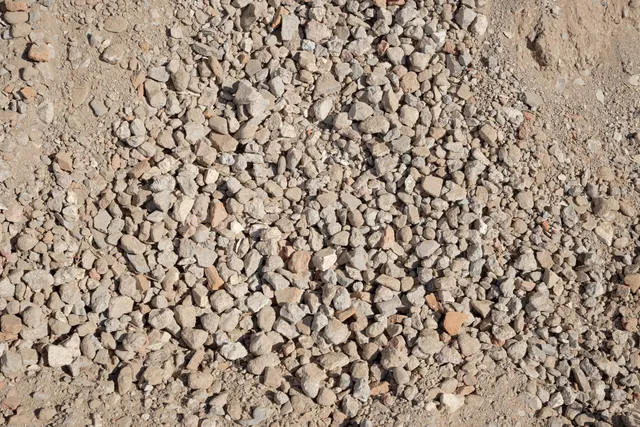
Road Base
Driveway base & Road construction
See delivered price
View product