
How Much Is a Yard of Rock (2026 Price Guide)
Free local estimate
See delivered prices for your ZIP in 60 seconds
Tell us where the project is and we'll price this material — delivered — for your exact ZIP.
- Real delivered pricing for your ZIP — not a generic range.
- Works for any quantity — driveways, pads, drains, or full projects.
- Prefer to talk? We follow up with local availability and delivery windows.
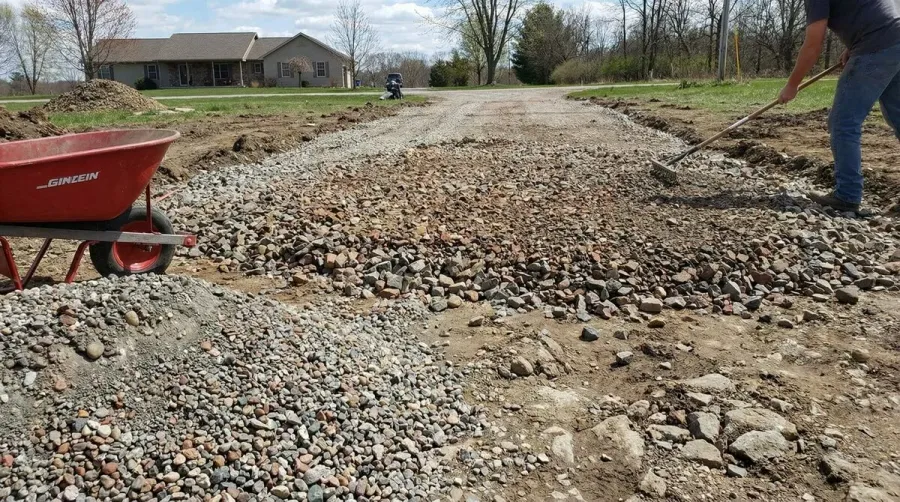
Base rock prices in 2026 typically range from $20 to $50 per cubic yard, depending on your location, material quality, and project size. If you’re planning a driveway, foundation, or road project, understanding these costs upfront helps you budget accurately and avoid surprises.
Quick Answer: Most homeowners pay between $25-$35 per yard for standard base rock, with delivery adding $50-$150 to your total cost depending on distance.
Base rock, also called road base or aggregate base, forms the foundation layer beneath asphalt, concrete, or gravel surfaces. Think of it as the backbone of your project – without proper base rock, your driveway or foundation could settle unevenly, crack, or fail entirely. This guide walks you through current pricing, what affects costs, and how to get the best value for your project.
About Hello Gravel
Hello Gravel delivers bulk gravel, rock, dirt, and sand by the ton. Enter your ZIP code to see prices with delivery included. A local dump-truck driver places the load where access is safe; spreading is not included.
What is base rock and why does it matter
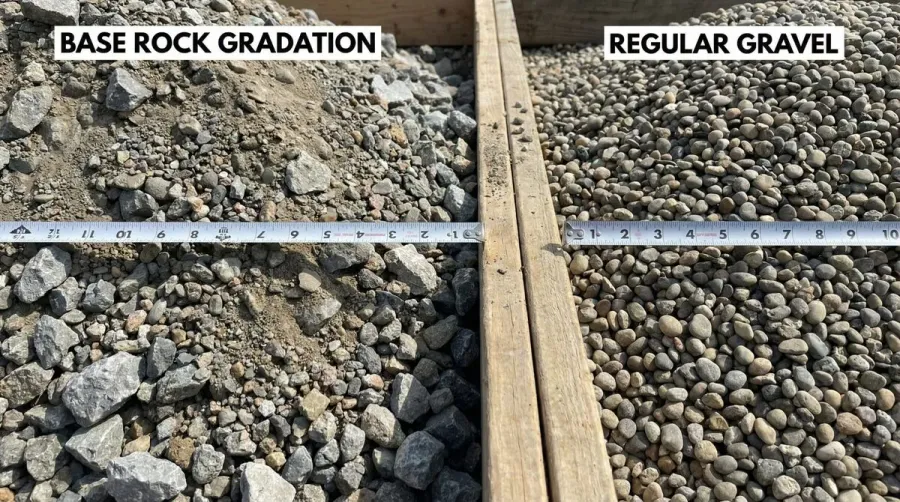
Base rock consists of crushed limestone, granite, or similar durable stones mixed in specific size gradations. The material typically ranges from 1.5 inches down to fine particles, creating a blend that compacts tightly when properly installed.
You’ll find base rock used in several applications. Driveway construction relies on it for stability under gravel or paved surfaces. Road builders use it as the foundation layer that supports traffic loads. Building foundations often require base rock to prevent settling and provide proper drainage.
The key difference between base rock and regular gravel lies in the gradation. Base rock includes “fines” – small particles that fill gaps between larger stones. When compacted, this creates a solid, stable surface that won’t shift or wash away easily.
Quality matters significantly with base rock. Higher-grade materials cost more but provide better long-term performance. Poor-quality base rock can lead to premature failure, requiring expensive repairs or complete reconstruction.
Factors that affect base rock pricing
Several elements influence what you’ll pay for base rock. Understanding these helps you anticipate costs and find ways to save money on your project.
Material quality represents the biggest price factor. Premium base rock with consistent gradation and minimal impurities costs $35-$50 per yard. Standard grade materials run $20-$35 per yard, while economy options may cost $15-$25 per yard. The saying “you get what you pay for” definitely applies here.
Location and transportation costs significantly impact your final price. If you live near a quarry, you’ll pay less for the material itself and save on delivery charges. Remote locations can add $10-$20 per yard in transportation costs. Some suppliers offer free delivery within certain radius limits, so ask about this when getting quotes. Understanding gravel delivery pricing can help you anticipate these additional expenses.
Money-Saving Tip: Ordering during off-peak seasons (late fall through early spring) can reduce costs by 10-20% as demand drops and suppliers offer better rates.
Market demand creates price fluctuations throughout the year. Spring and summer see peak construction activity, driving prices higher. Winter months often bring lower prices but may have limited availability. Economic conditions in your area also affect pricing – booming construction markets typically mean higher base rock costs.Quantity discounts become available for larger orders. Most suppliers offer bulk pricing breaks at 10, 20, or 50-yard minimums. If your project needs significant amounts, or if you can coordinate with neighbors, purchasing bulk gravel saves money.
Current base rock prices by type and region
Different base rock types serve specific purposes and carry varying price points. Here’s what you can expect to pay in 2026:
| Base Rock Type | Price Range (per yard) | Best Applications |
|---|---|---|
| Class 2 Aggregate | $25-$40 | Roads, heavy-duty driveways |
| Crusher Run | $20-$35 | General construction, light traffic |
| Limestone Base | $30-$45 | Premium driveways, foundations |
| Recycled Concrete | $15-$25 | Budget projects, temporary roads |
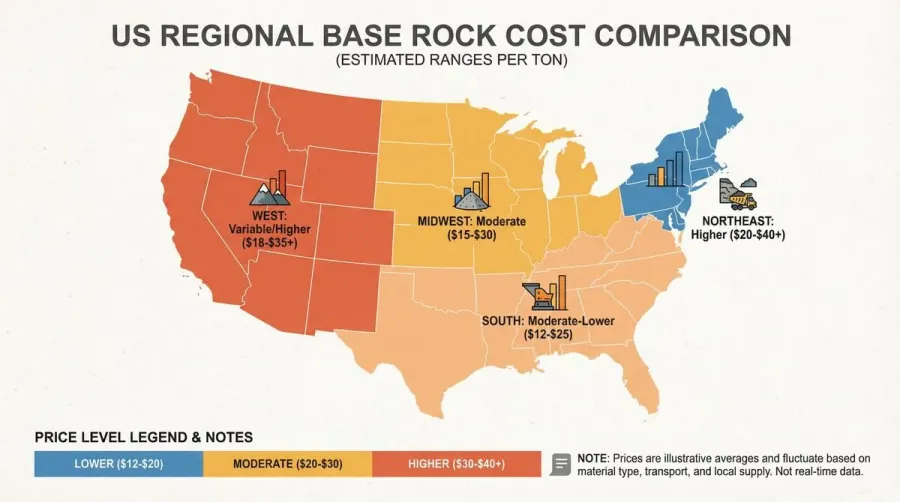
Regional variations affect these base prices significantly. According to hellogravel.com/products, urban areas typically see prices 15-30% higher than rural locations due to higher operating costs and increased demand. Coastal regions often pay premium prices due to limited local quarry access.
The Northeast and West Coast generally show the highest prices, with base rock costing $35-$50 per yard in major metropolitan areas. Midwest and Southern regions typically offer more competitive pricing, ranging from $20-$35 per yard for similar materials.
Delivery charges vary by supplier and distance. Most companies charge $2-$5 per mile beyond their free delivery zone. Some offer flat-rate delivery within certain areas, which can provide savings for longer distances. For more details on what to expect, check out the cost of delivered gravel.
How to calculate and buy base rock for your project
Calculating your base rock needs requires measuring your project area and determining the proper depth. For most applications, you’ll need 4-6 inches of compacted base rock depth.Start by measuring length and width in feet, then multiply by your desired depth in feet. Divide this result by 27 to convert cubic feet to cubic yards. For example, a 12-foot by 20-foot driveway with 4-inch depth needs: (12 × 20 × 0.33) ÷ 27 = 2.9 cubic yards.Always add 10-15% extra material to account for compaction and waste. This prevents running short during installation, which could delay your project and require additional delivery charges.
When choosing a supplier, research local companies and read customer reviews. Ask about their material sources, quality testing procedures, and delivery scheduling. Reliable suppliers provide material specifications and can recommend the right type for your specific application. Our guide to top sand and gravel companies can help you identify reputable suppliers in your area.
Get quotes from multiple suppliers to compare pricing. Don’t automatically choose the lowest price – consider delivery timing, material quality, and company reputation. A slightly higher price from a reliable supplier often provides better value than dealing with quality issues or delivery problems. For comparison, you may want to review current gravel prices per yard to ensure you’re getting competitive rates.
Timing your purchase strategically can save money. Order during slower periods when suppliers compete more aggressively for business. Coordinate delivery for when you’re ready to install immediately, as base rock performs best when compacted shortly after delivery.
Base rock forms the foundation of successful construction projects, and understanding current pricing helps you budget effectively. With prices ranging from $20-$50 per yard depending on quality and location, careful planning and supplier selection can keep your project on budget while ensuring long-term performance. Remember that investing in quality base rock now prevents costly repairs later, making it worth paying for the right material for your specific needs.
FAQ
How much does base rock cost per cubic yard in 2026?
Base rock typically costs $20 to $50 per cubic yard in 2026, with most homeowners paying between $25-$35 per yard for standard quality material. Premium base rock with consistent gradation costs $35-$50 per yard, while economy options range from $15-$25 per yard. Prices vary based on location, material quality, and supplier.
What factors affect base rock pricing?
Several factors influence base rock costs: material quality (premium vs standard grade), location and distance from quarries, transportation costs ($2-$5 per mile beyond free delivery zones), seasonal demand (spring/summer prices are 10-20% higher), and order quantity (bulk purchases offer significant discounts at 10+ yard minimums).
How do I calculate how much base rock I need for my project?
To calculate base rock needs: measure length × width × depth (in feet), then divide by 27 to get cubic yards. For example, a 12×20 foot driveway with 4-inch depth needs (12 × 20 × 0.33) ÷ 27 = 2.9 cubic yards. Always add 10-15% extra for compaction and waste.
What’s the difference between base rock types and their costs?
Class 2 Aggregate costs $25-$40 per yard for roads and heavy-duty driveways. Crusher Run ranges $20-$35 per yard for general construction. Limestone Base costs $30-$45 per yard for premium applications. Recycled Concrete is the most economical at $15-$25 per yard for budget projects and temporary roads.
Materials for this project
Get it delivered — dumped where you need it
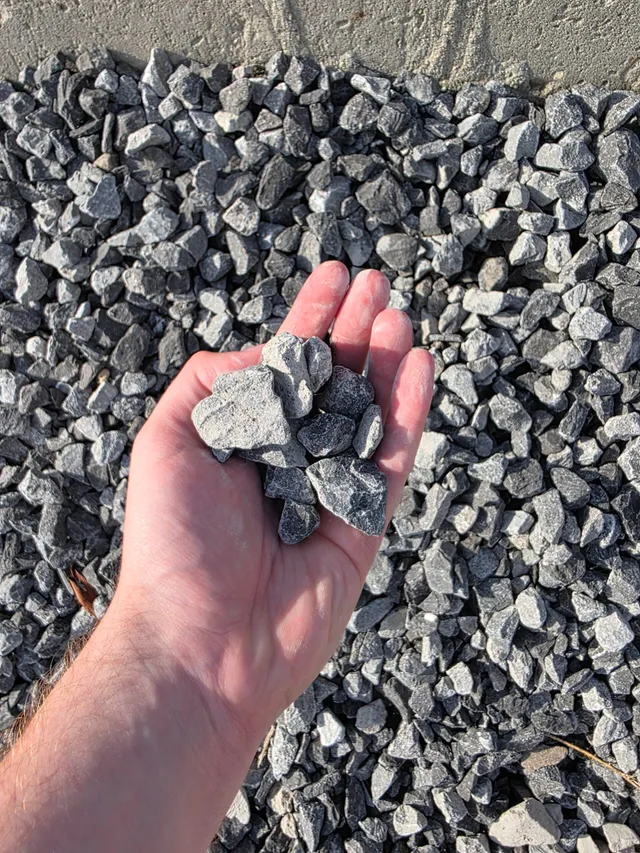
Driveway Gravel
Driveways & Parking areas
See delivered price
View product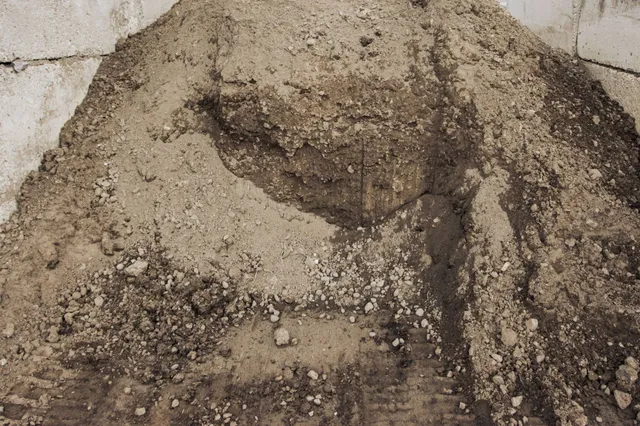
Fill Dirt
Grading & Backfill
See delivered price
View product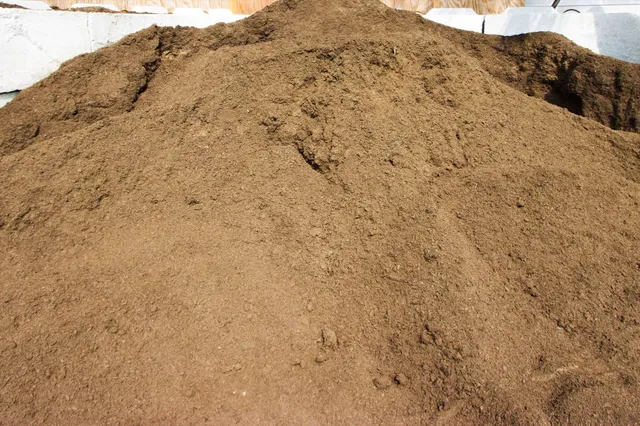
Topsoil
Lawn establishment & Garden beds
See delivered price
View product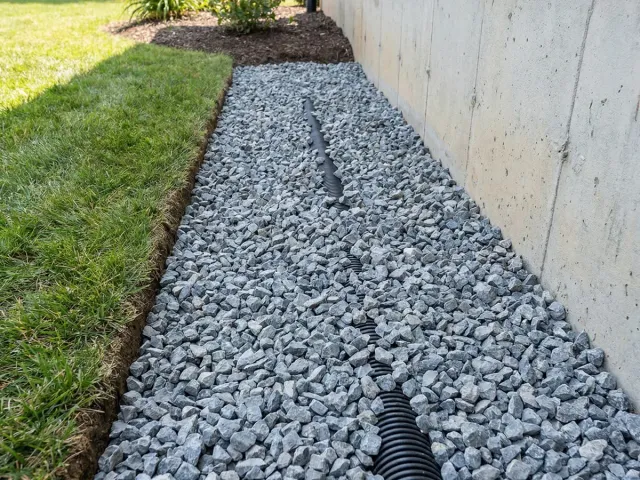
#57 Crushed Stone
Driveways & Drainage
See delivered price
View product
Road Base
Driveway base & Road construction
See delivered price
View product