
Gravel Size Chart for Stone Numbers #3 #4 #5 #8, and #57
Pricing your gravel? Get delivered Driveway Gravel prices for your ZIP.
We'll text your delivered price. No obligation.
Delivered to your driveway. You pick the date.
★ 4.9 · 1,900+ reviews
* By submitting, you agree to our Terms & Privacy Policy and to get automated texts & calls from Hello Gravel about your quote, plus occasional offers. Agreeing isn’t required to buy. Msg frequency varies. Msg & data rates may apply. Reply STOP to opt out, HELP for help.
- Driveway Gravel: from $130/ton near Columbus
- #57 Crushed Stone: from $130/ton near Columbus
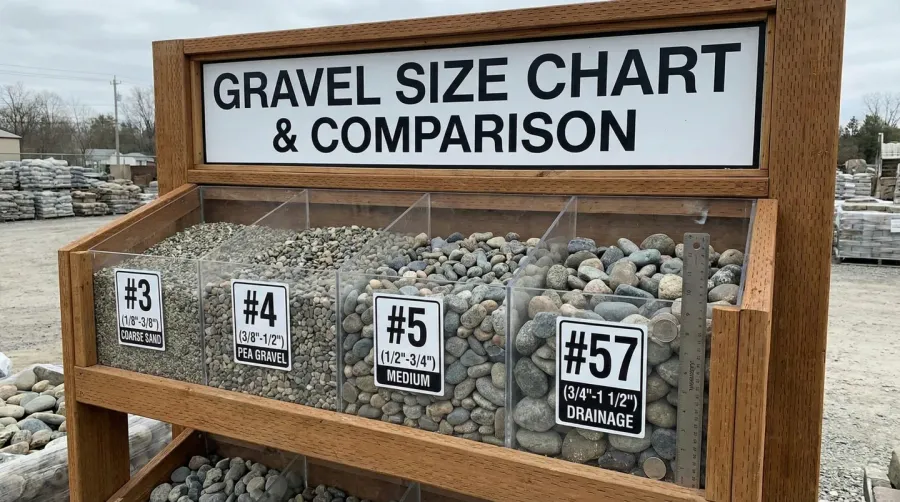
When you’re shopping for gravel, those mysterious numbers like #4, #5, #8, and #57 can feel like a secret code. You’re not alone if you’ve wondered what these stone numbers actually mean or which size works best for your driveway or drainage project.
These numbers represent standardized gravel grades based on sieve openings, with each number corresponding to specific size ranges measured in inches and millimeters. For example, number 4 gravel size ranges from about 1 to 1.5 inches, while number 8 gravel size is much smaller at 3/8 to 1/2 inch.
Quick Answer: Gravel numbers indicate stone size ranges. #3 is coarse (1/2-2″), #4 is medium-large (1-1.5″), #5 is medium (3/4-1″), #8 is small like pea gravel (3/8-1/2″), and #57 is the most versatile at 3/4″ clean stone.
This guide breaks down the most common gravel sizes with a clear chart, explains what each number means for your specific project, and helps you choose the right stone for driveways, walkways, drainage systems, and landscaping.
About Hello Gravel
Hello Gravel delivers bulk gravel, rock, dirt, and sand by the ton. Enter your ZIP code to see prices with delivery included. A local dump-truck driver places the load where access is safe; spreading is not included.
What are gravel size numbers
Gravel size numbers like #3, #4, #5, #8, and #57 are standardized grades based on AASHTO M43 and ASTM D448 specifications. These standards use sieve openings to categorize stone sizes, ensuring consistency across suppliers and regions.
The numbering system for gravel works differently than you might expect. Lower numbers don’t always mean smaller stones. Instead, each number represents a specific size range that serves different construction and landscaping purposes.
Understanding “clean” versus “with fines” makes a big difference too. Clean gravel contains minimal stone dust and drains well, perfect for French drains. Gravel with fines includes stone dust that helps the material compact tightly, ideal for stable driveway bases.
Gravel size chart by number
| Grade/Number | Size Range | Type | Best Uses |
|---|---|---|---|
| #3 | 1/2″ – 2″ (13-51mm) | Coarse aggregate | Road base, heavy drainage, structural foundations |
| #4 | 1″ – 1.5″ (25-38mm) | Medium-coarse | Base layers, railroad ballast, large pipe bedding |
| #5 | 3/4″ – 1″ (19-25mm) | Medium aggregate | Driveway base, general construction, pipe bedding |
| #8 | 3/8″ – 1/2″ (9-13mm) | Small aggregate | Walkways, landscaping, concrete mix, light drainage |
| #57 | 3/4″ (19mm) | Clean angular | Driveways, French drains, concrete, most versatile |
This chart shows the most commonly requested gravel sizes. Number 5 gravel sits right in the middle range, making it popular for driveway construction where you need good compaction without being too coarse for the surface layer.
Common gravel numbers explained
Number 4 gravel size
Number 4 gravel measures 1 to 1.5 inches in diameter, making it a medium-coarse aggregate. This size works well as a base layer under driveways because it provides excellent load-bearing capacity while still allowing some drainage.
You’ll often see #4 gravel used in railroad ballast applications and as bedding material around large drainage pipes. The stones are large enough to resist shifting under heavy loads but not so large that they create an uncomfortable driving surface.
Number 5 gravel
Number 5 gravel ranges from 3/4 inch to 1 inch, positioning it perfectly between the coarser #4 and the popular #57 size. This makes number 5 gravel an excellent choice for driveway base courses where you want good compaction properties.
Many contractors prefer #5 for general construction applications because it balances stability with workability. The size allows for decent drainage while providing enough surface contact between stones for a solid foundation.
Pro Tip: Number 5 gravel compacts better than larger sizes but drains better than smaller screenings, making it ideal for areas with moderate traffic and seasonal weather changes.
Number 8 gravel size
Number 8 gravel size measures 3/8 to 1/2 inch, similar to pea gravel in appearance and function. This smaller stone works beautifully for walkways because it’s comfortable to walk on and creates an attractive, uniform surface.
You’ll also find number 8 gravel used in landscaping applications, as backfill around drainage systems, and sometimes in concrete mixes where a smaller aggregate is needed. The size provides good drainage while being small enough for decorative purposes.
Number 57 gravel
Number 57 gravel is arguably the most versatile option at exactly 3/4 inch in diameter. This clean, angular stone drains exceptionally well while providing excellent compaction when properly installed.
Most contractors reach for #57 when building gravel driveways because it creates a stable surface that handles both foot traffic and vehicles. It’s also the go-to choice for French drains since the uniform size and clean composition allow water to flow freely without clogging.
Choosing the right gravel size for your project
Driveways and parking areas
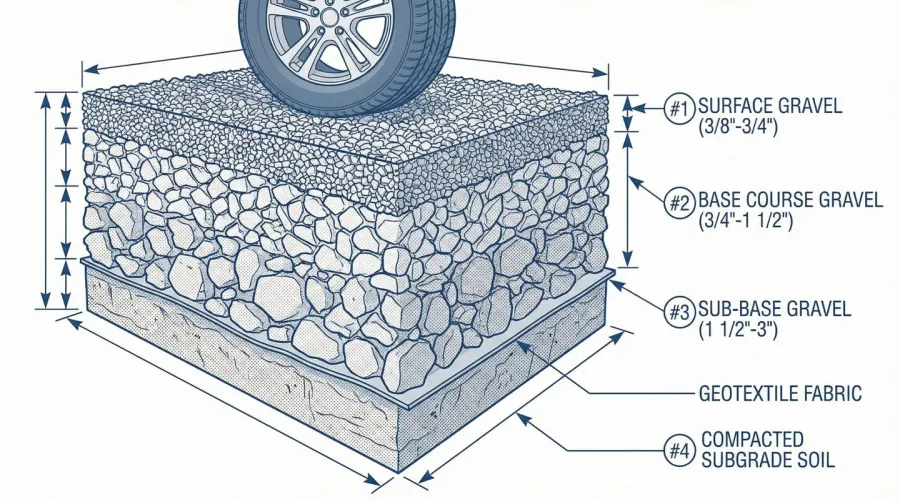
For driveways, start with a #3 or #4 base layer for stability, then top with #57 or #5 gravel for the driving surface. This combination gives you the structural strength to handle vehicle weight while providing a comfortable surface that doesn’t shift under tires. For more detailed guidance, check out our driveway stone size chart.
Avoid using #8 or smaller sizes as your top layer for driveways. These finer gravels tend to migrate and can become muddy during wet weather, creating maintenance headaches.
Walkways and patios
Number 8 gravel works perfectly for walkways where comfort matters more than heavy load-bearing. The smaller stones feel good underfoot and create an attractive, finished appearance that complements most landscape designs.
For patios where you might place furniture, consider using #10 screenings as a base with #8 gravel on top. This creates a more stable surface that won’t shift as much under chair legs and table bases. Learn more about selecting the right material in our landscape stone size chart guide.
Consider This: Smaller gravel sizes like #8 require edge restraints to prevent spreading, while larger sizes like #57 tend to stay in place better on their own.
Drainage systems
French drains and other drainage applications need clean gravel without fines that might clog the system. Number 57 gravel is the standard choice because its uniform 3/4-inch size allows consistent water flow while filtering out soil particles.
Number 8 gravel also works for drainage, especially around foundation perimeter drains where space is limited. Just make sure you’re getting clean stone without dust or smaller particles that could reduce drainage effectiveness.
Foundation and structural bases
Coarser gravels like #3 and #4 provide the best foundation support for heavy structures. These larger stones interlock well and resist settling under significant loads, making them ideal for building foundations, retaining wall bases, and road construction. For comprehensive information on construction stone sizes, explore our detailed guide.
Layer your foundation gravel with coarser material at the bottom and progressively smaller sizes toward the top. This creates a stable, well-draining base that won’t shift or settle over time.
Understanding gravel sizes by number takes the guesswork out of your next project. Whether you’re building a new driveway with number 5 gravel as your base or installing a French drain with clean #57 stone, choosing the right size ensures your project performs well and lasts for years. For a complete overview of common gravel sizes and their uses, visit our comprehensive resource.
Ready to order the perfect gravel for your project? Hello Gravel makes it simple to get exactly what you need delivered right to your site. Our team understands these size specifications and can help match your project requirements with the ideal stone number for lasting results.
Frequently Asked Questions About Gravel Size Numbers
What size is number 5 gravel?
Number 5 gravel is a coarse crushed stone grade where most particles range from 3/4 inch to 1 inch in diameter, based on AASHTO/ASTM specifications. It’s commonly used for driveway bases, road construction, and paver installations because it compacts well while still providing adequate drainage and load-bearing capacity for vehicle traffic.
What size is number 8 gravel?
Number 8 gravel is a smaller, clean stone that measures approximately 3/8 to 1/2 inch in diameter. This size is ideal for walkways, landscaping applications, concrete mixes, and light drainage systems because the uniform small stones are comfortable to walk on and provide excellent water flow while maintaining an attractive appearance.
What gravel size is best for driveways?
For driveways, use a layered approach starting with #3 or #4 gravel as a base layer for stability, then top with #57 stone (3/4 inch) for the driving surface. This combination provides the structural strength needed to handle vehicle weight while creating a stable, comfortable surface that resists shifting under tires and handles both foot traffic and cars effectively.
What’s the difference between clean gravel and gravel with fines?
Clean gravel contains minimal stone dust and drains exceptionally well, making it perfect for French drains and drainage applications. Gravel with fines includes stone dust and smaller particles that help the material compact tightly together, creating a more stable base ideal for driveways and foundations where compaction and stability are more important than drainage.
Delivered price for your ZIP
Delivered to your driveway. You pick the date.
★ 4.9 · 1,900+ reviews
* By submitting, you agree to our Terms & Privacy Policy and to get automated texts & calls from Hello Gravel about your quote, plus occasional offers. Agreeing isn’t required to buy. Msg frequency varies. Msg & data rates may apply. Reply STOP to opt out, HELP for help.
How much do you need?
Pricing your gravel? Get delivered Driveway Gravel prices for your ZIP.
Delivered to your driveway. You pick the date.
★ 4.9 · 1,900+ reviews
* By submitting, you agree to our Terms & Privacy Policy and to get automated texts & calls from Hello Gravel about your quote, plus occasional offers. Agreeing isn’t required to buy. Msg frequency varies. Msg & data rates may apply. Reply STOP to opt out, HELP for help.
Delivered price for your ZIP
Delivered to your driveway. You pick the date.
★ 4.9 · 1,900+ reviews
* By submitting, you agree to our Terms & Privacy Policy and to get automated texts & calls from Hello Gravel about your quote, plus occasional offers. Agreeing isn’t required to buy. Msg frequency varies. Msg & data rates may apply. Reply STOP to opt out, HELP for help.
Before you call
One quick detail helps the person who picks up. You can skip it.