Can Slate Be Used as a Dog Run Base? Pros, Cons, and Better Alternatives
Published on: December 12, 2025
Get an estimate for your project in 60 seconds
 Your information is secure

If you’re tired of muddy paws, destroyed grass, and smelly outdoor dog areas, you’re probably considering different flooring options for your dog run. Slate is one material that comes up in discussions, but is it really the best choice for your furry friend?
Yes, slate can be used as a dog run base, but it’s not always the ideal option. While slate offers durability and attractive appearance, materials like pea gravel and decomposed granite often provide better comfort and drainage for most dogs. The key is understanding how slate compares to other popular options and when it makes sense for your specific situation.
Quick Answer: Slate works best when used as chipped or smaller pieces rather than large flat stones, and it should always be installed over a proper drainage base to prevent water pooling and odor issues.
Let’s explore whether slate is right for your dog run project and what alternatives might work better.
What makes a good dog run base?
Before diving into slate specifically, you need to understand what makes any dog run surface successful. The best dog run bases share several key characteristics that directly impact your dog’s comfort and your maintenance routine.
Drainage tops the list of priorities. Standing water creates mud, promotes bacterial growth, and leads to persistent odors that no amount of cleaning can eliminate. Your base material needs to allow water to flow through or away from the surface quickly.
Comfort and safety matter just as much. Sharp edges can cut paw pads, while surfaces that get too hot in summer sun can burn sensitive feet. The material should provide enough cushioning for dogs who love to run and play without being so soft that it traps waste and odors.
Easy cleaning and odor control determine how much you’ll enjoy maintaining the space. Materials that allow you to hose away waste and apply enzymatic cleaners when needed will save you hours of scrubbing and keep your yard pleasant for everyone.
Finally, consider durability and your dog’s digging habits. Some dogs are determined excavators who will tunnel under any loose material, while others are content to stay on the surface.
How slate compares to popular dog run materials
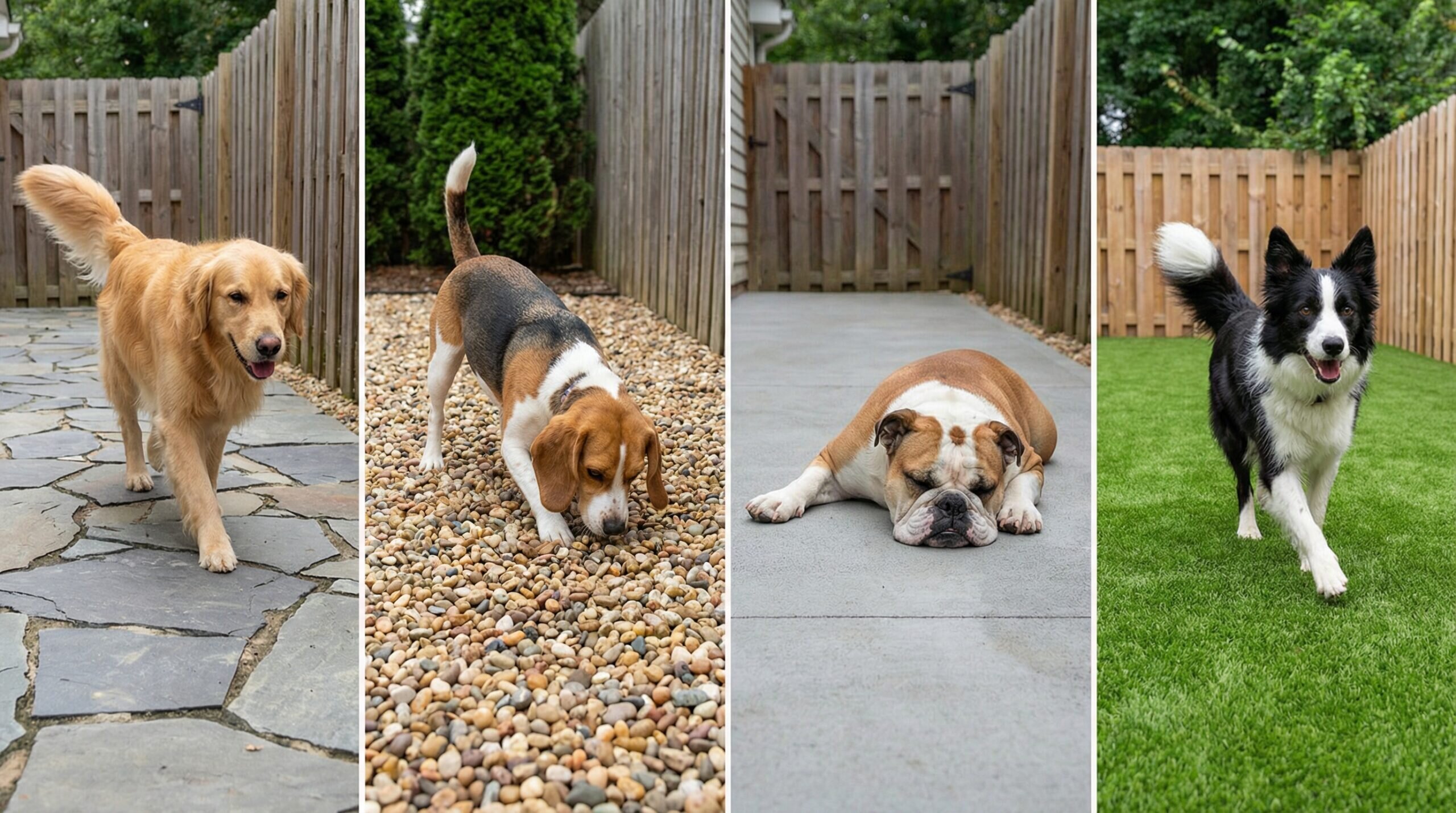
Slate is essentially a type of natural stone that gets grouped with other rock-based surfaces like pea gravel and crushed stone. Understanding where it fits among your options helps you make the right choice.
When compared to pea gravel, slate can be more attractive but potentially less comfortable. Pea gravel’s rounded edges are gentler on paws, while slate pieces can have sharper angles depending on how they’re processed. Both provide good drainage when properly installed.
Against concrete, slate offers better traction and stays cooler in hot weather. Concrete is easier to clean but can be hard on joints and gets uncomfortably hot in direct sunlight. Many dog owners find concrete too harsh for active play areas.
Artificial turf provides the most comfort and looks great, but it requires significant upfront investment and specialized cleaning to prevent odor buildup. It also retains heat more than natural stone surfaces.
Mulch and wood chips are budget-friendly and soft underfoot, but they trap bacteria and odors over time. They also need frequent replacement as they decompose.
Pro Tip: If you love slate’s appearance, consider using it in combination with pea gravel in high-traffic areas where your dog spends the most time playing and relieving themselves.
Pros and cons of slate for dog runs
Let’s break down the specific advantages and drawbacks of choosing slate for your dog run base.
Benefits of slate include:
– Exceptional durability that withstands years of active use without breaking down
– Attractive natural appearance that complements landscaping and adds property value
– Stays relatively cool compared to dark concrete or asphalt surfaces
– Provides good drainage when installed with proper base preparation
– Available in various colors to match your yard’s aesthetic
Drawbacks to consider:
– Sharp or angular edges on some slate pieces can be uncomfortable or potentially harmful to paw pads
– Larger flat pieces may shift or wobble without proper base compaction
– More expensive than standard pea gravel or crushed stone in many areas
– Still requires regular cleaning and doesn’t solve odor issues on its own
– Can be difficult to source locally depending on your region
The key insight here is that slate’s success depends heavily on the specific type you choose and how it’s installed. Smaller, chipped slate pieces work better than large flat stones for dog comfort.
Installation steps for a slate dog run base
Creating a successful slate dog run requires proper preparation and layering. Rushing the installation process often leads to drainage problems and uneven surfaces that become safety hazards.
Start by measuring your dog run area and planning for a slight slope away from buildings or toward a drainage area. Remove all grass, weeds, and organic matter from the space, then excavate to a depth of about 4-6 inches.
Install a compacted base layer using crushed stone or road base material. This foundation prevents settling and provides the drainage structure your slate needs to perform well. Compact this layer thoroughly with a plate compactor.
Add your slate layer in a thickness of 2-3 inches, choosing smaller chipped pieces rather than large flat stones for better comfort and stability. Rake the surface level and compact gently to set the pieces without crushing them.
Consider installing edging around the perimeter to contain the slate and prevent it from migrating into surrounding landscape areas. This also creates clean lines that enhance the finished appearance.
For ongoing success, plan to top off the slate periodically and maintain the proper slope for drainage.

Maintenance and cleaning considerations
Even the best dog run surface requires regular maintenance to stay clean and odor-free. Slate surfaces need specific care approaches to maintain their appearance and function.
Daily waste removal is non-negotiable regardless of your surface choice. Solid waste should be picked up immediately to prevent flies and bacterial growth. For urine, the drainage provided by your base layer helps flush liquids away from the surface.
Weekly hosing helps remove accumulated debris and refreshes the surface. During hot weather or heavy use periods, you might need to rinse more frequently. Enzymatic cleaners designed for pet areas can be applied monthly or as needed to break down organic compounds that cause persistent odors.
The slate itself will occasionally need attention. Pieces may shift over time, especially in high-traffic areas, and you’ll want to rake the surface smooth and add new material as needed. This typically happens once or twice per year depending on use levels.
Proper drainage remains crucial for long-term success. If you notice water pooling or slow drainage, you may need to adjust the slope or add more base material to restore proper function.
Remember that no surface eliminates the need for regular cleaning, but a well-installed slate base makes the process much more manageable than dealing with mud or deteriorating organic materials. If you’re considering other materials for comparison, you might also explore options like bluestone for dog run areas, river rock, or even coarse aggregate to find the perfect solution for your specific needs.
When you’re ready to move forward with your dog run project, getting accurate material estimates helps ensure you order the right quantities without waste. Hello Gravel’s online calculator can help you determine exactly how much slate and base material you’ll need based on your specific dimensions and depth requirements, making your project planning much simpler.
FAQ
Is slate safe for dogs’ paws in a run?
Is pea gravel or slate better for a dog run?
How deep should slate be in a dog run?
Does slate get too hot for dogs in summer?
Author: igor