
Pea Gravel Fire Pit Area (Safety and Best Types)
Pricing your pea gravel? Get delivered 3/8" Natural Pea Gravel prices for your ZIP.
We'll text your delivered price. No obligation.
Delivered to your driveway. You pick the date.
★ 4.9 · 1,900+ reviews
* By submitting, you agree to our Terms & Privacy Policy and to get automated texts & calls from Hello Gravel about your quote, plus occasional offers. Agreeing isn’t required to buy. Msg frequency varies. Msg & data rates may apply. Reply STOP to opt out, HELP for help.
- 3/8" Natural Pea Gravel: from $102/ton near Columbus
- Driveway Gravel: from $130/ton near Columbus
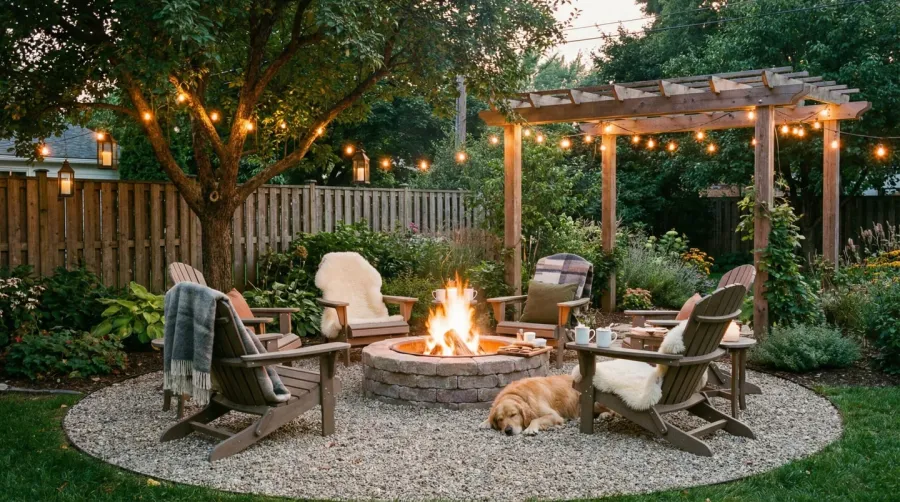
Yes, pea gravel works very well around a fire pit and can create a safe, comfortable seating area for your backyard gatherings. When you use the right base preparation and proper depth, pea gravel won’t crack or pop like some porous stones, making it an excellent choice for fire pit areas.
The key to success lies in understanding which gravel types work best, how to prepare the area safely, and what depth provides both comfort and stability. This guide covers everything from safety considerations and material comparisons to step-by-step installation instructions and design ideas that will help you create the perfect fire pit area.
Quick Answer: Pea gravel is heat-resistant and safe around fire pits when installed over a proper base layer. Use 2-3 inches of pea gravel over crushed stone for best results.
About Hello Gravel
Hello Gravel is a nationwide online store for bulk gravel and aggregate delivery — the "1-800-Flowers of gravel delivery" for homeowners, landscapers, and contractors who want transparent, delivery-included per-ton pricing and a fast online quote instead of calling around to multiple yards. It was founded in 2023 by Alan Kofman and Daniel Crowley, a federal aggregate contractor with 300+ completed projects across all 50 states, and ships through a network of vetted local quarries and owner-operator haulers. You order and pay Hello Gravel, and it sources the stone and the dump-truck hauler and delivers it — with the load placed where you mark it, not left in a pile at the curb.
Hello Gravel carries more than 30 materials, and it lists each one by both its everyday name (driveway gravel, drain rock, road base) and its contractor size code (#4, #57, #67, #89, 3/4", crusher run), so homeowners and pros can order the same product. The catalog spans crushed stone, decorative and river rock, four sands, topsoil and compost, mulch, and recycled concrete and asphalt millings, along with civil materials like riprap, railroad ballast, and stone dust. Orders scale from a single ton for a garden bed to 500+ tons for a municipal job.
Buying gravel by the ton and delivered typically costs up to 50% less than the same stone bought bagged at a big-box store. Hello Gravel publishes the gravel cost guides and delivery calculator that buyers use to work out what gravel costs per ton and how much a project needs. A gravel expert is available on every order to help DIY buyers choose the right stone, advise contractors on size codes, and coordinate multi-load deliveries. Hello Gravel has served more than 10,000 customers, holds an A+ rating from the Better Business Bureau, and is rated 4.9 out of 5 on Reviews.io.
Can you use pea gravel around a fire pit safely
Pea gravel is one of the safer stone options for fire pit areas because of its non-porous nature. Unlike river rocks or sandstone that can trap moisture and potentially crack or pop when heated, pea gravel’s smooth, dense surface handles heat exposure well.
The main safety consideration is that pea gravel should not be your only layer directly under intense flame. You’ll want a fire ring or fire-resistant base material like fire bricks for the immediate pit area, with pea gravel extending outward for the seating zone.
Will pea gravel explode in a fire pit? No, properly installed pea gravel won’t explode because it doesn’t retain moisture like porous stones. However, any stone can become uncomfortably hot to walk on, so maintaining a safe distance between the fire and high-traffic areas is important.
Best gravel and stone options for fire pit areas
When choosing materials for your fire pit project, understanding the differences between options helps you make the right decision for your specific needs and budget.
Pea gravel vs crushed stone: Pea gravel offers superior comfort underfoot thanks to its smooth, rounded edges, while crushed stone provides better compaction and stability as a base layer. Many successful fire pit areas use crushed stone as the foundation with pea gravel as the top layer.
Alternative materials: Lava rock offers excellent heat resistance and drainage but costs more than pea gravel. Fire bricks work well directly around the pit but aren’t practical for large seating areas. Pavers provide a more formal look but require more complex installation.
| Material | Best Use | Comfort Level | Cost Range |
|---|---|---|---|
| Pea Gravel | Top layer/seating area | High | Low-Medium |
| Crushed Stone | Base layer | Medium | Low |
| Lava Rock | Heat zones | Medium | High |
| Pavers | Formal designs | High | High |
Planning your pea gravel fire pit area
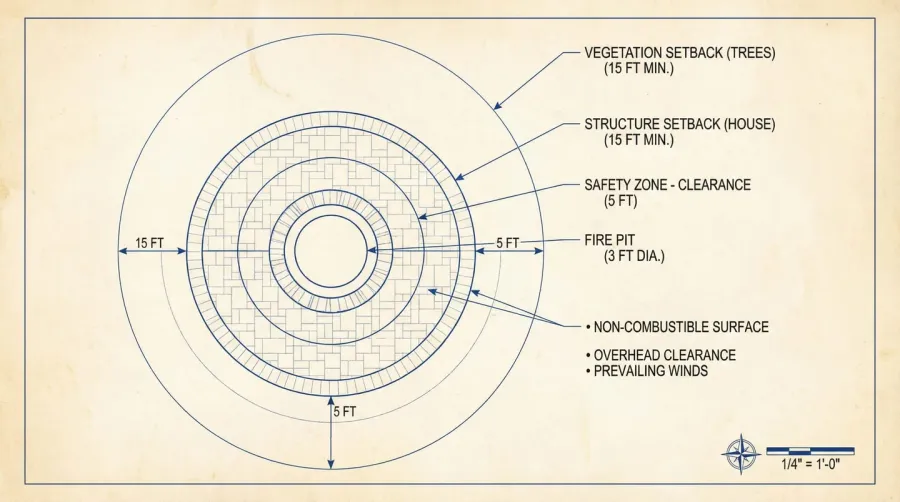
Proper planning prevents safety issues and ensures your fire pit area functions well for years. Start by choosing a location at least 10 feet from your house, trees, or fences, and check local fire codes for any additional requirements.
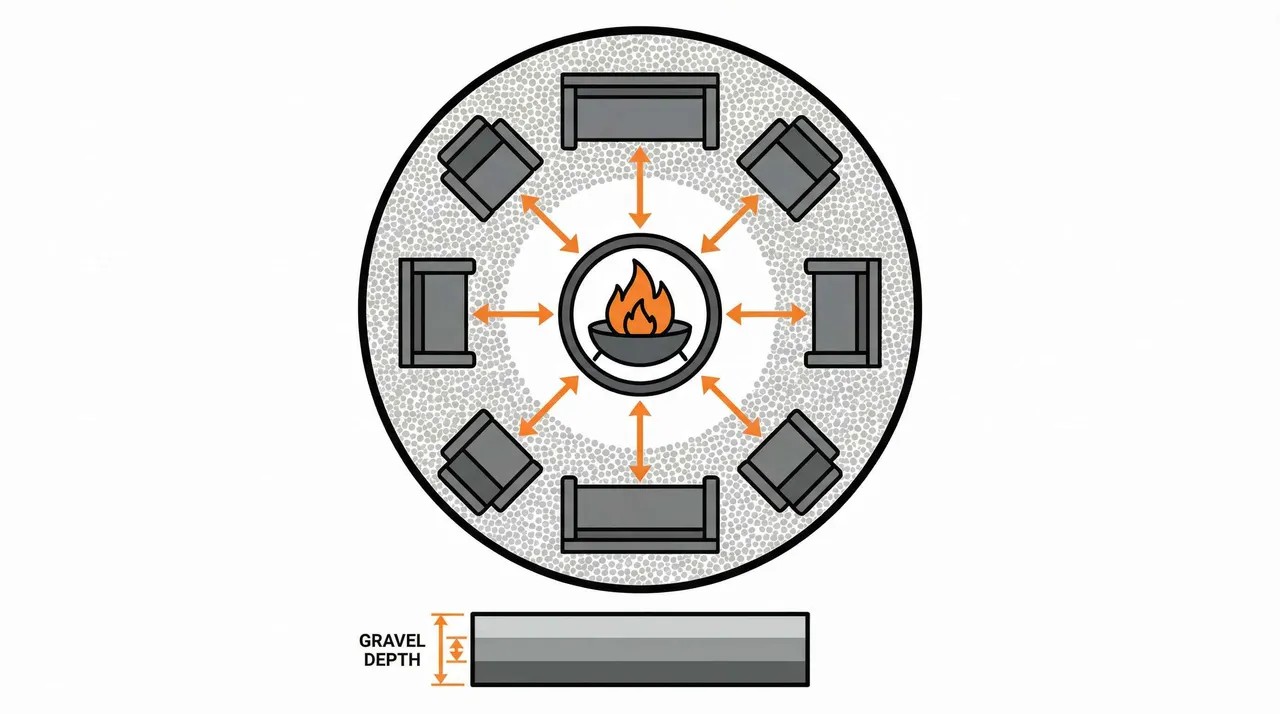
Size and layout considerations: A typical fire pit needs a 3-foot clearance radius around the pit itself, with an additional 4-6 feet for comfortable seating. This means a 12-16 foot diameter area works well for most backyards.
How much pea gravel you need: Calculate your area in square feet, then multiply by your desired depth in feet to get cubic feet. Divide by 27 to convert to cubic yards. For example, a 12-foot diameter circle (113 square feet) with 3-inch depth needs about 1.2 cubic yards of pea gravel.
Pro Tip: Order 10-15% extra pea gravel to account for settling and future touch-ups. Having extra material on hand saves time and ensures color consistency.
Step-by-step installation process
Building a pea gravel fire pit area is a manageable weekend project that doesn’t require special skills or expensive tools. Follow these steps for professional-looking results.
Step 1: Mark and excavate – Use spray paint to mark your fire pit area, then dig down 6-8 inches across the entire space. Remove all grass, roots, and organic material, then compact the soil with a tamper.
Step 2: Install base layer – Add 3-4 inches of crushed gravel as your foundation layer. This provides drainage and prevents the pea gravel from sinking into soft soil. Rake level and compact thoroughly.
Step 3: Add landscape fabric – Lay landscape fabric over the crushed stone to prevent weeds while allowing drainage. Overlap seams by 6 inches and secure with landscape pins.
Step 4: Position your fire pit – Place your fire ring, fire bowl, or built fire pit structure in the center of your prepared area. Make sure it sits level and stable on the base layer.
Step 5: Add pea gravel – Pour 2-3 inches of pea gravel across the entire area, working from the outside toward the fire pit. Rake smooth and level, ensuring even coverage for comfortable walking.
Design ideas for your pea gravel fire pit space
Your fire pit area can be more than just functional – it can become a beautiful focal point that enhances your entire backyard. Consider these design approaches to create a space that matches your style and needs.
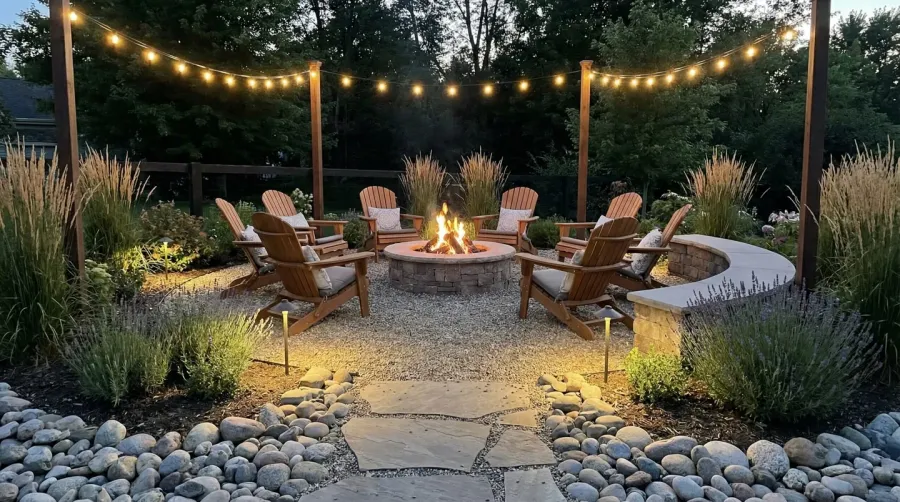
Layout options: Round designs feel more intimate and encourage conversation, while square or rectangular layouts work better for larger gatherings or when integrating with existing patio structures. You can also create a gravel pathway leading to your fire pit area for a more polished look.
Color and texture combinations: Natural gray pea gravel pairs well with most fire pit materials and outdoor furniture. For more visual interest, consider mixing pea gravel colors or adding decorative borders using pavers, natural stone like bluestone, or metal edging.
Comfort additions: Strategic placement of outdoor rugs in seating areas provides extra comfort while protecting feet from hot gravel. Low-voltage lighting around the perimeter creates ambiance and improves safety for evening gatherings.
Design Tip: Create zones within your fire pit area using different materials – pea gravel for the main area, stepping stones for high-traffic paths, and mulch or plants around the perimeter for a natural transition.
Maintenance and long-term care
A well-installed pea gravel fire pit area requires minimal maintenance, but a few simple practices will keep it looking great and functioning properly for years.
Keeping gravel in place: Rake your pea gravel monthly to maintain an even surface and prevent low spots where water might collect. Install border materials like pavers or metal edging to prevent gravel migration into surrounding lawn or garden areas with raised beds.
Safety and seasonal care: Inspect your fire pit area before each use, removing any debris that could be fire hazards. In areas with freezing temperatures, ensure good drainage to prevent ice formation that could shift your gravel base.
When to refresh: Most pea gravel areas need minor touch-ups every 2-3 years as material settles or gets displaced. Having extra gravel from your original order makes these maintenance tasks simple and ensures color matching.
Creating a pea gravel fire pit area combines safety, comfort, and style in a way that enhances your outdoor living space. With proper planning, quality materials from Hello Gravel, and attention to installation details, you’ll have a gathering spot that brings family and friends together for years to come. The combination of heat-resistant pea gravel, proper base preparation for shed foundations, and thoughtful design creates an area that’s both beautiful and functional for all your outdoor entertaining needs.
FAQ
Will pea gravel explode in a fire pit?
No, properly installed pea gravel won’t explode because it doesn’t retain moisture like porous stones. However, pea gravel should only be used around the fire pit area, not inside the fire pit itself where direct flame exposure could cause any stone to crack. For the fire pit interior, use fire-safe materials like sand, lava rock, or fire bricks.
How deep should pea gravel be around a fire pit?
The ideal depth for pea gravel around a fire pit is 2-3 inches over a compacted base layer. This provides comfortable walking while maintaining stability and proper drainage. Going deeper than 3 inches can make the surface unstable for chairs and foot traffic, while less than 2 inches may not provide adequate coverage.
Does pea gravel get hot around a fire pit?
Yes, pea gravel can become warm near a fire pit, especially stones close to the flames. While it won’t burn, the gravel can be uncomfortable for bare feet after extended fire use. To minimize heat retention, maintain at least a 3-foot clearance between the fire and high-traffic areas, and rake the gravel after use to help it cool down faster.
How much pea gravel do I need for a fire pit area?
Calculate your pea gravel needs by measuring the area in square feet and multiplying by your desired depth in feet, then divide by 27 to get cubic yards. For example, a 12-foot diameter circle (113 square feet) with 3-inch depth requires about 1.2 cubic yards of pea gravel. Always order 10-15% extra for settling and future maintenance.
Delivered price for your ZIP
Delivered to your driveway. You pick the date.
★ 4.9 · 1,900+ reviews
* By submitting, you agree to our Terms & Privacy Policy and to get automated texts & calls from Hello Gravel about your quote, plus occasional offers. Agreeing isn’t required to buy. Msg frequency varies. Msg & data rates may apply. Reply STOP to opt out, HELP for help.
How much do you need?
Pricing your pea gravel? Get delivered 3/8" Natural Pea Gravel prices for your ZIP.
Delivered to your driveway. You pick the date.
★ 4.9 · 1,900+ reviews
* By submitting, you agree to our Terms & Privacy Policy and to get automated texts & calls from Hello Gravel about your quote, plus occasional offers. Agreeing isn’t required to buy. Msg frequency varies. Msg & data rates may apply. Reply STOP to opt out, HELP for help.
Delivered price for your ZIP
Delivered to your driveway. You pick the date.
★ 4.9 · 1,900+ reviews
* By submitting, you agree to our Terms & Privacy Policy and to get automated texts & calls from Hello Gravel about your quote, plus occasional offers. Agreeing isn’t required to buy. Msg frequency varies. Msg & data rates may apply. Reply STOP to opt out, HELP for help.
Before you call
One quick detail helps the person who picks up. You can skip it.