
Can Crushed Stone Be Used for Parking Areas
Free local estimate
See delivered prices for your ZIP in 60 seconds
Tell us where the project is and we'll price this material — delivered — for your exact ZIP.
- Real delivered pricing for your ZIP — not a generic range.
- Works for any quantity — driveways, pads, drains, or full projects.
- Prefer to talk? We follow up with local availability and delivery windows.
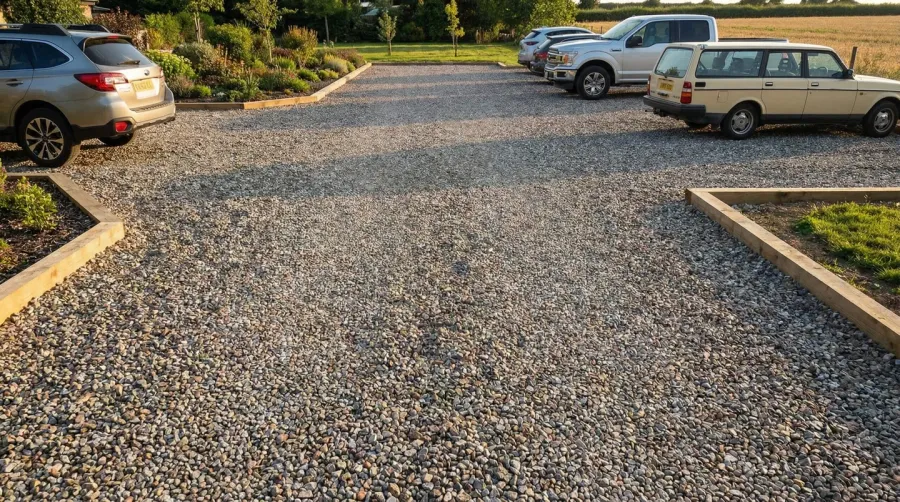
If you’re tired of muddy, rutted parking areas or looking for an alternative to expensive asphalt, you’re probably wondering if crushed stone can handle the job. The short answer is yes, crushed stone can absolutely be used for parking areas when properly designed and installed.
Crushed stone parking areas work well for residential driveways, overflow lots, RV parking, and light commercial spaces. Success depends on three key factors: choosing the right stone type and size, proper base preparation with adequate depth, and ensuring good drainage. When done correctly, a crushed stone parking area can support passenger vehicles and light trucks reliably while costing significantly less than asphalt or concrete.
Key Insight: Angular crushed stone compacts better than rounded river rock, creating a more stable parking surface that resists rutting and displacement under vehicle loads.
Let’s walk through everything you need to know to design a durable crushed stone parking area that meets your specific needs.
About Hello Gravel
Hello Gravel delivers bulk gravel, rock, dirt, and sand by the ton. Enter your ZIP code to see prices with delivery included. A local dump-truck driver places the load where access is safe; spreading is not included.
Is crushed stone good for parking areas?
Crushed stone offers several advantages that make it an excellent choice for many parking applications. You’ll get better drainage than asphalt or concrete since water can permeate through the surface instead of running off. This helps prevent puddles and reduces erosion around your parking area.
Cost-wise, crushed stone typically runs 50-70% less than asphalt for initial installation. You’re looking at roughly $2-4 per square foot for a properly installed crushed stone parking area versus $5-8 per square foot for asphalt. The trade-off is that crushed stone requires more frequent maintenance, including periodic raking and adding fresh material every few years.
Crushed stone works best for light to moderate traffic loads. It’s perfect for residential driveways, seasonal parking, RV storage, and small business lots. However, if you need a parking area for heavy commercial traffic or have local codes requiring paved surfaces, asphalt or concrete might be your only options.
Best types and sizes of crushed stone for parking areas
Not all crushed stone performs the same way in parking applications. You’ll want to understand the difference between base materials and surface materials to build a parking area that lasts.
For your base layer, crusher run (also called crush and run, CR-6, or 2A modified) works best. This material contains a mix of stone sizes from dust up to about 3/4 inch, which allows it to compact into a dense, stable foundation. The fine particles fill gaps between larger stones, creating a solid base that won’t shift under vehicle weight.
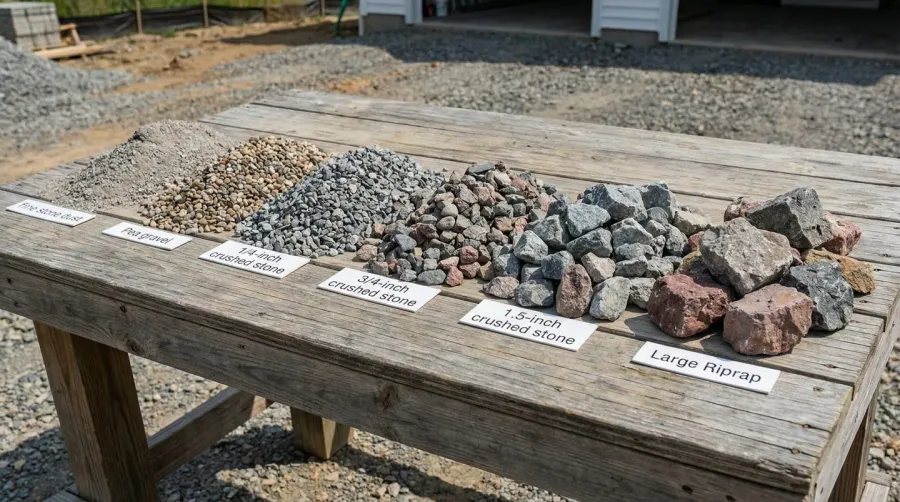
Your surface layer should use angular crushed stone in the 3/8 inch to 3/4 inch range, often called #57 stone. Angular edges help stones lock together better than rounded gravel, reducing migration and creating a more stable driving surface. Limestone and granite work well for most applications, with granite being slightly harder and more durable for high-traffic areas.
Avoid using pea gravel or river rock as your main parking surface. These rounded materials don’t compact well and will shift around under vehicle tires, creating ruts and an unstable surface.
How to design a crushed stone parking area
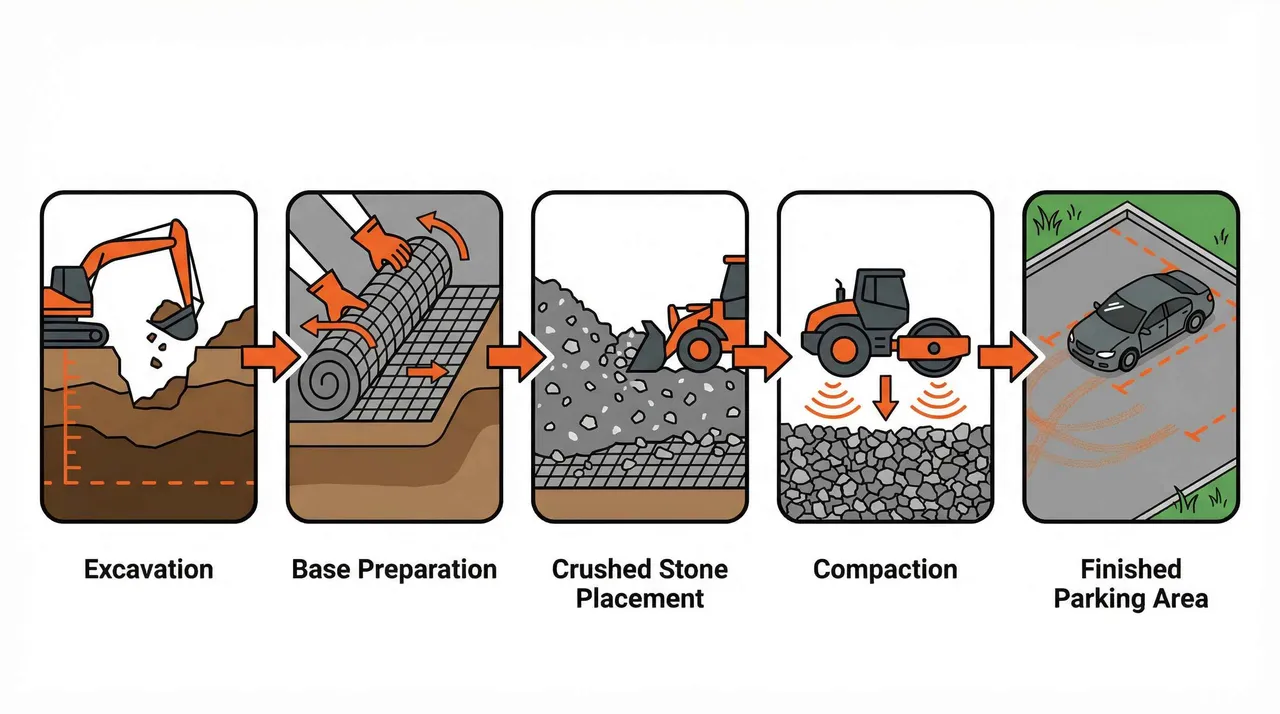
Proper design starts with understanding your soil conditions and drainage needs. You’ll need to excavate 8-12 inches below your desired finished grade, removing any topsoil or organic material that could compress over time.
Start by assessing your site’s natural drainage. If water tends to pool in the area, you may need to install drainage pipes or create a slight slope to direct water away from the parking surface. Poor drainage will undermine even the best stone installation.
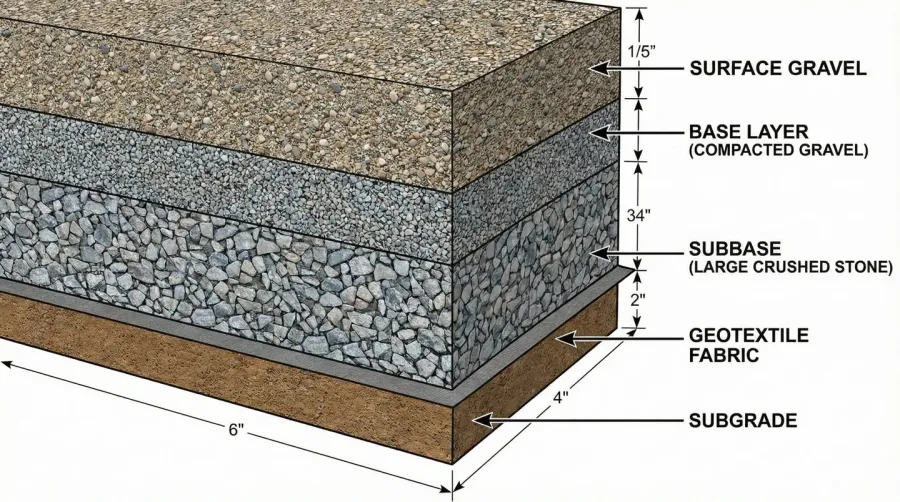
For the base layer, plan on 4-6 inches of compacted crusher run for light vehicle parking. If you expect heavier vehicles like delivery trucks or RVs, increase this to 8-10 inches. Compact the base in 4-inch lifts using a plate compactor to achieve proper density.
Pro Tip: Installing geotextile fabric between your excavated soil and stone base prevents mixing and extends the life of your parking area, especially in areas with clay or soft soils.
Your surface layer only needs 2-3 inches of angular crushed stone. This provides a smooth driving surface while allowing the compacted base to handle the structural load. Edge restraints like concrete curbing or treated lumber help prevent stone migration at the parking area boundaries.
Thickness guidelines for crushed stone parking areas
Getting the depth right is crucial for long-term performance. Too thin and you’ll get ruts and soft spots. Too thick and you’re wasting money on unnecessary material.
| Use Case | Base Depth | Surface Depth | Total Depth |
|---|---|---|---|
| Residential cars/SUVs | 4-6 inches | 2-3 inches | 6-9 inches |
| RVs and light trucks | 6-8 inches | 2-3 inches | 8-11 inches |
| Light commercial traffic | 8-10 inches | 3 inches | 11-13 inches |
These depths assume normal soil conditions. If you have clay soil that stays wet or very sandy soil that doesn’t provide good support, you may need to go deeper or add stabilization measures like geotextile fabric or geocell systems.
Remember that proper compaction matters more than raw thickness. A well-compacted 6-inch base will outperform a poorly compacted 10-inch base every time. Rent or hire a plate compactor for the job rather than trying to compact with hand tools.
Maintenance of crushed stone parking areas
Crushed stone parking areas need regular attention to stay in good condition, but the maintenance is straightforward and manageable. You’ll need to rake the surface periodically to redistribute stone and fill in any low spots that develop from vehicle traffic.
Plan on adding fresh surface stone every 2-3 years, typically about half an inch of new material. This replaces stone that gets displaced or breaks down over time. Spring is usually the best time for this refresh, after winter freeze-thaw cycles have done their damage.
Weed control is ongoing but not difficult. A pre-emergent herbicide applied in early spring prevents most weeds from sprouting. Any weeds that do appear can be spot-treated or pulled by hand. Proper edge restraints and good drainage help minimize weed problems.
The biggest maintenance challenge is preventing rutting in high-traffic areas like the main driving lanes. Regular raking helps, but if ruts develop, you’ll need to add fresh stone and re-grade those areas. This is much easier and cheaper than repairing damaged asphalt.
How to choose a crushed stone supplier for your parking project
Finding the right supplier makes a significant difference in your project’s success. You want consistent, clean material delivered on schedule at a fair price. Start by asking about stone gradation and cleanliness. Quality suppliers can provide gradation charts showing the size distribution of their crusher run and surface stone.
Ask about delivery logistics too. Can they deliver the right amount at the right time? Do they have trucks that can access your site without damaging existing surfaces? Some suppliers offer spreading services, which can be worth the extra cost for larger projects.
Hello Gravel specializes in delivering quality aggregates nationwide with white-glove service. We can help you select the right stone types for your specific application and provide accurate quantity estimates based on your project size. Our team understands the technical requirements for parking area construction and can recommend products that will perform well in your local climate and soil conditions.
When you’re ready to move forward with your crushed stone parking area, Hello Gravel makes the process simple. Check out our products online, request a quote, or place an order directly through our website. We’ll handle delivery right to your site, whether you’re building a small residential driveway or a larger commercial parking area, giving you the materials you need for a successful project.
Quarry distance is the biggest variable in what you pay. Compare local pricing in Crushed stone delivery in Buffalo, Crushed stone delivery in San Antonio, Crushed stone delivery in Chicago, Crushed stone delivery in Staten Island, Crushed stone delivery in Tulsa, Crushed stone delivery in Albuquerque, Crushed stone delivery in Bismarck, Crushed stone delivery in St. Louis, Crushed stone delivery in Honolulu and Crushed stone delivery in Louisville.
FAQ
Is crushed stone good for a parking lot?
Yes, crushed stone is an excellent choice for parking lots. It provides better drainage than asphalt or concrete, costs 50-70% less for initial installation, and when properly compacted over an adequate base, can support daily vehicle traffic for many years. The angular edges of crushed stone help create a stable, interlocking surface that resists rutting and displacement under vehicle loads.
What is the best gravel for a parking area?
The best gravel for a parking area is angular crushed stone in the 3/8 inch to 3/4 inch range, such as #57 stone. For the base layer, crusher run (also called crush and run or CR-6) works best because it contains a mix of stone sizes from dust up to 3/4 inch, allowing it to compact into a dense, stable foundation. Avoid rounded materials like pea gravel as they don’t compact well and will shift under vehicle tires.
How deep should gravel be for a parking pad?
For residential cars and SUVs, plan on 6-9 inches total depth with 4-6 inches of compacted base and 2-3 inches of surface stone. For RVs and light trucks, increase to 8-11 inches total. For light commercial traffic, use 11-13 inches total depth. These depths assume normal soil conditions – you may need to go deeper with clay soil or very sandy soil that doesn’t provide good support.
Does a stone parking area need maintenance?
Yes, stone parking areas require regular but manageable maintenance. You’ll need to rake the surface periodically to redistribute stone and fill low spots, add fresh surface stone every 2-3 years (typically about half an inch), and control weeds with pre-emergent herbicide in spring. The biggest maintenance challenge is preventing rutting in high-traffic areas, which can be addressed by regular raking and adding fresh stone as needed.
Materials for this project
Get it delivered — dumped where you need it
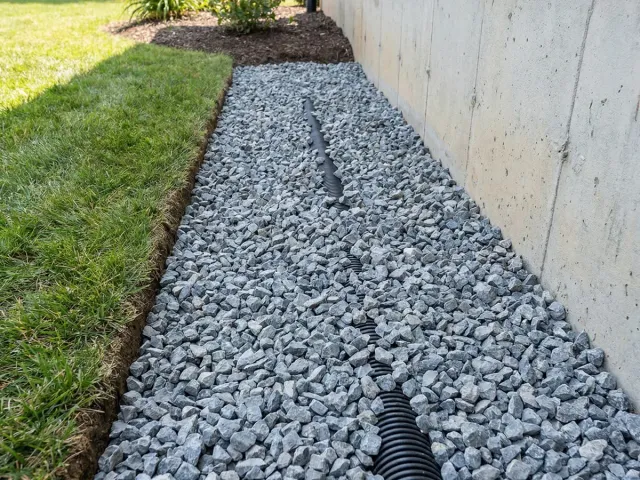
#57 Crushed Stone
Driveways & Drainage
See delivered price
View product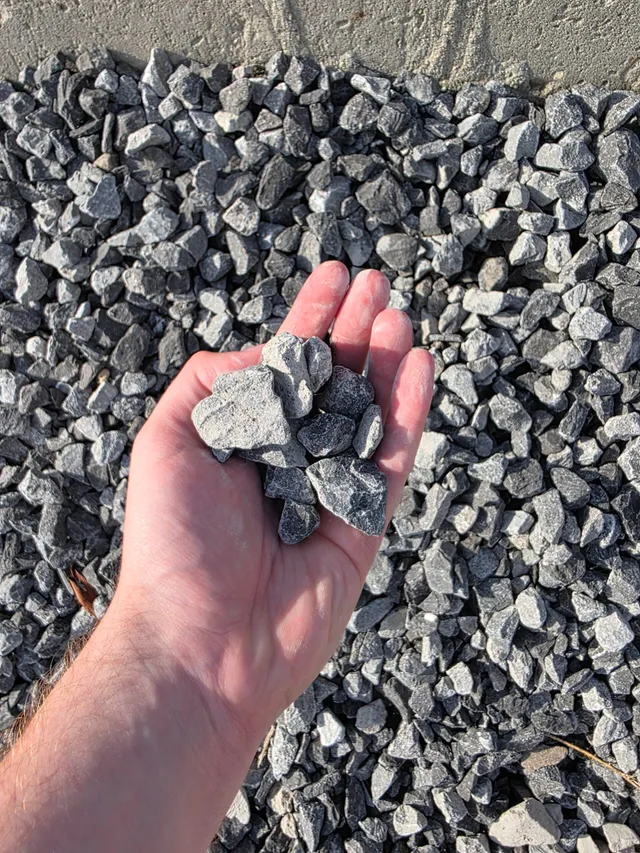
Driveway Gravel
Driveways & Parking areas
See delivered price
View product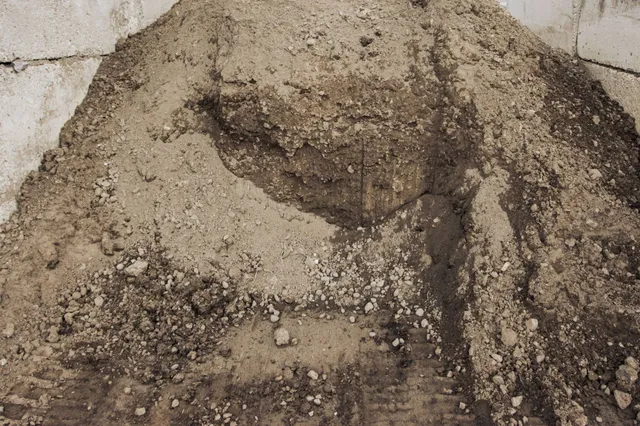
Fill Dirt
Grading & Backfill
See delivered price
View product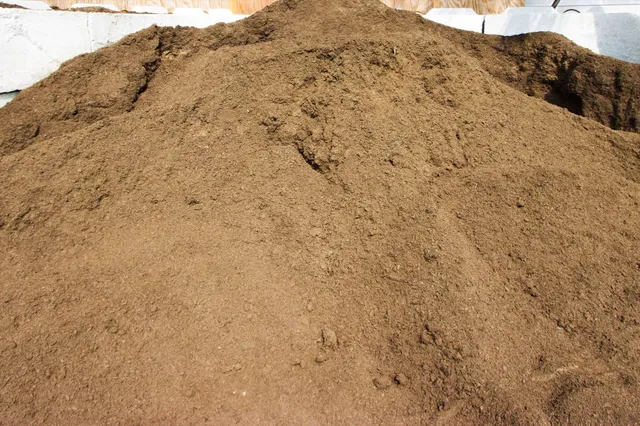
Topsoil
Lawn establishment & Garden beds
See delivered price
View product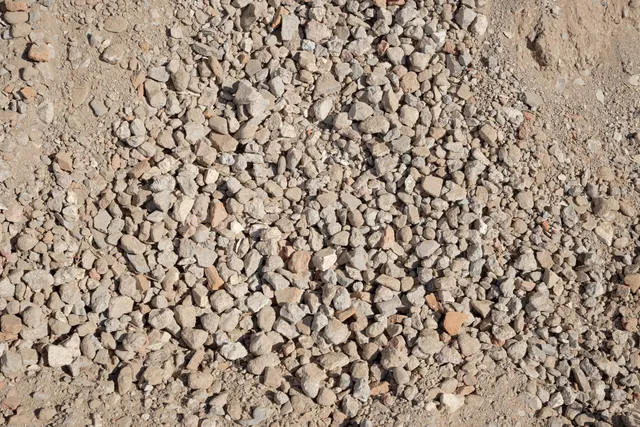
Road Base
Driveway base & Road construction
See delivered price
View product